Developer Contributions, CIL, Viability: Are We Nearly There Yet?

Bookends to this last week:
On Monday 5 March 2018 the draft revised NPPF , accompanying consultation proposals document and the Government’s response to the housing white paper consultation were all published, as well as the two documents I’ll focus on in this blog post:
Supporting housing delivery through developer contributions: Reforming developer contributions to affordable housing and infrastructure (which also addresses proposed reform to CIL); and 

Draft Planning Practice Guidance for Viability 
On Friday 9 March 2018 Draft Planning Practice Guidance: Draft updates to planning guidance which will form part of the Government’s online Planning Practice Guidance was published. 

The draft revised NPPF itself says very little on developer contributions, CIL and viability. 
On contributions, paragraph 34 of the draft (headed, in contrast to the “developer contributions” document, “development contributions” – consistency of terminology would be good!) states:
Plans should set out the contributions expected in association with particular sites and types of development. This should include setting out the levels and types of affordable housing provision required, along with other infrastructure (such as that needed for education, health, transport, green and digital infrastructure). Such policies should not make development unviable, and should be supported by evidence to demonstrate this. Plans should also set out any circumstances in which further viability assessment may be required in determining individual applications.”

On viability:

58. Where proposals for development accord with all the relevant policies in an up-to- date development plan, no viability assessment should be required to accompany the application. Where a viability assessment is needed, it should reflect the recommended approach in national planning guidance, including standardised inputs, and should be made publicly available.”
The Developer Contributions consultation document (responses sought by 10 May) addresses both contributions by way of section 106 planning obligations and by way of CIL. The document is accompanied by a research report commissioned from the University of Liverpool, The Incidence, Value and Delivery of Planning Obligations and Community Infrastructure Levy in England in 2016-17 which has some interesting statistics, underlining for me the scale of monies already being secured from development, over £6bn in 2016/2017:

It is clear from the consultation document that we are still on a journey to an unknown destination:
“The reforms set out in this document could provide a springboard for going further, and the Government will continue to explore options to create a clearer and more robust developer contribution system that really delivers for prospective homeowners and communities accommodating new development. 

One option could be for developer contributions [towards affordable housing as well as infrastructure] to be set nationally and made non negotiable. We recognise that we will need to engage and consult more widely on any new developer contribution system and provide appropriate transitions. This would allow developers to take account of reforms and reflect the contributions as they secure sites for development. 

The proposals in this consultation are an important first step in this conversation and towards ensuring that developers are clear about their commitments, local authorities are empowered to hold them to account and communities feel confident that their needs will be met.”
First step in a conversation??
Contributions via section 106 planning obligations
The document sets out perceived disadvantages of relying on section 106 planning obligations, including:
– delays (but there is no mention of how these could easily be reduced by prescriptive use of template drafts and more robust guidance and the Government’s previous proposal for an adjudication process to resolve logjams in negotiations has been dropped)
– the frequency of renegotiations, most frequently changing the type or amount of affordable housing (but with no analysis of why this is so – often in my experience for wholly necessary reasons, often linked to scheme changes or reflection of changed government affordable housing priorities or funding arrangements)

– a concern that they may “only have captured a small proportion of the increase in value” that has occurred over the time period covered by the University of Liverpool research report (but, aside from where the scale of contributions has been depressed from a policy compliant position due to lack of viability, why is this relevant? Planning obligations should be about necessary mitigation of the impacts from development, not about capture of uplifts in land value ). 

– lack of transparency. 

– lack of support for cross boundary planning. 

Despite these criticisms, the document does not propose significant changes to the section 106 process (or provide any timescale for the further review it alludes to) save for proposing to remove the pooling restriction (Regulation 123 of the CIL Regulations 2010) in areas:

* “that have adopted CIL; 


* where authorities fall under a threshold based on the tenth percentile of 
average new build house prices, meaning CIL cannot feasibly charged; 


* or where development is planned on several strategic sites

The Government is consulting on what approach should be taken to strategic sites for this purpose, the two options being stated as:
“a) remove the pooling restriction in a limited number of authorities, and across the whole authority area, when a set percentage of homes, set out in a plan, are being delivered through a limited number of large strategic sites. For example, where a plan is reliant on ten sites or fewer to deliver 50% or more of their homes; 

b) amend the restriction across England but only for large strategic sites (identified in plans) so that all planning obligations from a strategic site count as one planning obligation. It may be necessary to define large strategic sites in legislation.”
I would prefer to see the pooling restriction dropped across the board. If authorities choose not to adopt a CIL charging schedule but to rely on section 106 planning obligations to make contributions towards infrastructure then why not let them, subject to the usual Regulation 122 test? I thought we wanted a simpler system?
There are sensible proposals for summaries of section 106 agreements to be provided in standard form (although we do not yet have the template), so that information as to planning obligations can be more easily made available to the public, collated and monitored. 
Contributions via CIL
The Government’s thinking on CIL continues along the lines set out alongside the Autumn 2017 budget and summarised in my 24 November 2017 blog post CIL: Haven’t Found What I’m Looking For ie wandering dangerously away from the CIL review panel’s ideas of a simpler, more uniform but lower charge regime. The proposed ability for authorities to set different CIL rates based on the existing use of land is inevitably going to make an overly complex system even worse, introducing another uncertainty, namely how the existing use of the land is to be categorised. The Government recognises that risk:

Some complex sites for development may have multiple existing uses. This could create significant additional complexity in assessing how different CIL rates should be apportioned within a site, if a charging authority has chosen to set rates based on the existing use of land. 

In these circumstances, the Government proposes to simplify the charging of CIL on complex sites, by: 

* encouraging the use of specific rates for large strategic sites (i.e. with a single rate set for the entire site) 


* charging on the basis of the majority use where 80% of the site is in a single existing use, or where the site is particularly small; and 


* other complex sites could be charged at a generic rate, set without reference to the existing use of the land, or have charges apportioned between the different existing uses.”

One wonders how this would play out in practice. 

It seems that the requirement for regulation 123 lists (of the infrastructure projects or types of infrastructure which the authority intends to fund via CIL – and which therefore cannot be secured via section 106) is to be removed, which is of concern since regulation 123 lists (the use of which should be tightened rather than loosened) serve at least some degree of protection for developers from being double-charged. 
 The Government is proposing to address one of the most draconian aspects of the CIL process – the current absolute requirement for a commencement notice to be served ahead of commencement of development, if exemptions and the right to make phased payments (where allowed by the authority) are not to be lost, is to be replaced by a two months’ grace period. However, this does not avoid all current problems as any exemptions would still need to be secured prior to commencement.

A specific problem as to the application of abatement provisions to pre-CIL phased planning permissions is to be fixed. These flaws in the legislation continue to emerge, a function of the complexity and artificiality of the whole edifice, which the panel’s proposals would significantly have reduced. In the meantime, we are some way away from actual improvements to the system we are all grappling with day by day, with no firm timescale for the next set of amending Regulations. 
Viability
The thrust of the draft planning practice guidance for viability is understood and reflects what had been heralded in the September 2017 Planning for the right homes in the right places consultation document – focus viability consideration at allocation stage, standardise, make more transparent – but there are some surprising/interesting passages:
– Is the Government contemplating review mechanisms that don’t just ratchet upwards? Good if so:
It is important that local authorities are sufficiently flexible to prevent planned development being stalled in the context of significant changes in costs and values that occur after a plan is adopted. Including policies in plans that set out when and how review mechanisms may be included in section 106 agreements will help to provide more certainty through economic cycles. 

For all development where review mechanisms are appropriate they can be used to amend developer contributions to help to account for significant changes in costs and values over the lifetime of a development. Review mechanisms can be used to re- apportion or change the timing of contributions towards different items of infrastructure and affordable housing. This can help to deliver sites that would otherwise stall as a result of significant changes in costs and values of the lifetime of a development.”
– Review mechanisms are appropriate for “large or multi phased development” in contrast to the ten homes threshold in draft London Plan policy H6 (which threshold is surely too low). 
– The document advises that in arriving at a benchmark land value, the EUV+ approach (ie existing use value plus premium) should be used. The London Mayor will have been pleased to see that but will then have choked on his cornflakes when the Government’s definition of EUV+ is set out. According to the Government, EUV is not only “the value of the land in its existing use” (reflecting the GLA approach) but also “the right to implement any development for which there are extant planning consents, including realistic deemed consents, but without regard to other possible uses that require planning consent, technical consent or unrealistic permitted development” (which is more like the GLA’s approach to Alternative Use Value!). 
Then when it comes to assessing the premium, market comparables are introduced:
When undertaking any viability assessment, an appropriate minimum premium to the landowner can be established by looking at data from comparable sites of the same site type that have recently been granted planning consent in accordance with relevant policies. The EUV of those comparable sites should then be established. 

The price paid for those comparable sites should then be established, having regard to outliers in market transactions, the quality of land, expectations of local landowners and different site scales. This evidence of the price paid on top of existing use value should then be used to inform a judgement on an appropriate minimum premium to the landowner.”

I am struggling to interpret the document as tightening the methodologies that are currently followed, or indeed introducing any material standardisation of approach. 

The EUV+ position is covered in more detail by George Venning in an excellent blog post.
– There is a gesture towards standardisation in the indication that for “the purpose of plan making an assumption of 20% of Gross Development Value (GDV) may be considered a suitable return to developers in order to establish viability of the plan policies. A lower figure of 6% of GDV may be more appropriate in consideration of delivery of affordable housing in circumstances where this guarantees an end sale at a known value and reduces the risk.” However, there is no certainty: “Alternative figures may be appropriate for different development types e.g. build to rent. Plan makers may choose to apply alternative figures where there is evidence to support this according to the type, scale and risk profile of planned development.
More fundamentally, I am sceptical that viability-testing allocations at plan-making stage is going to deliver. At that stage the work is inevitably broad-brush, based on typologies rather than site specific factors, often without the detailed input at that stage of a development team such that values and costs can be properly interrogated and without an understanding of any public sector funding that may be available. If the approach did actually deliver, significantly reducing policy requirements, so much the better, but that isn’t going to happen without viability arguments swamping the current, already swamped, local plan examination process.
Indeed, as was always going to be the case with the understandable drive towards greater transparency, the process is becoming increasingly theoretical (think retail impact assessment) and further away from developers opening their books to demonstrate what the commercial tipping point for them is in reality, given business models, funding arrangements, actual projected costs (save for land), and actual projected values. “Information used in viability assessment is not usually specific to that developer and thereby need not contain commercially sensitive data“. 
The document contains more wishful thinking:
A range of other sector led guidance on viability is widely available which practitioners may wish to refer to.”
Excellent. Such as?
Topically, this week, on 6 and 7 March, Holgate J heard Parkhurst Road Limited’s challenge to the Parkhurst Road decision letter that I referred to in my 24 June 2017 blog post Viability & Affordable Housing: Update. The challenge turns on the inspector’s conclusions on viability. Judgment is reserved. 

We also should watch out for Holgate J’s hearing on 1 and 2 May of McCarthy and Stone & others v Mayor of London, the judicial review you will recall that various retirement living companies have brought of the Mayor of London’s affordable housing and viability SPG. 
The great thing about about writing a planning law blog is that the well never runs dry, that’s for sure. (Nothing else is). 
Simon Ricketts, 10 March 2018
Personal views, et cetera

Through A Glass Darkly: To BRE Or Not To BRE

How to determine whether the impact from a proposed development on the daylight and sunlight enjoyed by neighbours, or to be enjoyed by future occupiers of the scheme, is appropriate? That is the question. 
The problems are multi-layered:
– There is no practical guidance in the NPPF or NPPG as the approach to be taken.
– Many local planning authorities default in their policies to requiring compliance with a guide to good practice published by the Building Research Establishment in 2011: “site layout planning for daylight and sunlight: a guide to good practice” (BR 209) by Paul Littlefair (a document incidentally not freely available but available for purchase from the BRE for £55). 

– The document has various numerical criteria and calculations to determine acceptability. Whilst the need for flexibility in application is acknowledged in the document itself (“Although it gives numerical guidelines, these should be interpreted flexibly because natural lighting is only one of many factors in site layout design“) in practice this is often overlooked. 

– The document has not been updated to reflect changes in our understanding of what makes great places or indeed nuanced to reflect the very different expectations of those living in urban environments, and London in particular. 
The Government signalled in its February 2017 housing white paper that a new approach may be needed: “the Government intends to amend national planning guidance to highlight planning approaches that can be used to help support higher densities, and to set out ways in which daylight considerations can be addressed in a pragmatic way that does not inhibit dense, high- quality development.”
I will be disappointed if we do not see this in the draft revised NPPF (likely to be published on 5 March). 
Disappointingly, the Mayor of London has omitted specific guidance from the draft London Plan (2 March representations deadline looming). The opportunity has been missed to stress the need for flexibility and appreciation of context. Given the loss of the previous density matrices, daylighting and sunlighting issues will continue to be relied upon by objectors seeking to resist higher density schemes, which are inevitable if the housing targets in the plan are to be achieved. 
Against this context it is fascinating to read the inspector’s decision letter dated 21 February 2018 allowing an appeal by Londonewcastle for their Whitechapel Estate development, which comprises “demolition of all existing buildings and redevelopment to provide 12 buildings ranging from ground plus 2-23 storeys (a maximum 94m AOD height), comprising 343 residential dwellings (Class C3), 168 specialist accommodation units (Class C2), office floorspace (Class B1), flexible office and non-residential institution floorspace (Class B1/D1), retail floorspace (Class A1-A3), car parking, cycle parking, hard and soft landscaping and other associated works.” The site falls within the City Fringe Opportunity Area Planning Framework.
The inspector summarised the main issues as:
* “The quality of design of the appeal proposal and its effect on the character and appearance of the area and on the wider townscape;

* The effect on heritage assets and their settings; 


* The effect on living conditions of neighbouring residents, having regard in 
particular to daylight and sunlight, outlook and privacy; 


* The quality of living conditions for future residents of the development, having regard in particular to daylight and sunlight, overshadowing, outlook and privacy. ”

The inspector’s approach to daylight and sunlight is particularly interesting, given that it follows detailed evidence from, for the London Borough of Tower Hamlets, none other than Paul Littlefair, author of the BRE guide, and, for the appellant, leading consultant Gordon Ingram of GIA, proponent of a more nuanced, contextual, assessment approach. 

It is plain from the decision letter that the inspector preferred the GIA methodology:
107. It is agreed that the starting point in the assessment of the effect on residents’ living conditions arising from daylight and sunlight should be the Building Research Establishment 2011 publication Site layout planning for daylight and sunlight: A guide to good practice, (‘the BRE guide’) whose author gave evidence at the Inquiry on behalf of the Council. Use of this methodology is demanded by the supporting text to MDD Policy DM2539 and by the Mayor of London’s Housing SPG of March 2016. 

108. The BRE document offers guidance on generally acceptable standards of daylight and sunlight, but advises that numerical values are not to be rigidly applied and recognises the importance of the specific circumstances of each case. Inner city development is one of the examples where a different approach might be justified. This is specifically endorsed by the Housing SPG, which calls for guidelines to be applied sensitively to higher density developments, especially in (among others) opportunity areas and accessible locations, taking into account local circumstances, the need to optimise housing capacity, and the scope for the character and form of an area to change over time. This approach is clearly relevant to the appeal site. The area’s identification for transformation through high density housing development indicates high scope for its form and character to change over the short and longer term. I agree with the appellants that blanket application of the BRE guide optimum standards, which are best achieved in relatively low-rise well spaced layouts, is not appropriate in this instance.
112. The figures show that a proportion of residual Vertical Sky Component (‘VSC’) values in the mid-teens have been found acceptable in major developments across London. This echoes the Mayor’s endorsement in the pre- SPG decision at Monmouth House, Islington that VSC values in the mid-teens are acceptable in an inner urban environment. They also show a smaller proportion in the bands below 15%. Even if there were some discrepancy in the appellants’ figures for this lower band at Whitechapel Central, which is disputed, the VSC outcomes for the appeal proposal would in general be very similar to those of the other major schemes. The appeal proposal would therefore appear to be in compliance with the LP as amplified by the SPG and as it is being interpreted by the Mayor. The GLA responses to the planning application did not raise any concern about neighbours’ amenity. 

113. I acknowledge that a focus on overall residual levels could risk losing sight of individual problem areas. It is accepted that light is only one factor in assessing overall levels of amenity, but I consider that the trade-off with other factors, such as access to public transport or green space, is likely to be of more relevance to an occupier of new development than to an existing neighbour whose long-enjoyed living conditions would be adversely affected by new buildings. However, I also consider that Inner London is an area where there should generally be a high expectation of development taking place. This is particularly so in the case of the appeal site, where the WVM and the OAPF have flagged the desirability of high density development. Existing residents would in my view be prepared for change and would not necessarily expect existing standards of daylight and sunlight to persist after development.”
121. As in the matter of daylight, the guidance on loss of annual and winter sunlight is not to be rigidly applied. Emphasis on the level of retained sunlight rather than degree of change would be justified. On balance, I accept the appellants’ conclusion the proposal’s overall effect on sunlight would not be significantly adverse.”
As to the effect of the scheme on living conditions for neighbouring residents:
125. I conclude that the proposal would result in some significant individual reductions in daylight and sunlight levels, but that this is almost unavoidable in achieving the policy requirement for high density development in a confined urban setting. The new buildings would for the most part be comparable in height with the existing and would re-define traditional street frontages. Retained levels of daylight and sunlight would be adequate and comparable with existing and emerging urban conditions. The effects would appear very comparable with those recently allowed by the Council at Whitechapel Central. There would be minimal adverse losses of outlook and increases in overlooking. Taken as a whole, the proposal would not result in unacceptably harmful effects on living conditions and would comply with the development plan in this respect. ”
Whilst of course individual decisions of inspectors are not formal precedents, and every scheme is dependent on its individual circumstances and the relevant local policy background, this decision is undoubtedly important and surely fully in line with what the Government was flagging in the housing white paper. 
The BRE guidance in part draws upon British Standard BS 8206-2 (2008) Lighting for Buildings – Part 2: Code of Practice for Daylighting. I am wondering whether one reason that the 2011 guidance has not been updated is that the British Standards Institute has been working with other EU member states’ standards institutes on a new voluntary set of standards for natural daylight, via the European Committee for Standardisation. During this process, revisions of the relevant standard at a domestic level must be placed on hold. Following consultation, a new ECS standard was ratified on 8 February 2018 and will be formally available from 25 April 2018. More information as to the tighter criteria that the new standard will introduce is set out in a useful (subscription-only I am afraid) Planning Resource piece by Gregory Francis of GVA Schatunowski Brooks. 
So, on the one hand, are we at last seeing a move towards more flexible application of daylighting and sunlighting standards? On the other hand, are we are likely in due course to see a tightening of the standards themselves? I find it disappointing that the extent to which there is domestic oversight of the BRE (since 1997 not a governmental body but an independent charitable organisation) is opaque to say the least, before we even get to the complexities of the workings of the European Committee for Standardisation. The Government, and London Mayor, really do need shine a light on all of this.
Simon Ricketts, 24 February 2018
Personal views, et cetera

The Extra Care Question: RU-C2 or C3-UCO?

A long time ago in a galaxy far, far away, Parliament made the Use Classes Order. 
I referred in my 16 September 2017 blog post Class Distinctions: Planning For Older People to the blurred distinction between C2 (basically use for the provision of residential accommodation and care to people in need of care) and C3 (basically use as a residential dwelling) when it comes to “extra care” facilities for the elderly. I set out some of the criteria applied by inspectors in appeal decisions.
There was a very useful appeal decision letter last month which surely throws additional doubt upon the soundness of the curious attempt in the draft London Plan in effect to amend the Use Classes Order by policy rather than legislation, in that it seeks to deem extra care facilities for the elderly in London as falling within use class C3 (and thereby becoming subject to affordable housing and other obligations and requirements) whereas the recognised planning law position is that they are more likely to fall within use class C2. 
Draft policy H15 C states:
Sheltered accommodation and extra care accommodation is considered as being in Use Class C3. Residential nursing care accommodation (including end of life/ hospice care and dementia care home accommodation) is considered as being in Use Class C2.”
Paragraph 4.15.3 of the supporting text simply states again that “sheltered accommodation and extra care accommodation should be considered as C3 housing“, defining extra care accommodation as follows:
extra care accommodation (also referred to as assisted living, close care, or continuing care housing) is self-contained residential accommodation and associated facilities, designed and managed to meet the needs and aspirations of older people, and which provides 24-hour access to emergency support. A range of facilities are normally available such as a residents’ lounge, laundry room, a restaurant or meal provision facilities, classes, and a base for health care workers. Domiciliary care will be available to varying levels, either as part of the accommodation package or as additional services which can be purchased if required.”
First, how can it be appropriate in principle for a policy document to deem a use to be treated in a particular way in the Use Classes Order? The nature of the use and the determination of which use class, if any, it falls into, is a legal question. For instance whether planning permission would be required for a change of use would ultimately be determination by an application for a certificate of lawfulness of proposed use or development under section 191 of the Town and Country Planning Act 1990. By all means, if justified, the Mayor can determine that particular policies should apply to extra care accommodation (matters which could then be tested through the plan examination process) but his view as to which use class it might fall into has no weight in the legal determination of that question and in my view has no place in a document which is only allowed to address “matters which are of strategic importance to Greater London.

Secondly, his view, not supported by any reasoning, as to the appropriate use class do not sit easily with the conclusions that planning inspectors have come to. The most recent decision letter (22 January 2018) was by inspector Michael Boniface, where he allowed an appeal in Sidmouth, East Devon, by Pegasus Life for an “assisted living community for older people comprising extra care units, staff accommodation and communal facilities, including a kitchen, restaurant/bar/café, a well-being suite comprising gym, treatment rooms and pool, a communal lounge and storage facilities; car parking for residents, visitors and staff of the assisted living community; comprehensive landscaping comprising communal and private spaces; and associated groundworks.”
The decision letter and inspector’s reasoning is well summarised in a blog post by Housing LIN – “Planning Inspector sets out the distinctive elements of Extra Care scheme resulting in C2 Use Class conclusion” (8 February 2018). 

The inspector was presented with the Mayor of London’s position but it did not alter his conclusions on the facts of the case. 
 Thirdly, in its recent report Housing For Older People (8 February 2018) the Commons CLG Select Committee specifically considered the treatment of specialist older people’s housing in the planning system and particularly in the Use Classes Order:

125. We also heard that the “inconsistent and cumbersome” application of the C2 and C3 planning classifications to extra care housing was problematic for developers. Some local authorities apply the C2 classification, applied to residential care homes and nursing homes, to extra care housing which reduces planning charges. Others classify this type of housing as C3, along with mainstream housing, which means full charges apply. Audley Retirement argued that extra care housing should fall within the C2 class:

“Extra care is set up to fulfil many of the functions that care homes can provide in terms of care delivery as and when the resident requires it, monitored by an onsite care team and there is access to communal facilities. There are controls over who can occupy them by age and a need for care that do not exist on C3 standard dwellings.”

Extra care housing developers had a range of suggestions for countering this issue: an “extension and additional clarity” on C2 so that it captures extra care housing; the creation of a sub-section of C2 which attracts lower planning charges; and the creation of a “dedicated use class” for extra care housing which would enable planning contributions to be streamlined.

126. When we asked about this, the then Housing Minister, Alok Sharma, told us that the guidance will look at the “precise terminology that is used to describe the different types of older people’s housing”. 
The Select Committee concludes:
We believe that the level of planning contributions on specialist housing, which are increased as a result of the non-saleable communal areas which are a feature of this type of housing, is impeding the delivery of homes. We recommend either the creation of a sub-category of the C2 planning classification (which currently applies to residential care and nursing homes) for specialist housing, which would reduce the contributions required from developers, or the creation of a new use class for specialist housing which would have the same effect.”
In the light of these considerations, how can draft London Plan policy H15 C possibly be justified?
Simon Ricketts, 17 February 2018
Personal views, et cetera 

Nothing Was Delivered

“Nothing was delivered/And I tell this truth to you/Not out of spite or anger/But simply because it’s true” (Bob Dylan)

It was the first meeting on 5 February of the prime minister’s housing implementation taskforce. The subsequent press statement summarises the event as follows:
Today the Prime Minister chaired the first meeting of the Housing Implementation Taskforce at Downing Street.

She stressed the integral role all Government departments have in helping to fix the broken housing market and deliver 300,000 additional homes by the mid-2020s.

The taskforce discussed the steps Government has already taken, including further investment at the Budget, planning reform, releasing land faster, the Housing White Paper and building more affordable housing. They emphasised the key role of Homes England in driving forward change, and also focused on the supply of new housing, public sector land sales, land banking, house-building skills and building the infrastructure needed for new housing developments.

The Prime Minister reiterated that a step change was needed right across Government and that all departments needed to think creatively about how they can contribute to building the homes the country needs.
That “300,000 additional homes by the mid-2020s” reference is an interesting one, reflecting the Government’s previous 11 January 2018 announcement of the creation of Homes England:
Homes England will play a major role in fixing the housing market by helping to deliver an average of 300,000 homes a year by the mid-2020s.
This is surely a tactical step back from the Conservative party’s 2017 manifesto commitment, with no longer any pre-2022 election target:
We will meet our 2015 commitment to deliver a million homes by the end of 2020 and we will deliver half a million more by the end of 2022.”
A significant proportion of the country’s homes will need to come forward in London – the Mayor of London’s draft London Plan sets a target of around 65,000 homes a year, a significant increase from the previous plan figure of 42,000. 
These figures are only going to be achieved with a large degree of consensus between central government, the Mayor, boroughs and local communities. If I were prime minister (perish the thought) I would be worrying that in many areas, but particularly in London, there is increasing “spite or anger” (in the words of Mr Dylan). Inevitably, in any year with borough elections, planning becomes politicised but this year, with the repercussions of the Grenfell tragedy, the predictions of Conservative council losses and the internal battles within the Labour party, this is particularly so. EG has tracked the number of refusals in London up to the end of 2017. It makes for uncomfortable reading and the position will only be worsening. 


Against that background, is there a crisp appeals process? Not at all. The Planning Inspectorate’s performance statistics are still poor:


Anecdotally, many developers and authorities are keeping politically controversial decisions away from committees until the other side of the 3 May local government elections, even though the formal purdah rules, summarised in a useful Local Government Association guide, largely allow for statutory processes to carry on.
The politically charged atmosphere in many boroughs isn’t just leading to refusals of permission against officers’ recommendations – leading in turn to officers having to spend time defending appeals, with inevitable repercussions for capacity to cope with other applications in the system – but it’s impeding the work of boroughs that seek to achieve housing development, particularly in relation to estate regeneration schemes, without which those London numbers are not going to be met. 
Progress on the Haringey Development Vehicle initiative, brought forward by Haringey Council with private sector joint venture partner Lendlease, has now been halted by leader councillor Claire Kober, with no further decisions to be taken before purdah commences on 26 March until after the 3 May local election. Given that, following sustained pressure over the project, she announced on 30 January that she will not be standing for re-election, its long term future may be in doubt. This was a strategy to bring about widespread development on sites in the council’s ownership, including the proposed delivery of up to 6,400 homes. The HDV would in due course formulate development proposals for sites and make planning applications, applications which would be assessed as against planning policy, with the power for the Mayor to intervene in the usual way, but plainly in Haringey even the nature of the vehicle to be used to bring about development, presumably because of the role to be played in it by a private sector developer, was seen by objectors as unacceptable. 
There is room for debate in a democracy as to the form that regeneration should take and the extent and types of affordable housing to be provided but if the HDV is not to happen, what will? In current political and financial reality, my fear is that an opportunity to increase housing at scale, including affordable housing, will be lost. It is vital that affordable housing, with tenures to meet needs, is provided. Will the collapse of the HDV render this more or less likely? What’s the alternative? What’s the objectors’ plan? To continue this position until a 2022 general election? 
Whilst the politics played out, unpleasantly according to Councillor Kober’s account, Ouseley J was writing his judgment in Peters v London Borough of Haringey. This was a crowdfunded judicial review that had been brought on behalf of campaign group Stop HDV, seeking to establish that the council had acted outside its powers in proceeding with the project. The hearing had taken place over two days in October 2017 but Ouseley J’s judgment, over 50 pages long, was only handed down on 8 February 2018. 
The main ground of challenge was a legalistic one if ever one there was: that the council had acted outside its powers in establishing with Lendlease a limited liability partnership as the vehicle to take forward its strategic aims, on the basis that section 4(2) of the Localism Act 2011 provides that where “a local authority does things for a commercial purpose, the authority must do them through a company“. The judge rejected the argument:
To my mind, there is no doubt but that the Council’s purpose in entering into the arrangements setting up the HDV and governing its operation, including the relationship between the two partners, cannot be characterised as “a commercial purpose” within the scope of the Localism Act. Even more clearly is its dominant purpose not commercial. Any commercial component is merely incidental or ancillary, and not a separate purpose.”

“…the phrases to which Mr Wolfe took me do not show a separate commercial purpose, whether minor or not. It is important to examine why this is all being done. The purpose behind the Council’s entering into the HDV and associated arrangements is not that of a property investor, simply seeking to make a profit or to achieve a return on development or improved rentals. The purpose of the Council is to use and develop its own land to its best advantage so that it can achieve the housing, employment and growth or regeneration objectives that it has laid down. In order to achieve as much as it can, it has to achieve the best consideration on any disposal of its land; and it must be in other respects financially prudent, to produce returns in various ways which can be used to further its policy objectives. Achieving the return is neither the activity nor its purpose of itself.”

“The acquisition of other land in the context of regenerating a large estate is a commonplace, and, backed by compulsory purchase powers, it demonstrates not one whit that a separate activity of property development is being undertaken.”
In any event, the judge considered that the challenge in relation to this ground and others (lack of consultation, Equality Act) had been brought out of time. I understand that the claimant is likely to seek permission to appeal. 
In another part of London, progress is still slow on another regeneration project that has been to the High Court and back, the Aylesbury Estate. I covered in my blog post Regeneration X: Failed CPOs the decision of the Secretary of State to decline to confirm Southwark Council’s CPO based on his concern as to the effects of acquisition on leaseholders, a decision which was subsequently quashed by consent following a challenge brought by the council. A second inquiry that has been taking place into the order was adjourned on 31 January 2018 to resume for a further two weeks on 17 April. Judging from a ruling by the inspector prohibiting further filming at the inquiry it has been a lively event so far. 

According to the council’s statement of case:
The acquisition of the Order Land will enable demolition of the existing buildings in order to replace the 566 existing units of social and privately owned housing with a mixed tenure development comprising 830 homes. Of these, 304 will be social rent, 102 will be intermediate (affordable homes available as shared ownership or shared equity) and 424 will be private (of which 48 will be for open market rent and the remainder for sale). Included in the social rent homes are 50 extra care units and 7 units for people with learning difficulties.”
Inevitably, whatever the gains in housing numbers to be achieved (and indeed the affordable housing of all tenures to be provided), there will be legitimately held concerns on the part of residents directly affected. The Mayor announced on 2 February 2018 “mandatory ballots of residents for schemes where any demolition is planned as a strict condition of his funding“. 
Meanwhile, elsewhere in Southwark, Delancey has continued to face resistance in relation to its proposed redevelopment of the Elephant and Castle centre. At a committee meeting on 16 January, members overturned an officer’s recommendation to grant planning permission. A final decision has now been deferred, following a revised offer as to affordable housing and other commitments reportedly made by the developer. 
Delivery of the right schemes, in a way which maximises the potential for affordable housing and the wide range of other requirements set out in the draft London Plan will not be easy. How will land owners and developers respond? Will the Mayor continue to intervene to direct refusal where the affordable housing proportion offered is considered to be less than the maximum reasonably achievable? Will he use his call-in powers where boroughs unreasonably withhold permission for schemes which would deliver homes at scale? The Government had proposed back in 2015 reducing the threshold above which the Mayor could intervene on planning applications from 150 to 50 homes but unless the Mayor is seen as using his existing powers regularly and proactively to increase housing delivery, this may remain on the Government’s to-do list. 
The housing numbers that the Government is targeting will not be achieved without an active and engaged private sector. What if land owners choose not to release their land? There is a remarkable degree of consensus between the Conservative and Labour parties as to the desirability of using compulsory purchase powers. I covered the Conservative party’s manifesto thinking in my blog post Money For Nothing? CPO Compensation Reform, Land Value Capture (20 May 2017), in which I tried to set out some of the complexities arising from any proposal to change CPO compensation principles so as to strip out planning “hope” value (as opposed to just being smarter about using CPO powers in a way that hope values haven’t arisen in the first place). There was much publicity this month arising from an announcement from Labour shadow minister John Healey reported in the Guardian on 1 February that “Labour is considering forcing landowners to give up sites for a fraction of their current price in an effort to slash the cost of council house building“. 
Landowners currently sell at a price that factors in the dramatic increase in value when planning consent is granted. It means a hectare of agricultural land worth around £20,000 can sell for closer to £2m if it is zoned for housing.

Labour believes this is slowing down housebuilding by dramatically increasing costs. It is planning a new English Sovereign Land Trust with powers to buy sites at closer to the lower price. 

This would be enabled by a change in the 1961 Land Compensation Act so the state could compulsorily purchase land at a price that excluded the potential for future planning consent.”
I haven’t seen any more detailed analysis of the proposal or indeed any fleshing out of the idea of an English Sovereign Land Trust. Personally I would prefer to see Homes England grasp the nettle, with their existing wide compulsory purchase powers, to acquire sites at a scale which would be difficult to achieve without compulsory purchase, thereby minimising “no scheme world” values. Labour’s English Sovereign Land Trust concept sounds very rural in concept and not a substitute for facing up to difficult challenges about maximising use in cities of public sector land, about densifying suburbs and about effective approaches to estate renewal. 
And given the supposed cross-party support for increasing housing delivery, wouldn’t it be good to try to depoliticise the process where we can, rather than demonise the participants whether from public or private sector? I’ve previously blogged about the multiplicity of reviews being undertaken, to which list can now be added the CLG Commons Select Committee’s land value capture inquiry, for which the deadline for evidence is 2 March 2018). What scope can we find for consensus, about priorities, about the respective roles of the public and private sector, about funding of social housing and about the appropriate use of compulsory purchase?
Simon Ricketts, 10 February 2018
Personal views, et cetera

Sajid Javid: Agent Of Change?

Sajid Javid’s statement Strengthened planning rules to protect music venues and their neighbours on 18 January 2018, confirming that the “agent of change” principle would be included in the revised NPPF, was widely supported. 
But this was hardly news was it? Go back to the February 2017 housing white paper:

Noise and other impacts on new developments 

A.140 The National Planning Policy Framework, supported by planning guidance, already incorporates elements of the ‘agent of change’ principle (this provides that the person or business responsible for the change should be responsible for managing the impact of that change) in relation to noise, by being clear that existing businesses wanting to grow should not have unreasonable restrictions put on them because of changes in nearby land uses since they were established. 

A.141 We propose to amend the Framework to emphasise that planning policies and decisions should take account of existing businesses and other organisations, such as churches, community pubs, music venues and sports clubs, when locating new development nearby and, where necessary, to mitigate the impact of noise and other potential nuisances arising from existing development. This will help mitigate the risk of restrictions or possible closure of existing businesses and other organisations due to noise and other complaints from occupiers of new developments.

The latest statement takes this further forward not one jot. I was blogging about the agent of change principle back in October 2016 in my post Noise Annoys.

The prod for the 18 January announcement was the introduction into the House of Commons on 10 January 2018 of a private members’ bill, the Planning (Agent of Change) Bill, by Labour MP John Spellar. Following the debate on 10 January, the Bill (which has not actually been published at this stage, as is often the case with private members’ bills of this nature which are largely intended just intended to draw attention to an issue) was due to receive a second reading on 19 January but this has now been postponed until 16 March. Presumably the intention of the bill was simply to keep the Government focused on what it had already indicated to do. If this is how politicians have to spend their time but it all seems odd to this outsider. 
The agent of change concept really now does have momentum, with a strong campaign run by the Music Venue Trust and supported by the Local Government Association. It is frustrating that even such an apparently simple change to policy (oversold in Javid’s statement as a new “rule”) takes so long to introduce. 
The Welsh Assembly was able to move rather faster, introducing an equivalent policy change by its letter letter Supporting the Night Time Economy and the Agent of Change Principle (26 May 2017):
Existing policy in Planning Policy Wales already says new uses should not be introduced into an area without considering the nature of existing uses. Under the agent of change principle, if new developments or uses are to be introduced near a pre-existing business, such as a live music venue, it is the responsibility of the developer to ensure solutions to address and mitigate noise are put forward as part of proposals and are capable of being implemented. 

PPW also encourages local planning authorities to consider the compatibility of uses in areas and afford appropriate protection where they consider it necessary, as part of their development plans. The revisions to PPW will add to this and allow for the designation of areas of cultural significance for music through development plans.”


The letter advises Welsh planning authorities that they “should begin to apply this principle, where it is a relevant consideration, with immediate effect.” Javid could have taken this approach with his 18 January announcement and it is a disappointment that he did not.  
The Mayor of London has also of course introduced a policy into the draft London plan. 


There has also been coverage this week of the supposed news of further slippage in the publication of the draft NPPF, which would cause further delay to the final document. Senior MCHLG servant Melanie Dawes was reported in Planning magazine as saying to the CLG Commons Select Committee that it would be “ready for consultation in the next few months – I hope just before Easter or thereabouts”, meaning that we should assume it may be at the end of March (“or thereabouts”!). But again, this wasn’t news, given that Government chief planner Steve Quartermain’s 21 December 2017 letter to local authorities had promised the draft “early” in 2018. The letter states that the final version of the revised NPPF would be “before the end of the summer“. In my view this is careful wording: we should not necessarily assume that we will see it this side of the Parliamentary recess (which starts on 20 July). Which of course has an immediate influence on those authorities who had either been rushing to submit their local plans by the end of March 2018 or waiting until after that deadline, depending on their tactical judgment as to how they would be affected by the proposed standardised methodology for assessing housing needs – that end of March deadline is now a late summer deadline. 

Honestly, it would be enough to make one scream, if it wasn’t for the neighbours. 
Simon Ricketts, 19.1.18
Personal views, et cetera

How Much Weight Does The Draft London Plan Have In Decision-Making?

There’s a facetious answer, a political answer, a legal answer and a practical answer. 
The facetious answer? 

2 kg. (It’s a whopper). 


The political answer?
I’ve heard Deputy Mayor Jules Pipe confirm at a London First event that the Mayor will immediately take it into account. The Mayor’s website says:
The current 2016 consolidation Plan is still the adopted Development Plan. However the Draft London Plan is a material consideration in planning decisions.  It gains more weight as it moves through the process to adoption, however the weight given to it is a matter for the decision maker.”
The legal answer?
It’s not totally totally up to the decision maker. That statement suggests that the Mayor or the boroughs could give controversial new policies in the plan (for instance increased restrictions in relation to student housing schemes) significant weight even at this stage, before the outcome of the consultation process which runs to 2 March 2018 or before the inspector has reported following the examination in public anticipated for Autumn 2018. That is not quite right. 
In my view, paragraph 216 of the NPPF undoubtedly applies to the London Plan as a statutory development plan:

 “From the day of publication, decision-takers may also give weight to relevant policies in emerging plans according to:

•the stage of preparation of the emerging plan (the more advanced the preparation, the greater the weight that may be given);

•the extent to which there are unresolved objections to relevant policies (the less significant the unresolved objections, the greater the weight that may be given); and

•the degree of consistency of the relevant policies in the emerging plan to the policies in this Framework (the closer the policies in the emerging plan to the policies in the Framework, the greater the weight that may be given).”

The application of paragraph 216 was closely examined by the High Court in Woodcock Holdings Limited v Secretary of State (Holgate J, 1 May 2015). A decision by the Secretary of State to dismiss (against his inspector’s recommendations) an appeal for 120 homes and related development in West Sussex was quashed. One of the grounds relied upon by the court was that the Secretary of State, in deciding to place significant weight on an emerging neighbourhood plan which had not undergone examination had not considered the second and third criteria within paragraph 216:
In my judgment, the policy in paragraph 216 of the NPPF should be read as a whole. It is not a policy which simply makes the trite point that decision-makers may give weight to relevant policies in emerging plans. Rather it is a policy that they may do so “according to” the three criteria or factors which follow. The policy clearly stipulates that the three criteria are relevant in each case. Of course, when dealing with a particular planning proposal it may be the case that the relevant policies in a draft plan have not attracted any objections and so it would not be necessary to consider the second criterion beyond that initial stage. But plainly the second criterion is material in each case in order to ascertain whether a relevant draft policy has attracted any objections and if so, their nature, before going on to make an assessment of the significance of any such objections.”
(As an aside, following the quashing the Secretary of State redetermined the appeal, dismissing it again. That second decision was again challenged and the Secretary of State consented to judgment. Lo and behold, third time round the Secretary of State has now finally allowed the appeal in a decision letter dated 7 December 2017. Never give up!)
Applying Woodcock, I do not see how a decision maker can apply significant weight to the draft London Plan’s policies before knowing what objections have been made to them. It is presently a wish list (although of course, unlike with for instance local plans, the Mayor can reject the recommendations of the inspector who examines the plan, meaning that if he is sufficiently determined, those wishes are likely to be granted). 
The practical answer?

Aside from being able to reject the plan examiner’s recommendations, the Mayor holds another trump card: time. Given the current delays on the part of the Planning Inspectorate, if he directs refusal of a scheme that is referable to him, on the basis of inconsistency with the draft plan, by the time any appeal is heard the plan is likely to have at least reached the examination stage. 
The Planning Inspectorate’s most recently published stats make depressing reading:

You can add to that the further delays that often happen with appeals recovered for the Secretary of State’s own determination. 
When it comes to challenging decision makers’ reliance on emerging draft policies, justice delayed is justice denied. 
Notwithstanding the likely timing difficulty facing anyone seeking to challenge formally the Mayor’s approach, we should surely not accept assertions that the emerging London Plan should be accorded significant weight in decision making, particularly when inconsistent with the current statutory development plan (namely the current London Plan, any adopted borough plan and any made neighbourhood plan). Otherwise, will people feel that it is worthwhile investing time and resources in the examination process? What will be the point of the examination?
Simon Ricketts, 15 December 2017
Personal views, et cetera
 

What’s For The Plan, What’s Supplementary?

A blog post in two halves:

– the increasing risk that SPDs (supplementary planning documents) and other policy documents will be struck down by the court if their policies should in fact be in a local plan or other DPD (development plan document)

– in the wake of the draft London Plan, a reminder that it should only contain “strategic” policies, as well as another look at the affordable housing and viability SPG (supplementary planning guidance), now subject to a judicial review. 

Bottom drawer plans

It is tempting for local planning authorities to fill policy gaps or update their policies by way of an SPD given that there is only a consultation requirement and no independent examination, or indeed by more informal plans. But care is needed. There are stringent rules as to what is appropriate for inclusion in an SPD or other policy document and what needs to be in a DPD. 

There have been two examples this year of policies having been quashed by the High Court on this basis. 
On 23 November 2017 in William Davis Limited & Others v Charnwood Borough Council Gilbart J quashed a policy in Charnwood’s Housing SPD which specified the required size mix for market and affordable homes. 
On 20 March 2017 in R (Skipton Properties Limited) v Craven District Council Jay J quashed Craven’s entire Negotiating Affordable Housing Contributions 2016 interim policy document. 

The issues turn on interpreting the Town and Country Planning (Local Planning) (England) Regulations 2012 about which Jay J says:
“Frankly, those responsible for these regulations should consider redrafting them”. 

Gilbart J agrees “with Jay J that the drafting of these Regulations is very poor and can lead to confusion, or to lengthy arguments on interpretation with not much regard being had to the realities of development control“. 

You’ve been warned. 
Regulations 5 and 6 read as follows:
 “5. (1) For the purposes of section 17(7)(za)(1) of the Act the documents which are to be prepared as local development documents are—


(a) any document prepared by a local planning authority individually or in cooperation with one or more other local planning authorities, which contains statements regarding one or more of the following -


(i) the development and use of land which the local planning authority wish to encourage during any specified period;


(ii) the allocation of sites for a particular type of development or use;


(iii) any environmental, social, design and economic objectives which are relevant to the attainment of the development and use of land mentioned in paragraph (i); and


(iv) development management and site allocation policies, which are intended to guide the determination of applications for planning permission;

(b) ………………………………………………………………


(2) For the purposes of section 17(7)(za) of the Act the documents which, if prepared, are to be prepared as local development documents are—


(a) any document which—


(i) relates only to part of the area of the local planning authority;


(ii) identifies that area as an area of significant change or special conservation; and


(iii) contains the local planning authority’s policies in relation to the area; and


(b) any other document which includes a site allocation policy.


6. Any document of the description referred to in regulation 5(1)(a)(i), (ii) or (iv) or 5(2)(a) or (b) is a local plan.”
So if a policy document meets any of the criteria in Regulation (1) (a) (i), (ii) or (iv) or 5 (2) it is in reality a local plan and will be at risk of being quashed if the procedures stipulated for a local plan have not been followed. This means that there are huge consequences for authorities whose policy documents fall within any of these criteria – rightly so, in my view (albeit with sympathy for authorities in relation to the difficulties inherent in working out whether a policy falls for instance within Regulation 5 (1) (a) (iii) – ok – or (i), (ii) or (iv) – not ok!).
In the words of Gilbart J:
“It has always been the case since the original TCPA 1947 that the policies of a proposed development plan should be the subject of consultation, and where objection is made, independent examination. PCPA 2004 and the related LP Regs 2012 made considerable changes to the mechanics of the system for bringing forward policies, whether those which have the status of development plan policies for the purposes of the legislative code, or have a less significant role.
Albeit that the procedures for the adoption of a development plan have altered over the years, it is still a fundamental feature of the system that policies which form part of the development plan must be subjected to proper scrutiny, including independent scrutiny.”
In William Davis, Gilbart J held that the relevant housing mix policy “sought to prescribe different percentages for all house sizes, and as between market and affordable housing. It related to “the development and use of land which the local planning authority wish to encourage during any specified period” and therefore fell within Reg 5(1)(a)(i). But it also contained “development management and site allocation policies, which are intended to guide the determination of applications for planning permission” and therefore also engaged Reg 5(1)(a)(iv). On that basis it could only be promoted by way of a local plan as defined.” It was therefore quashed. 
In Skipton, Jay J noted:
Affordable housing policies are ordinarily located in local plans because they relate to the development and use of land“. 
He found that even if he was wrong about the affordable housing contributions interim policy document being in fact a DPD (and failing the procedural requirements of a DPD), nor was it an SPD – policies in an SPD must be supplementary to policies in a DPD. There were no affordable housing policies that has been saved in Craven’s local plan: “it cannot logically supplement a black hole“.
He concluded:
“In my judgment, the correct analysis is that the NAHC 2016 contains statements in the nature of policies which pertain to the development and use of land which the Defendant wishes to encourage, pending its adoption of a new local plan which will include an affordable housing policy. The development and use of land is either “residential development including affordable housing” or “affordable housing”. It is an interim policy in the nature of a DPD. It should have been consulted on; an SEA should have been carried out; it should have been submitted to the Secretary of State for independent examination.”
There is a final coda to Jay J’s judgment:
“…I am not oblivious to the practical difficulties facing local planning authorities assailed by constant changes in the legislative regime and national policy. However, a local planning authority is required to keep its local plans under review. The correct course is to press on with the timeous preparation of up-to-date local plans, and in the interregnum between draft and adoption, deploy these as material considerations for the purpose of the rights and duties conferred by the 2004 Act.”


I take from these two cases that we should be scrutinising carefully policies that authorities seek to rely on that have not been tested as DPD policies undergoing proper independent scrutiny. For example management policies, site allocation policies and policies encouraging the development and use of land should all be restricted to DPDs so that they can be properly examined as the legislation requires. 
London: another kettle of fish


The above analysis is relevant to London boroughs but the position of the London Mayor is different, given that his plan making powers are not set out in the 2012 Regulations but in the Greater London Authority Act 1999. As I set out in my 23 April 2017 blog post Make No Little Plans: The London Plan, policies in the London Plan can only deal with “matters which are of strategic importance to Greater London”.
The draft London Plan was of course published on 29 November 2017. As you read its 500 plus pages, ask yourself in relation to each policy whether it truly does meet that “strategic importance to Greater London” test or are we seeing a further boxing in of the policy making powers which should be left to the boroughs?
Partly to seek to bring about changes ahead of progress with this plan and partly to seek to set out his required approach to a level of detail that would be wholly inappropriate for a “strategic” document, the Mayor has set out his approach to affordable housing and viability in a detailed, non statutory, SPG (the Greater London Authority Act does not provide for statutory SPDs). I covered the document in my 20 August 2017 blog post 20 Changes In The Final Version Of The London Mayor’s Affordable Housing & Viability SPG.
A legal challenge to the validity of the SPG has been brought by four retirement living providers (McCarthy & Stone, Churchill Retirement Living, Pegasus Life and Renaissance Retirement), based on three grounds:
– that the SPG “unlawfully represents substantive new policy, without going through the independent examination process which should apply to policy changes of this kind“. 

– lack of strategic environmental assessment

– breach of the Equality Act 2010 and other legislative requirements “since it introduces an unjustified and disproportionate new regulatory hurdle which leads to differential treatment for the elderly and women seeking to have their housing needs met in London“. 

Whether through this litigation or through the examination process that lies ahead for the London Plan itself, some interesting analysis lies ahead as to (1) what are “matters of strategic importance to Greater London” and (2) the extent to which the Mayor can lawfully go faster, or into a greater level of detail, in supplementary planning guidance. 
The examination process for DPDs, and indeed for the London Plan, can sometimes appear superficial in relation to individual policy issues, but at least there is some independent scrutiny. On the other hand where planning applications are refused on the basis of policies that the decision-maker has itself both made and approved, the position can defy any common sense notion of gravity. The authority has simply pulled itself up by its own bootstraps. 
Simon Ricketts, 1 December 2017
Personal views, et cetera

PSI-Apps

Nothing in this blog post is intended to suggest in any way that planning in London is a game of psychology, politics and process but here are the basic rules, as applied this month by Sadiq Khan in Wandsworth and Barnet. 
PSI applications are defined in the Mayor of London Order 2008 as applications of “potential strategic importance” that fulfil at least one of the criteria set out in the Schedule to the Order. 

PSI applications have to be referred to the Mayor before they are determined by the borough council (I include in that term for ease the Corporation of the City of London and Westminster City Council) and referred again, if he requires it, after their determination and before the permission or refusal is issued – stage 1 and stage 2 referral respectively. 
The Mayor has two special powers:
First, subject to various detailed criteria and procedural requirements he can direct refusal (see my 9 September 2017 blog post Policing The SPG: New Scotland Yard). The borough council must then issue a refusal notice and the applicant has its usual right of appeal to the Planning Inspectorate. Advanced players of the game (not a game) take the view that the Mayor’s direction is potentially revocable, so in some circumstances the borough may hold off issuing its refusal notice and further negotiations will ensure. (I note for example that the New Scotland Yard refusal notice has not yet been issued). 
Secondly, again subject to various detailed criteria and procedural requirements, he can direct that he should be the local planning authority and then determine it himself (almost inevitably by granting planning permission) following a representation hearing (before which there is a stage 3 report). Until this month he had only determined two applications by this route, Hale Wharf in Haringey and Palmerston Road in Harrow (see my 18 March 2017 blog post London Calling: Mayoral Interventions).
We now have two more examples: 
Homebase site, Swandon Way, Wandsworth 
As set out in his press release, the Mayor has resolved on 17 October 2017 to approve a scheme by National Grid UK Pension Scheme next to Wandsworth Town railway station for 348 homes. Wandsworth Council had resolved to refuse permission for the development of the site due to the height and scale of the development and its proximity to a nearby conservation area. The development included 23% affordable homes. The developer has now agreed to increase that figure to 35%, with the majority in the first phase of development, and with review mechanisms as per the Mayor’s SPG. 
He had called in the scheme on 26 June 2017, noting that Wandsworth was significantly underperforming against its borough 33% affordable housing target. 
The Stage 1, 2 and 3 documents are at this link.
National Institute for Medical Research site, Mill Hill


The Mayor resolved to approve on 6 October 2017 a scheme by Barratt London for 460 homes on the National Institute for Medical Research site, the Ridgeway, Mill Hill. Barnet Council’s planning committee had resolved to refuse planning permission against officers’ advice, with the proposed reasons for refusal referring to effect on a conservation area, on green belt and on trees. In his 2 May 2017 call in letter he stated that Barnet Council is “currently significantly under-delivering against its annualised housing completions targets and the borough’s affordable housing targets.” The Mayor secured an increased affordable housing commitment, from 20% plus off-site financial contribution, to 40%. 
The Stage 1, 2 and 3 documents are at this link.
So it may be said that the Mayor is achieving on these schemes the percentages that he has flagged in the SPG. But I do have some open questions:
1. Where is the developer’s focus now to be in preparing proposals – on meeting local and borough concerns and aspirations or on achieving, via density, a development that is sufficiently viable to deliver the affordable housing percentages that may lead to the Mayor stepping in to assist if local discussions become difficult?
2. By his pragmatic actions, is the Mayor giving more weight to the SPG (non-statutory guidance, not policy) than it deserves, particularly in insisting on fairly rigorous adoption of the review mechanisms in the SPG?

3. When we see the draft London Plan at the end of next month, are we going to see various policies that cannot be said to be “strategic” but are drilling down to issues which should be left to be addressed at borough level?

4. Where deals are done to ensure an increased affordable housing percentage, will the increased pressure on viability in fact delay those schemes coming to fruition?

5. In some circumstances, will we see developers either seeking to ensure that their schemes meet the PSI application threshold, so as to come within the Mayor’s ambit, or conversely, seeking to ensure that they remain below the radar? Where will the balance lie – more big schemes, or fewer?

6. To what extent is party politics relevant? Is the Mayor more likely to intervene in Conservative boroughs such as Wandsworth and Barnet?

In the meantime, there are plenty of rumours about the Mayor’s planning policy direction, from tightening up on the criteria for student housing schemes to scrapping density matrices. All will no doubt be revealed on 29 November. 
Simon Ricketts, 21 October 2017
Personal views, et cetera

Everyone Knows This Is Nowhere: Devolution

The prospect of devolution can perhaps cause people to get too excited (Brexit; Catalonia) or perhaps not excited enough (the last Labour Government’s experiment with regional assemblies; the current roll-out of combined authorities). Predictably, this blog post focuses on the latter category. 
First of all, in order to understand planning in Great Britain you need to understand its post-devolution administrative structure, following the enormous changes of the last 20 years. 
It is now 20 years since referendums in Scotland and Wales led to the creation of the Scottish Parliament and National Assembly for Wales, with the Good Friday Agreement and Northern Ireland Act 1998 following a year later, leading to the creation of the Northern Ireland Assembly. 
Slowly but surely, four different planning systems have developed, summarised in a January 2016 House of Commons library briefing paper, Comparison of the planning systems in the four UK countries.
In relation to English devolution issues, perhaps dull is good, with arguments often focusing on worthy but dull questions of efficiency of administration and decision making, and the unlocking of funding streams. 

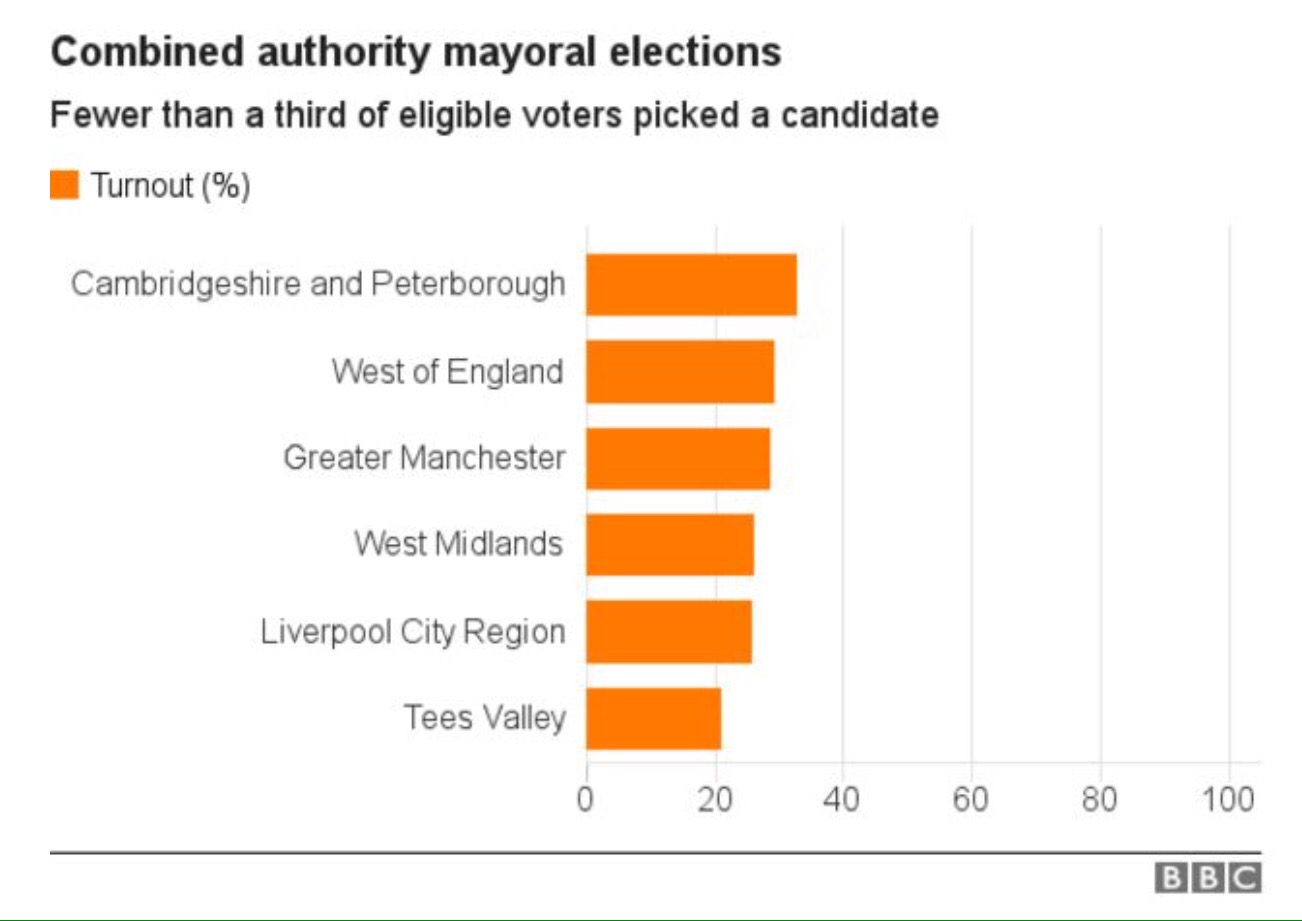
Directly elected regional administration of London was reintroduced in 2000 following a referendum in May 1998, in which there was a 72% majority vote (out of a 34% turnout) for the establishment of the Greater London Authority, to be led by an elected Mayor. Despite the low turnout, the size of the “yes” vote did seem to recognise the need for a unified voice for London that had been missing since the abolition of the Greater London Council in 1986. 
The Labour Government of the time attempted to use elements of the London model to introduce directly-elected regional assemblies across England. However, it became plain that there simply was not the public appetite. Voters rejected the proposal for a regional assembly for the North East 77.9% to 22.1%, on a turnout of 48% in November 2004 and other proposed referendums for the North West and for Yorkshire and the Humber were then dropped. Whilst there is still some nostalgic harking back to the regional planning of the time, the ridiculously complicated structure in the Planning and Compulsory Purchase Act 2004 took the form of regional spatial strategies, prepared by ‘regional planning bodies’, comprising regional assemblies of co-opted local authority members. The process was closely overseen by central Government and indeed each final regional spatial strategy was published by the Government. So, hardly devolution – and with regional boundaries that often had no historic or emotional basis – although a potentially helpful administrative structure for coordinating local authorities and determining local authority housing targets.
Regional spatial strategies, along with all mentions of the “r” word including the regional planning boards, regional assemblies and regional development agencies (save for the London Development Agency, which survived a little longer) were swept away following the coalition Government coming into power in 2010. The new mantra of localism dictated the removal of top-down targets in favour of the bottom-up idea that it would be more effective for local authorities to determine how to meet their and their neighbours’ housing needs via the Localism Act 2011’s “duty to cooperate”, a Cheshire cat’s smile if ever one there was. Coordinated investment into the regions, including application of EU structural funds, became more difficult following the abolition of the regional development agencies, a vacuum only partly filled by LEPs (voluntary local economic partnerships between local politicians and business people). 
But local politicians (the public? I’m not so sure) continued to press for greater devolution of powers to the regions, particularly against the background of the greater autonomy given to Scotland in particular in the run-up to the 2014 Scottish independence referendum (where there was a 55% vote against independence on an 85% turnout – that was clearly a vote that clearly did matter to its electorate). The Government embarked on negotiating a series of ‘devolution deals’ with groups of local authorities. The first deal, to create the Greater Manchester Combined Authority, was announced in November 2014. 
The Cities and Local Government Devolution Act 2016 was, as set out its explanatory notes, “intended to support delivery of the Government’s [2015] manifesto commitment to “devolve powers and budgets to boost local growth in England”, in particular to “devolve far-reaching powers over economic development, transport and social care to large cities which choose to have elected mayors” and “legislate to deliver the historic deal for Greater Manchester”. The Act takes forward a number of reforms which are intended to allow for the implementation of devolution agreements with combined authority areas and with other areas. It is enabling legislation which provides a legislative framework which can be applied flexibly to different areas by secondary legislation.” 

The devolution deals to date are listed on the Local Government Association’s website. The powers agreed to be devolved have been different in each case. The position is well summarised in a House of Commons library briefing paper, Devolution to local government in England (23 November 2016):


It will be seen that some deals include the power to create a spatial plan for the area, and/or the power to establish Mayoral Development Corporations. Some deals will also permit the combined authority to use compulsory purchase orders, with the consent of the local authority in which the land or property is located.

I looked specifically at the West Midlands Combined Authority in my blog post Devo West Mids (24 October 2016). 
So far we have had mayoral elections for six combined authorities, which all took place in May 2017. Turnouts were all very low indeed:

Whilst regional devolution may not capture the attention of voters (in fact I’m sure it is utterly confusing to most), undoubtedly it presently brings the promise of significant funding streams from Government. Professor Janice Morphet has also pointed in her 2016 book Infrastructure Delivery Planning to the work of economist Paul Krugman in showing the growth in national GDP that can result from investment decisions being made at a sub-national level. More practically, big personalities are important. That has been the experience in London – and Greater Manchester and the West Midlands both now have strong Mayors, in the shape of Andy Burnham and Andy Street respectively, who will undoubtedly drive those great city regions in an equivalent way. 

A further election, in the Sheffield City Region, is due to be held in May 2018. Why the delay in Sheffield? The city region, which will control additional spending of £30m a year over the next 30 years, was originally going to include Chesterfield and Bassetlaw (which authorities would thereby be able to participate in the significant government funding available). However, Derbyshire County Council (which would automatically thereby be drawn into the arrangement and which opposed “powers for key services in the town being handed to a Sheffield City Region Mayor”) successfully judicially reviewed the process, alleging consultation flaws in R (Derbyshire County Council) v Barnsley, Doncaster, Rotherham and Sheffield Combined Authority, Secretary of State and Chesterfield Borough Council (Ouseley J, 21 December 2016). Chesterfield is in the county of Derbyshire and Bassetlaw is in the county of Nottinghamshire. Ouseley J accepted that the views of the public should have been, but were not, specifically sought as to whether Chesterfield Borough Council should be a part of the combined authority. The case led first to the Sheffield City Region mayoral election being delayed by a year and then to Chesterfield and Bassetlaw withdrawing their applications for full membership (in the case of Chesterfield after Derbyshire had resolved in June 2017 to carry out a full referendum of all Chesterfield residents). 
The momentum generally appears to have paused. Section 1 of the Cities and Local Government Devolution Act 2016 places a duty on the Secretary of State to provide annual reports to Parliament setting out progress on devolution across England as soon as practicable after 31 March each year. The Local Government Association is concerned that this year’s report has not yet been published.   
We are at an interesting point. 

First, am I being too downbeat about the benefits of further devolution? I see that Lord Heseltine and Ben Rogers are speaking on Giving Power to the People: The Future of Devolution at the Future City Festival on 19 October 2017. Is there currently the political, or public, will?
Secondly, what now for London? In my view, the devolution of power to London (including reducing to an extent the powers of individual boroughs) has been a success. The moves towards greater powers for the Mayor of London have continued, which is welcome, but should there be more? Ben Rogers wrote an interesting FT piece Would more independence for London benefit the nation? on 3 October 2017.

Thirdly, and most importantly, what changes will Brexit bring? For a start we will see an end to EU structural funding, much of which was to be passed to local areas, although the Government has guaranteed any spending of these funds that is agreed before the UK leaves the EU. But more fundamentally, as again Professor Janice Morphet has pointed out, in her 2017 paper (not yet published) to the Oxford Joint Planning Law Conference we risk losing part of the drive towards devolution that arises from the EU’s principles of subsidiarity and fairness, which translate into for instance the application of structural funds and the development of the Trans European Networks which have been an impetus for transport infrastructure investment. 
Ultimately, might it be the case that some devolution is ruled by the heart and some by the head? English devolution may be in the latter category, described indeed this week in EG this week by Jackie Sadek as a “fragile flower”. Let’s hope it’s not trampled upon by politicians with only a March 2019 deadline in mind. 
Simon Ricketts, 6.10.17
Personal views, et cetera

Class Distinctions 2: Student Housing

Happy freshers’ week. 
I blogged recently about how the planning system struggles when it comes to housing for older people. But there are worse problems when it comes to student housing. Some recent press articles are at the end of this post, but first you need to get through some law I’m afraid (there may be an examination on it later). 
For a start, from a legal perspective there is a similarly poor fit with the Use Classes Order.
Shared student living in converted houses has since 2010 (in England, 2016 in Wales) been hived off from use class C3 (residential use) into use class C4, the HMO (“houses in multiple occupation”) use class: “small shared houses occupied by between three and six unrelated individuals, as their only or main residence, who share basic amenities such as a kitchen or bathroom”.
This definition excludes: 
– HMOs in blocks of flats (eg what seems to be the main model these days in relation to purpose built student accommodation blocks, with clusters of self-contained flats, each housing six students, sharing cooking and living accommodation) 

– Houses shared by more than six students.

The background to the creation of C4, which was not all about students, but in part a response to concerns about pressures being caused to communities by high concentrations of HMOs more generally, is well summarised in a House of Commons library briefing paper, Houses in multiple occupation & planning restrictions (14 July 2017). 
By virtue of Part L of the Town & Country Planning (General Permitted Development) (England) Order 2015, unless the relevant local planning authority has made an article 4 direction to contrary effect, planning permission isn’t needed to change from C4 to C3 (residential use), or vice versa. Many university towns and cities have made article 4 directions, requiring planning permission to change from C3 to C4 use, for example Sheffield, Leeds, Loughborough, Leicester, Nottingham, Southampton and Durham to name but a few. 
Against the background of almost universal university expansion, this constraint on supply of converted accommodation, denying much of the already (in most areas at least) expensive PRS market to students, has surely played its part both in further increasing student housing costs and in giving students fewer practical alternatives to living in purpose-built student accommodation, often now built and operated by large specialist student housing providers. 
As far as the planning system is concerned, purpose built student housing blocks are generally treated as “sui generis” (outside any use class) and therefore specific planning policies are required at an individual local planning authority level to control them (or to impose standards in terms of unit size, daylighting and sound insulation). In some ways they now often more closely resemble clusters (stacked high) of quasi C4 HMO style accommodation, with bedrooms in self-contained clusters of six, each with its own kitchen and communal area. 
Planning permission is required to make a material change from a sui generis use. Whether there is a material change in the character of the use is for the decision maker to judge. As long as conditions or section 106 agreement planning obligations aren’t breached, change to, say, co-living may not require planning permission. 
Ensuring that purpose built student accommodation is affordable is a big issue. In recent years we have seen student rent strikes, supported by the NUS. In London, we wait to see what further controls will be proposed in the draft London Plan, now expected on 29 November. In the meantime, there was nothing in the Mayor’s draft housing strategy published on 6 September 2017 (in 236 pages I could only find one passing reference to students). To what extent will the policies set out in the previous Mayor’s March 2016 housing SPG remain? The SPG takes the following approach in relation to purpose built student accommodation (PBSA):

– “providers of PBSA are encouraged to develop models for delivery of PBSA in london which minimise rental costs, via its layout and location, for the majority of the bedrooms in the development and bring these rates nearer to the rate of a affordable student accommodation described below
– requirement for affordable student accommodation where a proposed provider does not have an undertaking with a specified academic institution(s) that specifies that the accommodation will be occupied by students of that institution(s)

– affordability determined by reference to a formula that equates to 55% of average student income. For the academic year 2016/2017 this equated to £5,886 or less and for a 38 week contract a weekly rent of £155. 

– the extent of affordable housing to be secured “should be the maximum reasonable amount subject to viability” (our old friend!)

– to enable PBSA providers to maximise the delivery of affordable student accommodation by increasing the profitability of the development, boroughs should consider allowing the temporary use of accommodation during vacation periods for ancillary uses and should consider setting nil CIL rates for affordable student accommodation. 

– eligibility for affordable student accommodation should be based on assessment of need. 

Now that reading list:

Oliver Wainwright, A new urban eyesore: Britain’s shamefully shoddy student housing (The Guardian, 11 September 2017)

Rhiannon Bury, Student housing may be a property bubble in waiting (Telegraph, 18 September 2017)

Could it be the end of the Newcastle student flat boom? Council set to vote on greater controls (Evening Chronicle? 15 January 2017)

Letter: Students vs Residents – this situation in Bath around housing is not students’ fault (Bath Chronicle, 5 September 2017)

Students in Wales taking out loans to afford ‘luxury’ flats (BBC website, 22 September 2017)

It seems to me that there are various issues to be unpacked here:
– the need for authorities properly to plan for the consequences of increases in student numbers

– competing needs as between between student and general needs housing

– often unjustified “there goes the neighbourhood” concerns about the impacts of students on an area. 

– affordability

– the extent to which universities should retain responsibility for housing their students, affordably and to appropriate quality standards.

Class, discuss. 
Simon Ricketts, 24.9.17
Personal views, et cetera