I’ve seen that planning lawyers and other planning advisers are increasingly tempted to roll out statistics as to likely appeal outcomes as part of the advice being given by clients. By and large, it’s good, I often do it myself.
But I do wonder whether sometimes it is too easy to get misled by the numbers without digging a little bit further. Damned statistics and all that. This post just looks at one truism that I’m increasingly sceptical about: that for an appellant it is better for your appeal to be determined by way of hearing rather than written representations because the statistics demonstrate a higher success rate.
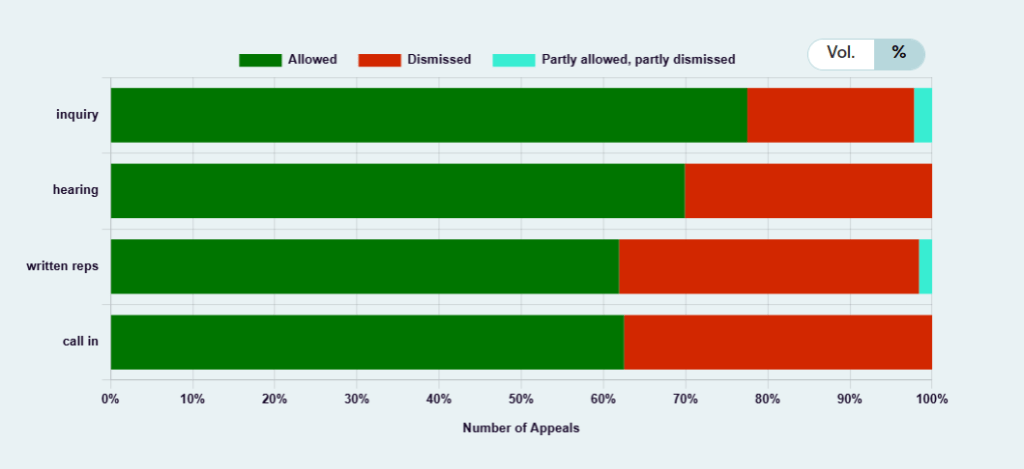
Appeal Finder do some great tables like this one:
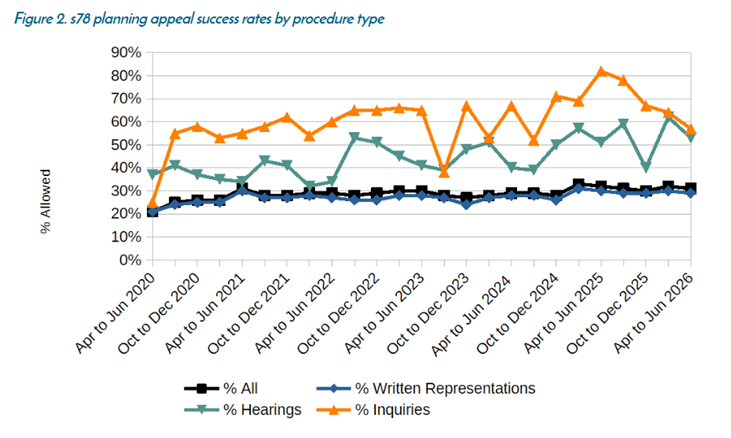
Who wouldn’t look at this and draw an obvious conclusion?
But let’s dig a little deeper. This is an Appeal Finder table which breaks down the percentage of appeals allowed by type of development:
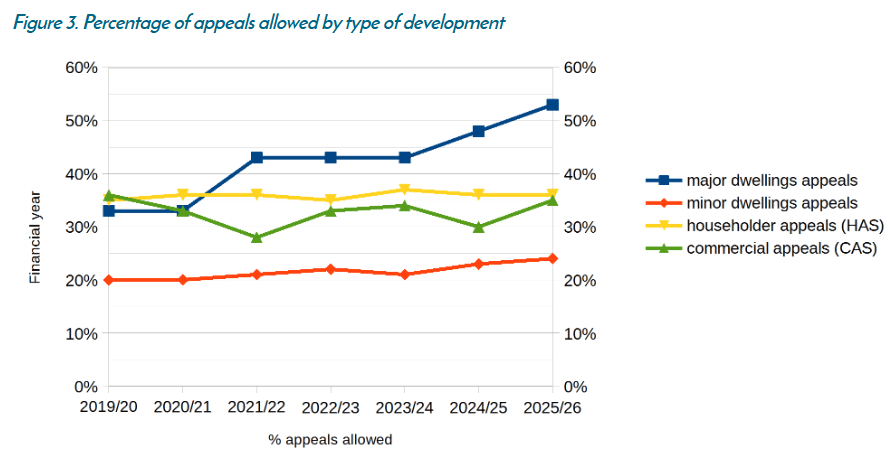
A couple of interesting themes start to take shape:
- Major dwellings appeals (I assume 10+ dwellings) have a significantly greater success rate than commercial appeals – perhaps unsurprising given the positive national policy climate for residential development (look at the increase since 2023/2024), although perhaps that “commercial appeals” basket may also include some appeals for minor works which have not had the level of professional input and attention as more major schemes in terms of (1) whether to appeal in the first place and (2) a proper evidence-based articulation of the case.
- Major dwellings appeals have an even greater success rate than minor dwellings appeals – my points (1) and (2) above, surely.
In fact, my proposition is that your prospects of success as an appellant are not particularly down to whether the appeal is determined by way of written representations or by way of hearing (I’m leaving the question of inquiries out of this – maybe I’ll compare hearings and inquiries in a future post). What is more influential is whether the scale of the scheme is such that there has been that professional input. My points (1) and (2).
You can see the position more clearly if you start to break down dwellings appeals as between schemes for 50 dwellings or more and schemes for fewer than 50 homes.
Smaller schemes are less likely to be approved on appeal than larger schemes, regardless of procedure.
I’m very grateful to my colleague Adam Choudhury for producing some tables from the Compass website, looking at appeals determined since the December 2024 NPPF until this month’s version.
With schemes for fewer than 50 dwellings, a circa 29% success rate for written representations appeals plays circa 40% for hearings. A difference but not huge, bearing in mind that many of those written representations appeals will have been at very much the lower end of the scale and made without any initial professional advice as to prospects of success (i.e. hopeless from the start) and/or not assisted by professional representation.
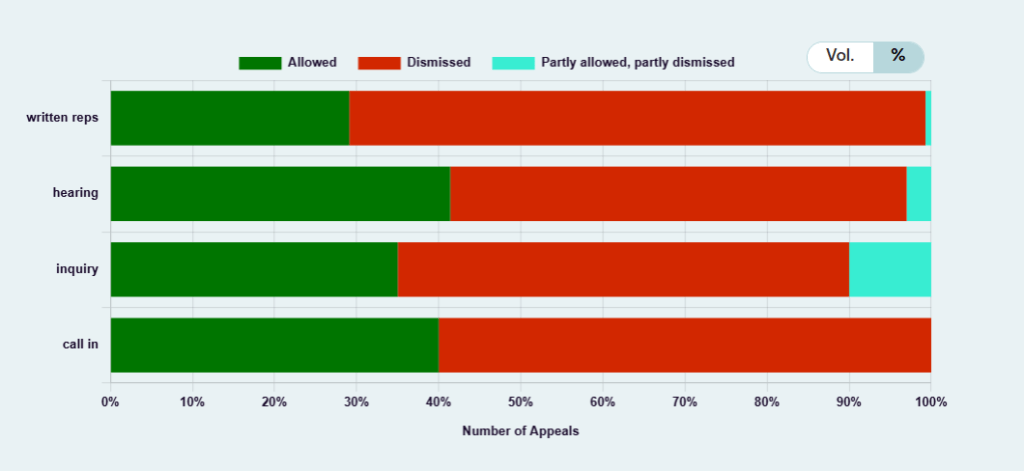
With schemes for 50 dwellings or more the success rate is completely different, a circa 62% success rate for written representations appeals plays circa 70% for hearings. Yes, still a distinction but the huge distinction is with the earlier table. For written representations appeals 62% plays circa 29%. The vast majority of written representations appeals are for those smaller schemes, of fewer than 50 dwellings (1,959 over the period as opposed to 63 for schemes of 50 dwellings or more), which makes it so misleading for anyone to point to anything like the first table in this post as a reason not to go down the written representations route!
Given that with the streamlined procedures now in place for written representations appeals resulting from applications submitted from 1 April 2026 (see my 15 February 2026 blog post Don’t Be An April Fool: Written Reps Planning Appeals Are About To Get Faster But Also Riskier ), there’s a risk that appellants miss out on faster decision making simply through fear that there is an inherent material disadvantage in proposing, or being allocated, the written representations route. I wonder whether advisers and advocates in relying on the overall stats are really in part backing up a “gut feel” that (1) if only they can eyeball the inspector and address him or her face to face they will inevitably improve the appellant’s prospects and/or that (2) a written representations appeal may be determined by a less experienced inspector and/or one paying less attention to the submitted detail. The small delta in percentage prospects of success for similar schemes via the two processes does, I suggest, cast doubt as to whether these are in fact significant factors and that the most important question is which is the procedure that most sensibly is going to give the inspector the necessary understanding of the appellant’s case, which after all is by definition a case based on written documents, drawings and an understanding of the site and surroundings.
(With the new written representations procedure I know there is also a great fear out there amongst appellant teams about the restriction on introducing new material at the appeal stage. In my view the challenge this creates in terms of needing to ensure that your application is “appeal ready” is usually outweighed by the benefits of a faster simpler process without the LPA and third parties able to backfill their case but that’s a topic for another day).
If I have gone any way at all to bust this myth about written representations appeals, I do think there is another much more uncomfortable myth to be busted: that we have a quasi -judicial, rational, development management system such that any inspector is usually likely to reach the same determination in relation to any particular case. The larger the scheme the clearer it is to me that this is not the case, for an obvious reason: a large element of the decision-making process involves determining how much weight to give to various material considerations, without prescriptive national guidance on calibration. I tried to address this in my 9 February 2024 blog post The Weighting Game. The new NPPF is more prescriptive, more rule-based, but inevitably a huge amount is still left to that black box we call “planning judgment” and that inevitably brings an element of our personal values to the table, however sub-consciously, in the balance of, for instance, heritage, economy, social issues, climate. Appeal Finder have a table identifying each planning inspector’s record in terms of his or her decision making. Whilst again we need to distinguish causation and correlation (a leading surgeon may have fewer successful patient outcomes than a surgeon doing less challenging cases), it always feels uncomfortable to me (on behalf of the client sitting next to me and in fact on behalf of the whole system that we all in some way serve) when the KC’s advice on appeal prospects is along the lines of between x and y % but dependent on knowing which inspector is appointed because for instance if it is going to be Mr or Ms A this is going to be very difficult but if it is going to be Mr or Ms B we stand a much better prospect. The client then asks “What can we do if we get Mr or Ms A?” and we all shrug our shoulders just like that emoji.
I would welcome your thoughts. All this seems to me to be pretty important to the roles that we all play in guiding clients through an uncertain, opaque system, and to how we make it clearer and more certain.
And on that theme…
I was so proud this week to see two initiatives by Town Legal colleagues come to fruition.
First, MHCLG’s consultation on Standard planning agreements for medium-sized sites (25 August 2026), with a series of proposed standard templates for section 106 agreements and unilateral undertakings in relation to residential developments of between 10 and 49 homes and up to 2.5 hectares. These initial templates comprise draft standard clauses, schedules for financial contributions, councils’ covenants and affordable housing schedules, including a discretionary cascade mechanism (to be used where authorities consider appropriate) in the case of full permissions. Meeta Kaur has led a large Town Legal team in this work for the Planning Advisory Service. We invite and encourage everyone to respond to the consultation process, by MHCLG’s 11:59 20 October deadline.
Secondly, a brilliant new podcast series on future facilities for women’s football, Built For Her Game, featuring Town Legal’s Victoria McKeegan alongside Sarah Rock (Boodle Hatfield), and Rebecca Burnhams (Quod). The first two, short and snappy, episodes are out now. The second episode is the first of a series of interviews with leaders in the sector, this first being Sue Day, director of women’s football at the Football Association. No mentions so far of the NPPF or of appeals or of anything at all like that. What not to like?
Simon Ricketts., 29 August 2026
Personal views, et cetera
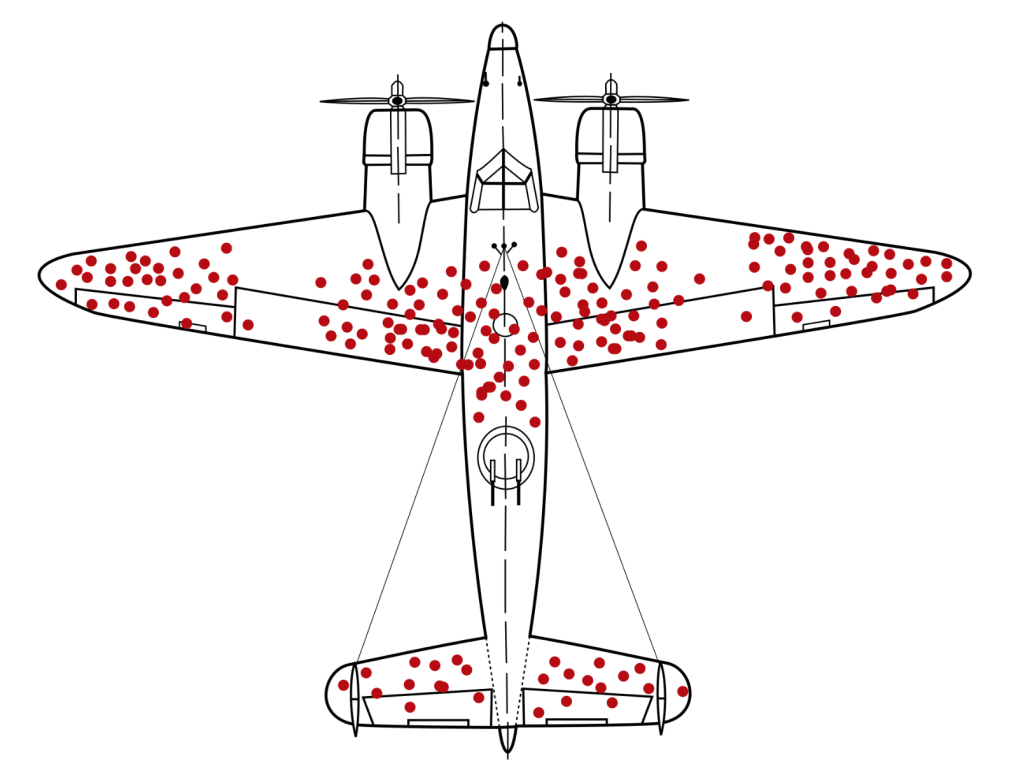
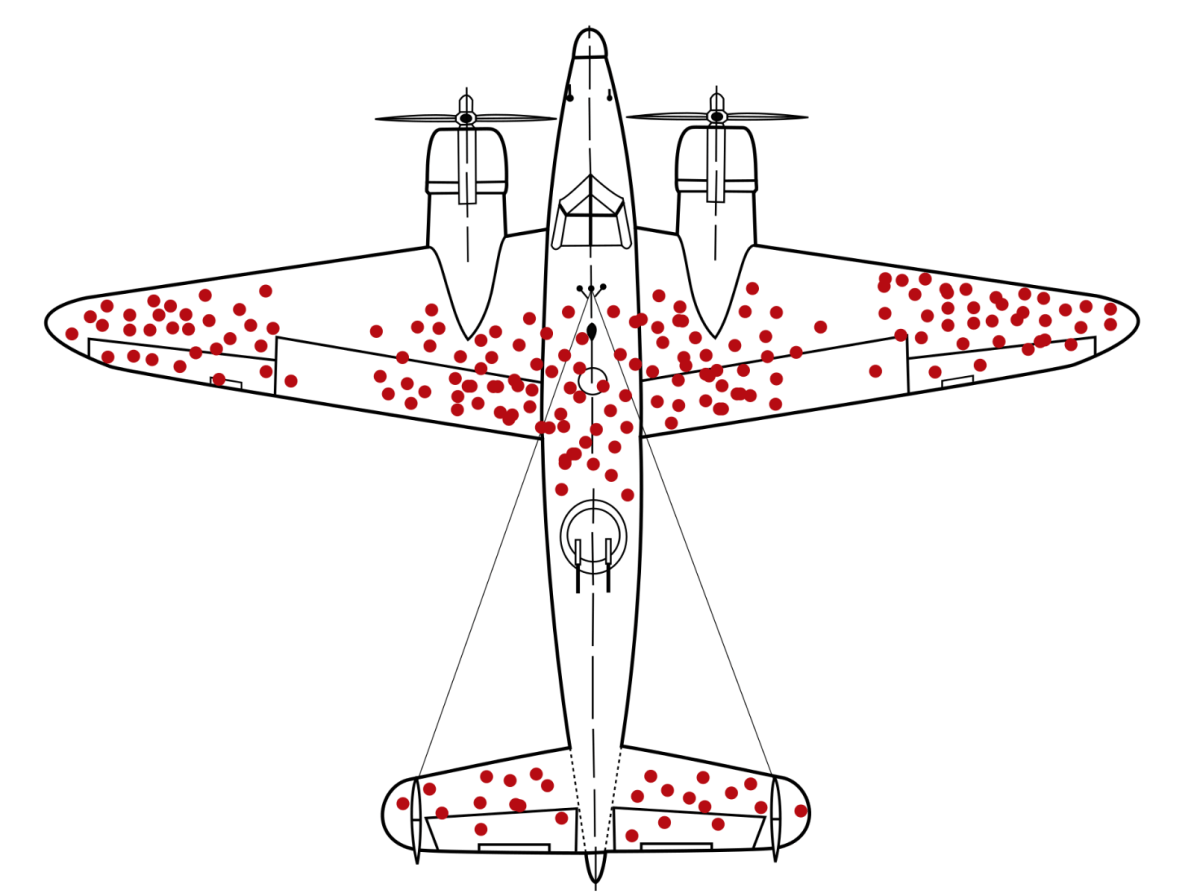
[Image from Wikipedia of the classic visualisation of survivorship bias in statistics: It shows the hypothetical pattern of damage sustained by an aircraft that returned from combat. Reinforcing aircraft just in these areas would overlook the question of where non-surviving planes had been struck, fatally].


