To maximise the prospect of securing planning approval, scheme promoters need to ensure that their schemes press as many of the relevant buttons in the new NPPF as possible.
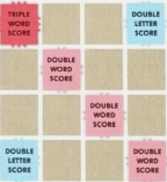
I have counted 21 of them, which I set out below. Most have detailed qualifying criteria to meet, but hopefully this will allow you to see the wood for the trees in applying the new policy framework. Not triggering the particular policy may in some cases count against you in the planning balance, so this is not quite just the Scrabble approach of always looking to maximise use of those triple word scores.
S3: Presumption in favour of sustainable development
1. Decisions on development proposals should apply a presumption in favour of sustainable development. This means:
a. Policy S4 in this Framework should be applied when considering development proposals within settlements;
b. Outside settlements, policy S5 should be applied; and
c. In all locations, development proposals that accord with both an up-to-date development plan and the decision-making policies in this Framework should be approved without delay.
S4: Principle of development within settlements
- Development proposals within settlements should be approved unless the benefits of doing so would be substantially outweighed by any adverse effects, when assessed against the national decision-making policies in this Framework.
S5: Principle of development outside settlements
- Only certain forms of development should be approved outside settlements, as set out in the following list. These should be approved, unless the benefits of doing so would be substantially outweighed by any adverse effects, when assessed against the national decision-making policies in this Framework.
For developments outside settlements, falling within the a to j list is vital. If your land is green belt the development proposed must not be “inappropriate development” and must therefore fall within one of the a to h criteria in policy GB7 1 – so grey belt development, for instance, also qualifies for this strong pro-development presumption.
CC2: Mitigation of climate change
2. Substantial weight should be given to the benefits of improving the energy efficiency of existing buildings and/or drawing energy from district heat networks, renewable and low carbon sources (including through the installation of heat pumps and solar panels where these do not already benefit from permitted development rights) where this would be achieved through proposals for development.
CC3: Adaptation to climate change
2. Substantial weight should be given to the benefits of improving the resilience of existing buildings and public spaces to anticipated climate change impacts where this would be achieved through proposals for development.
HO7: Meeting the need for homes
1. In applying the policies in this Framework, substantial weight should be given to the benefits of providing homes which will contribute towards meeting the evidenced accommodation needs of the community, as identified through needs assessments prepared for the area of the local planning authority and other relevant evidence. This includes, but is not limited to, homes needed for different groups assessed under policy HO1.
E2: Meeting the need for business land and premises
1. To support business growth, substantial weight should be given to:
a. The economic benefits of proposals for commercial development which allow businesses to invest, expand and/or adapt; especially where this would support the economic vision and strategy for the area, the implementation of the Industrial Strategy, support improvements in freight and logistics and/or reflect proposals for Industrial Strategy Zones and AI Growth Zones; and
b. Benefits for domestic food production, animal welfare and/or the environment which can be demonstrated through proposals for development for farm and agricultural modernisation.
TC2: Development in town centres
1. In considering proposals for development in town centres, substantial weight should be given to the benefits of:
a. Supporting the overall vitality and viability of the centre, including where this can be achieved through the diversification of uses, intensification and provision of residential accommodation (provided this would not conflict with policies in the development plan for specific locations); and
b. Improving or retaining access to local shops and other facilities which provide day-to day services for the local community.
CO1: Proposals for telecommunications infrastructure
1. In considering proposals for the expansion or upgrading of electronic telecommunications networks, substantial weight should be given to the benefits of maintaining or improving network coverage, capacity, reliability and resilience, including where significant improvements are required such as along rail corridors. This includes, but is not limited to, providing for next generation wireless technologies (such as standalone 5G), gigabit capable broadband connections and supporting infrastructure such as fibre exchanges.
W3: Renewable and low carbon energy development and electricity network infrastructure
1. In considering proposals for renewable and low-carbon energy development and electricity network infrastructure, substantial weight should be given to:
a. The benefits for improving energy security, supporting economic development and/or the transition to a net zero future;
b. In the case of applications for the re-powering and life-extension of existing sites, the additional benefit of utilising an established site for this purpose; and
c. The contribution that small-scale and community-led renewable and low carbon energy projects can make to reducing greenhouse gas emissions, along with their associated economic and social benefits.
W4: Water infrastructure
1. In considering proposals for water supply, drainage and wastewater development, substantial weight should be given to the benefits of: a. Providing the capacity needed to serve proposed development and/or improving the security of supply and capacity for existing users (both residential and commercial, including agricultural users); and
b. Improving water quality and reducing water-borne pollution.
M3: Assessing the benefits of mineral development
1. In assessing proposals for minerals development, substantial weight should be given to the benefits of mineral extraction and processing, including to the economy.
L2: Making effective use of land
1. Substantial weight should be given to the benefits where a development proposal would achieve one or more of the following:
a. Remediating despoiled, degraded, derelict, contaminated or unstable land;
b. Making better use of vacant and underutilised land and buildings (such as: by bringing back into residential use empty homes and other suitable buildings; converting space above shops; redeveloping underutilised retail and business sites; and building on or above service yards, lock-ups, car parks and other transport infrastructure which are no longer required);
c. Making effective use of previously developed land and buildings through temporary uses, in situations where alternative development is anticipated within a reasonable period (including as a result of the land being allocated for an alternative purpose in the development plan); or
d. Creating additional homes or floorspace within settlements by using the airspace above existing residential and commercial premises, or through sensitive redevelopment or additional development within existing plots (including, but not limited to, the addition of mansard roofs, proposals to fill gaps in the existing roof line, the introduction of higher buildings at street corners and additional units within residential curtilages).
GB8: The Golden Rules
2. In considering applications for major development involving the provision of housing on land released from the Green Belt through plan preparation or review, or on sites in the Green Belt subject to a planning application, substantial weight should be given to the importance of complying with the Golden Rules.
DP3: Key principles for well-designed places
5. Substantial weight should also be given to outstanding or innovative designs which promote high levels of sustainability, or which help raise the standard of design more generally in an area, so long as they are consistent with the overall form and layout of their surroundings.
HC4: Proposals for new and improved community facilities, public service infrastructure and development providing public health benefits
1. Substantial weight should be given to the benefits where:
a. New or improved public service infrastructure or community facilities would be provided; and
b. Development proposals would make a demonstrable contribution towards promoting good health, preventing ill-health, reducing health inequalities or supporting social interaction in the local community (such as, but not limited to, the provision of new recreation facilities, meeting places and opportunities to grow or purchase healthier food).
P6: Land and operations for defence and public safety
1. Substantial weight should be attached to the importance of sites, activities, facilities and infrastructure required to maintain and enhance defence capability, or whose primary purpose is public safety (including uses such as coastal protection works, coastguard and lifeboat facilities and emergency services telecommunications infrastructure), when considering:
a. Proposals for such development (whether through modernisation, intensification, redevelopment or expansion for operational and related purposes); and
b. Proposals which could affect their operational activity and capability, including situations where other development should only proceed where it can make alternative or replacement provision for defence or public safety operations which would otherwise be affected, or where noise from operational activities could affect the proposed development (in which case policy P4 should also be applied).
HE6: Proposals affecting designated heritage assets
- Development proposals which would have a positive effect on a designated heritage asset should be supported.
HE7: Decisions on non-designated heritage assets
- Development proposals which would have a positive effect on a non-designated heritage asset should be supported.
HE8: World Heritage Sites
- Proposals that conserve those elements of a World Heritage Site or its setting, including any buffer zone, that make a positive contribution to it or which better reveal its significance, should be supported.
HE9: Conservation areas
- Proposals which conserve those elements of a conservation area that make a positive contribution to the area (or which better reveal its significance) should be supported.
Simon Ricketts, 31 August 2026
Personal views, et cetera