Starter Homes Were A Non Starter – What Future For First Homes?

Government is consulting on the “design and delivery” of First Homes. The deadline for responses is 3 April 2020. First Homes was of course a manifesto pledge and so there are no questions as to whether the concept itself is supportable or indeed practical.

That is a shame, given the failure of the Starter Homes initiative after so much work and public expenditure. As explained in my 4 March 2017 blog post Definitely Maybe: Defining Affordable Housing, an elaborate structure was arrived at by way of chapter 1 of the Housing and Planning Act 2016 and a technical consultation by the Government in March 2016:

– a legal requirement that 20% of new homes in developments should be starter homes, ie

⁃ to be sold at a discount of at least 20% to open market value to first time buyers aged under 40. 

⁃ Price cap of £250,000 (£450,000 in London)

– The restriction should last for a defined number of years, the first suggestion being five years, replaced with the concept of a tapered restriction to potentially eight years

– Commuted sums in lieu of on site provision for specified categories of development, eg build to rent.

The Government’s response to the technical consultation then significantly watered down the starter home concept, to the extent that the legislation was surplus to requirements (it is still on the statute book, just left hanging):

– There would be no statutory requirement on local planning authorities to secure starter homes, just a policy requirement in the NPPF, which was to be amended accordingly. 

– Rather than requiring that 20% of new homes be starter homes, the requirement would be that 10% of new homes will be “affordable housing home ownership products” so could include shared equity or indeed low cost home ownership. 

– maximum eligible household income of £80,000 a year or less (or £90,000 a year or less in Greater London 

– 15 year restriction

– No cash buyers, evidence of mortgage of at least 25% loan to value

– Only be applicable to schemes of ten units or more (or on sites of more than 0.5h). 

The only reference to starter homes in the February 2019 version of the NPPF is in the glossary’s definition of affordable homes:

b) Starter homes: is as specified in Sections 2 and 3 of the Housing and Planning Act 2016 and any secondary legislation made under these sections. The definition of a starter home should reflect the meaning set out in statute and any such secondary legislation at the time of plan-preparation or decision-making. Where secondary legislation has the effect of limiting a household’s eligibility to purchase a starter home to those with a particular maximum level of household income, those restrictions should be used.”

Paragraph 64 of the NPPF of course requires:

Where major development involving the provision of housing is proposed, planning policies and decisions should expect at least 10% of the homes to be available for affordable home ownership, unless this would exceed the level of affordable housing required in the area, or significantly prejudice the ability to meet the identified affordable housing needs of specific groups. Exemptions to this 10% requirement should also be made where the site or proposed development:

a) provides solely for Build to Rent homes;

b) provides specialist accommodation for a group of people with specific needs (such as purpose-built accommodation for the elderly or students);

c) is proposed to be developed by people who wish to build or commission their own homes; or

d) is exclusively for affordable housing, an entry-level exception site or a rural exception site.”

Going back to the NPPF affordable housing definition, aside from starter homes the other two listed categories of affordable home ownership are:

c) Discounted market sales housing: is that sold at a discount of at least 20% below local market value. Eligibility is determined with regard to local incomes and local house prices. Provisions should be in place to ensure housing remains at a discount for future eligible households.

d) Other affordable routes to home ownership: is housing provided for sale that provides a route to ownership for those who could not achieve home ownership through the market. It includes shared ownership, relevant equity loans, other low cost homes for sale (at a price equivalent to at least 20% below local market value) and rent to buy (which includes a period of intermediate rent). Where public grant funding is provided, there should be provisions for the homes to remain at an affordable price for future eligible households, or for any receipts to be recycled for alternative affordable housing provision, or refunded to Government or the relevant authority specified in the funding agreement.”

Of these different affordable home ownership options (using the Government jargon, I appreciate that what is “affordable” is an open question), starter homes were abandoned by the Government as a concept after a huge amount of money and time had been spent. The National Audit Office’s Investigation into Starter Homes (4 November 2019) found as follows:

In April 2015, the Conservative Party manifesto committed to “200,000 Starter Homes, which will be sold at a 20% discount and will be built exclusively for first-time buyers under the age of 40”. The November 2015 Spending Review subsequently provided £2.3 billion to support the delivery of 60,000 Starter Homes (of the 200,000 previously announced). The Housing and Planning Act (2016) set out the legislative framework for Starter Homes and the Department ran a consultation on Starter Homes Regulations (the regulations) between March and June 2016.

Between 2015 and 2018, government’s policy towards Starter Homes shifted.

In May 2018, the Minister of State for Housing and Planning stated that the government had spent an estimated £250 million of the Starter Homes Land Fund. In July 2018, the Department clarified that it had spent £250 million buying land to build affordable properties from two funds, the Starter Homes Land Fund and the Land Assembly Fund, with work under way to get the land ready for development, but that building had not yet started.”

“No Starter Homes have been built to date.”

“The Starter Homes legislative provisions are not yet in force.”

“The Department no longer has a budget dedicated to the delivery of Starter Homes.”

“Between 2015-16 and 2017-18, the Department spent almost £174 million preparing sites originally intended for building Starter Homes.”

“In 2015-16, Homes England spent £15.4 million of the Starter Homes 2015 funding preparing brownfield land.”

“Since August 2015 the Department has spent £6.45 million supporting local authorities through the Programme.”

“In 2016-17 and 2017-18, the Department spent £151 million under the

[Starter Homes Land Fund], but the spending has not supported the building of Starter Homes.”

“In 2017-18, the Department spent £97 million from the SHLF, but under [Land Assembly Fund] criteria, on acquiring land needing work and preparing it for the market”

No doubt some of the monies earmarked for starter homes may have ended up going towards other housing and affordable housing initiatives (I am not clear on that) but surely what an embarrassment this is for whoever first came up with the bright idea that was starter homes.

However, moving on from that failure, of course the thing to do is to learn from past mistakes? Why didn’t it work? What could have been done better? This is the essence of “black box thinking”. I was certainly not the only one pointing out the potential complexities that might prove its downfall (See my 21 June 2016 blog post Valuing Starter Homes).

But of course there is a insatiable political hunger for new ideas for manifestos, and in the December 2019 Conservative manifesto a concept of First Homes was trumpeted as the new solution to “making the dream of home ownership a reality for everyone” (to quote from the latest consultation document).

The initiative was formally launched on 7 February 2020 with a one page guide and more detailed consultation document.

The headlines are set out in the guide:

• First Homes are flats and houses built on developments up and down the country. They will be no different from other properties except they will be sold with a discount of at least 30 percent.

• They will be sold to local people who want to stay in the community where they live or work but are struggling to purchase a home at market prices.

• They will be prioritised for first-time buyers, serving members and veterans of the Armed Forces, and key workers, such as nurses, police and teachers.

• The discount will be passed on to future buyers when First Homes are resold so more people can be helped onto the ladder.

Jennie Baker at Lichfields has written an excellent summary First Homes: discounted market housing that actually delivers? (10 February 2020).

There has been widespread concern as to whether this new product (however it may be delivered – and there is going to be a statutory or policy requirement for it to be provided as part of the housing tenure mix on major schemes) will be at the expense of other more needed or more efficient affordable housing products (see for instance the piece by Ruth Davison, chief executive of Islington and Shoreditch Housing Association, First Homes won’t extend homeownership and will decimate supply of homes for those most in need) and of course not “affordable” for many (see for instance Shelter’s comments in the 16 February 2020 Guardian piece Discounted housing scheme out of reach of most first-time buyers) and I personally see as many potential valuation pitfalls as identified with starter homes – and surely there is a greater difficulty “selling” a discount product to purchasers where, unlike with starter homes, that discount will remain in perpetuity.

If you are not now going to MIPIM, why not consider the questions in the consultation paper instead? They neatly encapsulate many of the current uncertainties as to how this is all going to work:

Q1.

a) Do you agree with a minimum discount of 30% (but with local flexibility to set a higher one)?

b) If not, what should the minimum discount be? i. 20%

ii. 40%

iii. Other (please specify)

Q2.

a) Should we set a single, nationally defined price cap rather than centrally dictate local/regional price caps?

b) If yes, what is the appropriate level to set this price cap? i. £600,000

ii. £550,000 iii. £500,000 iv. £450,000

v. Other (please specify)

Q3.

a) If you disagree with a national price cap, should central Government set price caps which vary by region instead?

b) If price caps should be set by the Government, what is the best approach to these regional caps?

i. London and nationwide

ii. London, London surrounding local authorities, and nationwide

iii. Separate caps for each of the regions in England iv. Separate caps for each county or metropolitan area

v. Other (please specify)

Q4.

Do you agree that, within any central price caps, Local Authorities should be able to impose their own caps to reflect their local housing market?

Q5.

Do you agree that Local Authorities are best placed to decide upon the detail of local connection restrictions on First Homes?

Q6.

When should local connection restrictions fall away if a buyer for a First Home cannot be found?

i. Less than 3 months

ii. 3 – 6 months

iii. Longer than 6 months

iv. Left to Local Authority discretion

Q7.

In which circumstances should the first-time buyer prioritisation be waived?

Q8.

a) Should there be a national income cap for purchasers of First Homes?

b) If yes, at what level should the cap be set?

c) Do you agree that Local Authorities should have the ability to consider people’s income and assets when needed to target First Homes?

Q9:

Are there any other eligibility restrictions which should apply to the First Homes scheme?

Q10.

a) Are Local Authorities best placed to oversee that discounts on First Homes are offered in perpetuity?

b) If no, why?

Q11.

How can First Homes and oversight of restrictive covenants be managed as part of Local Authorities’ existing affordable homes administration service?

Q12.

How could costs to Local Authorities be minimised?

Q13.

Do you agree that we should develop a standardised First Home model with local discretion in appropriate areas to support mortgage lending?

Q14.

Do you agree that it is appropriate to include a mortgage protection clause to provide additional assurance to lenders?

Q15.

For how long should people be able to move out of their First Home and let it out (so it is not their main or only residence) without seeking permission from the Local Authority?

i. Never

ii. Up to 6 months

iii. 6- 12 months

iv. Up to 2 years

v. Longer than 2 years vi. Other (please specify)

Q16.

Under what circumstances should households be able to move out of their First Home and let it for a longer time period? (Tick all that apply)

i. Short job posting elsewhere

ii. Deployment elsewhere (Armed Forces)

iii. Relationship breakdown

iv. Redundancy

v. Caring for relative/friend

vi. Long-term travelling

vii. Other (please specify)

Q17.

Do you agree that serving members and recent veterans of the Armed Forces should be able to purchase a First Home in the location of their choice without having to meet local connections criteria?

Q18.

What is the appropriate length of time after leaving the Armed Forces for which veterans should be eligible for this exemption?

i. 1 year

ii. 2 years

iii. 3-5 years

iv. Longer than 5 years

Q19.

Are there any other ways we can support members of the Armed Forces and recent veterans in their ability to benefit from the First Homes scheme?

Q20.

Which mechanism is most appropriate to deliver First Homes?

i. Planning policy through changes to the National Planning Policy Framework and guidance

ii. Primary legislation supported by planning policy changes

Q21.

Which do you think is the most appropriate way to deliver First Homes?

i. As a percentage of section 106 affordable housing through developer contributions

ii. As a percentage of all units delivered on suitable sites

Q22.

What is the appropriate level of ambition for First Home delivery?

i. 40% of section 106

ii. 60% of section 106

iii. 80% of section 106

iv. Other (please specify

Q23.

Do you agree with these proposals to amend the entry-level exception site policy to a more focused and ambitious First Homes exception site policy?

Q24.

a) Do you think there are rare circumstances where Local Authorities should have the flexibility to pursue other forms of affordable housing on entry-level exception sites, because otherwise the site would be unviable?

b) If yes, what would be an appropriate approach for Local Authorities to demonstrate the need for flexibility to allow other forms of affordable housing on a specific entry- level exception site?

Q25.

What more could the Government do to encourage the use of the existing rural exception site policy?

Q26.

What further steps could the Government take to boost First Home delivery?

Q27.

Do you agree that the proposal to exempt First Homes from the Community Infrastructure Levy would increase the delivery of these homes?

Q28.

Do you think the Government should take steps to prevent Community Infrastructure Levy rates being set at a level which would reduce the level of affordable housing delivered through section 106 obligations?

Q29.

a) What equality impacts do you think the First Homes scheme will have on protected groups?

b) What steps can the Government take through other programmes to minimise the impact on protected groups?

Q30.

Do you have any other comments on the First Homes scheme?

Obviously there is a place for discount to market “for sale” products, as part of the affordable housing mix on a major project, and obviously local connection/key worker restrictions need to play an important role, but let’s

⁃ be really careful that the First Homes concept does not squeeze out other affordable housing options for which there may be greater need, or through inefficiency place a greater strain on project viability and consequently the overall monies available for affordable housing

⁃ ensure that the regime is loophole-proof, straight-forward and fair, however mutually inconsistent those aspirations may be (cf CIL)

⁃ (above all else) learn from that Starter Homes failure.

Simon Ricketts, 29 February 2020

Personal views, et cetera

Out Of Time

Cases about missed time limits give many of us sleepless nights, so (rapid eye movement) you might want to look away now.

I’m fairly sure that Laing J’s judgment from last September in R (Bellamile Limited) v Ashford Borough Council (Laing J, 19 September 2019), about a missed deadline for challenging a local plan under section 113 of the Planning and Compulsory Purchase Act 2004, only appeared online last week. I’ll deal with that after belatedly bringing you up to date as to what happened in the Croke litigation saga after my 7 April 2018 blog post Fawlty Powers: When Is A Permission Safe From Judicial Review?

Croke

At the time I wrote that blog post, Mr Croke, who had missed the deadline for making a challenge under section 288 of the Town and Country Planning Act 1990 to an inspector’s decision to allow a planning appeal, had secured permission from the Court of Appeal to appeal from a ruling of the High Court that the deadline should not extended.

The full hearing subsequently took place in October 2018. The facts are set out in the judgment, R (Croke) v Secretary of State (Court of Appeal, 1 February 2019):

Mr Croke was aware that the six-week period under section 288 expired on 23 March 2016, which was the Wednesday before the Easter Bank Holiday. He was also aware that on each working day – that is, on every day from Monday to Friday – the doors of the Administrative Court Office in the Royal Courts of Justice are closed at 4.30 p.m. He intended to go to the court office himself on 23 March. But he missed his train at Haddenham and Thame Parkway railway station, and knowing he would not be able to get to the court office before it closed, he sent an email to Mr Miller asking him to lodge the application on his behalf. In his letter to the court dated 26 April 2016 Mr Croke said he “returned home and emailed the Application, signed Statement of Facts and Grounds and a copy of the Decision being challenged, to Mr … Miller, who was located just a few minutes from the Court and who agreed to act for [him] in submitting the application on his behalf”. However, his attempt to get the Statement of Facts and Grounds to Mr Miller by email at 3.59 p.m. failed, because he mistyped Mr Miller’s email address. He eventually succeeded in sending the document to Mr Miller at 4.06 p.m. Mr Miller said in his witness statement (in paragraph 1):

“1. … I did … at 16.25 hrs attended [sic] at Royal Courts of Justice … on behalf of the claimant, in an attempt to seal the section 288 on behalf of the claimant; I was refused entry by security. The adult male security guard stated the counters were closed.”

In his letter of 26 April 2016 Mr Croke added this:

“… Despite [Mr Miller’s] pleading with them to allow him to proceed to the counter he was refused entry. …”.

At 5.09 p.m. Mr Miller sent an email to Mr Croke to tell him what had happened.

On 24 March, Maundy Thursday, Mr Croke himself went to the Administrative Court Office, arriving there at about 3.25 p.m. There was a queue. Mr Croke reached the front of the queue at about 5 p.m. and attempted to file his application using a standard Part 8 claim form (form N208). A member of the court staff told him he had used the wrong form and would have to file a Planning Court claim form (form N208PC) instead. He gave Mr Croke form N208PC but refused his request that he be allowed to complete it and file it straight away. He told him to return with the completed form N208PC on the next working day. Mr Croke did so on 29 March 2016, the Tuesday after the Easter Bank Holiday weekend, filing his application on the correct form.”

The two issues were (1) whether the statutory period for challenging the Secretary of State’s decision could be extended by a single day from 23 to 24 March 2016 and (2) if so whether from 24 to 29 March 2016.

Traditionally, time limit provisions, such as the six weeks deadline in section 288 for commencing proceedings, are absolute (although where the last day is a day when the court is closed the deadline is extended to the following day – the so-called Kaur v Russell principle – and the deadline is also in principle capable of being extended where there would otherwise be “an unjustifiable violation of human rights”). The position is less absolute where there is an error in a claim form (or the wrong claim form is used) but the filing is within time – the court has discretion to allow the error to be corrected.

Mr Croke argued that the Kaur v Russell principle should be extended to a claimant a further working day “where a prospective litigant had been inside the court building within normal court working hours but had then been prevented from lodging his or her claim on that day by some action or inaction on the part of staff employed within the building, or by some other unforeseen event within the responsibility of the court over which he or she had no control, that day should be treated as being a “dies non”. This would also apply, for example, to a failure of the court’s IT system that had the same effect. Certainty for all parties involved in the proceedings could be safeguarded by ensuring that a time limit would never be extended by more than a single day, and by requiring a litigant in this situation to put all parties with standing on notice, so that they would not rely on the decision under challenge – as Mr Croke had done in a letter to the council dated 23 March 2016. Mr Croke did not seek to support his argument with a submission that the court would in any event have a discretion to extend the statutory time limit on human rights grounds.”

The court did not consider that there was any justification for extending the principle. “To extend it to accommodate the unfortunate facts of a particular case such as this would be to undermine it.” The court went on to consider whether it should exercise a discretion to extend time, on human rights grounds but saw no basis for this. The six weeks’ deadline was contrasted with extradition proceedings: “The relevant documents here would have not been hard to assemble; they should all have been in Mr Croke’s possession. And the drafting of the grounds would not have been an onerous task, even for an applicant who had not instructed a lawyer to do it. This is in stark contrast to the situation of the appellant in Pomiechowski who was in custody, facing extradition, and had only seven days to make his appeal.”

The question of whether there could be a further extension from 24 to 29 March 2016 was accordingly academic, although the court was sympathetic in the circumstances, there having been errors on the part of the court on terms of the references to prescribed forms in its guidance, and given that the form which Mr Croke used contained the “essential content, including the grounds on which the challenge was made”.

So near and yet so far.

Bellamile

R (Bellamile Limited) v Ashford Borough Council (Laing J, 19 September 2019) relates to a claim, made out of time, seeking to challenge the adoption of the Ashford local plan. The facts are set out in detailed and plain terms at paragraphs 8 to 20 but can be summarised as follows:

The last day for making the challenge was 4 April 2019. A paralegal at the firm acting for the claimant took the claim bundle to the Administrative Court at about 3.35 on that last day. She had a cheque for £154, which is the right fee for judicial review claims, but is the wrong fee for a statutory review claim (which this was). She was turned away on the basis that the fee should have been £528. An email went back to the solicitor dealing with the matter from another paralegal communicating some internally contradictory information, suggesting that a different court form (one for a judicial review claim, which this wasn’t) was required as well as the higher fee.

On 5 April 2019, the day after the time limit, the claim was filed using a judicial review claim form and the judicial review fee was paid (£154). The solicitor subsequently on 13 May 2019 asked the court to treat the claim as if it had been made under the statutory review claim procedure, but without any “application for an extension of time for filing, production of the replacement claim form, or any offer of the correct fee at that stage”. These were provided on 23 May, with a request for an extension of time.

In her judgment, after rehearsing these facts, Laing J first deals with the substantive grounds of challenge to the plan and rejects them – so the question of whether the court had jurisdiction to hear the claim in the first place was potentially only of academic interest. However she goes on to consider whether the claim was out of time, reviewing the previous cases, including Croke.

First, she rejects any suggestion that the merits of a claim are relevant to the exercise of any exceptional jurisdiction to extend time.

Secondly, she finds that there is nothing in the statutory scheme for challenging local plans which gives rise to a discretion to extend on human rights grounds. But in any event she is not satisfied that the claimant has “personally done all that he can to bring and notify the claim timeously”, pointing to various unexplained gaps in the evidence before the court and lack of contemporaneous evidence as to what actually happened on that last filing date.

Out of time.

It’s surprising how often these sorts of issues arise – memories for instance of late, and therefore rejected, challenges to the Thames Tideway Tunnel development consent order (Challenge by council to London super-sewer plans dismissed as “out of time” Local Government Lawyer, 19 January 2015 and also the “Blue Green” case – since when the deadline under the Planning Act 2008 for challenges has been amended, but the basic pitfalls still remain).

Simon Ricketts, 21 February 2020

Personal views, et cetera

Let Me Count The Ways

How unromantic. To my disappointment, that line from Elizabeth Browning’s poem is not followed by a list of the differences between the section 247 and 257 procedures for stopping up highways.

I need to fill that gap.

After all, the process for stopping up highways in order to enable development to be carried out is a vital corner of our planning system that is particularly dysfunctional and lacking in logic. Perhaps because the process largely comes after the decision as to whether the development itself is to be approved, there is too little focus on whether it is working effectively. The last material change to the procedure was the limited, but welcome, amendment made by way of the Growth and Infrastructure Act 2013, which at least allowed it to commence prior to planning permission being granted.

Section 247 (1) of the Town and Country Planning Act 1990 provides that “the Secretary of State may by order authorise the stopping up or diversion of any highway outside Greater London if he is satisfied that it is necessary to do so in order to enable development to be carried out…in accordance with planning permission...”

The procedure covers all types of highway.

Section 257 (1) of the Town and Country Planning Act 1990 provides that “[s]ubject to section 259, a competent authority may by order authorise the stopping up or diversion of any footpath, bridleway or restricted byway if they are satisfied that it is necessary to do so in order to enable development to be carried out…in accordance with planning permission…”

The procedure just covers footpaths, bridleways and restricted byways.

The substantive test in relation to both processes is whether the stopping up is “necessary” in order to enable the development to proceed and whether stopping up is in the public interest. However, they are administered in very different ways (and the section 247 process is different in London).

(Outside London) a section 247 application is made by the developer to the Secretary of State for Transport, and is administered by the Department for Transport’s National Transport Casework Team in Newcastle. The casework team’s guidance indicates that the “Department aims to process Orders where there are no objections within 13 weeks from receipt of all necessary information.”

If there are objections following publicity for the application, the Secretary of State considers in his discretion whether an inquiry is to be held. If an inquiry is to be held, there are no procedural rules which govern the process. The inspector is appointed by the DfT and reports to the Secretary of State for Transport, who makes the final decision.

(In London, section 247 order applications are made by the developer to the relevant borough.

If objections are received and cannot be resolved, the application is referred to the Mayor of London, who either decides that under section 252 (5A) that “in the special circumstances of the case” an inquiry is unnecessary, in which case the borough may confirm the order, or that inquiry is necessary, in which case the borough must cause an inquiry to be held.)

A section 257 application is made by the developer to the local planning authority, following the form set out in the Town and Country Planning (Public Path Orders) Regulations 1993. If there are objections following publicity for the application, section 259 and schedule 14 of the Town and Country Planning Act 1990 require that the application must be referred by the local planning authority to the Secretary of State for Environment, Food and Rural Affairs (although in practice by way of reference to the Planning Inspectorate’s rights of way section).

Unlike with opposed section 247 order applications, there are procedural rules that govern the determination of opposed section 257 order applications, namely the Rights of Way (Hearings and Inquiries Procedure) (England) Rules 2007 and there is also procedural guidance published by the Planning Inspectorate.

Unless each objector indicates that he or she doesn’t wish to be heard in front of an inspector, PINS will either arrange a hearing or a public inquiry. There are set timescales for the relevant stages. For a hearing, each party wishing to give evidence must provide a statement of case within 12 weeks of the start date. The hearing should generally take place within 20 weeks of the start date. For an inquiry, the parties must provide their statements of case within 14 weeks of the start date and proofs of evidence must then be provided at least four weeks before the start of the inquiry, which should generally be not later than 26 weeks after the start date.

Not only is it odd that the Planning Inspectorate has no discretion to decide that an opposed application be determined by written representations unless all objectors agree (contrast with section 247 but also with the powerless position of an appellant in relation to a section 78 appeal) but these timescales are way out of kilter with modern, post Rosewell, inquiry timescales, where statements of case are due within five weeks of the start date and the inquiry will generally be within 13 to 16 weeks of the start date.

There is a further sting in the tail: The Planning Inspectorate’s procedural guidance warns:

Having received an order from a local authority, we aim to issue the notice containing the ‘start date’ to all the parties within 10 weeks.”

Ten weeks! That is often by definition ten additional weeks on the post permission, pre construction, timeline for a project.

So a section 257 order is likely to take around 36 weeks to get to inquiry…

The only good news is that (another difference between section 247 and 257 orders), the inspector can make the final decision in relation to section 257, so there is no further delay caused by waiting for the Secretary of State to consider his or her report.

In conclusion, there are unjustified differences between what should be very similar processes:

⁃ No overall statutory procedural framework (no procedural rules in relation to section 247; out of date procedural rules in relation to section 257, in terms of leisurely time limits and limited scope for determining that a written representations procedure is adequate)

⁃ No single decision-maker (two different Secretaries of State – and in London the Mayor’s role in relation to section 247 – and section 257 decisions are taken by the relevant inspector rather than needing to be referred to the Secretary of State).

⁃ No single body administering the process (DfT National Transport Casework Team vs Planning Inspectorate rights of way section).

In relation to both processes I would go further: As long as there are appropriate safeguards for those affected and with suitable requirements as to consultation and publicity, surely a local planning authority, at the same time as determining any planning application for development, should be able to approve any highways closures that are required in order for that development to be carried out? Otherwise, the issues are artificially divided, in a way that is particularly confusing for objectors, between two processes (planning and stopping up) which still have to run largely one after the other?

How do I love thee (sections 247 and 257)? Let me count the ways (not).

Simon Ricketts, 15 February 2020

Personal views, et cetera
Stansted Airport

This blog post covers yesterday’s High Court ruling in Ross & Sanders (obo Stop Stansted Expansion) v Secretary of State for Transport (Dove J, 7 February 2020), where the issue before the court was whether an application for planning permission for development at Stansted Airport, made to the local planning authority, Uttlesford District Council, by the airport under the Town and Country Planning Act 1990, should instead have been pursued as a Nationally Significant Infrastructure Project (NSIP), to be determined by the Secretary of State for Transport. I also set out the timeline as to the council’s decision-making in relation to the planning application. I have limited what I say to a factual account, given that my firm is acting for the airport (alongside Tom Hill QC and Philippa Jackson from 39 Essex chambers).

The airport is subject to a cap of 35 million passengers per annum (mppa) and a cap of 274,000 air traffic movements (ATMs) per annum. On 22 February 2018 the airport submitted an application for planning permission which involved “building two new taxiway links, being a rapid entry taxiway and a rapid exit taxiway, and nine additional aircraft stands. These new developments are planned to take place in four separate locations within the existing footprint of Stansted Airport. It is uncontentious that these developments would increase the use of Stansted Airport’s single runway and its potential to handle aircraft movements. The planning application also includes a request for the planning cap of 35 million passengers per annum (“mppa”) to be increased to 43 mppa.” It was not proposed to increase the ATMs cap.

The relevant part of section 23 of the Planning Act 2008 provides that airport-related development is to be treated as an NSIP in the case of any “alteration” to an airport the effect of which is “to increase by at least 10 million per year the number of passengers for whom the airport is capable of providing air passenger transport services”.

Section 23(6) provides that “”alterationin relation to an airport, includes the construction, extension or alteration of:


(a) a runway at the airport,

(b) a building at the airport, or

(c) a radar or radio mast, antenna or other apparatus at the airport.”

The Secretary of State for Transport determined on 28 June 2018 that the 10 mppa threshold would not be exceeded and that he would not exercise his discretionary power under section 35 of the Act to treat the proposals as nationally significant and therefore subject to the 2008 Act decision-taking process and a decision at a national level. The latter determination was taken against the background of the Secretary of State’s publication on 5 June 2018 of the government’s “”Airports National Policy Statement: new runway capacity and infrastructure at airports in south-east of England” (NPS) together with the policy “Beyond the horizon: The future of UK aviation-Making best use of existing runways” (“MBU”).The MBU policy paper stated that the government would be using its Aviation Strategy to progress its wider policy towards tackling aviation carbon. “”[T]o ensure that our policy is compatible with the UK’s climate change commitments we have used the DfT aviation model to look at the impact of allowing all airports to make best use of their existing runway capacity.” The paper stated:

Airports that wish to increase either the passenger or air traffic movement caps to allow them to make best use of their existing runways will need to submit applications to the relevant planning authority. We expect that applications to increase existing planning caps by fewer than 10 million passengers per annum (mppa) can be taken forward through local planning authorities under the Town and Country Planning Act 1990. As part of any planning application airports will need to demonstrate how they will mitigate against local environmental issues, taking account of relevant national policies, including any new environmental policies emerging from the Aviation Strategy. This policy statement does not prejudice the decision of those authorities who will be required to give proper consideration to such applications. It instead leaves it up to local, rather than national government, to consider each case on its merits.”

Stop Stansted Expansion challenged the Secretary of State’s 28 June 2018 determination on two grounds: that the airport’s proposals would in fact lead to the 10 mppa cap being exceeded and that the Secretary of State should have used his discretionary power to treat the proposals as an NSIP, the claimant relying, amongst other things on a “suggestion that the application was in truth part of a wider project for expansion of passenger throughput in excess of the NSIP definition, and the ramifications of increased carbon emissions as a result of increased air travel which ought to have led to the conclusion that the development should be treated as an NSIP.”

On the first ground, the court accepted that the proposed works amounted to an “alteration” of an airport (the argument was as to whether the definition was for the purposes of these proposals limited to alterations to a runway but Dove J accepted a wider definition, given the word “includes” in sub-section (6)). However, the court found that the Secretary of State was correct to conclude that the 10 mppa threshold would not be breached:

I am satisfied that the submissions of the Defendant in this respect are undoubtedly correct. The language of the statute in relation to whether the alteration will “increase by at least 10 million per year the number of passengers for whom the airport is capable of providing air passenger transport services” requires the Defendant to form a judgment in relation to that question. In my view that judgment is to be formed by asking what increase in capacity could realistically be achieved, not what might technically or arithmetically be possible. It requires an analysis based on how the infrastructure is likely to perform, not a hypothetical approach assuming speculative figures in relation to each aspect of the calculation of capacity to show what might be possible rather than what is likely to occur in practice.”

On the second ground, the court noted that from the statutory language of section 35 of the 2008 Act “the Defendant is granted a broad discretion as to whether or not to treat an application for development which does not otherwise meet the definitions for an NSIP as a project which requires development consent on the basis of national significance. Bearing in mind the prescriptive nature of the definitions for various types of NSIP contained in the 2008 Act, the discretion under section 35 is a broad one. Given the nature of the Defendant’s decision, as one which was exercised using a relatively broad discretion, the task of the Claimants to show that the judgment which the Defendant reached was unlawful is daunting.

The court concluded that similarly ground 2 was not made out. One of the claimant’s submissions was that the MBU carbon emissions modelling was flawed and had “underestimated the effects of growth in aircraft traffic at Stansted airport”. The judge accepted the Secretary of State’s submission that in “reality this aspect of the Defendant’s decision was essentially based on reliance on the MBU policy, and that the substance of the Claimants’ case is in fact a challenge to the legality of that policy in disguise (see paragraphs 95 and 96 above). Certainly, the legality of that policy is now beyond argument. As such I accept that the Defendant was, lawfully, entitled to reach the conclusion which he did, based squarely on the MBU policy that “an increase in the planning cap at [Stansted]…could be adequately mitigated to meet the CCC’s 2050 planning assumption”. That was a conclusion which applied the provisions of the MBU policy (see paragraphs 38 to 40 above) which had considered that proposals of this scale would not imperil the achievement of climate change targets in the light of the modelling work which had informed the policy.”

The Defendant has provided in the evidence a clear and coherent explanation of the purpose of the modelling (namely for long-term forecasting at a national level) and the basis on which it was constructed so as to inform and justify the policy in MBU relating to whether planning proposals at airports could be adequately mitigated and dealt with at the local level. Once this background to the technical work is understood, then it becomes clear that the criticisms of the Claimants, based upon short-term analysis or examination of individual years is without substance.”

Accordingly, the airport had been correct to pursue the proposals by way of an application for planning permission to the local planning authority, and the Secretary of State had not acted unlawfully in declining to intervene by way of directing that the proposals should proceed as an NSIP.

So was the local planning authority, Uttlesford District Council, now free to determine the application? Well this would have been the case if it had not resolved, against officers’ recommendations, to refuse planning permission on 24 January 2020, the decision notice then having been issued on 29 January 2020.

It has been a twisting route, summarised in the report prepared for Extraordinary Planning Committee meetings that were held on on 17 and 24 January 2020 (the passages in quotation marks below), with additional factual insertions by me:

The claimant made requests on 19 April and 14 June 2018 to the Secretary of State for Housing, Communities and Local Government for the application to be called in. He responded that the Secretary of State for Transport should first determine whether the application should be treated as an NSIP.

The Secretary of State determined on 28 June 2018 that the application was not to be treated as an NSIP. Stop Stansted Expansion issued judicial review proceedings in relation to that decision (those proceedings eventually being dismissed on 7 February 2020 as described above).

On 14 November 2018, the Planning Committee resolved to grant the application, subject to conditions and subject to completion of an agreement imposing legally binding planning obligations (“section 106 agreement”). The Report and Supplementary Reports identified the planning obligations required. The precise form that the section 106 agreement should take, in accordance with the amended recommendation, was resolved to be delegated to officers. Subsequently, a proposed S106 Agreement was drawn up between the Council, Essex County Council (as relevant highway authority) and Stansted Airport Ltd.”

On 20 March 2019 the Secretary of State for Housing, Communities and Local Government decided not to call in the application. Stop Stansted Expansion issued judicial review proceedings in relation to that decision (Legal bid lodged after Government rejects ‘call in’ of Stansted Airport planning application, Saffron Walden Reporter, 28 March 2019). Those proceedings were subsequently withdrawn.

The purdah period commenced ahead of local government elections on 2 May 2019.

5. An Extraordinary Meeting of the Council was called for 25 April 2019 to consider the following motion:

“To instruct the Chief Executive and fellow officers not to issue a Planning Decision Notice for planning application UTT/18/0460/FUL until the related Section 106 Legal Agreement between UDC and Stansted Airport Limited and the Planning Conditions have been scrutinised, reviewed and approved by the Council’s Planning Committee after the local elections.

The motion was defeated by 14 votes to 18 votes.

6. A further Extraordinary Meeting was called to consider the following motion:

To instruct the Chief Executive and fellow officers not to issue the Planning Decision Notice for planning application UTT/18/0460/FUL until members have had an opportunity to review and obtain independent legal corroboration that the legal advice provided to officers, including the QC opinion referred to by the Leader of the Council on 9th April 2019, confirms that the proposed Section 106 Agreement with Stansted Airport Limited fully complies with the Resolution approved by the Planning Committee on 14 November 2018 such that officers are lawfully empowered to conclude and seal the Agreement without further reference to the Planning Committee.

The meeting was originally scheduled for 3 June but was deferred until 28 June to allow further time for consideration of legal advice.

7. An informal meeting was held on 30 April with members who had requisitioned the Extraordinary Meeting. It was agreed:

⁃ that officers would not complete the section 106 agreement and issue the

planning consent for the time being;

⁃ That the legal advice previously obtained from Christiaan Zwart, barrister,

would be circulated to all members;

⁃ That a briefing session would be held for all members, with Christiaan Zwart in attendance to answer questions about his advice;

⁃ That, if need be, further advice would be sought at Q.C. level and a further briefing for all councillors would be held. This advice would focus on whether the planning obligation requirements made by the Planning Committee have been incorporated fully and effectively into the s106 agreement, and on the origin and consequences of any “gaps” if any between the Planning Committee Resolution and the resulting S106 Agreement.”

At the local government elections on 2 May 2019, the council came under the control of Residents 4 Uttlesford by a substantial majority.

8. A briefing meeting for all councillors was called for 14 May. Advice obtained from the Council’s barrister, Christiaan Zwart, was circulated prior to the meeting. He spoke to his advice on 14 May and answered questions.

9. Further advice was then obtained from Stephen Hockman Q.C. working jointly with Christiaan Zwart. Their joint advice was sent to members prior to a second briefing meeting held on 21 May. They answered questions raised by members at that briefing. Issues raised at the briefing meeting by members, and by Stop Stansted Expansion separately, led to additional further advice from Stephen Hockman, Q.C. and Christiaan Zwart. This also was shared with all members of the Council. In all cases information was shared on a legally privileged and confidential basis.

10. At the Extraordinary Meeting of Full Council on 28 June officers were instructed not to issue a Planning Decision Notice for planning application UTT/18/0460/FUL until the Planning Committee had considered:

(i) the adequacy of the proposed Section 106 Agreement between UDC and Stansted Airport Ltd, having regard to the Heads of Terms contained in the resolution approved by the Council’s Planning Committee on 14th November 2018;

(ii) any new material considerations and/or changes in circumstances since 14 November 2018 to which weight may now be given in striking the planning balance or which would reasonably justify attaching a different weight to relevant factors previously considered.

11. Since that meeting further expert legal advice has been obtained from Philip Coppel QC at the request of Members, and officers have been supporting members of the Planning Committee in preparing to consider the two matters set out above through a series of workshop sessions, in part owing to the significant change in membership of the committee. These sessions have taken members through the content of the draft obligations and issues that might be raised as potential new material considerations and regarded as a material change in circumstances since 14 November. They have provided opportunities for councillors and officers to ensure the obligations and issues are fully understood.

12. This report seeks to set out the issues comprehensively, to enable the Committee to comply with the Council resolution and authorise the release of the appropriate decision notice on the planning application.”

Officers recommended the following:

The Assistant Director – Planning be authorised to issue the decision notice approving the planning application subject to the planning conditions as resolved by the Planning Committee on 14 November 2018 on signing of the amended S106 Agreement appended to this report.”

The Committee sat on 17 and 24 January 2020. Members rejected the officers’ recommendation (ten members voting to reject it, with two abstentions).

The reasons for refusal set out on the decision notice are as follows:

1 The applicant has failed to demonstrate that the additional flights would not result in an increased detrimental effect from aircraft noise, contrary to Uttlesford Local Plan Policy ENV11 and the NPPF.

2 The application has failed to demonstrate that the additional flights would not result in a detrimental effect on air quality, specifically but not exclusively PM2.5 and ultrafine particulates contrary to Uttlesford Local Plan Policy ENV13 and paragraph 181 of the NPPF.

3 The additional emissions from increased international flights are incompatible with the Committee on Climate Change’s recommendation that emissions from all UK departing flights should be at or below 2005 levels in 2050. This is against the backdrop of the amendment to the Climate Change Act 2008 (2050 Target Amendment) to reduce the net UK carbon account for the year 2050 to net zero from the 1990 baseline. This is therefore contrary to the general accepted perceptions and understandings of the importance of climate change and the time within which it must be addressed. Therefore, it would be inappropriate to approve the application at a time whereby the Government has been unable to resolve its policy on international aviation climate emissions.

4 The application fails to provide the necessary infrastructure to support the application, or the necessary mitigation to address the detrimental impact of the proposal contrary to Uttlesford Local Plan Policies GEN6, GEN1, GEN7, ENV7, ENV11 and ENV13.

If you are interested in the debate that led to these conclusions, you are out of luck: No webcast or sound recording of the 24 January session is apparently available. There is an apology on the council’s website:

Unfortunately the broadcasting of today’s meeting failed. Officers worked throughout the day, in liaison with the supplier, to identify and rectify the problem without success.

It has now been established that the back-up local recording of the meeting also failed, meaning an audio recording of the meeting will not be available on the council’s website.

We sincerely apologise to those who had wanted to ‘listen in’ or ‘listen again’ to the meeting.”

From lack of sound to lack of soundness…

The inspectors examining Uttlesford’s local plan concluded in their 10 January 2020 post stage 1 hearings letter as follows:

Unfortunately, despite the additional evidence that has been submitted during the examination and all that we have now read and heard in the examination, including the suggested main modifications to the plan (ED41) put forward by the Council, we have significant concerns in relation to the soundness of the plan. In particular, we are not persuaded that there is sufficient evidence to demonstrate that the Garden Communities, and thus the overall spatial strategy, have been justified. We therefore cannot conclude that these fundamental aspects of the plan are sound.”

But that, friends, is for another blog post.

Simon Ricketts, 8 February 2020

Personal views, et cetera

Beauty Duty

The accelerated planning green paper will be published in November 2019.” (MHCLG press release, 1 October 2019).

Later this year I will publish a White Paper on planning reform, an objective of which will be a simpler and faster system for the benefit of everyone, including homeowners, and small and medium-sized builders” (Robert Jenrick, 13 January 2020, during Commons debate on new homes).

These proposals have certainly lost their acceleration.

Of course the white paper could emerge at any time now, or be part of the now traditional cohort of budget-accompanying announcements on 11 March 2020 (MIPIM week too…). But actually why not take a little longer so as to reflect on the recommendations in the final report of the Building Better Building Beautiful Commission, Living with Beauty: Promoting health, well-being and sustainable growth (30 January 2020)?

For a report on beauty it’s a bit of a beast, at 190 pages.

I blogged here on the appointment of the Building Better Building Beautiful Commission in April 2019 and here on the Commission’s July 2019 report.

As with the interim report it is a wide ranging and discursive read, prickling with all manner of recommendations. It will take some time to assimilate. I almost pulled up at the first fenestration, but spent my commutes yesterday cantering once through the whole document, before then reading the “planning” section in more detail. (I had been to three preparatory discussion sessions held by Commission member Adrian Penfold, who led on this strand. The sessions were in fact extremely interesting with a wide range of perspectives and Adrian obviously has unparalleled experience – the discussion was practical, and action-orientated). I noted down some wider questions and dipped back into the main document in more detail this morning to see if they had been addressed.

The report sets out its overall aims in three exhortations:

• Ask for Beauty

• Refuse Ugliness

• Promote Stewardship

These aims are to be “embedded in the planning system and in the culture of development, in such a way as to incentivise beauty and deter ugliness at every point where the choice arises” by way of eight objectives:

1. Planning: create a predictable level playing field

2. Communities: bring the democracy forward

3. Stewardship: incentivise responsibility to the future

4. Regeneration: end the scandal of left behind place

5. Neighbourhoods: create places not just houses

6. Nature:re-green our towns and cities

7. Education: promote a wider understanding of placemaking

8. Management:value planning,count happiness, procure properly

Each objective leads to a series of recommendations, or “policy propositions”.

For instance these are the ten policy propositions under the “planning” objective, even though many of the policy recommendations under the other objectives would equally call to be delivered by way of changes to the planning system. I don’t see any alternative to setting out the “planning” propositions almost verbatim:

Policy Proposition 1: ask for beauty. The National Planning Policy Framework (NPPF) defines the planning system’s purpose as ‘to contribute to the achievement of sustainable development.’

a. References to the importance of ‘placemaking’ and ‘the creation of beautiful places’ should be placed in chapter 2 as well as in chapter 12 of the NPPF, particularly in paragraphs 7 to 10, at the end of the first sentence of paragraph 17 and in paragraphs 72(c) on new settlement, 73 on buffers and 91 on green infrastructure. Beauty and placemaking should be strategic and cross-cutting themes.

b. References to ‘good design’ in the NPPF should be replaced with ‘good design and beautiful places’ particularly in the section on ‘achieving sustainable development’

c. Beauty and placemaking should be embedded more widely across relevant government strategies. They should also feature in relevant forthcoming government legislation, such as the Environment Bill.

d. We have heard much support for the government’s recent guidance document Design: process and tools, as well as its new National Design Guide (one public sector planner told us it ‘would make things a lot easier’). We warmly endorse both the National Design Guide’s aim – to illustrate ‘how well-designed places

that are beautiful, enduring and successful can be achieved in practice’ – and its contents. We particularly commend its focus on character and identity.

d. Local planning authorities should take up the strong encouragement in paragraph 34 to use the National Design Guide to prepare their own local plan policy, guidance and area-wide or site-specific codes in line with clear evidence of local preferences (see chapter 7).

• Where relevant, a similar aim should be embedded in other planning policy guidance.

• The National Design Guide could be improved further with even more emphasis and more visual explanation on façade quality and materials (the importance of elevational proportions, symmetry, window treatment, storey heights and a façade with both complexity and composure are not mentioned). The guide could illustrate more the importance of block size, type and structure (above all blocks with clear backs and fronts and the way in which houses face the street so that boundaries contain façades). The guide could also focus more on height to width (or enclosure) ratio and street proportions, grain and plot size and effective ways to meet the challenges of parking provision. It should contain even more on street trees and the need for a hierarchy of public squares, streets and green spaces.

e. Paragraph 79e of the NPPF states that planning permission can be given for isolated houses in the countryside where design is ‘truly outstanding or innovative’. This opens a loophole for designs that are not outstanding but that are in some way innovative in these precious sites. The words ‘or innovative’ should be removed. In cases like these, we should always insist on outstanding quality.

Policy proposition 2: expect net gain not just ‘no net harm.’ The planning system operates on the principle of minimising harm. The important paragraph 130 of the NPPF should be reworded to say:

‘Development that is not well designed should be refused. Well-designed development will take the opportunities available for improving the character and quality of an area and the way it functions, be properly served by infrastructure and will contribute towards meeting the needs of the wider community. It will also take into account…’

Policy Proposition 3: say no to ugliness. We have found good examples of schemes being turned down by the Planning Inspectorate on well-argued design grounds after developers appealed against rulings from local authorities.

Such examples should be publicised, celebrated and used to encourage beautiful and popular placemaking and they should encourage neighbourhoods or local media to argue for less unpleasant development. Local planning authorities should feel the full support of government when they reject ugliness. Government and the Planning Inspectorate should have a consistent message about placemaking.

Policy Proposition 4: discover beauty locally. Local authorities, neighbourhood forums and parishes should be strongly encouraged to embed the national requirement for beauty and placemaking from the outset, before any decisions are made about allocating land or making development control decisions. What beauty means and the local ‘spirit of place’ should be discovered and defined empirically

and visually by surveying local views on objective criteria as well as from deliberative engagement with the wider local population. Where appropriate, more detailed design codes should also be included in local plan documents, supplementary planning documents or neighbourhood plans. […]

Policy Proposition 5: masterplan, don’t plan by appeal. Local planning authorities should be encouraged to take a more strategic and less reactive approach to their local plans. Steps to incorporate this would include:

• More clarity on what and where. The ‘plan-making’ section of the NPPF should make it clear in paragraph 16 that plan proposals should provide a clear indication of the scale and design features of development that is proposed, particularly on strategic sites. This could be elaborated in paragraph 23 (which deals with broad locations for development) and in the ‘non-strategic policies’ section in paragraphs 28-30.The soundness test in paragraph 35 should be reworded to read ‘d) consistent with national policy – enabling the delivery of sustainable development, including the creation of beautiful places..’;

• Thinking more broadly about optimisation. We recommend the addition of text in paragraph 123 of the NPPF on the importance of area-based masterplanning in assessing and meeting the need to optimise, whilst also creating beautiful places. The piecemeal site by site approach leads to poor outcomes.

• A process review. We recommend a review of the way in which sites are identified including the ‘call for sites’ process. The review should consider which process changes could reduce the adversarial consequences of the current approach, reduce the resource-pressure on local authorities and better encourage ‘the right growth in the right place.’

• A timescale review. It takes too long to prepare local plans, supplementary planning documents and area action plans. We recommend a detailed review of how the process of creating local plans can be speeded up. Ultimately, local plans should be quicker to write and ‘living documents’ which can be updated more readily when circumstances change.

• Thinking long-term as well as medium-term. We understand and respect why the government has increased the focus on five-year land supply. This has had the very welcome consequence of obliging councils to have local plans in place. However, a longer time frame is necessary when thinking about new settlements, urban extensions and infrastructure investment. We recommend that the phrase ‘within the context of a longer 30-year vision is’ added to paragraph 22 of the NPPF.

[ ]

Policy Proposition 6: use provably popular form-based codes. Local planning authorities should develop more detailed design policy interventions, such as provably popular form-based codes and

pattern books, as a basis for considering planning applications. We believe that form-based codes and non-negotiable infrastructure including green infrastructure (as with the Community Infrastructure Levy) are often appropriate ways to embed quality in a popular and predictable way. [ ]

• The government’s July 2019 guidance on plan-making…should be more specific, requiring a minimum level of detail.

• The local plan should apply the approach taken in the national planning practice guidance on design at the local level, reflecting local circumstances, by setting clear area-wide design criteria, and local planning authorities should consider adopting a co-ordinating code approach in the local plan, particularly for strategic sites. It should also define the requirement for masterplanned area action plans in order to coordinate development across sites in any defined growth area, as well as the application of a co-ordinating code or similar approach to allocated non-strategic sites. These should be prepared as supplementary planning documents or in Neighbourhood Plans prior to the commencement of any planning application process.

• Pages 23 to 28 of the government’s July 2019 guidance on plan- making deal with the evidence required when preparing a local plan. Other than ‘conservation and the historic environment’ there is no section which deals with evidence that might support design policies, such as character assessment. This should be included.

• The Town and Country Planning (Local Planning) (England) Regulations 2012 set out the legal requirements for local planning authorities when preparing local plans and supplementary planning documents. They specify their form and content very generally. There is no specific reference to design. There is scope to specify the minimum design policy level for different types of site.

• The government’s Design: process and tools guidance gives helpful and positive advice to local planning authorities on design policy and its associated tools. It also provides useful advice on assessment frameworks, design review and effective community engagement on design. The ‘What role can non-strategic

policies play?’ section refers specifically to the establishment

of local and/or detailed design principles for an area, including design requirements for site specific allocations. The wording might however be strengthened to move from encouragement (‘can’) to something closer to requirement, (‘should’ or, in some circumstances, ‘must’).

Policy Proposition 7: localise the National Model Design Code. We support the government’s proposal to publish a National Model Design Code, which will function as a template for local authorities to develop, their own codes in accordance with local needs and preferences and to support better urbanism and mixed use…

The model code should include the following elements:

• Design guidance relying on numbers, specifications and images more than words. The model code should define the segments, ratios, façade patterns or cross-sections that make for popular and well-designed places. Local authorities would not be required to accept these definitions in their own codes, but they would form

a template to help local planning authorities understand what they need to define. The national code should provide measured and illustrated exemplars of how all these good principles come together in street segments, public space segments, building and street patterns. These can be stylistically neutral and should take account of parking and servicing.

• Guidance on what goes where. A street hierarchy, and the difference between a good central, urban or suburban street (including levels of mixed use), needs to be set out and illustrated so that it is clear where different elements of guidance are most relevant in different types of place.

• Guidance on scales of development. The National Model Design Code should give examples of what is relevant for various scales of development so that local authorities are helped to be clear about what is (and is not) being scrutinised

• Guidance on turning the The National Model Design Code into a local code. The national code should contain a clear and straightforward suggested process to help turn it into local policy. This will need

to include surveying local preferences empirically and should lay great weight on harmonising with local vernaculars.

[ ]

Policy Proposition 8: require permitted development rights to have standards. There is scope for targeted and carefully drafted use of permitted development rights to free up the delivery of new development, whilst ensuring it achieves better placemaking. But we are not there yet. One way to keep the supply-side advantages of permitted development rights but with some basic standards, would be to move minimum home or room sizes into building regulations. This would prevent some of the worst excesses that have come to light in office to residential conversion. We support this but it is not enough.

The government should evolve a mechanism whereby meaningful local standards of design and placemaking can efficiently apply to permitted development rights. This is not possible at present under the current legal arrangement. It should be. Where it is appropriate, to build housing via permitted development rights or permission in principle should require strict adherence to a very clear (but limited) set of rules on betterment payment and design clearly set in the local plan, supplementary planning document or community code as set out above. If these rules are followed, then approval should be a matter of course. There are precedents for this. For example, permitted development rights for residential extensions requires matching materials.

The Commission recommends that adherence to established design guidance, coupled with a certification process, not unlike the Building Research Establishment Environmental Assessment Method (‘BREEAM’) but directed to the sense of place, is embedded into an overhauled ‘prior approval’ process. It is outside the scope of this report to undertake that drafting, but we consider it to be an important ‘next step’ following these recommendations

Policy Proposition 9: permit a fast track for beauty. If a robust design policy, which is based on community engagement and which has been properly examined, has been established, the detailed planning application stage should be relatively straightforward. The focus should be on compliance with the site-specific design policy, whether contained in the local plan or in a supplementary planning document.

[ ]

Policy Proposition 10: ensure enforcement. Where masterplans or designs are approved, it is those schemes that should be built – not a diluted version down the line. There should be more efficient management of conditions applications, of alterations and a greater probability of enforcement, with stricter sanctions where necessary. Clearer, shorter, more visual local plans should help, but additional ways to achieve this which we recommend include:

• Encouraging specificity on issues such as materials in detailed planning applications.

• Supporting the use of centres of excellence to aid local planning authorities’ enforcement teams.

• Strengthening enforcement penalties for a Breach of Conditions Notice from a maximum of £2,500 to perhaps ten times that. (Breach of Enforcement Notice is already unlimited). The Government should also consider permitting authorities to obtain proceeds from a Process [sic] of Crime Act order in relation to breach of condition notices.

• Tightening the approach and digitising the process of signing off the discharge conditions and regulating non-material and minor alterations. Might it be a requirement that building control sign-off cannot be achieved without adherence to design quality requirements?

• Involving enforcement teams in early discussions about the scheme. This would permit them to understand the relative priorities of members and officers, and the importance of the design features of a scheme. This appears to happen very rarely, if at all, at present.

Many of these recommendations appear to me to be practical and deliverable but obviously questions arise:

Are we all on the same page as to what is “beauty” or “good design”? Can such prescription be imposed in reality without stifling individual design responses? Are we not just feeding bullets to those who will oppose development, using whatever arguments come to hand?

The document says this:

Are there assumptions that arise from political or social outlook, or age? The report roots its stance by describing a “powerful consensus…concerning what people prize in the design of new developments, and about how beauty in human settlement is generally understood”, with passages on:

⁃ townscape

⁃ mixed-use

⁃ building to last

⁃ affordability

⁃ respect for nature

⁃ stewardship.

Much of this must be right, but, faced with specific choices, I am still certain that there is room for debate as to development choices.

The throw-away assumption in the document is that tall buildings are bad:

“...there is much evidence for the view that we will not normally achieve the kind of humane densification that we are looking for by ‘building upwards’ – evidence that has not always been taken into account in recent urban developments, especially in London and Bristol. We need to weave the ground-level fabric more closely, not to stretch it to the skies.”

There is an equivalent dismissive reference to “iconic buildings”, immediately followed by a photograph of the Walkie Talkie:

“...people may not want an ‘iconic’ building in their immediate environment if it does not fit in or harmonise. For many planning protesters, the best outcome is also the outcome that will not be noticed.”

Do we dream of a bland and pleasant land? Where is the room for rebel buildings, for surprises? (I spotted nothing on the desirability or otherwise of preserving, for instance, outstanding examples of brutalist or post modern architecture – little of which would have got past the beauty police). And, whilst the use of traditional materials is eulogised, is this not, in many circumstances, to descend to pastiche and facadism? A logistics warehouse is what it is, or it should be.

Given the difficult value judgments required, are local planning authorities sufficiently resourced to fulfil the central role that the Commission envisages for them?

It is going to be a fascinating debate and, given the warm reception that the Secretary of State has already given to the recommendations (one of which is that he should become the Secretary of State for Place – I would certainly support a change of MHCLG to MoP), I predict that much of the document will find its way into the Government’s agenda. Better this, in my view, than a curious document, almost as long, published earlier in the week by Policy Exchange, Rethinking the Planning System for the 21st Century.

To my mind, we need to move on from the Conservatives’ 2010 mantra that “the planning system is broken”. It either is not, and never has been – or they have had long enough to mend it (and it beggars belief that the Policy Exchange can be advocating “a clean break with the land use planning system introduced in 1947”, unless you read it as part of a wider free market attack on all associated post-war settlements of that time). I tend to favour the former – the planning system is not broken – and the system can indeed accommodate greater attention to be paid to beauty. However, whilst there are always improvements to be made (including some of those recommended by the Commission) there are always two more fundamental influences on outcomes:

stewardship, dealt with well in the the Commission’s report:

We are persuaded, from a wide pool of evidence, that on-going involvement by the landowner very often leads to development which is better for residents’ well-being, more popular and, ultimately, more valuable. Currently, however, most landowners sell or ‘option’ their land to developers or sign deals with land promoters.. If we are to achieve this stewardship model, there are six issues that must be confronted:

1. We need to encourage management structures that can guide longer-term placemaking projects or stewardship projects, as well as the expertise to staff them;

2. We should support and encourage sources of patient capital investment;

3. We need to address ways in which the tax code unintentionally discourages landowners and developers from putting together stewardship projects;

4. We need to use the spatial planning system to encourage the right stewardship projects and infrastructure in the right place (using improving geospatial data where possible);

5. We need to help public bodies pool their land with private landowners for long-term schemes; and

6. We need to encourage competent long-term stewardship (or trusteeship) of the result.

financial resources, the relevance of which is acknowledged but not given particular prominence in the report, by which I mean: both a recognition that is wishful thinking to assert that good design does not cost (in terms of compromises on height and massing, on materials and in the use of appropriate professionals at every stage) and a recognition of the additional resources, including additional skillsets, required by local planning authorities.

My condolences to Sir Roger Scruton’s family. With Nicholas Boys Smith and the other Commissioners, he has produced an elegant and thought-provoking, but practical, piece of work. Let’s not dismiss it out of hand, but equally, as with any contemplated changes to the planning system, let’s be sure that the consequences of what is proposed are fully understood before we hand-chisel again into our battered, much extended, poorly maintained, but still in its own way beautiful, planning system.

Simon Ricketts, 1 February 2020

Personal views, et cetera

Jenrick Allows Two Further Large London Appeals, With Costs

Exactly a week after the Westferry Printworks decision letter (see my previous blog post) on 22 January 2020 the Secretary of State allowed two further appeals in relation to significant London residential development projects, this time both decisions following his inspectors’ recommendations, and with costs awards in favour of the appellants, again as recommended by his inspectors.

Given that an award of costs can basically only be made on the basis of unreasonable behaviour by a party to the appeal (see the detailed advice in the Government’s Planning Practice Guidance), lessons plainly need to be learned – in fact what happened in both cases was pretty shocking.

North London Business Park site, Barnet

This was an appeal by Comer Homes Group against Barnet Council’s refusal of a hybrid application for planning permission for the phased comprehensive redevelopment of the North London Business Park to deliver a residential led mixed-use development:

• detailed element comprising 376 residential units in five blocks reaching eight storeys, the provision of a 5 Form Entry Secondary School, a gymnasium, a multi- use sports pitch and associated changing facilities, and improvements to open space and transport infrastructure, including improvements to the access from Brunswick Park Road, and

• outline element comprising up to 824 additional residential units in buildings ranging from two to eleven storeys, up to 5,177m2 of non-residential floorspace (Use Classes A1-A4, B1 and D1) and 2.9 hectares of public open space, associated site preparation/enabling works, transport infrastructure and junction works, landscaping and car parking.

This is the Secretary of State’s decision letter and inspector’s report in relation to the appeal and this is the Secretary of State’s decision to make a full costs award against the council, following the inspector’s recommendations.

Members had refused the application against officers’s recommendations.

The council’s failing is set out starkly in the inspector’s costs report: no proper evidence was adduced to support its decision:

Mr Griffiths, Principal Planning Officer at the Council of the London Borough of Barnet, was the Council’s only witness at the Inquiry. He stated, in his proof of evidence, that “It is not the intention for this document to represent my professional opinion and the evidence presented represents the views of elected members of the London Borough of Barnet Planning Committee”.

The proof of evidence focusses on a particular view contained within a TVIA submitted by the Applicant and states that “Within View 11, the 8-storey height of Blocks 1E and 1F stands in harmful juxtaposition with the two-storey height of the properties on Howard Close”. But the proof acknowledges “…that buildings of up to 7 storeys in height could be acceptable in this location therefore it is pertinent to outline the additional harm that would arise from the 8 and 9 storey buildings proposed within the development and why these heights are unacceptable”.

The written evidence fails to substantiate why the extra storey on Blocks 1E and 1F would cause harm and fails to consider the effect of buildings over seven storeys in height elsewhere in the development. The proof simply repeats the assertion made in the sole reason for refusal of the application that “The proposed development, by virtue of its excessive height, scale and massing would represent an over development of the site resulting in a discordant and visually obtrusive form of development that would fail to respect its local context…to such an extent that it would be detrimental to the character and appearance of the area”.

Under cross examination Mr Griffiths refused to answer some questions put to him and to give his professional view on the effect of the proposed development on the character and appearance of the area. The Appellant was not thus afforded the opportunity, at the Inquiry, to explore the unsubstantiated assertions made in the proof of evidence and did not learn anything more about members concerns. Crucially, no member of the Planning Committee appeared at the Inquiry to substantiate their views that was unsubstantiated in the proof of evidence.

The Council has failed to produce either written or verbal evidence to substantiate the reason for refusal of the application, and has provided only vague and generalised assertions, unsupported by an objective analysis, about the proposed development’s impact. The Council has behaved unreasonably and the Appellant has incurred unnecessary expense in the appeal process. A full of award of costs against the Council is justified.”

It was hardly surprising that the Secretary of State decided to allow the appeal:

“32. The development plan restricts tall buildings to identified locations, and the proposal would include them on a site not identified as suitable for them. This conflict carries significant weight against the proposal.

33. The proposal has been designed to respect the existing character of the local area, while maximising the potential for delivering homes. It would deliver a replacement secondary school alongside new open space, sports facilities and community space. The local authority is unable to demonstrate a five-year supply of housing land without taking account of this site, and the proposal would provide 1350 new homes. The provision of the housing and the ancillary facilities both carry significant weight in favour of the proposal.

34. The Secretary of State considers that there are material considerations which indicate that the proposal should be determined other than in accordance with the development plan, and therefore concludes that the appeal should be allowed and planning permission granted.”

The inquiry sat for four days in October and November 2018 (why the inordinate delay since then?), with the appellant team comprising Christopher Katkowski QC and Robert Walton (now QC), calling four expert witnesses. The costs award will amount to a sum that would be ruinous for many private sector bodies, well into six figures – because council members took a decision without evidence and without considering whether proper evidence, or a different approach, might be required in the face of an appeal. And a scheme for well over a thousand homes and a school (first applied for in December 2015!) has been delayed for absolutely no reason.

Conington Road, Lewisham

This was an appeal by MB Lewisham Limited against Lewisham Council’s decision to refuse its application for planning permission for the construction of three buildings, measuring 8, 14 and 34 storeys in height, to provide 365 residential dwellings (use class C3) and 554 square metres (sqm) gross of commercial/ community/ office/ leisure space (Use Class A1/A2/A3/B1/D1/D2) with associated access, servicing, energy centre, car and cycle parking, landscaping and public realm works.

This is the Secretary of State’s decision letter and inspector’s report and this is the Secretary of State’s decision to make a partial award of costs against the Mayor of London, and inspector’s report.

The procedural position here was a little more complicated. After Lewisham had refused this application, the applicant had submitted a further application for planning permission which sought to address the reasons for refusal. The scheme would secure 20.19% affordable housing by habitable room, which the council accepted, on the basis of viability appraisal, was more than the maximum reasonable provision. The Council resolved to approve the application but the Mayor directed refusal, not satisfied that the viability work justified that level of affordable housing.

By that time the first application had been refused and the appellant revised the scheme to reflect the changes introduced into the second application. Accordingly, whilst the appeal was technically against Lewisham’s initial decision on the first application, in reality the only live issues were those raised by the Mayor on affordable housing and viability, including whether a late stage review mechanism was necessary in line with its policy requirement.

I suspect that you needed to be at the inquiry to appreciate the full horror as events unfolded (I wasn’t) but it appears that the viability case against the appellant’s position completely collapsed at the inquiry following exchange of evidence and cross-examination by Russell Harris QC. But that wasn’t the only problem. Presumably to save costs, the council and the Mayor both engaged the same advocate at the inquiry and, once it understood the real position on viability, the council wished to concede various issues but the Mayor was not willing so to do, meaning that the advocate immediately had a conflict of interest and, mid-inquiry, had to recuse herself from acting for the Mayor! The Mayor’s team continued to participate in the inquiry but without challenging the evidence provided by the appellant.

This is from the inspector’s report on the appellant’s costs application:

On day 2 of the Inquiry, following cross-examination of the Council’s construction costs witness Mr Powling, the advocate representing the Council and the Greater London Authority (GLA) advised that due to a conflict of interest, the GLA would no longer be represented. The GLA however wished to continue with their objections as an unrepresented principal party. Later in the afternoon, following cross-examination by the appellant of Ms Seymour for the GLA, the Council formally withdrew its objections to the proposal on viability grounds. The Council took no further part in the Inquiry.

Where the operation of a direction to refuse is issued, the GLA is to be treated as a principal party. Without the GLA direction, the London Borough of Lewisham (LBL) would have granted a planning permission for a now identical scheme. This appeal only arises thus as a result of the change of the resolution to grant to reflect the terms of the GLA’s direction.

6. In its letter to the Inspectorate indicating its intention to attend, the GLA made it clear that was prosecuting its direction in terms and was expecting LBL to do the same. Therefore for all practical legal and policy purposes, the GLA must be treated as a main party prosecuting the terms of its direction at this appeal. Without that direction LBL would not have opposed this scheme and this inquiry would not have been necessary.

7. Their conduct therefore falls to be considered in accordance with the provisions for principal parties.

8. Its conduct was unreasonable in substantive terms in relation to its directed main reason for refusal. Its conduct during the inquiry was also unreasonable. Both levels of unreasonableness resulted in the inquiry and the appellant having to incur significant unnecessary expense in relation to the affordable housing issue.

9. In substantive terms, the GLA produced no evidence which met or came close to the requirements of the PPG on the issue of construction costs to support its reason for refusal.

10. Its ‘evidence” failed to meet the threshold properly to be called “evidence” It failed to engage with the agreed evidence of others that the construction costs were fair and reasonable and during the proceedings failed to read understand or engage with evidence which clearly established that its evidence was incorrect and unreasonable.

11. In terms of the double count issue, the GLA persisted with its case irrespective of evidence suggesting that it was wrong and in an unreasonable fashion after the only other relevant party advised by Leading Counsel had accepted that the point was simply not properly arguable. It chose not to read and understand the clear evidence, notwithstanding it had insisted on the reason for refusal and that it be a party at the inquiry.”

The Greater London Authority shall pay to MB Homes Lewisham Ltd its partial costs of the inquiry proceedings, limited solely to the unnecessary or wasted expense incurred in respect of the costs of the appeal proceedings related to dealing with the issue of affordable housing after the Council decided not to represent the Greater London Authority, such costs to be taxed in default of agreement as to the amount thereof.”

Oof!

The Secretary’s conclusions on viability were as follows:

“17. The Secretary of State agrees with the Inspector that the essential differences on viability between the parties lies in a variation of around £11m in construction costs (including fees and profit); and private residential values (IR127).

Construction costs

18. The Secretary of State notes that CDM (for the GLA) consider build costs to be overstated (IR129). However, the Secretary of State also notes that independent costs estimates produced by 3 firms of costs consultants were within 2 percentage points of each other. He agrees with the Inspector that no evidence has been produced in any later analyses to show that those build costs, or any element of them considered for viability purposes, are unreasonable (IR128-131).

Fees

19. The Secretary of State notes that the level of fees remained a point of difference at the beginning of the Inquiry. The Secretary of State also notes that while detailed analysis of this issue did identify an overstatement of fees of less than £1m, this is far below the overstatement claimed by the Council and GLA. He further notes that, at the Inquiry no evidence was forthcoming from the GLA’s costs witness, CDM, to support their contention that preliminaries are set too high or that the level of professional fees of around 10% would be excessive for a project of this nature. In addition, the Council’s costs witness accepted that if a reasonable preliminaries figure of 17% or so was adopted then the whole argument in support of the £5.5m fees deduction from the overall level of costs fell away (IR132-133).

Profits

20. For the reasons given in IR134-135, the Secretary of State agrees with the Inspector that the proposed profit levels are reasonable for this scheme.

21. For the reasons given in IR136 the Secretary of State agrees with the Inspector that no evidence was offered by the Council or the GLA to counter the appellant’s build costs analysis or the level of fees or profit.

Private residential values

22. The Secretary of State has carefully considered the Inspector’s analysis in IR137-146 and agrees that the GLA’s suggested values would be unlikely to be achievable in the market (IR144).

23. The Secretary of State also notes that the GLA accepted at the Inquiry that if the £11m alleged surplus on fees and construction costs did not exist, then the claimed remaining £900,000 (IR132) would not have led to a direction to refuse from the Mayor’s office (IR146). For the reasons in IR147, the Secretary of State agrees with the Inspector that the 20.2% affordable housing proposed by the appellant is the maximum, if not somewhat more, than what can be reasonably provided, and he accordingly attaches very considerable weight to this benefit of the proposal. He finds no conflict with the requirements of LonP policy 3.12; the Mayor’s Affordable Housing and Viability SPG, Lewisham CS policy 1 and DMLP policy DM7.

Late stage review

24. For the reasons given in IR148-149, the Secretary of State agrees with the Inspector that there is no pressing case for a late stage review for a scheme such as this, where development is proposed to be completed in a single phase. He finds no conflict with the requirements of LP policy 3.12, the Mayor’s Affordable Housing and Viability SPG, Lewisham CS policy 1 and DMLP policy DM7.

“In favour, the Secretary of State affords very considerable weight to the provision of market and affordable housing. He also affords moderate weight to the positive contribution to the character and appearance of the emerging Lewisham Town centre.”

And no late stage review!

In amongst the horror show for both the council and the Mayor seems to have been some simple lack of communication as between their witnesses. Quoting from the inspector’s summary of Lewisham’s case:

When the appellant’s viability proof was received and reviewed it did not appear that the short reference in paragraph 7.2 to the Gardiner & Theobald review report raised any pertinent issue. This was particularly so as the proof suggested that the appellant’s basis for assessment of costs was unaltered.

As a consequence the Council’s viability witness did not send its costs witness the appellant’s viability proof (which dealt with numerous other issues not relevant to costs estimates). On review at the Inquiry, the Council’s build cost estimate was revised from £107,179,737 to £111,809,368 representing a difference of £4,629,631. The consequence of this was that it changed appraisal A – 2018 Residential Pricing to negative £1,155,982 and Appraisal B – 2017 residential pricing (less HPI) reduced to £ 3,111,251. This still represents a £20m disparity approximately with the appellant’s viability conclusions. It nonetheless reduced the margin of surplus on the Council’s assessment to fall within an acceptable margin of error“.

Oof.

Where would we be without the ability properly to test evidence at inquiry?

Simon Ricketts, 25 January 2020

Personal views, et cetera
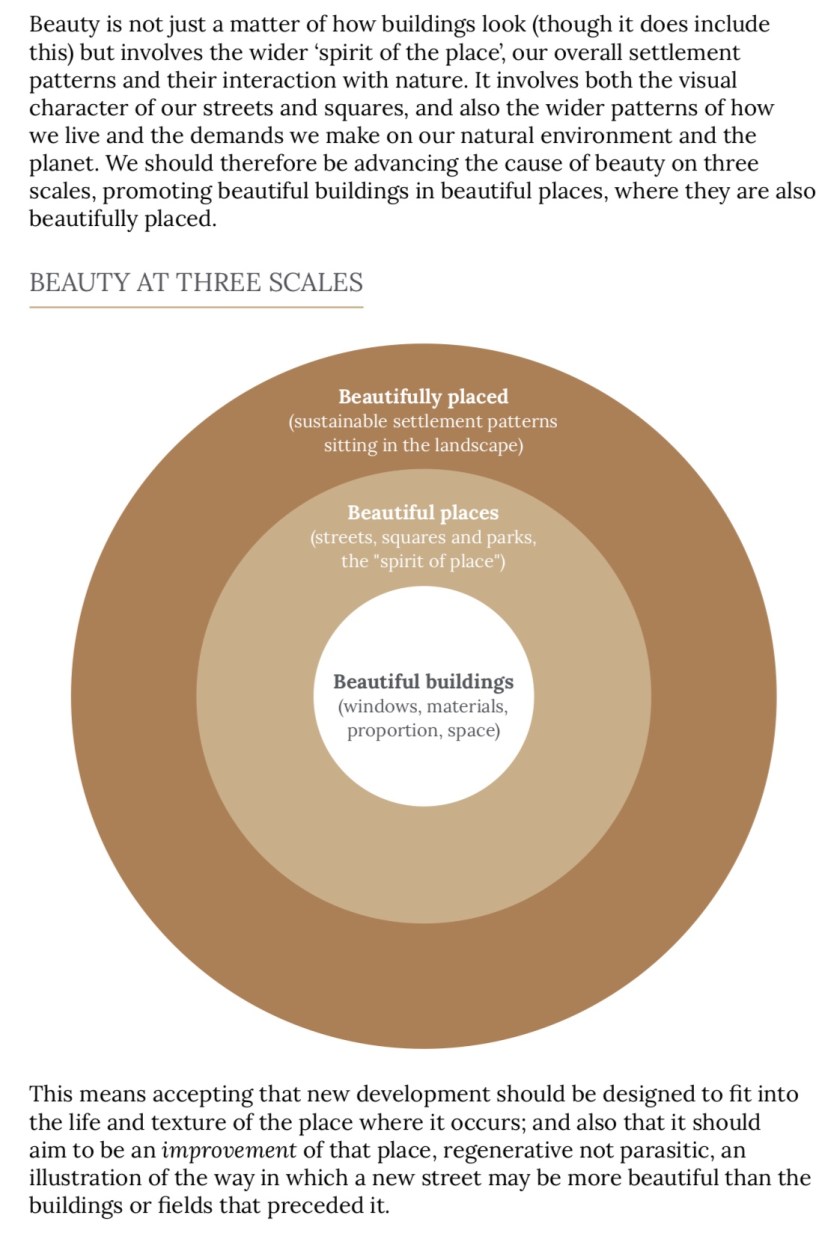
PS not to be too London-centric, I should add that on the same day the Secretary of State also allowed an appeal for 850 homes near Tewkesbury.

The appeal stats for 2020 are already going to look more healthy than those for the last two years, which become apparent if you interrogate our Town Legal 2014-2019 housing inquiry appeals data visualisation tool.

Westferry Printworks Decision: LPA Reaction Unprintable

Tower Hamlets Council’s revised CIL charging schedule came into effect on 17 January 2020, imposing borough CIL for the first time on its large allocated sites, so you will appreciate its double disappointment at the Secretary of State allowing the Westferry Printworks site appeal, against the inquiry inspector’s recommendations, in a decision letter dated 14 January 2020. The CIL figure could have been up to £50m, according to evidence given at the inquiry on behalf of the appellant.

The scheme is for a “comprehensive mixed-use redevelopment comprising 1,524 residential units (Class C3), shops, offices, flexible workspaces, financial and professional services, restaurants and cafes, drinking establishments (Classes B1/A1/A2/A3/A4), community uses (Class D1), car and cycle basement parking, associated landscaping, new public realm and all other necessary enabling works” at Westferry Road on the Isle of Dogs.

There has been a furious response from the council. At a full council meeting the following day, 15 January 2020, a resolution was passed to examine “all available options, including a judicial review“. The East London Advertiser reports Mayor John Biggs as saying:

It is a massively tall and dense development. Something of 40 floors on the island is an outrage. By making the decision on Tuesday we also lose a massive sum of money. This development will place a huge impact on the island. It is a scandal and outrageous. We will be doing everything in our power [including] seeking a judicial review.”

The potential impact of borough CIL on the viability of the proposals obviously had been raised by the appellant as a potentially relevant matter, given that it would go to viability. Unsurprisingly, the appellant had sought to include a mechanism within its section 106 agreement for a potential reduction in affordable housing should the Secretary of State’s decision letter be issued after the revised CIL charging schedule had been adopted, a proposal which both the inspector and Secretary of State rejected.

The timing of the decision letter meant that this issue went away – it would have been an interesting one to test, given that the situation often arises where an applicant or appellant is in the hands of the decision maker as to whether permission will be issued before a revised CIL charging schedule comes into effect and why shouldn’t a section 106 agreement mechanism to neutralise the effect be appropriate where the viability appraisal has not taken the potential additional CIL liability into account?

The decision letter was plainly ready to be issued, why should it have been held back?

The appeal had been lodged in relation to an application submitted by Westferry Developments Limited (the owner of the site is Northern & Shell, the development manager is Mace) on 24 July 2018. The appeal was recovered for the Secretary of State’s own determination on 10 April 2019. Tower Hamlets asked for more time to formulate their position in relation to the proposals but this was refused by the Secretary of State, as recorded in a report to a meeting of Tower Hamlets’ strategic development committee on 14 May 2019:

This report is seeking the authority of the committee for officers to defend an appeal which has been submitted to the Secretary of State by the developer. The Secretary of State has imposed a timetable which requires that this report is considered by the Committee on 14th May 2019 in time for the council to submit a Statement of Case by 22nd May 2019 in order to avoid breaching the imposed timetable and making the authority liable for costs for unreasonable behaviour. As the report had not been written when the timetable was imposed, the Council asked Secretary of State to review the timetable and he has declined. These are the special circumstances justifying the urgency.”

The previous Mayor of London (whatever happened to him?) had intervened and granted planning permission for an earlier scheme for the site in 2016 for “comprehensive mixed use redevelopment of 118,738 m2 including buildings ranging from 2-30 storeys (tallest 110 m AOD) comprising: a secondary school, 722 residential units, retail use, restaurant and cafe and drinking establishment uses, office and financial and professional services uses, community uses, car and cycle basement parking, associated landscaping and new public realm“. That planning permission has been implemented by the demolition of the printworks and works to construct a new basement.

The latest application had been on the basis of an offer of 35% affordable housing, although not policy compliant due to the proposed tenure mix, justified by reference to viability appraisal. When the appeal was submitted, unsurprisingly, given that on appeal the decision maker would expect an updated viability appraisal, that offer was withdrawn and at the time of the 14 May 2019 committee meeting there was just an indication that a revised viability assessment would be submitted and that the revised offer would be less than 35%.

The committee resolved that the proposals would have been refused on the following grounds:

⁃ Townscape and visual impact

⁃ Wind Impact on the Docklands Sailing Centre

⁃ Affordable housing – amount

⁃ Housing mix and choice

The inquiry started on 7 August 2019. This was an important appeal for the council, as can be seen from this July 2019 Facebook post from a councillor, encouraging opposition to the proposals:

In the evidence for the inquiry, the affordable housing offer had been reduced to 21% on the basis of an updated viability assessment.

In this summary that follows I am plagiarising some of an internal note prepared by my Town partner Louise Samuel (into which I may now introduce errors, all mine):

• The inspector accepted that the existing permission should be treated as a fallback, which formed an appropriate basis for assessing an alternative use value for the purposes of arriving at a benchmark land value.

• However, the inspector did not agree with how the appellant had calculated the benchmark land value (see IR 507 on for BLV discussion) and considered that the 21% offer was unlikely to be the maximum reasonable provision for the site. He did not, however, set what the maximum reasonable provision would be.

• Whilst Tower Hamlets criticised the appellant for resiling from its previous 35% offer, the Inspector notes that it was clear that the appellant was responding to the Mayor’s fast-track approach (which requires at least 35%) and so took a commercial view despite the fact that it was not supported by the viability assessment at the time. He concluded that this was not, in itself, a reason to reduce the weight to be attached to the Assessment before him (see para 530 of the IR).

• The Inspector’s view was that the consented scheme provided many of the same benefits but without causing the same harm to heritage assets. Because of the consented fallback, the only benefits that carried weight were those in addition to the consented position.

• The Secretary of State agreed that it is likely that the scheme could provide more affordable housing (“21% does not…represent the maximum reasonable amount of affordable housing”) but still considered that the additional benefits (compared to the consented fallback scheme) of: (a) housing (802 more units of which 142 would be affordable, with a policy compliant tenure split of 70% affordable rent 30% intermediate); and (b) employment during construction, were enough to grant permission. The Secretary of State gave these benefits significant weight whereas the Inspector had attached moderate weight to these benefits. The Secretary of State took into account that “there is no evidence before him of any other scheme which might come forward or what level of affordable housing might be delivered by any such scheme”.

• The Secretary of State considered these benefits to be enough to outweigh harm to important heritage assets (Grade I Old Royal Naval College; Grade I Tower Bridge; and the Greenwich World Heritage Site).

• The section 106 agreement included both an early and late stage viability review, which means that the percentage of affordable housing may increase, albeit the Inspector criticised the limited effectiveness of these.

An interesting decision in that we would need to go back almost two years to find another recovered appeal for housing development which the Secretary of State has allowed in London. Contrast for instance with the 19 July 2019 Chiswick Curve decision letter, appeal dismissed by the Secretary of State against his inspector’s recommendations, where he gave only moderate weight to the provision of 327 dwellings, whereas the Inspector had given significant weight to the housing offer (the decision has been challenged by the appellant – Louise and colleagues acting), and contrast with for instance the 1 Cambridge Heath Road 10 June 2019 decision letter, again an appeal dismissed against his inspector’s recommendations.

Much to chew over for those promoting, or otherwise engaged with, major projects in London.

Simon Ricketts, 18 January 2020

Personal views, et cetera


Image courtesy of Westferry Printworks website

Feels Like We Only Go Backwards: Wealden, South Oxfordshire & Eastleigh Local Plans

It feels like I only go backwards, baby

Every part of me says, “Go ahead”

I got my hopes up again, oh no, not again

Feels like we only go backwards, darling

The seed of all this indecision isn’t me, oh no

‘Cause I decided long ago

But that’s the way it seems to go

When trying so hard to get to something real, it feels

(Tame Impala)

An Australian band singing about English local plans?

Wealden local plan

First the Sevenoaks plan was knocked back on failure of the duty to cooperate (see my 26 October 2019 blog post More Plans Grounded: West Of England; Sevenoaks; London), now Wealden.

As always, it is interesting to start with the “taking the moral high ground” toned press statement.

Throughout the Local Plan process, we have always tried to find the right balance between the need for growth in housing and employment land, and the need to protect our unique environment,” said Councillor Bob Standley, Leader of Wealden District Council.

“Our approach to protect the environment has been supported by our Councillors and many of our residents.

“Unfortunately, the Planning Inspector, following last summer’s Examination in Public of our Local Plan, has found that we put too great an emphasis on protecting the environment and that we need to do more to build houses in Wealden which our neighbouring councils cannot accommodate.

“Regrettably, this will inevitably have impacts on our communities. We acknowledge that there is already significant pressure on infrastructure; such as roads, doctors, dentists, schools and sports facilities. A requirement to build more homes will only have a greater impact on those facilities, which will require further investment.”

(Wealden District Council’s 6 January 2020 press release).

It is interesting then to turn to the forensic dissection of the council’s approach, its multiple failings laid bare in the inspector’s 20 December 2019 letter.

I wrote about Wealden’s previous run-ins with Natural England, adjoining authorities and the courts, all basically about the extent that the council is entitled to rely on environmental concerns to reduce housing numbers within its district, in my 8 April 2017 blog post Heffalump Traps: The Ashdown Forest Cases.

South Oxfordshire local plan

My 12 October 2019 blog post SOx On The Run explained the background to the Government’s intervention to prevent the new Lib Dem administration at South Oxfordshire from withdrawing the plan which the previous Conservative administration had submitted for examination.

Secretary of State Robert Jenrick has now written on 6 January 2020 to the council indicating that he is considering whether to use powers to ask Oxfordshire County Council to prepare the Plan.

In this context, I would like to take this opportunity to ask you to outline by 31st January 2020, if there are any exceptional circumstances as to why you do not have a plan in place that I should take into account when I make a decision on next steps.”

Eastleigh local plan

Eastleigh Borough Council is in the middle of an examination of its submitted local plan. It has not been uncontroversial locally:

Hundreds of campaigners, along with local TV crews, converged on the Botleigh Grange Hotel yesterday morning as Action Against Destructive Development (ADD) staged a demonstration on the second day of the public examination of Eastleigh’s Council’s Local Plan.

Organisers estimated 400 hundred people had braved the rain to attend the early morning “show of strength” as residents from Eastleigh’s Northern and Winchester’s Southern parishes united in opposition to council plans to build thousands of new homes and a motorway link road in countryside just North of Bishopstoke and Fair Oak.  It was reported that so many people had turned up, some were forced to park at the Ageas bowl two miles away.”

(from Hundreds protest at Local Plan hearing Eastleigh News, 23 November 2019).

31 year old career politician Paul Holmes was elected to represent the Eastleigh constituency in the December 2019 general election, replacing fellow Conservative Mims Davies, who is now MP for mid-Sussex. Ms Davies was a long-time opponent of the (Lib Dem) council’s plans – indeed oddly (and surely contrary to convention) there are still campaigning pieces by her about Eastleigh on her official website despite now representing another constituency:

Our community must be heard. Real democracy is missing across Eastleigh in the local planning process. Our beautiful green spaces are under direct threat from the plans of the Council. We need to use brownfield land first. That is why I joined with community groups to make a strong submission to the Eastleigh Local Plan process. The Council should serve Eastleigh residents and not developers.”

Mr Holmes has picked up the reins from Ms Davies with some verve…

Indeed he asked a question about the local plan at Prime Minister’s Questions on 8 January 2020:

My right hon. Friend has always been a vocal advocate of localism, so what advice can he give to my constituents who are concerned about the local Lib Dem council’s unwanted housing plan in Eastleigh, which would lead to even more overdevelopment without securing the vital infrastructure that Eastleigh needs?

The Prime Minister’s response:

I am not surprised by what my hon. Friend says about the cavalier behaviour of the Lib Dem council in Eastleigh. We will ensure that, in so far as we need to build many more homes, which we do, we will supply the infrastructure necessary and do it on brownfield sites.”

(Sigh, that brownfield sites reference. That’s what they all say, isn’t it? What did Mr Holmes do on the very first day in his new job? He objected to proposed development on just one such brownfield site, the GE Aviation site in Hamble Lane, and the application was duly refused by members in spite of officers’ recommendation to approve).

I wrote about other examples of MPs intervening in local plan processes in my 13 July 2019 blog post Less Than Best Laid Plans: Political Pragmatism.

Let’s leave local plan examinations to the examiners!

Simon Ricketts, 11 January 2020

Personal views, et cetera

Image from Tame Impala video for Feels Like We Only Go Backwards.

Elephant, Dove, Old Oak, RICS

I thought I would start 2020 by trying to establish some common ground, before then mentioning what happened shortly before Christmas in relation to the Elephant & Castle and Old Oak projects, both controversial in different ways. The questions are long but I hope that the answers are short.

Do we all agree that…

1. more housing is needed for those who cannot afford homes that are being built by the private sector in their local area, even when these are required to be sold or let at significant discounts to market rates – and that what we call that housing (eg social housing/socially rented) and the nature of the body that delivers and manages it (housing associations or other registered providers, local authorities) are secondary issues?

2. the current system of seeking to require developers to deliver that housing (whoever then manages it) is not working and is hugely inefficient, in that: (1) local policy expectations set out in local plans are often not met, due to those expectations being determined not to be viable – leading to prolonged negotiations and local objection (2) the complexities and multitude of inputs to any negotiated section 106 affordable housing package, often including intricate mechanisms to provide for later reviews of the viability position, are at best a costly distraction for all parties (needing to be tooled up with valuation and QS professionals) and at worst are prone to lead to huge delays and, over time, the prospect of renegotiation where the negotiated outcome is not sufficiently attractive to funders, or where (almost inevitably) circumstances have changed during the long course of the process?

3. it is in the public interest for communities within developments to be socially and economically diverse?

4. the system worked more easily when much more Government money was available to support affordable housing by way of grant (without grant obviously a requirement to deliver social housing has a huge impact on the viability of a scheme) and that we need to get back to a system that (1) is simple (2) delivers housing that is truly affordable for those who need it (3) is efficient and (4) does not delay development more generally?

5. government (ie our) money needs to be spent where it can have most beneficial impact and is most needed?

There has been a lot of government tinkering but don’t we have to get back to those fundamentals? I’m not sure that the Government’s promised Social Housing White Paper is going to get us there, given the absence of relevant detail about affordable housing in the Conservatives’ manifesto – talk about owning first homes is a world away from the very different challenges faced by so many.

I’m sorry to be a cracked record – see my 28 May 2017 blog post Affordable Housing Tax or 4 November 2017 blog post Viability Assessment Is Not A Loophole, It’s A Noose. We could look at the idea of expanding CIL to include a social housing contribution, so that local authorities can deliver or procure it, with the option of provision on site counting as works in kind? But I’ve previously been against further rolling out another complex and inefficient regime, ie CIL, and most authorities, hollowed out and stretched as they are, are not currently in any position to deliver or procure social housing at scale. Instead, personally I would simply prefer that we go back to the old way – grants to providers so as to reduce the impact on viability for the developer of providing social housing.

In the meantime, we have to make the current system work. My 8 June 2019 blog post The Bottom Line: Updates On CIL And Viability reported on the RICS professional statement on financial viability in planning, which came into effect on 1 September 2019, and mentioned the revisions made to viability passages of the PPG by the Government on 9 May 2019, reflecting changes to the NPPF that seek to ensure, amongst other things, that detailed viability examination takes place at plan-making stage rather than when applications come forward.

The RICS professional statement sets out the professional responsibilities of the surveyor in the viability appraisal process, to seek to ensure that the surveyor operates with professional independence and integrity throughout. The RICS is now consulting from 13 December 2019 until 9 February 2020 on a draft guidance note Assessing financial viability in planning under the National Planning Policy Framework for England, 1st edition that seeks to set out the methodology to be applied by those professionals, so as to give effect to Government policy.

We are not seeking comments contrasting the government framework with a market-based appraisal. Comments should focus on whether our draft guidance gives effect to government policy and practice guidance, in an administratively efficient way, in order to deliver the objectives of the NPPF.”

Make your views known.

In the meantime…

Elephant & Castle

Delancey’s proposed redevelopment of the Elephant & Castle shopping centre and London College of Communication has long been controversial. It proposes a large mixed-use development comprising a range of buildings of up to 35 storeys, with a mix of uses including 979 dwellings (proposed to be for rent rather than sale) and accommodation for retail, office, education, assembly and leisure along with a remodelling of the London Underground station. One of the lines of attack for objectors, including the 35% Campaign, has been the perceived lack of “genuinely affordable” housing.

Planning permission was granted by the London Borough of Southwark on 10 January 2019. Just before Christmas, in Flynn v London Borough of Southwark (Dove J, 20 December 2019), the High Court rejected a crowdfunded challenge to the permission brought on behalf of the 35% Campaign. The grounds of challenge all turned on the affordable housing deal that Southwark struck in the section 106 agreement with the developer.

The case doesn’t turn on any particularly interesting legal principles or make any new law. But the facts, set out in careful detail by Dove J, illustrate precisely the concerns that lay behind my attempt just now to establish some common ground:

The policy background is not straightforward, with a changing position both at borough level and at London Plan level.

The Mayor has set out criteria in his 2017 affordable housing and viability SPG for different tenures of affordable housing, including social rent (target rents determined through the national rent regime), affordable rent (rent controls requiring a rent of no more than 80% of the local market rent), intermediate (available for rent or sale at a cost above social rent but below market levels – and eligible only to households whose annual income is within a defined range) and intermediate London Living Rent (only available to households renting with a maximum income of £60,000 without sufficient current savings to purchase a home within the local area).

The adopted London Plan requires boroughs to seek the “maximum reasonable amount of affordable housing…when negotiating on individual private residential and mixed use schemes, having regard to” a number of factors, including “development viability” and the “availability of public subsidy”.

Within the Elephant & Castle area, Southwark’s adopted plan seeks a minimum requirement of 35%, on the basis of a split of 50% social rented and 50% intermediate housing. Its emerging plan seeks, in relation to build to rent developments, a different tenure split for the 35%: social rent equivalent (ie social rent level but not managed by registered provider) 34% minimum, affordable rent (aka discount market rent) capped at London Living Rent equivalent 52% minimum, affordable rent (aka discount market rent) for household incomes between £60,000 and £90,000 per year 14% minimum. The lack of social rent reflects the specific nature of build to rent developments, where it is more efficient for all of the housing to remain under single management rather than for a separate registered provider to be introduced.

At the time Delancey’s application first went to committee on 16 January 2018, its proposal was 36% affordable housing based upon habitable rooms, with the 36% made up as follows: 10% social rent equivalent, 46% London Living Rent, 43% discount market rent. The non policy compliant offer (in terms of tenure split) was based on an agreed viability assessment. Despite a recommendation for approval, members deferred a decision until a meeting scheduled for 30 January 2018 at which they intended to formulate reasons for refusal. The day before the follow-up meeting the developer made further proposals in relation to the affordable housing offer and the application was deferred to a subsequent meeting.

The revised proposal was to replace 33 social rent equivalent units with 74 socially rented units, all to be located on the western part of the development and to be owned and operated either by the borough or by a registered provider. This changed the tenure split (of the 35% affordable housing dwellings) to: social rent 24.9%, London Living Rent 27.9%, discount market rent 47.2%.

In June 2018 the offer was increased again. The developer’s consultants indicated that following “in-principle agreement from the GLA to provide grant funding towards the proposed scheme” the number of social rent units could be increased to 116 homes, or 38.1% of the 35% of the units that were to be affordable.

The application was approved at a committee meeting on 3 July 2018. It was acknowledged in the report that the proposed tenure split was still not policy compliant but was justified by way of the agreed viability appraisal. The report also noted that there would need to be a fallback arrangement in the section 106 agreement to cater for the possibility that the developer might choose after all to develop the western part of the development on a for sale rather than for rent basis (in which case the affordable housing requirement for that part of the site would return to 50% social rented, 50% intermediate).

If all of this does not start to give an idea of the inevitable complexity of negotiations on a scheme such as this, then consider the viability appraisal. As is common with a significant longterm development, where application of the more straightforward benchmark land value plus developer’s profit approach does not reflect accurately the financial modelling of a project over time, viability was judged against a minimum internal rate of return for the developer.

The latest RICS draft guidance defines internal rate of return (or “IRR”) as follows:

The rate of interest (expressed as a percentage) at which all future project cash flows (positive and negative) will be discounted in order that the net present value (NPV) of those cash flows, including the initial investment, be equal to zero. IRR can be assessed on both gross and net of finance.”

However, unless I have missed it, there is no guidance anywhere as to when an IRR approach is appropriate and how to arrive at and test the inputs and modelling.

The agreed benchmark was 7.15% IRR, with annual growth to 11% over the construction period. Review mechanisms in the section 106 agreement provide that 50% of any excess are to be applied to increasing the affordable housing provision up to a policy compliant level/tenure split.

The claimant had three grounds of challenge. The first turned on an alleged inaccuracy in the way that the GLA’s offer of funding had been reported – it had not been formally confirmed and discussions were at an “in principle stage”. The second alleged that one of the detailed mechanisms in the section 106 agreement departed from the relevant head of term in the committee resolution. The third related to the mechanism in the section 106 agreement for determining the affordable housing to be provided if the western part of the site turned into a “for sale” development, but a deed of variation had been entered into after the challenge was brought, largely correcting the error that had been identified.

Dove J rejected each of the grounds, whilst accepting that each was arguable. (1) The report did not materially mislead members. (2) The section 106 mechanism was not outside the scope of the committee resolution (“True it is that the solutions arrived at are not a literal interpretation of paragraph 364 [of the report to committee], in that they do not include for the provision of land and a substantial cash dowry to construct the social rented units but, in my judgment, that was not required in order to remain within the scope of the delegation granted by the members”). (3) The approach to the fallback (“for sale”) scenario was “entirely rational and appropriate”. Part of the claimant’s criticism of the arrangements turned on whether the additional affordable housing in these circumstances should be social rented units rather than the social rented equivalent units provided for. The judge saw nothing relevant in the distinction:

In terms of the matters raised by the Claimant the quality of tenure enjoyed by tenants in social rented equivalent properties are, as the nomenclature suggests, equivalent to those in social rented properties. Of course, there may well be nuanced differences between them as a consequence of them being separately defined. Furthermore, they will be managed in different ways as the definition implies. Be all of this as it may, in my view the important point is that the requirement of the officers’ report was a review in terms of affordable housing, and whether the additional habitable rooms were to be provided as social rented or social rented equivalent accommodation was not identified as being in any way a critical point upon which the delegation to the officers of authority to enter into the section 106 obligation turned. Put another way, whatever may be the nuanced differences between social rented equivalent property and social rented units that was not identified as a key requirement in relation to the review mechanism contemplated were the developer to take up the fall-back scenario.”

Will the new guidance make any of this more straight forward? I doubt it. Would proper funding for social rent and social rent equivalent housing? Of course it would.

Old Oak and Park Royal Local Plan

The recent NPPF and PPG changes of course seek to move the viability spotlight to the point at which sites are allocated for development. The Old Oak plan was examined last year under the previous NPPF but viability matters were still centre stage and the inspector’s findings may be an indicator of the detailed scrutiny that is likely to be given to the viability in particular of strategic sites (taken together with proposed policy requirements in terms of infrastructure delivery and affordable housing).

One of the key issues for the inspector was whether the proposed allocation of the 54 acre Cargiant site for residential and associated development was viable. Cargiant had itself attempted development of its site in the past. It had concluded that it would be unviable to contemplate relocating or extinguishing its business and carrying out the development – and took the position that there was no reasonable prospect within the plan period of the Old Oak and Park Royal Development Corporation (“OPDC”) being in a position to carry out such proposals, even by resorting to compulsory purchase and even with the benefit of £250m Housing and Infrastructure Fund monies which had been agreed in principle to be allocated by MHCLG.

My firm acted for Cargiant and so I will restrict myself to pointing out the level of detail to which the inspector went in his interim findings on viability of Cargiant site proposal (10 September 2019) before concluding that the allocation would be unviable and therefore unsound.

The day after the general election, on 13 December 2019, the OPDC announced that it would change its proposals, which will now leave Cargiant in place:

New focus for Old Oak and Park Royal regeneration:

The Old Oak and Park Royal Development Corporation (OPDC) has today set out a revised approach to deliver tens of thousands of new homes and jobs through collaboration with major public sector landowners.

The regeneration of Old Oak, Park Royal and surrounding areas in west London, has the potential to deliver 25,500 new homes and 65,000 jobs over the next 30 years. OPDC has already approved plans for over 5,000 homes including 1,500 already completed or being built.

The shift in approach has been triggered by recent, rapid increases in industrial land values in west London which mean that it is currently not financially viable to deliver OPDC’s early regeneration plans at Old Oak North. This area, close to the planned new HS2 interchange station, includes the 54-acre site that is owned and operated by Cargiant, which had originally been earmarked for development.

Earlier this year, the Planning Inspector, in his interim report on the OPDC’s draft Local Plan, de-designated the Cargiant site from Strategic Industrial Land, but also concluded that Old Oak North had become commercially unviable for residential-led development at this time.”

Whilst this situation might be taken to be an example of how viability matters can indeed in practice be taken into account at the plan-making stage, I do have concerns:

⁃ There is now a bigger onus on authorities to carry out proper viability work, including work to a sensible level of detail on strategic sites (albeit often with assistance from those promoting those sites for development), and is it actually going to be done?

⁃ Where it is not done, delays will occur in the examination process. At Old Oak, the necessary work had not been done and there was a significant hiatus whilst it was commissioned.

⁃ Development proposals are often not sufficiently worked up, at the stage that the plan is being prepared, so as to enable a sensible viability appraisal to be undertaken. And will developers be prepared always to come clean at the allocation stage as to the challenges they are facing in making the numbers stack up?

⁃ Will there always be participants in the local plan examination process with the motivation and resources to put authorities to proof on the work that has been carried out? If Cargiant hadn’t taken its stance (entailing lawyers and a team of consultants to challenge much of the inputs) I suspect the allocation would have been confirmed without challenge – and then proved over time to be undevelopable.

The next blog post will be shorter, I promise.

Simon Ricketts, 4 January 2020

Personal views, et cetera

Pic credit: Bizarro Comics

Blue Christmas

Duncan Field, Victoria McKeegan and I were speculating in our 16 December 2019 planorama vlog as to what the new Government’s legislative programme and policy priorities are likely to be in relation to planning, infrastructure and the environment

We now have the blueprint, in the form of the Queen’s Speech on 19 December 2019 and particularly the 151 pages of background notes published the same day.

There is going to be an “ambitious” planning white paper in due course, but what is promised in the meantime in this very blue paper that these notes represent? The government has little excuse not to deliver on what it has set out, given the size of its majority. The most relevant references are as follows:

Housing (pages 48 to 50):

My government will take steps to support home ownership, including by making homes available at a discount for local first-time buyers.”

The Government will support people to realise the dream of homeownership. One of the biggest divides in our country is between those who can afford their own home and those who cannot.

The Government will shortly launch a consultation on First Homes. This will provide homes for local people and key workers at a discount of at least 30 per cent – saving them tens of thousands of pounds.

The discount on First Homes will be secured through a covenant. This means these homes will remain discounted in perpetuity, supporting people now and in the future who aspire to own a home of their own.

The Government will also renew the Affordable Homes Programme, building hundreds of thousands of new homes for a range of people in different places. This will help us prevent people from falling into homelessness while also supporting further people into homeownership.

We will introduce a new, reformed Shared Ownership model, making buying a share of a home fairer and more transparent. This new model will be simpler to understand and better able shared owners to buy more of their property and eventually reach full ownership.

To deliver on the homes this country needs, the Government is committed to building at least a million more homes over this Parliament. In the coming months we will set out further steps to achieve this, including an ambitious Planning White Paper and funding for critical infrastructure.

The Planning White Paper will make the planning process clearer, more accessible and more certain for all users, including homeowners and small businesses. It will also address resourcing and performance in Planning Departments.

The new £10bn Single Housing Infrastructure fund will provide the roads, schools and GP surgeries needed to support new homes. Alongside First Homes, this will ensure local people truly benefit from house building in their area and build support for new developments

To help those who rent, the Government will build a rental system that is fit for the modern day – supporting landlords to provide high quality homes while protecting tenants. The Government’s Better Deal for Renters will fulfil our manifesto commitments to abolish ‘no fault’ evictions and to introduce lifetime deposits, alongside further reforms to strengthen the sector for years to come.

The Government is taking forward a comprehensive programme of reform to end unfair practices in the leasehold market. This includes working with the Law Commission to make buying a freehold or extending a lease easier, quicker and more cost effective – and to reinvigorate commonhold and Right to Manage.

The Government will ensure that if a new home can be sold as freehold, then it will be. We will get rid of unnecessary ground rents on new leases and give new rights to homeowners to challenge unfair charges. The Government will also close legal loopholes to prevent unfair evictions and make it faster and cheaper to sell a leasehold home.

For those in the social rented sector, we will bring forward a Social Housing White Paper which will set out further measures to empower tenants and support the continued supply of social homes. This will include measures to provide greater redress, better regulation and improve the quality of social housing.

This Government has committed to end rough sleeping by the end of this Parliament. The Government will continue to invest in key rough sleeping interventions, building on the progress that we made last year in reducing rough sleeping numbers. The Government will also continue to support those at risk of homelessness and rough sleeping through the continued enforcement of the Homelessness Reduction Act.

Building Safety Bill (pages 51 to 53):

New measures will be brought forward…to improve building safety.

An enhanced safety framework for high-rise residential buildings, taking forward the recommendations from Dame Judith Hackitt’s independent review of building safety, and in some areas going further by:

Providing clearer accountability and stronger duties for those responsible for the safety of high-rise buildings throughout the building’s design, construction and occupation, with clear competence requirements to maintain high standards.

Giving residents a stronger voice in the system, ensuring their concerns are never ignored and they fully understand how they can contribute to maintaining safety in their buildings.

Strengthening enforcement and sanctions to deter non-compliance with the new regime, hold the right people to account when mistakes are made and ensure they are not repeated.

Developing a new stronger and clearer framework to provide national oversight of construction products, to ensure all products meet high performance standards.

Developing a new system to oversee the whole built environment, with local enforcement agencies and national regulators working together to ensure that the safety of all buildings is improved.

We will also legislate to require that developers of new build homes must belong to a New Homes Ombudsman.

Fire Safety Bill (pages 54 to 55):

New measures will be brought forward…to improve building safety.”

Clarifying that the scope of the Fire Safety Order includes the external walls of the building, including cladding, and fire doors for domestic premises of multiple occupancy.

Strengthening the relevant enforcement powers to hold building owners and managers to account.

Providing a transitional period for building owners and managers (the “responsible person”) and Fire and Rescue Services to put in place the infrastructure for these changes.”

National Infrastructure Strategy (pages 90 to 91):

My government will prioritise investment in infrastructure…”

The National Infrastructure Strategy will be published alongside the first Budget, and will set out further details of the Government’s plan to invest £100 billion to transform the UK’s infrastructure.

The Strategy will set out the Government’s long-term ambitions across all areas of economic infrastructure including transport, local growth, decarbonisation, digital infrastructure, infrastructure finance and delivery.

The Strategy will have two key aims:

To unleash Britain’s potential by levelling up and connecting every part of the country. Prosperity will be shared across all of the UK, and long- standing economic challenges addressed, through responsible and prudent investment in the infrastructure.

To address the critical challenges posed by climate change and build on the UK’s world-leading commitment to achieve net zero emissions by 2050.

The Strategy will also provide the Government’s formal response to the National Infrastructure Commission’s 2018 National Infrastructure Assessment, which made a series of independent recommendations to government across all sectors of economic infrastructure (transport, energy, digital, waste, water and flood management).”

Rail reform and High Speed Rail 2 (West Midlands – Crewe) Bill (pages 101 to 103)

Last year the Government launched a ‘root and branch’ review of the railways led by Keith Williams. The Review is the first comprehensive assessment of the rail system in a generation and is tasked with making ambitious proposals to reform the rail industry.

The Review is focused on reforms that will put passengers at the heart of the railway, provide value for taxpayers and deliver economic, social and environmental benefits across Britain.

The Government will publish a White Paper informed by the recommendations next year. Among other things, this will end the complicated franchising model to create a simpler, more effective system.

The Government has also committed to a number of major investments in the railway, including:

o Midlands Rail Hub, to improve services around Birmingham and throughout the West and East Midlands;

o Northern Powerhouse Rail;

o Reopening a number of the lines and stations closed under the

Beeching cuts in the 1960s; and,

o Significant upgrades to urban commuter and regional services outside London.

Separate to the wider review of the railway system, the Government awaits the review, of the High Speed Two (HS2) network led by Doug Oakervee which is looking at whether and how to proceed with HS2, including the benefits and impacts; affordability and efficiency; deliverability; and scope and phasing, including its relationship with Northern Powerhouse Rail.

Without prejudice to the Oakervee Review’s findings and any Government decisions that follow, it is expected that the High Speed Rail (West Midlands – Crewe) Bill will be revived in this Parliament. The Bill was first introduced in Parliament in July 2017 and will enable Phase 2a of HS2. The Bill passed through the House of Commons and had completed Second Reading in the House of Lords before the dissolution of the previous Parliament. Following revival it would begin its next stages in the House of Lords.

English Devolution (pages 109 to 110):

My government…will give communities more control over how investment is spent so that they can decide what is best for them.”

We are committed to levelling up powers and investment in the regions across England and allowing each part of the country to decide its own destiny.

This means proposals to transform this country with better infrastructure, better education, and better technology.

We will publish a White Paper setting out our strategy to unleash the potential of our regions, which will include plans for spending and local growth funding.

It will provide further information on our plans for full devolution across England, levelling up powers between Mayoral Combined Authorities, increasing the number of mayors and doing more devolution deals.

These increased powers and funding will mean more local democratic responsibility and accountability.

We remain committed to the Northern Powerhouse, Midlands Engine, and Western Gateway strategies.

Business rates (page 111):

To support business, my government will…bring forward changes to business rates.

The Government is committed to conducting a fundamental review of business rates.

The Government recognises the role of business rates as a source of local authority income and will consider input from the sector as part of the review of business rates. Further details on the review will be announced.

We are committed to increasing the retail discount from one-third to 50 per cent, extending that discount to cinemas and music venues, extending the duration of the local newspapers discount, and introducing an additional discount for pubs.

We will also progress legislation to bring forward the next business rates revaluation by one year from 2022 to 2021 and move business rates revaluations from a five-yearly cycle to a three-yearly cycle. This will allow the Government to press ahead with delivering an important reform that has been strongly welcomed by business.

More frequent revaluations will ensure that business rates bills are more up- to-date reflecting properties’ current rental values. Moving to three-yearly revaluation will make the system more responsive to changing economic conditions.

Environment Bill (pages 112 to 114):

To protect and improve the environment for future generations, a bill will enshrine in law environmental principles and legally-binding targets, including for air quality. It will also ban the export of polluting plastic waste to countries outside the Organisation for Economic Co-operation and Development and establish a new, world-leading independent regulator in statute.

Establishing new long term domestic environmental governance based on: environmental principles; a comprehensive framework for legally-binding targets, a long term plan to deliver environmental improvements; and the new Office for Environmental Protection.

Improving air quality by setting an ambitious legally-binding target to reduce fine particulate matter (PM2.5), the most damaging pollutant to human health. The Bill also increases local powers to address sources of air pollution and brings forward powers for the Government to mandate recalls of vehicles when they do not meet legal emission standards.

Protecting nature by mandating ‘biodiversity net gain’ into the planning system, ensuring new houses aren’t built at the expense of nature and delivering thriving natural spaces for communities. We will improve protection for our natural habitats through Local Nature Recovery Strategies and give communities a greater say in the protection of local trees.

Preserving our resources by minimising waste, promoting resource efficiency and moving towards a circular economy. These measures include extended producer responsibility, a consistent approach to recycling, tackling waste crime, introducing deposit return schemes, and more effective litter enforcement. We will also ban the export of polluting plastic waste to non- OECD countries, consulting with industry, NGOs, and local councils on the date by which this should be achieved.

Introducing charges for specified single use plastic items. This will build on the success of the carrier bag charge and incentivise consumers to choose more sustainable alternatives.

Managing water sustainably through more effective legislation to secure long- term, resilient water and wastewater services. This will include powers to direct water companies to work together to meet current and future demand for water, making planning more robust, and ensuring we are better able to maintain water supplies.

Climate change (pages 115 to 118):

My government will continue to take steps to meet the world-leading target of net zero greenhouse gas emissions by 2050. It will continue to lead the way in tackling global climate change, hosting the COP26 Summit in 2020.”

We will build on our progress with an ambitious programme of policy and investment, with our first Budget prioritising the environment. This will help deliver the green infrastructure needed to improve lives and achieve Net Zero, including by investing in carbon capture, offshore wind, nuclear energy, and electric vehicle infrastructure so that individuals are always within 30 miles of a chargepoint. We will make sure we help lower energy bills investing in the energy efficiency of homes, schools and hospitals. And away from home, we will use our £1 billion Ayrton Fund to develop affordable clean energy for developing countries.

The government will continue to use our position as a global leader in this area by hosting the UN Climate Change Summit in Glasgow in 2020 (COP26). We will ask our partners to match the UK’s ambition.

With a focus on nature based solutions at our upcoming COP summit, at home we will be substantially increasing our tree-planting commitment and creating a £640 million new Nature for Climate fund.

Our natural environment is one of our greatest assets, and can play a crucial role in the fight against climate change. This government will:

introduce a landmark Environment Bill – the first one in twenty years – that will create an ambitious environmental governance framework for post Brexit, as well as banning the export of plastic waste to non-OECD countries;

establish a new £500 million Blue Planet Fund to help protect our oceans from plastic pollution, warming sea temperatures and overfishing;

lead diplomatic efforts to protect 30 per cent of the world’s oceans by 2030; and,

in our trade negotiations, never compromise on our high environmental protection

We will also ensure that we are protecting our citizens by investing £4 billion in flood defences and lowering energy bills by investing £9.2 billion in the energy efficiency of homes, schools and hospitals.

We will increase our ambition on offshore wind to 40GW by 2030, and enable new floating turbines.

We will support decarbonisation of industry and power by investing £800 million to build the first fully deployed carbon capture storage cluster by the mid-2020s; and £500 million to help energy-intensive industries move to low-carbon techniques.

Constitution and democracy (pages 126 to 127):

A Constitution, Democracy and Rights Commission will be established. Work will be taken forward to repeal the Fixed-term Parliaments Act.”

Setting up a Constitution, Democracy & Rights Commission that will:

Examine the broader aspects of the constitution in depth and develop proposals to restore trust in our institutions and in how our democracy operates. Careful consideration is needed on the composition and focus of the Commission. Further announcements shall be made in due course.

It’s a blue, blue, blue, blue Christmas.

The usual askew perspectives and commentary will continue here in 2020.

Simon Ricketts, 21 December 2019

Personal views, et cetera