Well done all local election candidates whether you won or lost.
And well done all public affairs consultancies for the updates and analysis as to the changes. But maybe add the Daily Express to your mailing lists next time?
We expect plenty of announcements this week, finally, as to the Government’s intended changes to the planning system.
I’m coiled like a rusty spring.
We’ll be navigating the implications of the Queen’s Speech and expected flotilla of accompanying announcements on Clubhouse at 5.30 pm on Thursday 12 May. Special guests include Catriona Riddell, Nick Walkley, Phil Briscoe and Meeta Kaur. Join us here.
M&S used to be the bellwether of the retail sector but its proposed demolition and redevelopment of its 456 – 472 Oxford Street store, in preference to refurbishment and extension, is as likely to be a bellwether of decision makers’ approach to carbon efficiency and in particular to justifying the loss of embodied carbon.
Siri, give me a definition of embodied carbon:
“Embodied carbon means all the CO2 emitted in producing materials. It’s estimated from the energy used to extract and transport raw materials as well as emissions from manufacturing processes.
The embodied carbon of a building can include all the emissions from the construction materials, the building process, all the fixtures and fittings inside as well as from deconstructing and disposing of it at the end of its lifetime.” (UCL engineering faculty).
Plainly, maximising the carbon efficiency of new development should be a significant material consideration in the determination of planning applications. But it’s not easy. How, for instance, to weigh longer term operational carbon savings against the one-off carbon costs associated with demolition and rebuild? And how much weight is to be given to carbon saving in the planning process as against other considerations?
You can look in vain for any specific guidance in the National Planning Policy Framework. The “planning for climate change” section (paragraphs 153 to 158) is of course woefully out of date, with an update promised mañana. Climate crisis what crisis?
Even so, the issue was raised by the Secretary of State when he dismissed the Tulip appeal (11th November 2021): “Although considerable efforts have been made to adopt all available sustainability techniques to make the construction and operation of the scheme as sustainable as possible” the result would still amount to “a scheme with very high embodied energy and an unsustainable whole life-cycle.” The Secretary of State also agreed with the Inspector: “that the extensive measures that would be taken to minimise carbon emissions during construction would not outweigh the highly unsustainable concept of using vast quantities of reinforced concrete for the foundations and lift shaft to transport visitors to as high a level as possible to enjoy a view.”
Notwithstanding the lack of national policy guidance, the London Plan does have a policy hook, Policy SI 2:
I want to scoot through the sequence of events so far in relation to the M&S proposal.
Its application for planning permission was submitted to Westminster City Council on 2 July 2021, proposing the demolition of the three buildings that comprise its 456 – 472 Oxford Street store, to make way for a comprehensive redevelopment to provide a building comprising two basement levels, ground and nine upper floors. The proposal would provide an office and retail led mixed use development. The oldest of the buildings, Orchard House, dates from the 1930s. Two comprise basement plus six storeys and one being basement plus seven storeys. Given the changing retail economy, the need for substantial changes to buildings such as this is of course no surprise. The scheme is by architects Philbrow & Partners.
Fred Philbrow stresses the lower lifetime carbon emissions that will arise from the new building, rather than a retrofit:
“It’s not always right to refurbish” old structures, Pilbrow told Dezeen, claiming that the contentious project is akin to trading in a gas guzzler for a Tesla.
“I would liken this to a discussion about a not-very-well-performing diesel car from the 1970s,” he said. “And what we’re trying to do is replace it with a Tesla.“
“In the short term, the diesel car has got less embodied carbon,” he added. “But very quickly, within between nine and 16 years, we will be ahead on carbon because our Tesla will perform better.” (Dezeen, 17 December 2021).
The application was resolved to be approved by Westminster City Council on 23 November 2021, despite last minute objections from Save Britain’s Heritage and others. The report says this on carbon:
“The applicant has submitted a Whole Life-Cycle Carbon Assessment (WLCA) prepared by Arup, as required by Policy SI2 of the London Plan and City Plan Policy 36.
The WLCA includes a comparative assessment of the whole life carbon emissions of a ‘light touch’ refurbishment versus new build development options. The report sets out that refurbishment option has the lowest embodied carbon impact initially because minimal works (and materials) are required. However, this increases over time due to the required maintenance and poor operational performance of the existing buildings.
The assessment concludes that the new build option is the most efficient scenario, especially through the implementation of the low-carbon opportunities recommended in the report. Whilst it has a higher initial embodied carbon than the refurbishment option as it needs to be built (with a high carbon expenditure) – over its operational lifetime it will require much less maintenance than the refurbishment option and be a more efficient building, providing a betterment from years 15/16.
The GLA in their stage 1 response requested the applicant to complete the GLA’s WLCA assessment template. This has been submitted to the GLA and an update on this position with regard to London Plan policy S12 will be reported verbally at the Committee meeting.”
The resolution was subject to referral to the Mayor of London and completion of a section 106 agreement, including an index linked carbon offset payment of £1,198,134 payable prior to the commencement of development.
On the same day as Westminster’s resolution to grant, Historic England turned down a request by objectors that the building be listed.
The Mayor confirmed on 7 March 2022 that he was not going to intervene. However, Save Britain’s Heritage complained that he had not taken into account representations that they had made, including a report they had commissioned from Simon Sturgis Why a Comprehensive Retrofit Is more Carbon Efficient than the Proposed New Build. Simon had previously advised the Mayor on his emerging carbon policies. [NB see Simon Sturgis’ subsequent comments on this blog post at the foot of the page]
Unusually, the Mayor then decided he was going to reconsider the issue:
“A spokesperson for the Mayor of London, said: ‘In line with London Plan policy on Whole Life Carbon, the question of retention and refurbishment or demolition and new build was considered in the GLA’s assessment of this application, and based on officer advice that there was no sound planning reason to intervene, on 7 March the Mayor made the decision to allow Westminster to determine the application.
‘However, City of Westminster is yet to issue its planning decision, and the GLA has now published its planning guidance on Whole Life Carbon and Circular Economy. In light of this situation GLA officers consider it would be prudent to consider a further Stage 2 report, which would also allow consideration of the detailed report by Simon Sturgis examining the carbon emissions impacts of the proposed demolition. An updated Stage 2 report will be presented for consideration at the Mayor’s meeting on Monday 4 April.’” (Architects Journal, 1 April 2022).
However, his decision on 4 April 2022 was the same – no intervention. The stage 2 report and addendum report are available here.
Given the assessment that the Mayor will have made as against his own policies, more up to date and stringent than those of the Government, it is perhaps disappointing for those who believe in devolved decision making then to read that Michael Gove has, presumably in response to further representations (see eg Save Britain’s Heritage’s letter dated 20 April 2022) issued a holding direction preventing Westminster City Council from issuing planning permission until he has decided whether to call it in. The holding direction, under Article 31 of the Town and Country Planning (Development Management Procedure) (England) Order 2015, is only a precautionary procedural step to buy time and doesn’t at all mean that the Secretary of State is definitely going to call the application in, just that he is considering whether to do that. Indeed holding directions are not particularly unusual in relation to controversial proposals where the Secretary of State has received requests from objectors for him to use his call in powers. seeking call in. But frankly it’s anybody’s guess what will now happen.
The planning system is certainly curious in its inconsistencies. What about the “demolish and rebuild” permitted development rights for some categories of building, introduced in August 2020? Or that demolition of itself does not usually require formal planning permission?
Concluding thoughts:
⁃ climate change considerations should increasingly be central to planning decision making
⁃ but it’s no use the Government reacting in an ad hoc way to specific proposals – up to date, practical, guidance is needed to manage everyone’s expectations – a lengthy call in inquiry is in no-one’s interests
⁃ it shouldn’t be about the easy headlines and twitter pile-ons, but about robust detailed calculations.
⁃ watch how heritage campaign groups continue to accentuate the embodied carbon issue: embodied carbon vs operational savings via more efficient buildings is going to be a constant battleground.
Talking of listening…no clubhouse Planning Law Unplanned discussion this week but plenty of previous episodes to listen to here and some good sessions lined up….
Current events underline why we must never forget the Holocaust. When it comes to what is now happening in Ukraine at least there is more that we could be doing NOW both for the victims and to seek to bring this dreadful intentional slaughter of innocents to an end.
It is utterly frustrating that the planning permission granted for the construction of the United Kingdom Holocaust Memorial and Learning Centre in Victoria Tower Gardens, next to the Houses of Parliament, has been now quashed due to the failure of the decision maker, and indeed every major participant in the application process, to consider the implications of a local Act of Parliament affecting the gardens, the London County Council (Improvements) Act 1900. For this is the outcome of London Historic Gardens Trust v Minister of State for Housing (Thornton J, 8 April 2022). The court has also published this summary.
The judgment repays reading not just on this point but on the issue which often arises in cases involving heritage aspects – what is the threshold for “substantial harm” as defined in the NPPF?
First, the background…
The Government set up the Holocaust Commission in January 2014 “to examine what more should be done in Britain to ensure that the memory of the Holocaust is preserved and that the lessons it teaches are never forgotten.”
The Commission carried out a consultation process and recommended in January 2015 that a monument be established, vitally with an accompanying learning centre:
“there should be a striking new memorial to serve as the focal point for national commemoration of the Holocaust. It should be prominently located in Central London to attract the largest possible number of visitors and to make a bold statement about the importance Britain places on preserving the memory of the Holocaust.”
The UK Holocaust Memorial Foundation was created and the then prime minster announced on 27 January 2016 that Victoria Tower Gardens would be the location.
As summarised by the judge:
“Victoria Tower Gardens has considerable cultural, historical and heritage significance. It is located on the north bank of the River Thames immediately south of and adjacent to the Palace of Westminster and Black Rod Garden. It is a Grade II Registered Park and Garden. It contains within it three listed structures; the statue of Emmeline Pankhurst (Grade II listed), the statue of the Burghers of Calais (Grade I listed) and the Buxton Memorial Fountain (Grade II* listed). The site has contained a garden for public recreation since approximately 1880.”
Unusually, Secretary of State made the application for planning permission, in January 2019 (this would have been the late James Brokenshire).
The proposals have always been surprisingly controversial. When Westminster City Council delayed in determining the application, rather than being appealed on the basis of non-determination, the Application was procured to be called in but due to the Secretary of State clearly being “off side”, handling arrangements were arrived at (after previous litigation by the London Historic Parks and Gardens Trust) that resulted in the minister of state for housing being the decision maker.
The proposals were approved on 29 July 2021 after a long inquiry.
The decision was challenged by the Trust on what became three grounds when the case came to a full hearing before Thornton J. The grounds before her were as follows:
“Ground 1: Harm to heritage assets
The Planning Inspector and Minister applied the wrong legal test to the issue of whether there will be ‘substantial harm’ to the heritage assets within the Gardens. The correct application of the test would have led inevitably to the conclusion that the harm to the significance of the Buxton Memorial was substantial and which would have led in turn to a very different test for the acceptability of the proposal.”
“Ground 3: The London County Council (Improvements) Act, 1900”
“Ground 4: error of law in relation to alternative sites
The Inspector erred in law in considering that in order to attract significant weight, the merits of any alternatives must be underpinned by a good measure of evidence demonstrating their viability and credibility as such an alternative.”
The issues arising were as follows:
“1) Did the inspector err in his assessment of harm to the historic environment of the Gardens; in particular the setting of the Buxton Memorial?
2) Does the London County Council (Improvements) Act 1900 impose a statutory prohibition on locating the Memorial in the Gardens?
3) Did the inspector err in his treatment of alternative sites for the Memorial?”
That 1900 Act ground had been considered unarguable at permission stage in the proceedings but the renewed application for permission on that ground had been allowed by Thornton J to be dealt with on a rolled-up basis as part of the main hearing. The twists and turns of litigation never fail to amaze. This proved to be the decisive issue in the whole case. As indicated by the judge:
“In his application to renew, Mr Drabble focussed on section 8(1) of the 1900 Act rather than section 8(8) which had been the focus of submissions before the Permission Judge. As refined by Mr Drabble, the ground is arguable, and I grant permission. Given the refinements to the Trust’s case as developed during oral submissions at the hearing, including the production of the Local Law (Greater London Council and Inner London Borough) Order 1965, I considered it appropriate (and of assistance to the Court) to allow the parties the opportunity to make short written submissions after the hearing.”
So what was this killer point?
By way of brief interjection, the outcome hasn’t gone down well with one previous Secretary of State at least:
Section 8(1) reads as follows:
“(1) “The lands lying to the eastward of the new street described in this Act as consisting in part of widenings of Abingdon Street and Millbank Street which is in this section called “the new street” and between the said street and the new embankment wall shall be laid out and maintained in manner herein-after provided for use as a garden open to the public and as an integral part of the existing Victoria Tower Garden subject to such byelaws and regulations as the Commissioners of Works may determine”
The judge’s interpretation:
“On its ordinary and natural meaning, Section 8(1) of the 1900 Act imposes an enduring obligation to lay out and retain the new garden land for use as a public garden and integral part of the existing Victoria Tower Gardens. It is not an obligation which was spent once the Gardens had been laid out so that the land could be turned over to some other use or be developed or built upon at some point after it had been laid out whenever it suited those subject to the obligation”
Her conclusion was reinforced by detailed consideration of pre-legislative material leading up to the 1900 Act.
Did this restriction on use of the gardens matter, being separate from planning legislation? In her view, yes:
“the 1900 Act is a material consideration because of the impediment it presents to delivery of the Memorial in Victoria Tower Gardens and the importance attached by the Inspector to the delivery of the Memorial in the lifetime of Holocaust survivors.”
So the case succeeded on ground 3, and also partly therefore on ground 4:
“I have concluded in relation to Ground 3 that, section 8 of the 1900 Act imposes an enduring statutory obligation to maintain Victoria Tower Gardens as a public garden, This is a material consideration in the context of the Inspector’s emphasis on the importance of the need to deliver the scheme within the lifetime of the Holocaust survivors. The Inspector considered the question of alternative sites and the implications of their deliverability without assessment of the deliverability of the location in Victoria Tower Gardens in the context of the issues now presented by the Court’s construction of the 1900 Act. In the circumstances, as a consequence, to this extent, Ground 4 succeeds.”
What of ground 1, whether the correct test of “substantial harm” was used? I’m going to pass the keyboard to my Town Legal colleague Tom Brooks to explain:
“Ground One sought to challenge the primacy of that long favoured quote of heritage consultants seeking to duck the NPPF test of substantial harm, from Bedford BC v Secretary of State for Communities and Local Government (High Court, 2012), paras 24-25:
“for harm to be substantial, the impact on significance was required to be serious such that very much, if not all, of the significance was drained away […] an impact which would have such a serious impact on the significance of the asset that its significance was either vitiated altogether or very much reduced.”
In arguing that there was no substantial harm to the Grade II* listed Buxton Memorial at the inquiry, the Secretary of State (as applicant) had relied on this definition from Bedford. In making the same argument, Westminster City Council had preferred the Planning Practice Guidance definition that substantial harm “seriously affects a key element of special architectural or historic interest”.
The ground of challenge put to Thornton J, that the inspector had erred by adopting the Bedford test, failed.
Thornton J found that the references to Bedford in the inspector’s heritage analysis “are no more than the Inspector confirming, or cross checking his analysis, conducted by reference to his view of the test as the ‘serious degree of harm to the asset’s significance’, by reference to the case advanced before him […] This is unimpeachable” (para 46)
The inspector’s approach was thus “entirely consistent” with the approach to the NPPF test that had been stipulated in City & County Bramshill Limited v Secretary of State (Court of Appeal, 2021), summarised by Thornton J as follows:
“The question whether there will be substantial harm to a heritage asset is a matter of fact and planning judgment and will depend on the circumstances. The NPPF does not direct the decision maker to adopt any specific approach to identifying harm or gauging its extent beyond a finding of substantial or less than substantial harm.” (para 47)
The judgment helpfully and eloquently goes on to put to bed the use of Bedford as a test of substantial harm.
The references to the draining away and vitiating of significance are simply Jay J’s “encapsulation of the Inspector’s application of the test of substantial harm” (para 51) in that specific case, and nothing more.
Crucially then:
“[The Bedford] judgment does not import a test of ‘draining away’ to the test of substantial harm […] a word like ‘substantial’ in the NPPF means what it says and any attempt to impose a gloss on the meaning of the term has no justification in the context of the NPPF. […] It is not appropriate to treat comments made by a Judge assessing the reasoning of an individual decision maker, when applying the test of ‘substantial harm’ to the circumstances before him/her, as creating a gloss or additional meaning to the test.” (para 53)
Cue hasty edits to heritage impact assessment methodologies across the land.”
Thanks Tom. Now it’s back with me, just to say that this week’s clubhouse session will be at 5pm on Wednesday 13 April 2022 and we will be examining the government’s Energy Security Strategy, with Ben Lewis (Barton Willmore), Rachel Ness (Clearstone Energy), David Hardy (Squire Patton Boggs) and my Town Legal colleagues Duncan Field and Nikita Sellers. Join us here.
Undoubtedly, the environmental protection and assessment system that has developed pursuant to European Union Directives and caselaw of the European Court of Justice is ripe for review now that we are no longer in the EU. It is complicated, uncertain and its tests can lead to wide repercussions, as we have seen with the “neutralities” issues the subject of Natural England’s advice. It was no surprise that the Government has been trumpeting for years (literally years) the opportunity to review the system post Brexit.
This was Environment minister George Eustice in his 20 July 2020 speech on environmental recovery:
“Later this autumn we will be launching a new consultation on changing our approach to environmental assessment and mitigation in the planning system. If we can front-load ecological considerations in the planning development process, we can protect more of what is precious.
We can set out which habitats and species will always be off-limit, so everyone knows where they stand. And we can add to that list where we want better protection for species that are characteristic of our country and critical to our ecosystems that the EU has sometimes overlooked– things like water voles, red squirrels, adders and pine martens. We want everyone to be able to access an accurate, centralised body of data on species populations so that taking nature into account is the first, speedy step to an application.”
“Later this Autumn”, my foot!! Only last month was the Nature Recovery Green Paper finally published, for consultation from 16 March to 11 May 2022. This was finally the opportunity to grasp the nettle.
I have read the paper several times now, together with the summary of findings of the HRA review working group comprising DEFRA ministers Lord Benyon and Rebecca Pow, Tony Juniper (Natural England chair) and Christopher Katkowski QC that was published alongside the green paper. I’m afraid I do not see any nettles grasped but rather far too much about how to assimilate the nomenclature and classification of EU designations (special areas of conservation and special protection areas) into our domestic regime and general aspirations for a system that is simpler and clearer without any ideas as to how to make it, in practice, simpler or more clear. How do we actually address these nutrient neutrality issues for instance and avoid any more applications via Natural England advice of an emergency hand-brake on the operation of the planning system?
I make the point forcefully because there is a risk that we all see this as complicated, long-term, expert-driven and ultimately one for the academics and planoraks, whereas it is vital stuff if we are to achieve a functioning planning system alongside a system of environmental protection and recovery that is fit for purpose (or at least as good as the EU system of which we are no longer part).
My Town Legal colleague Stephanie Bruce-Smith has summarised chapter 3 of the green paper in a piece which I set out at the foot of this post without amendment – and for which I take the responsibility (but not the credit). Chapter 3 is the meat of the proposals and Stephanie’s piece, which I think is great and I hope you do too, will give you a good sense of the Government’s thinking.
We are going to be discussing the green paper in a clubhouse session this week – at a changed time and date so please mark it in your calendars – 5.30 to 6.45 pm on Monday 4 April. Our main speakers will be Victoria Hutton (39 Essex chambers) (who has published this great summary on LinkedIn), Andrew Baker (Baker Consultants) and Stephanie Bruce-Smith (Town Legal). Event details here.
Simon Ricketts, 2 April 2022
Personal views, et cetera
Stephanie’s piece:
Nature recovery green paper: protected sites and species
Introduction
On 16 March 2022 DEFRA published its Nature Recovery green paper. The green paper opens by identifying two main problems. The first is the degradation and/or loss in habitats and species over the last 50 years. This problem is cited as a key reason for a renewed emphasis on nature’s recovery, rather than conservation, which has hitherto been the focus of nature protection regimes. The second problem identified is the complexity of the existing environmental regulatory landscape for protected sites and species. It references the overlapping site designations as a significant issue, noting how over 80% of Sites of Special Scientific Interest (SSSIs) by area are also designated as Special Areas of Conservation (SACs) and Special Protection Areas (SPAs). This overlap is said to be problematic in two main ways:
(i) It distracts from the ability to focus resources strategically or holistically on actions on-site and pressures off site in a way that best delivers for nature, and
(ii) Very few members of the public are likely to know what these terms mean, or why these sites are worth protecting, which is crucial to public engagement with and support for this work.
There is therefore a wish to “simplify and streamline environmental regulation, with a focus on delivering legally binding targets now enshrined in the Environment Act”. The paper also includes two further aims: moving towards a system where scientific judgment has a greater role (“rather than action being led solely by legal process”); and greater flexibility and accountability given to those delivering policy on the ground, to enable a more joined up response to the specific circumstances of particular sites and areas. In summary, the five main aims of the reform are:
1. Renewed emphasis on, and designation for, nature’s recovery;
2. Simplification and streamlining of environmental regulations;
3. Delivery of environmental targets or outcomes;
4. A greater role for scientific judgement; and
5. Increased flexibility and site-specific policy delivery.
The green paper builds on the findings of the Habitats Regulations Assessment Review Working Group and focuses on several “remaining” areas where DEFRA believes change is required to meet the UK’s nature recovery ambition, i.e. areas not covered by the Environment Act 2021, the Fisheries Act 2020, the Agriculture Act 2020, the Sustainable Farming Incentive and the Local Nature Recovery and Landscape Recovery schemes. By far the most detailed chapter is Chapter 3, the proposals for protecting wildlife sites on land and at sea, which is the focus of this note. Chapters 4-6 will be dealt with in a separate note.
Protected sites: a primer
To understand why there is a significant overlap between protected sites, as correctly identified in the Green Paper, and why this might be problematic, it is useful to consider the various nature conservation regimes in place in the UK, their scope and their purpose. This section will therefore provide a brief overview of the patchwork of regimes that govern this area.
Sites of Special Scientific Interest (“SSSIs”) as their name suggests, have roots in the post-war idea that nature had a “scientific” value. Under section 28 of the Wildlife and Conservation Act 1981, Natural England may designate (notify) a site as being of special interest by reason of any of its flora, fauna, geological or physiographical features. A notification by Natural England specifies the features by reason of which the land is of special interest and any operations Natural England believe are likely to damage those features.
The practical implications of a SSSI notification are that if an owner or occupier wishes to carry out an operation considered likely to damage the features, prior consent is required from Natural England, unless the operation is carried out in accordance with a management agreement or management scheme.
Special Areas of Conservation (“SACs”) and Special Protection Areas (“SPAs”) are designations deriving from two EU Directives: the Habitats Directive and the Birds Directive. The designation of sites under the two directives differs. The basis of designation of a SPA is scientific: it must be ornithological criteria alone set out in the Birds Directive (e.g. 1% of the population of listed vulnerable species). By contrast, for SACs, Member States must make a selection of proposed areas according to scientific criteria listed in Annex III of the Habitats Directive, to ensure that specific habitat types and habitats of certain protected species are maintained. Based on these proposals, scientific seminars are convened for each biogeographical region and a list of Sites of Community Importance (SCIs) are ultimately adopted. Member States must designate those areas of Special Areas of Conservation (SACs) within six years.
The main implication of such a designation it requires an assessment (known in the UK as a Habitats Regulations Assessment or “HRA”) to take place before any potentially damaging activity can take place. If the HRA concludes that the impact is likely to adversely affect the integrity of the site, the only way in which development may occur on such a site is where there are imperative reasons of overriding public interest (IROPI). Where these are present, the competent authority will also decide what potential compensatory measures are needed to maintain the overall coherence of the site.
The question of whether such an impact requires a HRA and whether it meets the test, is a question for the decision-maker. As set out in the green paper, the HRA process “aims to inform decision-making regarding the protection of conservation areas of international importance from any harm that may arise from activities or development” – it is not intended to be prescriptive about what can or cannot be built, or deliver any set conservation outcomes.
Pausing there, it is possible to see why there is frequently (if not nearly always) an overlap between SSSIs, SACs and SPAs. It is likely that a site of special interest for reason of its fauna (and thus designated a SSSI), would also be a European protected site for the habitat it provides for such fauna (requiring a SAC designation) – and potentially even fall under a migration path for certain birds and protected for that reason too (SPA). However, not only do these regimes protect different things (site of special interest, habitats, birds) but also SSSIs and the EU regimes offer different forms of protection. For SSSIs, Natural England must grant prior consent for any specified operation whereas for SACs, and SPAs, any “plan or project” may trigger the need to carry out a HRA.
Marine Conservation Zones (“MCZs”) and a network of marine conservation sites were created under the Marine and Coastal Access Act 2009. Ramsar sites are wetlands of international importance, designated under the Convention on Wetlands of International Importance (Ramsar convention), of which the UK is a signatory.
Given its breadth, SACs, SPAs and Ramsar sites can easily be designated SSSIs and indeed almost all (if not all) land-based SACs and SPAs are also SSSIs. In contrast to National Nature Reserves (NNRs), SSSIs are often on private land.
Protecting wildlife sites – on land and at sea
There are two main limbs to the Government’s proposals for reform in this area: (a) consolidation and (b) promotion of scientific judgment.
A. Consolidation
The section opens with the statement that “the Government is interested in consolidating the protected sites we have into a simpler legal structure to deliver better environmental outcomes which are based on the best available science and evidence”. It highlights in particular the “disconnect between the historical purposes for which different types of sites were designated and our ambition to halt biodiversity loss by 2030 and protect 30% of our land and seas”. Accordingly, “a more ecologically coherent but less complex network of sites with a clear purpose could offer multiple benefits and ensure the network better addresses both nature recovery and climate change”.
These statements raise a number of questions which remain unanswered throughout the paper. Is case that the existing network of sites are not “ecologically coherent” or fail to be based on science? And whilst it may be the case that the historical purpose of SSSIs is not solely concerned with biodiversity or habitats (as we see above, it is much wider), it is difficult to see how designations such as SACs, MCZs and Ramsar sites are concerned with anything other than biodiversity loss. And as for the goal of protecting 30% of land and seas, one might legitimately ask why the goal of increasing the amount of land protected in the UK requires overhauling and redefining protected sites – unless, of course, this might make the goal easier to achieve by making it easier to categorise sites as “protected”.
Turning to the proposals, these fall under three main types (although the green paper splits them into five headings): (1) protected sites reform/consolidation (2) reform/consolidation of the designation procedure for such sites and (3) introduction of new nature recovery sites.
(1) Protected sites reform
The paper identifies three options for reform of terrestrial sites, all with the aim of better enabling “nature’s recovery through a less prescriptive system which allows the right actions to be taken in the right places” (unfortunately, the paper does not elaborate on the precise ways in which it believes the current system to be over-prescriptive, or what the “right actions” are that need to be taken are but cannot currently be taken in the existing system).
Option 1 is a tiered approach, which proposes to replace the existing regimes with ‘highly protected’ sites (applying only to a limited number of sites of the highest international importance) and ‘protected’ sites (managed for national or international biodiversity or geodiversity importance as SSSIs, SACs and SPAs are currently). ‘Highly protected’ sites would provide stronger protection than currently applied to existing SACs and SPAs and would largely focus on protection and recovery of terrestrial ecosystems (e.g. nature reserves). The paper notes that for ‘protected’ sites, as at present, economic and other activities would need to be sustainable in relation to the conservation objectives of those sites.
Option 2 would focus on “streamlining and merging existing site designations that operate similarly (SACs, SPAs, and SSSIs)”. An example provided is to “rename” the site designations as ‘highly protected’ and ‘protected’. It suggests that the areas of existing sites network which are of international biodiversity and geodiversity importance could be designated ‘highly protected’; and that ‘protected’ could apply to the remaining areas of the sites network, which could be managed and protected in a similar way to SSSIs.
The distinction between this proposal and option 1 appears to be that option 1 would strengthen the protection for a limited number of sites, whereas option 2 appears to be just a renaming exercise. However, for option 2, it is unclear where the distinction between ‘highly protected’ and ‘protected’ will apply, since it appears to suggest that the ‘highly protected’ designation will be give to areas of the existing site network which are of ‘international and biodiversity and geodiversity importance’. Logically, this would mean all Natura 2000 sites, i.e. all SACs and SPAs – and therefore nearly all SSSIs too.
Option 3 consists of consolidating existing sites into one single type of protected site designation, which could “reflect the existing sorts of protections whilst offering an opportunity to convey the value and benefits of these sites more easily to people”. The paper notes that existing rules already identify and offer additional protection to certain priority habitats and species, where a significant portion of their natural range falls in the UK – giving blanket bogs as one such example. It also suggests exploring scalable levels of protection within one type of designation, which it suggests could (i) help support recovery through higher protection levels where needed (ii) offer scope to adapt sites more easily to climate change or (iii) enhance protections to areas of particularly significant nature value.
By contrast, for marine sites, the paper notes that despite the multiple designation types, the MPA network is “ecologically coherent”. But, given that the range of marine designation types can cause confusion, there may be benefits to consolidating designations, which could mean a single designation type (such as Option 3) or formalising the current policy approach of MPAs and HPMAs into two designation types (i.e. an approach similar to Option 1).
(2) Reform/consolidation of the designation procedure
As set out above, notification (designation) of SSSIs is the responsibility of Natural England. By contrast, final decisions for other statutory designations (such as SACs and SPAs) rests with the Secretary of State.
The paper references the risks and opportunities from climate change impacting protected sites, noting that it is likely to become increasingly difficult to accommodate this impact unless designation and management processes are adapted. To solve this issue, it proposes to have “one consistent decision-making process as part of a rationalised site protection system” with one option being for it to rest with the Secretary of State, informed by the scientific advice of its statutory advisors “in a similar way to how SACs and SPAs are currently designated”.
In short, it proposes removing Natural England’s power to designate sites, and giving this to the Secretary of State, on the basis that having two designation processes means that the risks from climate change cannot be adequately addressed. It is not entirely clear how this follows, nor is it made clear, if there has to be one designation procedure, why the Secretary of State would be better placed to do this than Natural England. For those fearing that the Secretary of State, as opposed to Natural England, might be swayed by other concerns that nature protection, the paper seems to seek to allay such fear by emphasising that at any new decision-making process will “be consistent with our existing international commitments and be fully transparent with regard to the decisions taken”.
(3) Introduction of new nature recovery sites
The final area of ‘consolidation’ relates to nature recovery sites. The paper notes that designation of protected sites has not been successful in helping sites recover to a more favourable condition and avoiding further decline. To that end, it notes the new initiatives being brought forward (Nature Recovery Network, Biodiversity Net Gain, the Nature for Climate Fund and new contracts under Conservation Covenants) but also notes how it is considering whether a new sort of designation for nature’s recovery should be explored. To that end, it seeks views on several areas including:
– Identification (strategies to identify potential ‘Nature Recovery’ sites for formal consideration, such as those set out in the government’s vision for Local Nature Recovery Strategies)
– Safeguards (how the planning system can play a role in promoting environmental recovery and long-term sustainability)
– Management (suggesting less prescriptive management measures and a holistic approach)
– 30 by 30 (whether such sites should ‘count’ towards the 30 by 30 goal)
– At sea (creative thinking about opportunities for co-location and space sharing to maximise benefits for sea users while also protecting the marine environment).
The paper also references the recent ‘rewilding’ approaches that have been developed on land, noting how, due to failing to meet established selection criteria for designation (despite their benefits for biodiversity), they are frequently not recognised for the value they can bring in making space for nature. On the other hand, it notes the concern that designation of such sites could lead to management in ways that limit or inhibit the opportunity for other species and habitats to flourish. It therefore suggests providing flexibility as to what areas could be designated and also in the requirements following such a designation.
B. Scientific Judgment in site management and protection
This second part of Chapter 3 paints a pretty dismal picture of the Habitats Directive in operation – its “interpretation has often led to high levels of legal uncertainty which can be corrosive to good governance”; “process has become king and crowded out scientific judgment on individual cases”, and whether or not a certain activity should be altered or restricted is “guided as much by concerns about possible future legal challenge over decision making, as it is by the actual impact of the activity”. Another problem identified is that “the current process lacks the tools necessary to incentivise change on the main pressures and threats affecting a site, some of which are not subject to [Habitats Regulations Assessment]”
Strong criticism indeed, and it is worth noting that the HRA Review Working Group summary of findings (found here) presents a slightly less pessimistic picture. The experts highlighted the need for greater certainty and clarity throughout the HRA process, with key points being:
– Clarification of legal terminology and processes
– A need to make existing data readily available and user friendly
– Specific site advice accessible in one place
– Basing scientific judgements on a clearer framework of evidence (screening and assessment)
– Earlier consideration of avoidance or mitigation measures
– Earlier expert engagement to increase Local Planning Authority confidence in scientific evidence
They also suggested further exploration into:
– Use of strategic mitigation solutions to secure better outcomes from the assessment process
– A more strategic approach to “environmental compensation” to support nature recovery.
On the litigation risk, again the conclusion of the working group was more muted: “whilst it is a straightforward process in some respects, the amount and type of specialist evidence required coupled with the perceived risk of legal action, creates an elevated level of caution around decision-making.”
The Green Paper notes that the UK government wants to “fundamentally change” the way assessments under the Habitats Regulations work to create clearer expectations of the required evidence base at an early stage and with a focus on addressing the threats and pressures on and off site that will make the greatest difference to the site. In addition, there is a desire to “make sure there is space of individual evidence-based judgement by an individual case officer on an individual case”.
The paper identifies seven main areas for reform.
(1) Assessment and consent
In this section, the work of the HRA working group is referenced, namely their proposal for a single reformed assessment process which complements proposals for simplified site designations, and their suggestions for clarity, certainty and a strategic approach to mitigation.
It is suggested that the single assessment would remove some of the complexities from having a number of assessment regimes on SSSIs and provide greater certainty and consistency for users. The paper goes on to say that this single assessment would be supported by “a clearer decision-making framework aimed at addressing process and data issues, including the earlier consideration of alternative ways to implement a plan or project and mitigation measures and creating more reasonable and clearer expectations of the required evidence base.” However, there is no further detail at this stage as to what this framework would look like and how it would achieve those aims.
(2) Addressing the legacy impact of dormant SSSI consents
This second heading notes the problem that many SSSIs issued in the past which permit certain activities, might, if exercised, cause damage or deterioration to protected sites. It notes that currently Natural England has only limited powers to change such consents and that these can only be modified or revoked on a case-by-case basis and that such revocation may require compensation. However, no solution is proposed to address this issue – just that it needs to be addressed. It is interesting to note, however, that in previous sections the concern has been on the need for ‘site-specific’ and ‘case-by-case’ decision-making, whereas in the case of revocation, this is seen as part of the problem.
(3) Management of protected sites
Instead of the current focus on stopping the deterioration of protected sites, the Green paper underlines the need for a “future protection process which can also support the management of the site and nature recovery”. This again represents the shift identified at the start of the paper – away from conservation or maintaining the status quo, to focusing on improvement or recovery.
The paper suggests a greater role for Site Improvement Plans (‘SIPs’) as one option which would allow problems to be approached more strategically and in a more tailored way. SIPs currently exist as a tool for identifying actions that need to be taken by public, private and voluntary bodies on protected sites to address existing pressures and threats impacting their conservation status. The green paper suggests “making the concept [of SIPs] statutory”, as a means to increase their uptake as a basis for action.
(4) The Habitats Regulations: Power to amend the general duties
A further issue identified by the paper is that the requirements of the Habits Directive and the Wild Birds Directives (with regard to which public authorities are required to exercise their nature conservation functions) are not explicitly set out. The paper identifies this issue as providing scope for differing interpretations and disagreement, and emphasises the “new” power within the Environment Act to amend the ‘general duty’ under Regulation 9 to delivery domestic and international biodiversity duty.
(5) Management at sea
As for management at sea, the key area for exploration is whether existing processes in other legislation applying to the UK can delivery improved outcomes for MPAs and better support the objective or protecting important marine habits and species, as opposed to the current requirement for a HRA under Part 6 of the Habitats Regulations (which applies out to 12 nm).
(6) Environmental Impact Assessment
Tucked away on page 19 of the green paper, this section is of particular interest as it notes that the Government is “committed” to reform of both the SEA and EIA process “to better support nature recovery”. One reason why this is particularly noteworthy is that both regimes are currently very broad, looking and impacts on “the environment” rather than just nature or habitats – so it will be interesting to see whether the reform proposes to narrow it or merely refined it in certain respects in the area of nature recovery.
It notes that the reforms “will ensure environmental protections are more relevant; and more closely monitored and enforceable with a stronger focus on delivering the outcomes we need” – in short, the revised EIA seems like it will no longer be about assessment for the purposes of informed decision-making but may set down targets or rules to deliver outcomes. An interesting approach in a paper determined to be less “prescriptive”. The paper does not state when the proposals will be brought forward.
(7) Establishing priority areas for woodland creation
The final subheading looks at afforestation projects, noting that the existing requirement for a determination under the forestry EIA regulations can be resource and time intensive. The paper proposes that the Forestry Commission undertake an Afforestation Strategic Assessment, described as a “landscape scale scoping project” assessing the relevant features likely to be affected by afforestation, with the aim of establishing preferred low risk areas for afforestation. Afforestation projects within those areas would then not require an individual EIA or equivalent impact assessment (except in “exceptional circumstances”). The aim is to “kick-start” afforestation projects and encourage locating new woodland in areas of the least risk to surrounding habitats
Implications of NE’s updated generic Nutrient Neutrality Methodology and updated catchment calculators referred to on page 4 of its 16 March 2022 letter
The updated methodology and calculators are appended to the letter, which advises that individual authorities consider how to transition to “the new tools and guidance”.
My blog post focused on the implications for areas not previously caught by nutrient neutrality issues but of course the guidance also creates an element of uncertainty for areas already caught, where good progress has been made towards solutions, if calculations need to be amended and given that there can be no certainty as to what transitional period (if any) each authority will allow for.
Examples of progress
A huge amount has gone into developing strategic mitigation solutions, but it is inevitably complicated – involving multiple land interests, commercial arrangements, local authority joint working, robust survey work and ecological analysis. The Solent nutrient market pilot is a great example – see this LinkedIn post by Simon Kennedy last month, strategic environmental planning officer for the Partnership for South Hampshire.
As another example, in Kent, Ashford Borough Council is progressing with a strategic mitigation solution in relation to potential effects on Stodmarsh Lakes, taking a report to cabinet on 31 March 2022.
Let’s hope that the new advice does not slow down progress in relation to these initiatives. Let’s also hope that these pioneers pave the way for a much faster roll out of solutions for the additional areas now caught.
Another dark cloud?
The Natural England advice letter also referenced last year’s High Court ruling, R (Wyatt) v Fareham Borough Council (Jay J, 28 May 2021), which is currently subject to an appeal – which the Court of Appeal will hear in the first week of April 2022. The advice should be regarded as provisional until the outcome of that case. The concern is that the case concerned a challenge to Natural England’s 2020 advice on achieving nutrient neutrality in the Solent region on the basis that the advice, in effect, was not stringent enough – see our Town Library summary of the first instance ruling prepared last year by my colleague Safiyah Islam. The court rejected the challenge but if the Court of Appeal takes a different stance then Natural England may need again to reconsider its methodology.
Reserved matters and pre-commencement conditions
One particularly unfair aspect of the way in which many local planning authorities are applying Natural England’s advice is to assert that if the necessary Conservation of Habitats Regulations assessment work was not done at planning permission stage (which will often not have been the case if the nutrient neutrality issue had not been identified by Natural England at that point) it must now be done at reserved matters stage, in the case of an outline planning permission, or at the stage of discharge of any pre-commencement condition, in the case of a full planning permission.
This of course cuts across the traditional planning law tenet that the planning permission stage is the point at which the principle of the development is determined to be acceptable, with subsequent approvals serving to define the detailed scale and disposition of development within the tramlines of what has been authorised by way of the permission. The authorities’ stance means that planning permission no longer gives any certainty as far as purchasers and funders are concerned and is a real impediment to market certainty and confidence. Who knows what equivalent restrictions lie ahead, after all? Even if your area is not affected at present, this should be of concern.
Local planning authorities appear to base their position on a decision of the High Court (i.e. a first instance ruling, not the Court of Appeal or Supreme Court) in R (Wingfield) v. Canterbury City Council (Lang J, 24 July 2019), but surely the case is capable of being distinguished in at least the following ways:
• The basic facts were different – a claimant was seeking to quash the outline planning permission because the LPA had failed to carry out appropriate assessment in a lawful manner. The developer and LPA had accepted there was a breach but had sought to rectify it by carrying out appropriate assessment at reserved matters stage – which the court agreed remedied the breach. This was not a case where the developer was challenging the ability of the LPA to undertake appropriate assessment at reserved matters stage or indeed to require appropriate assessment at that stage.
• Lang J relied in her reasoning on the Habitats Directive and interpretation of the Directive in rulings of the Court of Justice of the European Union. That was permissible at that time but since 1 January 2021 is no longer how the UK courts are able to approach these issues. The Habitats Regulations are now to be interpreted on their own terms without reference to the Directive. This potentially gives the UK courts the opportunity to ensure that the approach to assessment in relation to the stages of decision making allowed for in the Town and Country Planning Act 1990 are consistent with the legislative framework of the 1990 Act – i.e. issues of principle are for outline permission stage, with the outline permission setting the parameters for subsequent more detailed decision making at reserved matters stage and discharge of other conditions – but without the principle of the basic acceptability of the development being able to be re-visited at those later stages.
It should also be noted that regulation 70 of the 2017 Regulations is headed “grant of planning permission” and provides that the “assessment provisions” apply to specified categories of decision. None of these is a decision to grant reserved matters approval, or a decision to discharge a pre-commencement condition.
Is anyone aware of this issue having been tested, on appeal or in litigation post 1 January 2021? Or is everyone being terribly British and waiting patiently for strategic solutions to be found to all of these neutrality issues before their reserved matters and pre-commencement conditions can be signed off? I suspect that some permissions will expire in the meantime. In my view this is not acceptable, or warranted, but am I a voice in the wilderness here?
And lastly
Just to note that there was also a Welsh case on nitrates last week, R (National Farmers Union of England and Wales) v Welsh Ministers (Sir Wyn Williams, 23 March 2022). Welsh farmers are unhappy about the Welsh Government ending, post-Brexit, certain dispensations as to the amount of livestock manure that can be deposited on grassland. The claim, based on an asserted breach of legitimate expectation, as well as lack of rationality, failed.
This coming Tuesday 29 March at 6pm we will be focusing on all of these Natural England neutrality issues: “More Natural England Development Bans – What To Do?” – there is so much to cover with our panellists, who will include Charles Banner QC, Mary Cook, Tim Goodwin (Ecology Solutions) and Peter Home (Paris Smith). Link here.
Developers face some immediate additional impacts on their proposals as a result of two advice letters written by Natural England this week. Some additional guidance has been published by DLUHC and DEFRA. DEFRA has published its nature recovery green paper, setting out its options for reform of nature conservation legislation and processes, together with a summary of the findings of its HRA review working group.
Nutrient neutrality
On 16 March 2022 Natural England set out in a letter to local authorities its “advice for development proposals that have the potential to affect water quality in such a way that adverse nutrient impacts on designated habitats sites cannot be ruled out.” With appendices it runs to 25 pages. The letter isn’t online but you can see it via a LinkedIn post by James Stevens (Centre for Cities). 27 new catchment areas (covering 42 new local authorities) have been added:
This news will be unwelcome for those seeking to deliver development, and those looking to accommodating local housing needs, within the affected areas. Planning permissions will not be issued unless Natural England can be satisfied that the effects on protected habitats cannot be fully mitigated, whether by on-site or off-site solutions. There will be delays and, at best additional cost. The advice may also of course have implications for plan making in the 42 local authority areas.
“Many of our most internationally important water bodies are designated as protected sites under the Conservation of Habitats and Species Regulations 2017. Under the Habitats Regulations, competent authorities, such as local planning authorities and the Environment Agency, must assess the environmental impact of planning applications or local plans. As a result of these regulations and European case law, Natural England has advised that in areas where protected sites are in ‘unfavorable condition’ due to nutrient pollution, Local Planning Authorities can only approve a project if they are certain it will have no negative effect on the protected site.
Following further work to understand the sources of site deterioration, Natural England has today issued updated advice and support to the 32 Local Planning Authorities currently affected by nutrient pollution, as well as 42 new LPAs. So far this approach has too often been complex, time-consuming and costly to apply, and government is clear that action is needed to make sure that we both deliver the homes communities need and address pollution at source.
Firstly, to help all Local Planning Authorities affected to navigate this requirement, Natural England have published a “nutrient calculator” to enable development to take place in a sustainable way. The Government is offering £100,000 to each affected catchment to support cross-Local Authority work to meet Natural England requirements and enable development to continue.
These solutions are pragmatic short-term steps but do not amount to a permanent solution that will improve water quality and allow sustainable development to proceed, and so we are going further. The government already has highly ambitious plans to reduce nutrient pollution from both agriculture and sewerage works and has further plans for the future. We have also secured a series of pledges from water companies to provide new funding for nature-based ‘strategic solutions’ to tackle nutrient pollution. We welcome the new and proactive investment from Severn Trent Water, United Utilities, South West Water and Yorkshire Water in collectively investing an additional £24.5m in reducing nutrient pollution affecting these sites, including nature based solutions. We will work with the wider industry to deliver further action, as far as possible.”
Joanna Averley, the Government’s chief planner, has published a newsletter on the issue and written to affected local authorities. Under “What does this mean for decisions and plans” she says:
“For planning applications in the affected areas, this means you need to consider the possibility of adverse effects, as a result of additional nutrient loads (including from residential developments); as part of a Habitat Regulations Assessment (HRA). In practical terms, this means that before granting any new permissions following the receipt of the Natural England advice, you will need to be confident that the development in question does not require nutrient neutrality to be acceptable under the regulations or that nutrient neutrality is secured, as part of the proposal.
The nutrient neutrality methodology allows for mitigation to be secured to ensure there are no adverse effects. There may be a need to reconsult Natural England and consider requesting additional information. When undertaking an appropriate assessment, to consider mitigation and ensure there are no adverse effect as part of a HRA, there is a statutory 21-day consultation with Natural England.
I appreciate that this will have an immediate impact on planning applications and appeals in affected areas. There may be a need to reconsider the acceptability of current proposals, in light of the advice issued and you may need to consider seeking further information from applicants and reconsult as appropriate. In this situation you should follow the usual process of requesting a reasonable extension of time as necessary.
We recognise that in the newly affected areas, it is unlikely for there to be mitigation solutions in-place or readily available and so the ability for development to be made acceptable will be necessarily limited in the short term. As we have seen in catchments already affected by similar advice, it may take time for applicants to secure mitigation to be able to demonstrate neutrality.
As set out in the National Planning Policy Framework, I would encourage you to approach decisions on proposed development in a positive and creative way . This should include working with developers to identify mitigation solutions, and may be aided by the use of local validation lists to clarify the level of information that is required to adequately consider proposals in the context of nutrient neutrality. I realise that the issuing of this advice may be particularly challenging in relation to plan making. Our Local Plans team will engage with those local authorities who are facing challenges to understand what support can be provided to enable plans to continue to progress, such as the funding and PAS online workshops outlined below.
We are considering wider ramifications for this advice and are actively reviewing the relevant sections of the Planning Practice Guidance to ensure it provides the best support for decision-making and plan-making in-light of the challenges of nutrient neutrality. We also recognise that there may be implications for the Housing Delivery Test and 5 Year Housing Land Supply and will keep the situation under review.”
Recreational pressure on Chilterns Beechwoods Special Area of Conservation
We are all well aware by now of the issue of recreational pressure on protected areas which has led to, for instance, the whole SANGs (suitable alternative natural greenspace) industry – initially the pragmatic solution arrived at in relation to the Thames Basin Heaths for the purposes of the South East Regional Spatial Strategy 15 or so years ago (see the chapter SANGs: The Thames Basin Case Study, by me and Sarah Bischoff in a 2012 book edited by Greg Jones QC, The Habitats Directive: A Developer’s Obstacle Course?) but the use of which is now widespread.
Natural England wrote a letter on 16 March 2022 to Buckinghamshire Council (Aylesbury Vale and Chiltern Districts), Central Bedfordshire Council, Dacorum Borough Council, St Albans City and District Council, Hertfordshire County Council and National Trust to inform them “of emerging evidence which identifies significant recreational pressure on Chilterns Beechwoods Special Area of Conservation (SAC), more specifically Ashridge Commons and Woods Site of Special Scientific Interest (SSSI) component. This advice applies to all Local Planning Authorities (LPAs) which were identified as partly or wholly with the 12.6km Zone of Influence (ZOI) and contribute to more than 2% of visits to the SAC. This relates to the piece of evidence instructed by Dacorum Borough Council and completed by Footprint Ecology, due to be released on 14th March 2022.”
“The Footprint Ecology report to inform the Habitats Regulations Assessment of Dacorum Borough Council’s Emerging Local considers that 500m represents a reasonable boundary for an inner zone around the SAC where new net increases in development will be very difficult to deliver. They will struggle to pass a HRA. It is proposed that net increases in development within the ZOI but beyond the exclusion zone will need to incorporate mitigation measures to avoid additional recreational impacts – with such measures to be delivered by a Strategic Solution.”
“Due to the early stage which the project is at we do not yet know what the Strategic Solution will look like and we would like to continue working with LPAs and the National Trust to develop a bespoke Strategic Solution to avoid and reduce visits to the SAC and ease recreational pressure. We have no preconceptions about precisely what the mitigation should look like (so long as it satisfies HRA requirements) and we would be happy to listen to any suggestions put on the table.”
Solutions could include, surprise surprise, Strategic Access Management and Monitoring (SAMM) (which commonly turns into a per dwelling section 106 agreement contribution), plus SANGS (although “due to the uniqueness of Chilterns Beechwoods SAC, we recognise that alternative mechanisms may also have to be considered”) and a “new gateway to the Ashridge Estate”.
“In light of the emerging evidence, we recognize that there could be a serious potential conflict between the plans for new major housing provisions in the areas surrounding the Chilterns Beechwoods SAC, and the conservation objectives for the site.
Natural England understand that Strategic Solutions can be a time consuming process, and will lead to a period of time where strategic-level mitigation hasn’t yet been identified. During this period we advise that HRAs will be needed, detailing how each individual site is going to avoid adverse impacts on the integrity of the Chilterns Beechwoods SAC. This is for all planning applications that result in a net increase in dwellings, within the entire 500m – 12.6km ZOI. We are happy to work with the Local Planning Authorities and developers proactively to seek to find solutions during this temporary period.
The interim position is likely to apply until such time that a formal strategic solution is found. We will be looking for all applications to incorporate mitigation measures that will avoid additional recreational impacts.”
The letter describes the particular pressures upon the SAC created by visitor numbers at the Monument, which is the main area within the Ashridge Estate, where people park, there are walks, a café and so on. I have to declare an interest in that I live in Dacorum District and have visited Ashridge on many occasions, parking indeed at the Monument. Yes it can get busy. But to look to solve issues by clamping down on new development and/or extracting financial contributions from new development is in my view inequitable (although predictable – look at the knee jerk reaction to nitrate, phosphate and water issues!). It’s we in the existing population who need to change our habits. But as a first step, why not promote the fact that there is actually a problem, to seek to encourage people to ration their visits? It may be that this should not be your daily or weekly dog walk venue, folks! As far as I’m concerned, the National Trust positively encourages people to walk on and enjoy its land at Ashridge. It provides car parking and refreshment facilities. If that is harming the nature conservation interest of the land, shouldn’t the National Trust as responsible land owner take sufficient steps to manage numbers and dampen demand? And given that it is existing residents who are causing the damage, not future residents, why are impacts not mitigated via council tax rather than entirely loaded onto developers and future residents whose homes are now stuck in the system pending a solution?
In mid Sussex, as far as new development is concerned every additional litre of water is seen as a problem and with situations of recreational pressure every potential additional footstep from a new home – blind to the existing reality, which that any problems are being created by existing residents!
Reforming the system
I think I need to go for a calming walk (don’t worry, I’ll stick to pavements in the future, leaving special parts of the countryside for a privileged few, and perhaps if I can pledge not to visit Ashridge again I can sell that to a developer as a credit?).
So I am not going to go into any detail as to the options floated by DEFRA in its Nature recovery green paper: protected sites and species (16 March 2022) for reform of the regulatory system for protecting sites and species (part of the long-awaited post-Brexit environmental law reform package). That will be for another day.
George Eustice introduced it as follows in his written statement on 16 March 2022:
“We are today launching our consultation on legally binding targets under the Environment Act to leave our environment in a better state than we found it. This includes a world leading target to halt the decline of nature by 2030. This is our compass, spurring action of the scale required to address biodiversity loss. We are also proposing targets for air quality, water, trees, marine protected areas, biodiversity, and waste reduction and resource efficiency.
This goes beyond the legal minimum required under the Act and will support the delivery of many of the government’s priorities, including to reach net zero by 2050, build resilience against the impacts of a changing climate, and level up all corners of the country.
In order to meet these targets, we must move the emphasis away from bureaucratic EU processes that haven’t done enough to moderate the pace of nature’s decline, and instead put in place the governance regime that can deliver nature’s recovery. That’s why we are publishing a green paper today, setting out proposals to create a system which better reflects the latest science, has regard for our domestic species and habitats, and delivers nature recovery.
We have always said we will take a cautious and evidence-led approach to any reform. This green paper is the next step in setting out our ideas and gathering views to inform our approach.”
By way of a taster of the green paper itself:
“… the Government is interested in consolidating the protected sites we have into a simpler legal structure to deliver better environmental outcomes which are based on the best available science and evidence.
This approach could involve having a single legal mechanism for terrestrial designation and a single legal mechanism for marine designation, but within each having the possibility of varying levels of protection which could be site or species specific.
This would enable strict protection of certain habitats or species in a single protected site, as well as more general protection for other features or habitats which might affect the integrity of the site. This would also enable a tailored approach to delivering the recovery of protected sites.”
“…the UK Government wants to fundamentally change the way the assessments under Habitats Regulations work to create clearer expectations of the required evidence base at an early stage, for example, building on the concept of a site improvement plan.
The approach should focus on the threats and pressures both on and off the site that, when addressed, will make the greatest difference to the site and help drive nature recovery whilst enabling truly sustainable development – addressing challenging issues such as nutrient neutrality and marine development.
Assessments will better identify and manage areas of scientific uncertainty. Outcomes for each site will be regularly monitored, and actions taken to address failures in assessment and mitigation. It should then also streamline the process for addressing other impacts, such as by avoiding duplication and excessive burden, whilst ensuring a consistent level of protection.
Finally, the UK Government wants to make sure that there is space for individual evidence-based judgement by an individual case officer on an individual case. The scourge of modern government has been the obsession with uniformity of procedure, which has led to a scenario where the consistency of the process to avoid litigation risk has become elevated above the quality of decision making.”
The consultation period runs until 11 May 2022
There is an HRA review working group comprising DEFRA ministers Lord Benyon and Rebecca Pow, Tony Juniper (Natural England chair) and Christopher Katkowski QC and a summary of its findings to date was published on 16 March 2022 alongside the green paper.
This week’s clubhouse event (6pm, 22 March 2022) will look to bring us up to date on the question of who should pay for the remediation of unsafe buildings, following on from the Secretary of State’s threats to developers and revisions to the Building Safety Bill that I wrote about in a blog post last month. Join here whether to listen or participate.
Relax – this blog post is about on shore wind turbines rather than nuclear fallout.
But there is somewhat of a “dig for victory” feel to our current conversations about energy. If we all just turn down our thermostats by one degree and so on.
Against the urgent need for greater energy security, against the escalating costs of energy and fuel (which make “levelling up” a side show) and of course against the largest and most relentless horseman of the apocalypse, climate change – there is one central question: How can we reduce our energy requirements and maximise the potential of our “home grown” sources of energy?
Following this 8 March Government press statement UK to phase out Russian oil imports (phasing out to be by the end of this year), we await a statement from the prime minister next week on the future of UK energy supply. He was quoted last week as follows:
“We need to intensify our self reliance as a transition with more hydrocarbons, but what we also need to do is go for more nuclear and much more use of renewable energy,” he said. “I’m going to be setting out an energy strategy and energy supply strategy for the country in the days ahead.”
This is not going to be uncontroversial, both by reference to “more hydrocarbons” (see eg Johnson hints UK oil and gas output must rise to cut dependence on Russia (The Guardian, 7 March 2022)) but also unfortunately in relation to renewables, the further encouragement of which should surely be a no-brainer.
We had a wide-ranging clubhouse discussion back on 8 February 2022, Renewable energy and using less energy: are you plugged in? which is worth listening back to (it includes discussion of energy reduction and of what is happening in relation to off shore wind energy which this blog post will not), and there is also my 23 October 2021 blog post Net Zero Strategy: We Can Have Cake & Eat It, but all that seems a long time ago set against recent events.
Warning: this blog post only considers England’s, particularly troubled, policy position, rather than the rest of the United Kingdom.
The July 2021 update to the NPPF did not contain any specific changes in relation to planning for climate change. Paragraph 152 (previously paragraph 148) still reads:
“The planning system should support the transition to a low carbon future in a changing climate, taking full account of flood risk and coastal change. It should help to: shape places in ways that contribute to radical reductions in greenhouse gas emissions, minimise vulnerability and improve resilience; encourage the reuse of existing resources, including the conversion of existing buildings; and support renewable and low carbon energy and associated infrastructure.”
When the update was published the Government’s response to consultation stated that 20% of respondents to that draft section of the framework “recognised the importance of climate change and indicated a need for stronger terminology to reflect this, such as specific references to the net zero target and emphasis on renewable energy” and stated that the Government is “committed to meeting its climate change objectives and recognises the concerns expressed across groups that this chapter should explicitly reference the Net Zero emissions target. It is our intention to do a fuller review of the Framework to ensure it contributes to climate change mitigation/adaptation as fully as possible, as set out in the [planning white paper].”
So we expect changes to the NPPF to strengthen planning policies on climate change. Can we expect any change of policy in relation to on-shore wind in particular?
If you recall, following its 2015 election manifesto pledge, the Government significantly toughened its stance in relation to on shore wind. Greg Clark issued this written ministerial statement on 18 June 2015:
“I am today setting out new considerations to be applied to proposed wind energy development so that local people have the final say on wind farm applications, fulfilling the commitment made in the Conservative election manifesto.
Subject to the transitional provision set out below, these considerations will take effect from 18 June and should be taken into account in planning decisions. I am also making a limited number of consequential changes to planning guidance.
When determining planning applications for wind energy development involving one or more wind turbines, local planning authorities should only grant planning permission if:
· the development site is in an area identified as suitable for wind energy development in a Local or Neighbourhood Plan; and
· following consultation, it can be demonstrated that the planning impacts identified by affected local communities have been fully addressed and therefore the proposal has their backing.
In applying these new considerations, suitable areas for wind energy development will need to have been allocated clearly in a Local or Neighbourhood Plan. Maps showing the wind resource as favourable to wind turbines, or similar, will not be sufficient. Whether a proposal has the backing of the affected local community is a planning judgement for the local planning authority.”
The stance flowed through to the NPPF and the relevant paragraph remains – supportive of renewable energy in principle but with a killer footnote in relation to on shore wind:
“158. When determining planning applications for renewable and low carbon development, local planning authorities should:
(a) not require applicants to demonstrate the overall need for renewable or low carbon energy, and recognise that even small-scale projects provide a valuable contribution to cutting greenhouse gas emissions; and
(b) approve the application if its impacts are (or can be made) acceptable 54 . Once suitable areas for renewable and low carbon energy have been identified in plans, local planning authorities should expect subsequent applications for commercial scale projects outside these areas to demonstrate that the proposed location meets the criteria used in identifying suitable areas.”
Footnote 54:
“(54) Except for applications for the repowering of existing wind turbines, a proposed wind energy development involving one or more turbines should not be considered acceptable unless it is in an area identified as suitable for wind energy development in the development plan; and, following consultation, it can be demonstrated that the planning impacts identified by the affected local community have been fully addressed and the proposal has their backing.”
The Government has of course been consulting on its suite of energy national policy statements, which set the policy basis for the determination of development consent order applications for nationally significant infrastructure projects. The draft national policy statement for Renewable Energy Infrastructure (EN‐3)(September 2021) is not currently relevant to on shore wind, as on shore wind projects were entirely removed from the NSIP system. However, could we see a volte face on that restriction too?
It was interesting last week to read the detailed 9 March 2022 House of Commons briefing paper research paper on large solar farms and the Hansard transcript of the Westminster Hall debate on the subject. As with on shore wind, there are of course conflicting priorities to be weighed up – with on shore wind it is most often issues as to effect on protected landscapes and heritage assets and with solar farms most often the use of productive farm land (after all, food security is possibly as important as energy security). I wonder whether the position in relation to solar farms would be clearer if the NPPF reflected the language of the draft renewable energy infrastructure NPS (which of course only applies to solar farms of 50 MW capacity or above):
“Whilst the development of ground mounted solar arrays is not prohibited on sites of agricultural land classified 1, 2 and 3a, or designated for their natural beauty, or recognised for ecological or archaeological importance, the impacts of such are expected to be considered […]. It is recognised that at this scale, it is likely that applicants’ developments may use some agricultural land, however applicants should explain their choice of site, noting the preference for development to be on brownfield and non-agricultural land.”
But back to the big picture – what direction are the prime minister’s announcements likely to take? This is such a precarious moment for the country’s approach to the climate crisis, with siren calls from the likes of Farage for a “net-zero referendum” and from some, equally opportunistically, even for a reversal of the Government’s ban on fracking.
Dangerous times.
Simon Ricketts, 12 March 2022
Personal views, et cetera
PS no Clubhouse this week, due to MIPIM for some. We return on the 22 March – subject yet to be announced!
In the 21st century, London has increasingly been a safety deposit box for the wealthy of the world – so many people with incomprehensible amounts of wealth, including (but not exclusively) the so-called Russian “oligarchs” (“one of a small group of powerful people who control a country or an industry”).
Obviously, if you come by your wealth legitimately so be it, but the sums these people apparently own would suggest at best that something is wrong with the very structure of capitalism, and at worst…well draw your own conclusions. And to what extent is this all assisting the evils of the Putin regime – and its equivalents briefly eclipsed in the news cycle?
The UK financial sanctions list (4 March 2022) currently identifies 196 Russian individuals, with the reason for each person being on the list.
“Prior to 10 February 2022, the Regulations allowed the UK Government to ‘designate’ (that is, to impose sanctions on) a person who is or has been involved in ‘destabilising Ukraine or undermining or threatening the territorial integrity, sovereignty or independence of Ukraine’. Individuals and entities that are so ‘designated’ are listed on the UK Consolidated Sanctions List (“the UK Sanctions List”) along with confirmation of the reasons for designation.”
“Asset freeze” sanctions “seek to impose prohibitions or requirements for the purposes of:
1. freezing the funds or economic resources owned, held or controlled by certain individuals and entities;
2. preventing financial services being provided to or for the benefit of certain individuals or entities;
3. preventing funds or economic resources from being made available to or for the benefit of certain entities or individuals; or
4. preventing funds or economic resources from being received from certain individuals or entities.”
“On 10 February 2022, the UK Government expanded its power to designate entities and individuals from a wide variety of sectors as it gave itself the power to designate persons ‘involved in obtaining a benefit from or supporting the Government of Russia’, including:
1. Carrying on business as a Government of Russia affiliated entity
This will include any entity which is owned directly or indirectly by the Russian Government or in which the Government of Russia holds directly or indirectly a minority interest or which has received some form of financial or other material benefit from the Government of Russia.
2. Carrying on business of economic significance or in a sector of strategic significance to the Government of Russia
This includes the Russian, chemicals, construction, defence, electronics, energy, extractives, financial services, information and communications and transport sectors.
3. Owning or controlling directly or indirectly or working as a director or trustee of a Government of Russia affiliated entity or an entity falling within any of the other above categories.”
As described in Commons Library briefing Countering Russian influence in the UK (25 February 2022), the so-called “golden visa” scheme has now been scrapped:
“On 17 February, the Government announced the immediate closure of the Tier 1 (Investor) visa to new applicants. The visa offered up to five years’ permission to stay in the UK and a route to permanent residence, in return for a minimum £2m investment. A review of all investor visas granted between 2008 and April 2015 was announced in 2018. The Government has said results will be published “in due course”.
Russians are the second most common nationality granted investor visas since 2008, although they accounted for a much smaller proportion of applicants since 2015. Just over 2,500 investor visas have been issued to Russians since 2008 (roughly one fifth of all such visas issued). People granted investment visas before 2015 may have now completed the residence requirement for permanent residence (and possibly British citizenship).”
“Prevent and combat the use of land in the UK for money laundering purposes by increasing the transparency of beneficial ownership information relating to overseas entities that own land in the UK. The Bill therefore creates a register of the beneficial owners of such entities. The register will be held by Companies House and made public.
Reform the UK’s Unexplained Wealth Order (UWO) regime to enable law enforcement to investigate the origin of property and recover the proceeds of crime. The measures in the Bill aim to strengthen the UK’s fight against serious economic crime; to clarify the scope of UWO powers; and to increase and reinforce operational confidence in relation to UWO powers.
Amend financial sanctions legislation, including the monetary penalty legal test and information sharing powers to help deter and prevent breaches of financial sanctions.”
However, is this going far enough? There have been pieces in the media reporting that the French government had “seized” a Russian oligarch’s yacht. There is no detail as to what the precise legal status of that action was – there would need of course to be a solid legal basis for confiscation (presumably without compensation) but it is interesting that Boris Johnson and Michael Gove have been reported to be looking at the potential to bolster the Economic Crime Bill so as to facilitate the confiscation of UK property owned by Russian oligarchs (see for instance Michael Gove calling for UK to seize London homes of Russian oligarchs CityAM 27 February 2022 and Michael Gove considers options for seizing oligarchs’ property The Times 3 March 2022). Is this just tough talk and no action? I know you may not want to hear this but… any legislation, and individual decisions made under it, would need to be tightly framed to be consistent with the European Convention on Human Rights (and in a rule of law based, democratic, society that is surely right):
“Everyone has the right to respect for his private and family life, his home and his correspondence.
There shall be no interference by a public authority with the exercise of this right except such as is in accordance with the law and is necessary in a democratic society in the interests of national security, public safety or the economic well-being of the country, for the prevention of disorder or crime, for the protection of health or morals, or for the protection of the rights and freedoms of others.” (Article 8).
“Every natural or legal person is entitled to the peaceful enjoyment of his possessions. No one shall be deprived of his possessions except in the public interest and subject to the conditions provided for by law and by the general principles of international law.
The preceding provisions shall not, however, in any way impair the right of a State to enforce such laws as it deems necessary to control the use of property in accordance with the general interest or to secure the payment of taxes or other contributions or penalties.” (Article 1 of the First Protocol)
Of course, confiscation without compensation may be properly framed as necessary in the public interest but this will need care.
The London Mayor issued a press statement on 26 February 2022, Mayor demands seizure of property connected to oligarchs, supporting the confiscation of assets but going further in terms of measures to seek to minimise the number of empty homes in the capital (surely these measures are essential to ensure that we can look in the eye those who say that there is no need for additional new homes?) and to penalise foreign buyers more generally (jury out as far as I’m concerned – baby, bathwater etc):
“The Mayor has previously criticised the Government’s failure to deliver on the promise of a register of overseas property ownership and has now set out further measures to charge those who buy property in the UK with no intention of living here and leave them empty while London faces a housing crisis.
As well as the register of overseas ownership, the Mayor is calling for:
• Seizure of property assets held by allies of President Putin
• Raising the amount overseas owners have to pay for leaving their home empty by increasing the council tax ‘empty homes premium’
• Raising capital gains tax on overseas buyers from 28 per cent to 40 per cent
• Increasing the taxes paid by overseas companies investing in property by increasing the Annual Tax on Enveloped Dwellings”
For further reading, there is this article in yesterday’s edition of the Economist: The rise and fall of Londongrad (behind pay wall, 5 March 2022).
This week’s Clubhouse event will be at a slightly earlier time, at 5pm on Tuesday 8 March. Its theme is “BREAK THE BIAS – women in planning/law”, to mark this year’s International Women’s Day theme. We have various speakers including Meeta Kaur, Nikita Sellers, Caroline Daly, Nicola Gooch and Zenab Hearn. Link here.
First, a reminder about the Town Library weekly Planning Court updates. You can still register for free to receive a weekly summary of all judgments handed down from the Planning Court (and on appeal from the Planning Court) (those following a final hearing that is – wouldn’t it be great to have permission-stage orders as well…?). There is an on-line index that goes back 4 years and our internal index goes back to the creation of the court in 2014.
“The Court of Appeal has upheld the judgment of the High Court on the question of whether it was unlawful for Surrey County Council not to require the environmental impact assessment (“EIA”) for a commercial crude oil extraction project to include an assessment of the impacts of greenhouse gas emissions resulting from the eventual use of the refined products of that oil as fuel.
The High Court had found that, while it was common ground that an environmental statement should assess both the direct and indirect effects of the development for which planning permission was sought that are likely to be significant, “indirect effects” must still be effects which the development itself has on the environment. It noted that the EIA process was concerned with the use of land for development and the effects of that use; it was not directed at the environmental effects which resulted from the use of an end product.
The Court of Appeal agreed that the Council had not acted unlawfully but while the High Court considered that in the circumstances of this case, the assessment of greenhouse gas emissions from the future combustion of refined oil products at the development site was, as a matter of law, incapable of falling within the scope of the EIA for the planning application, the Court of Appeal held that the existence and nature of “indirect” effects would always depend on the particular circumstances of the development under consideration and that establishing what should be included in an environmental statement was for the relevant planning authority. The need for a wider assessment of greenhouse gas emissions may sometimes be appropriate; what needs to be considered is the degree of connection between the development and its putative effects.
In this case, though the project itself was confined to the construction and use of a well site for the commercial extraction of crude oil for onward transport to refineries, the eventual combustion of the refined products of the oil extracted at the site was “inevitable”, not merely “likely” or “possible”. This being so, the Court of Appeal decided that it was for the Council to establish whether, bearing in mind the intermediate stages which would have to occur before combustion could take place, the greenhouse gas emissions which would be generated in that way were properly to be regarded as “indirect” effects of the proposed development. It was not the court’s role in a claim for judicial review to substitute its own view for the planning authority’s on a question of this kind.”
Given that I am not responsible for the summaries, I think I can say that it really is an amazing resource to receive week by week.
Secondly, a reminder about our clubhouse Planning Law Unplanned event happening from 6 to 7.15 pm this Tuesday, 1 March 2022. Did you hear Hashi Mohamed’s radio 4 documentary, Planning, Housing and Politics on 21 February 2022? We thought it would be great to unpack some of the themes, and perhaps some things which weren’t covered, in a longer session. Hashi and some of those who spoke on the programme will be joining us. Do come along to listen or make your views known. Link to app and event here (and there are recordings of many of our recent events available to listen to on the app).


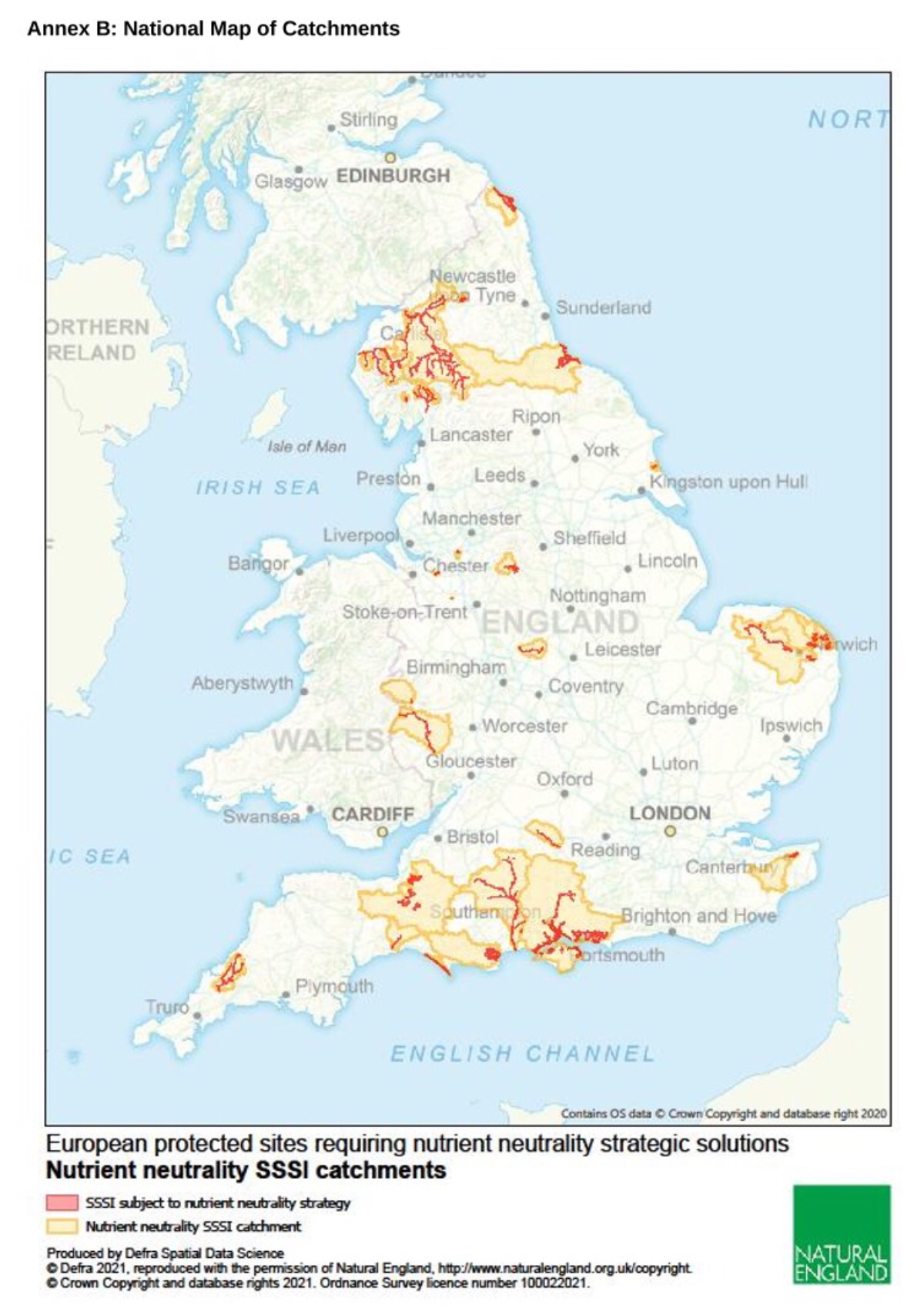





 SIMONICITY