Back To The Future: New Town Planning

Where are we now on the new towns (the new new towns and in some instances new old towns) following the government’s latest 23 March 2026 announcements and further consultation?

We now have MHCLG’s New Towns Draft Programme, with its Annex A: Draft New Towns Planning Policy and accompanying Strategic Environmental Assessment (prepared by WSP),  all for consultation until 19 May 2026.

Following this consultation and completion of the SEA and Habitats Regulation Assessments, the government intends to publish final proposals and confirm the New Town programme locations later in summer 2026.

You will recall MHCLG’s 28 September 2025 initial government response to the New Towns Taskforce’s report published that day. As at that point the government was welcoming all 12 potential new town locations recommended by the taskforce and started a strategic environmental assessment process to “to understand the environmental implications of new towns development. This will support final decisions on precisely which locations we take forward. No final decisions on locations will be made until that SEA concludes and preferred locations could change as a result of the process.”

At that stage: “We are determined to get spades in the ground on at least three new towns in this Parliament and the government is prepared to progress work on a far larger range of locations if it proves possible.”

The March 2026 draft programme sets out the objectives for the new towns programme under the following headings: scale (to comprise, or form part of, a new place comprising at least 10,000 homes); economic growth; spread (“geographically spread across England”); deliverability; placemaking.

13 locations have been assessed (the additional one to last year being the “urban regeneration of several sites and delivery of over 48,000 new homes at South Barking in East London”).

As a result of the further assessment work, subject to the outcome of consultation, the government is proposing to take forward seven locations:

  • Tempsford
  • Crews Hill and Chase Park, Enfield
  • Leeds South Bank
  • Manchester Victoria North
  • Thamesmead, Greenwich
  • Brabazon and the West Innovation Arc, South Gloucestershire
  • Milton Keynes

The first three are “priority interventions”. Manchester and Thamesmead are “exciting opportunities already in train where the government will provide assistance to maximise development opportunities”. The last two are “scalable schemes of considerable potential where the government will provide support for initial phases while exploring opportunities to further scale up development”.

The six locations not shortlisted “also meet the programme objectives and are propositions that represent credible development opportunities. However, we have had to prioritise central government resources on those sites which have the greatest potential for transformational impact. By meeting our programme objectives, the government has assessed that these 6 locations are strong propositions. Insofar as possible, we are supportive of these sites coming forward as large sites through our established programmes and interventions.”

What does it actually mean to be one of the shortlisted locations? It is intended that there be a “flexible and supportive implementation plan” for each location including: bespoke funding packages; advice and support on delivery vehicle set-up; “programme governance at senior level, with a New Towns Unit (NTU) providing escalation and extra capacity across departments and arm’s‑length bodies, and proactively prioritising resources and innovation for selected locations”; a specific new towns planning policy document which would only apply to the selected new towns, and “establishment of a New Towns Place Review Panel to provide impartial advice to delivery bodies and planning authorities, alongside practical design and placemaking guidance for new town delivery”.

The draft new towns planning policy would take effect once the new towns programme is adopted and would sit alongside the NPPF. Key aspects of the draft policy document:

Development plans should

  • identify New Town locations and their intended scale,  including identifying known boundaries to give clarity on the extent of land for development specifically as a New Town
  • set out the policies that apply  specifically  to any  New Town allocations 
  • identify the infrastructure necessary to support a New Town, both in the early stages of its development and over the longer term, and include measures to support its delivery (such as byallocatingland for infrastructure oridentifyingcorridors needed for future infrastructure investment)
  • beconsistent with any existingtown-wide framework masterplan and town-wide design code prepared to set out the vision for development in each New Town

In decision-making:

  • Substantial weight should be given to the social and economic benefits of New Towns when considering proposals for their development. Where development proposals within a New Town would comprise inappropriate development in the Green Belt, it is likely that that such development would constitute the very special circumstances to justify inappropriate development in the Green Belt. 
  • To support the development of New Towns and prevent development that would have an unacceptable impact on their delivery, development proposals within identified New Town areas should be consistent with” appended New Towns Placemaking Principles at Appendix A to the draft policy and any emerging or adopted framework masterplan and design code for the New Town. The placemaking principles “include a minimum target of 40% affordable housing, of which at least half are to be available for social rent. The government believes that this should be the expectation for all sites within the programme, while recognising some locations will be more able to meet the target than others, according to local conditions such as the volume of development on brownfield land.”
  • Development proposals in identified New Town areas should be refused if they would have a clear adverse effect on the proposed scale, location or phasing of New Town proposals.
  • Development proposals outside of New Town areas should not have an adverse impact on the delivery of New Towns, including in relation to consistency with Appendix A: New Towns Placemaking Principles.

There is long-awaited confirmation in the draft programme that “…the government considers that the delivery of housing in new town proposals should contribute towards meeting the identified housing need of relevant strategic and LPAs in all instances.”

On land assembly:

The programme sets ambitious expectations for the quality of infrastructure and placemaking in new town developments. As these locations will require substantial new infrastructure, land values are expected to be affected accordingly.

Subject to the relevant legal requirements and environmental assessments, the organisations responsible for delivering new towns will seek to assemble land at the earliest appropriate stage. Their initial approach will be to work with landowners to acquire land through voluntary negotiation. Where negotiations are not successful, the use of compulsory purchase powers may be considered to ensure that land can be planned and delivered comprehensively and that the public value generated through land value capture is maximised.

Any uplift in land value arising from planning decisions and infrastructure investment can then be reinvested to support the provision of affordable housing, community facilities, and other essential public services.”

The next steps:

Following this consultation and completion of the Strategic Environmental Assessment and Habitats Regulation Assessments, the government intends to publish final proposals and confirm the new towns locations later in the Summer. We will publish a full government response to the recommendations of the New Towns Taskforce, including more detail on how our confirmed locations will be delivered in line with our ambition for the programme.

Following confirmation of which locations will be taken forward through the New Towns Programme, the government will use every lever at its disposal to prioritise early delivery of homes and infrastructure. This includes establishing clear programme governance through a single front door to government, agreeing delivery vehicles for selected locations, and mobilising funding and business case work with local partners to enable infrastructure-first masterplanning.

Community engagement is a core part of the placemaking approach set out in our programme objectives. The government will continue to engage with communities, local authorities, delivery bodies, and investors throughout this process to ensure that new towns are planned and delivered to the highest standards of design, sustainability, and long-term stewardship. This consultation will be the first of many opportunities for people to shape the design and creation of the next generation of new towns. Tailored to each location, these opportunities will include formal routes such as future place-specific consultations as well in-person engagement and social impact activities to ensure residents and businesses have a key role in shaping their future community throughout the lifetime of the programme.”

Onwards!

(Incidentally, our 1 June “Ten Years’ Time” event is now sold out (thank you all). I’ll be interested to ask our panellists what 2036 holds for the programme. Wouldn’t it be fascinating to have a time machine?).

Simon Ricketts, 12 April 2026

Personal views, et cetera.

Roads? Where we’re going, we don’t need roads”.

(Image courtesy of Roger Ce, Unsplash)

Commons Select Committee: Land Value Capture

Today’s Commons Housing Communities and Local Government Committee’s report Delivering 1.5 million new homes: Land Value Capture (28 October 2025) contains recommendations which are more wide-ranging than the report’s title would suggest: some practical and, one would hope, uncontroversial; others touching on some raw political nerves at MHCLG no doubt.

Starting with the latter, do turn to the “epilogue” which comments directly on what were at that stage just media reports as to the “package of support for housebuilding in the capital” announcement which the government and the Mayor of London issued on 23 October 2025. The Committee expresses itself to be “seriously concerned by media reports that London’s affordable housing target could be cut” and “the Secretary of State may be considering suspending local authorities’ powers to charge the Community Infrastructure Levy to address concerns about development viability. None of the evidence to our inquiry—including from representatives of developers—advocated abolishing CIL entirely as a means of addressing viability concerns. On the contrary, we heard that the Government should reform CIL to extend its coverage where it is viable.”

The Ministry must continue its work with the Greater London Authority to deliver an acceleration package, so that London boroughs are delivering housing in line with their local housing need targets. In response to this Report, the Ministry must provide its assessment of how changes to London’s affordable housing target may deliver more affordable housing units, by increasing the number of new homes built overall. Any reduction to London’s affordable housing target must be accompanied by a clawback mechanism to ensure developers return a portion of their profits to the local authority, ringfenced for affordable housing delivery, if a development surpasses an agreed benchmark profit. If London’s affordable housing target is reduced and the number of affordable housing units delivered declines, the Ministry and the Greater London Authority must commit to reinstating the 35% target.”

Perhaps this epilogue is slightly premature, given the actual announcement proved only to be a prologue to a consultation process that will run “from November” (late November is my guess). Perhaps the Committee should hear further evidence on that back of the consultation material to be published – it is slightly odd to be responding just to a newspaper report, particularly given that the actual announcement has been made.

But that epilogue does point to the fundamental policy tension in the current economic environment: what matters most – affordable housing delivery by percentage, or by absolute numbers? See for instance its recommendation that the government’s “forthcoming reforms to its guidance on viability assessments must ensure developers reliably deliver on their agreed affordable housing commitments, with viability assessments only used to alter these commitments retrospectively in the most exceptional circumstances. To support this, we recommend that all local authorities in England must be encouraged to set a minimum percentage target for affordable housing in their local plan [NB what don’t?], with a ‘fast-track’ route planning route for developments which meet this local target.”

Too often, site-specific viability assessments are used by developers to negotiate down affordable housing requirements in circumstances where this is completely unjustifiable. Affordable housing contributions are frequently the first provision to be cut following a viability assessment, even where a developer may be making other significant contributions through Section 106 agreements and CIL. In areas with high land values, viability assessments should only be used in this way in very exceptional circumstances. Currently, not all local authorities have their affordable housing requirements clearly set out in local policy. Greater clarity from local authorities would provide developers with the right incentives to avoid lengthy viability negotiations, and ensure more applications are meeting local affordable housing requirements from the outset.

As part of its ongoing review of the viability planning practice guidance, the Government must consider how different types of developer contribution could be re-negotiated following a viability assessment, to protect affordable housing contributions. The Government must also update national policy to encourage all local authorities to set a minimum percentage target for affordable housing in their Local Plan for all major developments that include housing. This figure should be based on a local need assessment for affordable housing in each local authority, with particular regard for the local need for Social Rent homes. Local authorities should be encouraged to offer a ‘fast-track route’ for developments which meet the local affordable housing target, by making those developments exempt from detailed viability assessments and re-assessments later in the development process. This would encourage developments with a high percentage of affordable housing and speed up the delivery of housing of all tenures.

The Government must continue to develop its proposal to publish indicative benchmark land values to inform viability assessments on Green Belt land across England. The Government must publish different benchmark land values for each region of England, to reflect variation in land values. The Government must also ensure that the viability planning practice guidance contains clear advice on the “local material considerations” that would warrant local adjustments. The Government should continually review the effectiveness of the policy and consider how it may be extended to development on land that is not in the Green Belt.”

On land value capture itself:

There is scope to reform the current system of developer contributions in England to capture a greater proportion of land value uplifts from development to deliver affordable housing and public infrastructure. There is a compelling case for such reforms—especially in the context of a deepening housing crisis and with public finances currently under strain. However, a radical departure from the Section 106/Community Infrastructure Levy (CIL) regime, which currently constitute the existing mechanisms of land value capture in England, would risk a detrimental impact on the supply of land in the short-term. We recognise that this would be disruptive to the Government’s housebuilding agenda.

Reforms to land value capture should be iterative, starting with improvements to existing mechanisms. Therefore, the Government must immediately pursue the reforms to Section 106 and CIL outlined in the chapters below. These reforms must optimise the system’s capacity to capture land value uplifts and deliver infrastructure and affordable housing—particularly homes for Social Rent—in line with the Government’s wider policy ambitions. The Government must also trial additional mechanisms of land value capture in areas where there are significant uplifts in land value which current mechanisms may not capture effectively. Specifically, the New Towns programme discussed in Chapter 5 presents a vital opportunity to test new ways of financing infrastructure delivery on large developments and learn lessons for future reforms.

Any reforms to land value capture should also be considerate of the wider tax system, to balance public needs and equitable charges on development. To support this work, the Government should publish updated land value estimates, which were last published in August 2020. If the Government does not intend to do so, it must explain why it no longer publishes this data.”

In essence, the Committee sees any radical change as likely to be disruptive to the government’s current agenda. Instead, it is recommending a number of changes which in my view are “no brainers”, for instance better resources for local planning authorities and looking to simplify the approach to section 106 agreements and to CIL:

Reforms to section 106 agreements

“There is a strong case for the introduction of template clauses for aspects of Section 106 agreements across England, as was recommended by the National Audit Office and others. Templates would allow local authorities to focus negotiations on site-specific factors rather than legal wordings. Template clauses would also allow for greater standardisation and clarity of requirements across all local authorities, and in turn reduce the workload of local authorities and Small and Medium-sized Enterprise developers.

As part of the site thresholds consultation that will take place later this year, the Ministry must seek views on how standardised Section 106 templates could most effectively streamline the negotiation process across sites of all sizes. Based on the consultation responses, the Ministry must work with the Planning Advisory Service to develop a suite of Section 106 template clauses and publish these within six months of the consultation closing. Alongside their publication, the Ministry must also update its guidance to local authorities on Planning Obligations to encourage local authorities to adopt these template clauses.”

I covered the same ground in my 14 June 2025 blog post Why Does Negotiating Section 106 Agreements Have To Be Such A Drag? Not only that, but my firm has also been working on an actual template draft for small and medium sized schemes and a specific set of proposals for ironing out the pinch points that currently exist at every step of the sway from arriving at heads of terms through to agreement completion. This was there to be grasped – it is a national embarrassment. We held a workshop on 30 September 2025, attended by a selection of thirty or so lawyers and planners from the public and private sectors, developers and representatives of industry bodies with MHCLG present in an observer capacity. If you weren’t invited I apologise but we were limited by the size of our meeting room! The draft output from the workshop will be released next month. If there is an organisation out there which is willing to make a larger space available in late November for a launch event please let me know.

Section 106 dispute resolution scheme

This may be why I write blog posts…. The Committee picked up on a reference I made in the blog post mentioned above to section 158 of the Housing and Planning Act 2016 which has never been switched on, allowing for a dispute resolution procedure to be able to be invoked where necessary during the course of negotiations.

Local planning authorities across England have expressed concern that protracted Section 106 negotiations are causing delays to housing delivery. Drawn out negotiations do not benefit public outcomes and cause undue delays to development, which may impede the Government’s housebuilding ambitions. Whilst we recognise the Minister for Housing and Planning’s concerns that introducing a dispute resolution scheme may add complexity to the system, we believe the potential benefits to affordable housing delivery and unlocking stalled development outweigh this risk.

The Government should introduce a statutory Section 106 dispute resolution scheme, under the provisions of the Housing and Planning Act 2016. If the Government does not intend to pursue this, it should set out a detailed explanation as to why the Ministry has chosen not to implement the provision legislated for by Parliament in the 2016 Act. This should include setting out any specific technical or legal barriers to implementation which the Ministry has identified.”

Community Infrastructure Levy

Again, nothing earth-shattering. Rather, calls for more transparency as to which authorities are charging CIL and at what rates; widening opportunities for authorities to pool receipts (and recognising the opportunity that the reintroduction of strategic planning will bring) and greater focus on infrastructure funding statements.

On new towns:

The Committee calls on the government to set out where the funding is to come from (“The Government’s New Towns programme is likely to require billions of pounds of public and private investment over several decades, including millions from HM Treasury to establish development corporations during this Parliament”); greater use should be enabled of tax increment funding to fund infrastructure in cities and new towns. Specifically on the role that land value capture might play:

There is significant potential to use land value capture as part of funding the proposed New Towns, especially on green field sites. However, we are concerned that the Government has announced substantial detail of the 12 potential sites without a planning policy to protect land value, contrary to the recommendation of the New Towns Taskforce. It appears that the Government has not yet established any delivery body to purchase land or enter agreements with landowners, which risks allowing developers considerable time to acquire sites for speculative development and immediately push up land values. The Taskforce said that, in the worst-case scenario, this could “jeopardise New Town plans”.

The Government must immediately conduct an analysis of Existing Use Values (EUV) on each of the 12 sites to maximise the capture of future land value uplifts, and develop plans for using appropriate mechanisms for land value capture on each site. This must include the option of development corporations using Compulsory Purchase Orders to assemble land where ownership is fragmented or negotiations stall. The Government must ensure arrangements for the purchase of land on New Towns sites are in place before it announces its final decision on locations by spring 2026.”

“The Ministry is right to prioritise New Towns which have the greatest potential to boost housing supply in the short-term, but its plan to “get spades in the ground on at least three new towns in this Parliament” does not match the scale of the Government’s housebuilding ambition. The New Towns programme can and must make a contribution towards increasing housing supply during this Parliament.

The Government must immediately clarify how housing delivery in New Towns will interact with local authority housing need targets. In its final response in spring 2026, the Government must include a roadmap for the New Towns programme, to show when each development corporation will be established, when development will commence on each site, and the estimated development timeline for each New Town.”

So will the government meet its 1.5m homes target?

The housing sector is eagerly awaiting the Government’s Long-Term Housing Strategy, which it first announced in July 2024. Originally, this was to be published alongside the Spending Review in spring 2025. The continuing lack of a cohesive plan to deliver 1.5 million new homes has left the sector in the dark. We are also deeply disappointed that the Government has been unwilling to engage with us on the development of the Strategy, or provide any updates on its delayed publication, other than to tell us that it will be published “later this year”.”

“The Government can only begin to make significant progress towards its 1.5 million target once the sum of local housing need targets in Local Plans add up to that figure. Whilst the Government’s reforms to the National Planning Policy Framework seek to plan for approximately 370,000 new homes per year, local authorities will take several years to transition to this national annual target, as the currently Local Plans take seven years to produce and adopt on average. The Government has stated its ambition to introduce a 30-month plan-making timeline, but the relevant provisions in the Levelling-up and Regeneration Act 2023 to speed up plan-making have still not been implemented.

The Government must immediately bring forward its Long-Term Housing Strategy without further delay. It must set out an ambitious, comprehensive, and achievable set of policies that will deliver 1.5 million new homes by July 2029. The Strategy must prioritise implementing reforms to the plan-making system to move towards a 30-month timeline. The Strategy document must include an annex to provide the Ministry’s assessment of how many net additional dwellings each policy change will contribute towards annual housing supply, adding up to 1.5 million new homes over the five-year Parliament. If the Ministry is unable to supply this, the Government must make an oral statement to the House to confirm how many new homes it will deliver by the end this Parliament.”

There we have it. If nothing else, that will all spur us on with the work on the template section 106 agreements work and, related to that, I’m very keen to discuss how section 158 of the Housing and Planning Act 2016 might provide an effective, light touch, procedure.

Simon Ricketts, 28 October 2025

Personal views, et cetera

Hemel Homestead

On 4 November 2024 the New Towns Taskforce published its call for evidence with a deadline of 13 December 2024.

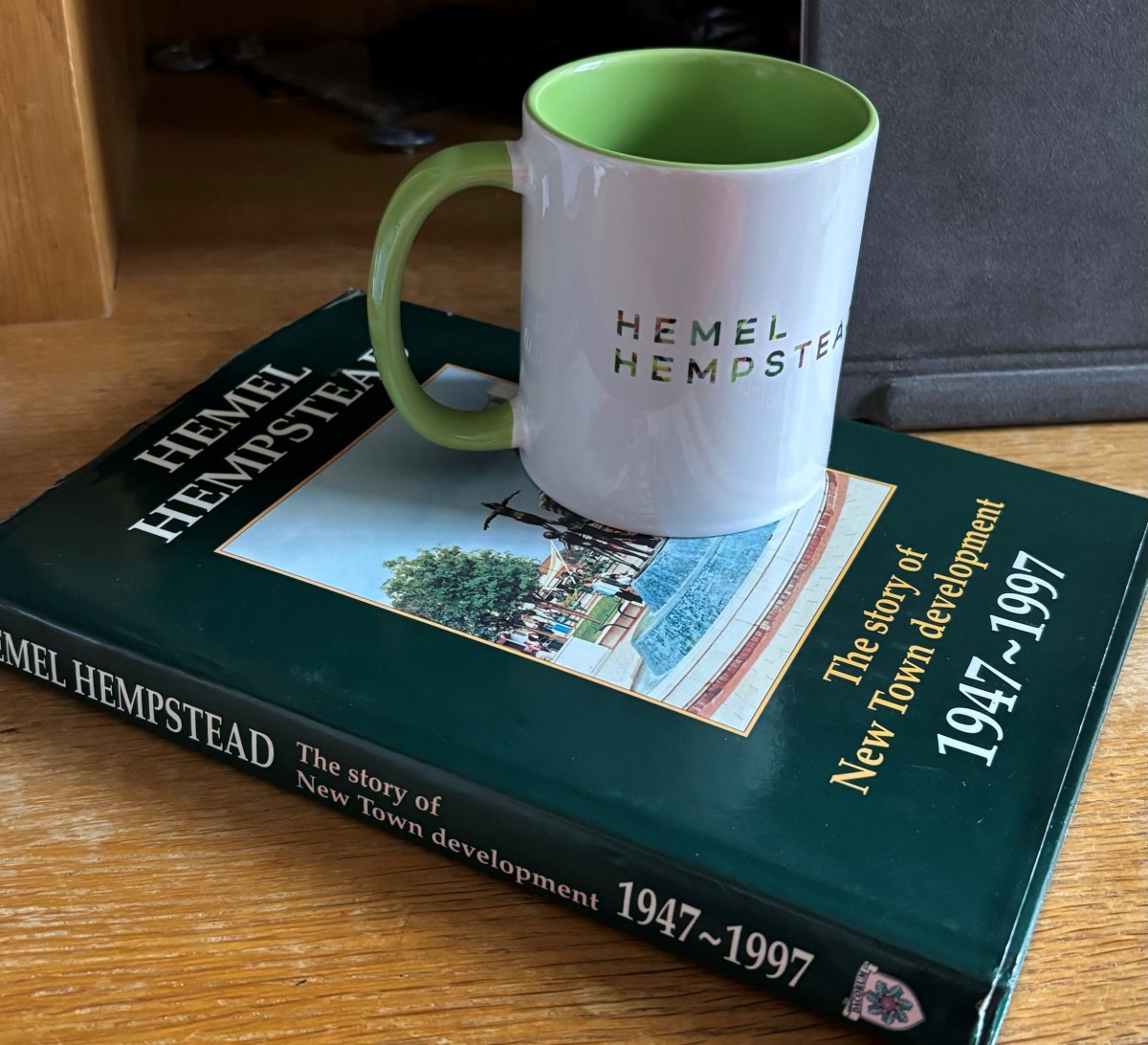
I live near an existing new town: Hemel Hempstead. This morning I happened to come across this 12 minutes promotional film from 1957, pitching its virtues to potential residents and workers, sponsored by furniture company Dexion which was building a factory as part of the new town project. The film is well worth a view. Who wouldn’t want to live in a place like this, I thought – a fresh start, cleanliness, space, facilities, modernity. Much of it is still recognisable to me. The Hemel Homestead dream portrayed in the film certainly hasn’t died, although it’s fair to say that some of those facilities may not still be there, or are much degraded, with an increasing lack of secure funding streams or the ravages of the market economy. And we have seen the replacement of that rather centralised post-war command and control economy, where so many people seemed to accept, whether or not under sufferance) their rigid place in society, with our so much more diverse and individualistic 21st century neo-liberalism.

(The film is on the BFI “Britain on Film” website. Just put in your postcode into this map and you will have access to many digitised amateur home movies, documentaries and news footage dating back more than 100 years).

Those planning the next generation of new towns would do well to reflect on lessons learned from previous generations. The post-war new towns programme saw 27 UK new towns built by state-sponsored development corporations under the New Towns Act 1946 and later amending legislation. One of the conundrums that successive governments have grappled with over the last 45 years or so is how to create the conditions in which the private sector, rather than the state, can bring forward and deliver residential-led proposals at scale, whether in the form of new towns or urban extensions.

Watching that film caused me to turn back to a book I have: Hemel Hempstead: The Story of New Town Development 1947-1997. One of its lessons for government may not be a popular one: expect resistance. Local activism against change, even resort to litigation to seek to prevent development, is certainly nothing new.

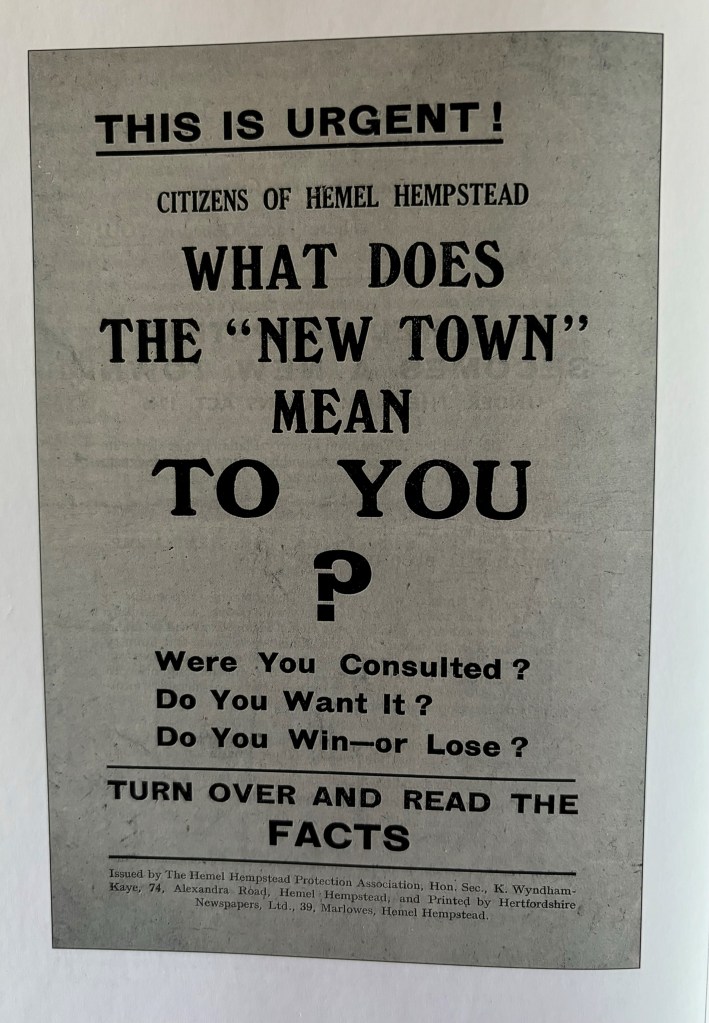
The book recounts a public meeting in 1946 at which the minister, Lewis Silkin, sought to justify the proposals. 150 local people turned up, sceptical of the project, expressing concerns as to “just how many undesirables” would move here from London (that would be me then), as to the prospect of demolition of older properties and loss of agricultural land. There was then a public inquiry which lasted all of three days! The Hemel Hempstead Protection Association sought to challenge the conclusions of the inquiry in the High Court on the basis that there had been inadequate consultation with the relevant local authorities but was rejected on 30 July 1947. I can’t find the judgment but the book asserts that it contains the sentence: “It may well mean that the village of Hemel Hempstead must die in order that Great London may live“. I’m not sure about that…

(Poster as reprinted in the book mentioned above, published in 1997 by Dacorum Borough Council)

In turn all of this sparks memories of the more well-known protests against Stevenage new town, recounted for instance in 2022 by Stephen V. Ward ‘An essay in civilisation’? – Stevenage and the post-war New Towns programme (note indeed that celebrities had their role, even back than…):

In contrast to this expert planning process quietly taking place within the Ministry, local anxieties had been growing since the Abercrombie plan’s first intimation of a satellite town (Cullingworth 1979: 27-31). The awareness from late 1945 that Abercrombie’s proposals were beginning to be acted upon heightened the unease. The Stephenson plan was not, of course, prepared in secret. A few team members had visited the area and there had been meetings with local officials but no formal contact with either the community or elected members of Stevenage Urban District Council. Meanwhile events moved on and opinions hardened. By February 1946, local development applications were being refused because they contravened the still undisclosed New Town plan. Then, in April, the famous novelist E. M. Forster condemned on radio the new ‘meteorite town’ set to land on Stevenage, where his novel Howard’s End had been set (Forster 1965: 68).

Only when the plan was virtually complete, later in April, did the planners and Ministry officials finally meet local councillors to explain it (TNA, HLG 91/74. Beaufoy, Memo, 27.4.1946). But already compulsory purchase notices were landing on Stevenage doormats. Most affected houses were only recently built but located within what would be the northern part of the proposed industrial zone. It meant, bizarrely, that the first specific thing local people learned about the New Town was that, despite a severe national housing shortage, perfectly fit houses would be demolished. (Over time, the industrial zone was reduced in size and these same houses are still there today.) The meeting with the council occurred in an atmosphere of what a ministry official optimistically termed ‘polite antagonism’. A few days later, on 6th May, all hell broke loose (TNA, HLG 91/77). During that day Lewis Silkin visited the town, meeting local people, the council and finally addressing an evening public meeting. Seemingly oblivious of what was brewing, the Minister confidently expected to carry the day. He had already arranged a triumphant news story ‘A New Town is Born’ to be circulated to the world’s press. Others had more accurately foreseen events. On 30th April, the London Evening News led with the headline ‘Doomtown Protest Rising’. The following day the Stevenage Residents’ Protection Association was formed and its membership and funding quickly grew.

At the public meeting (see Figure 2) over 350 people filled Stevenage Town Hall with (in some reports) about half the local population outside, listening on loudspeakers. The strongest objections came from farmers and residents set to lose their livelihoods or homes. There were also many general concerns: that Stevenage was the victim of a national experiment, that history was being uprooted and everything was being done in dictatorial fashion. Despite some cheers, the meeting did not go well for the Minister, his speech frequently being interrupted. He appealed to the audience’s highest instincts and invoked the wartime spirit. Yet such arguments did not assuage protesters who thought him profoundly anti-democratic, with cries of ‘hark, hark, the dictator’ and ‘Gestapo’. Nevertheless, Silkin assured incredulous listeners that soon ‘[p]eople from all over the world will come to Stevenage to see how we here in this country are building for the new way of life.’ He left the hall to find a tyre of his official car had been deflated and (it was suspected) sugar put in the petrol tank.”

(This was the famous incident where of course signs at Stevenage railway station were switched for signs reading “Silkingrad”. See also the litigation brought by those opposing the development, culminating in Franklin v the Minister of Town and Country Planning (House of Lords, 1948).

As was the case in the late 1940s, so now – the government should expect equivalent tests of its resolve. Where would we be if those planning Hemel Hempstead, or Stevenage, or other new towns of the time, had caved? A study of the anti-new towns campaigns and litigation of that time would be an informative read.

Simon Ricketts, 17 November 2024

Personal views, et cetera