As a long-time collector of successive promises by politicians to reform the planning system – and the metaphors and alliteration used to that end – I was excited to see the Labour Party’s 28 March 2024 document Power and Partnership: Labour’s Plan to Power-Up Britain, published ahead of the 2 May 2024 local elections.
PUB gives the clearest set of indications yet as to what a future (possibly near future) Labour government’s priorities will be for planning, development and local government. It’s bold and you need to read it. I’ll just now give you some selective highlights. (I’ve emboldened the boldest commitments, towards the end of this post).
From the foreword by Keir Starmer and Angela Rayner:
“Growth in every corner of the country, so that every town, village and city has a role to play, and can reap the rewards of a decade of national renewal.”
From an initial section headed “the challenge we face”:
“Despite hoarding the levers of power, our centre remains passive in the face of huge national challenges…Our sclerotic planning system has left England unable to build the infrastructure and homes it needs; and endless Conservative chaos has undermined certainty and investment across the country.”
“We are currently not able to effectively integrate local, regional and national transport systems. Decisions onhousing developments or commercial space chop and change at a moment’s notice. And the lack of a consistent economic strategy has undermined business confidence and investment.”
From a section headed “empowering communities to power up Britain”:
“Local and sub- regional decision- makers often possess better information about their local economies, and more developed capacity for working with local businesses and institutions. By giving local leaders a greater say, we can focus policies at the scale at which people live and work and at which businesses specialise andform economic clusters.
We also should not make policy on a scale which is so local that it does not reflect people ’s working, commuting and social patterns – people often cross administrative borders every day as they go to work or head into their town centre. OECD research indicates that administrative fragmentation at a locallevel holds productivity back.
By holding strategic decision- making over housing policy at a local authority level, for example, we are failing to seize the opportunity to build more homes in places where people need them to live and work.
We believe new combined authorities or devolution settlements should be tailored to functional economic areas. This is central to the economic promise of taking back control and will be necessary for local leaders to effectively deploy skills, transport, housing and other labour market policies and unlock new long- term , integrated funding settlements. By deepening devolution to city regions, we will make sure that the towns and cities that built the foundations of modern Britain are given the tools they need to thrive in the modernservice and high- value manufacturing economy.
We will also reap the benefits of combining scale with local knowledge, joining up the power of an active state with the information available to local leaders. We will work to build up capacity in local and sub- regional government and we will deliver a new institutional framework for partnership working and joined- up decision- making.”
From a section entitled “an active centre to power up Britain”:
“Labour’s plan for growth includes action at a national scale to address the failures outlined in this document. This includes a plan to steam ahead in the industries of the future, with a modern UK industrial strategy supported by tailored sector strategies and, in England, Local Growth Plans; strategic public investment via our National Wealth Fund across the United Kingdom ; wholesale reform to England’s system of planning for housing and infrastructure…
Just as our plan will require local leaders to be active players, it will require a greater level of strategy and direction from national government. It will involve the reintroduction of mandatory local housing targets to get Britain building again…”
A section entitled “English devolution” starts with three bullet points:
Turbocharge mayors with access to new powers over transport, skills, housing, planning, employment support and energy, supported by long- term integrated funding settlements.
Work to expand devolution further and faster, with local authorities coming together to take on new powers to boost their economies.
Roll out new Local Growth Plans to towns and cities take advantage of their economic potential and foster clusters of well- paid jobs.
“A Labour government will ask all councils outside of an existing or agreed combined authority or county devolution deal to begin preparatory work to join together on sensible economic geographies and take on a new suite of powers through our enhanced devolution framework to benefit their residents. We will provide them with support and guidance to do so through the leadership of the Secretary of State and the expertise of the Department.“
“We will create a statutory obligation on all combined authorities and counties with devolution deals to develop a Local Growth Plan based on those functional economic geographies which identifies economic clusters and sets out their plans to build on their local advantages, the key binding constraints of their local economies and how they will use the powers devolved from central government to support local growth.”
Labour will “provide longer- term funding settlements for councils, giving them the certainty they need to deliver better value for money”.
From a section entitled “high streets”, there is a commitment to “give communities the power to revampempty shops, pubs and community spaces with a strong new Community Right to Buy”
A section headed “building homes” starts with three bullet points:
Build 1.5 million new homes over the next parliament, unleashing growth and putting more money into people’s pockets.
Deliver the biggest boost of social and affordable housebuilding in a generation, embedding security and stability in our economy.
Empower metro mayors to deliver new housing projects linked up to the jobs and infrastructure needed to support regional growth.
“Labour will build 1.5 million high quality homes in the right places, with new towns, urban extensions and smaller developments – and they will be connected to infrastructure and built strategically as part of sub-regional strategies from mayors and combined authorities. This will increase the ‘effective size’of our major cities and high- potential towns so that they can reap the benefits of scale and agglomeration needed to develop and cement their labour market clusters and comparative strengths.
Our approach combines robust national policy frameworks, including targets for housing delivery, with measures to support local leaders delivering plans for meeting those targets and ensuringhomes are built in the right place. We want to give local leaders a say over ‘how’ new homes are delivered, whilst being robust in national policy about ‘if’ areas build the homes they need.”
Labour will deliver:
“• The biggest boost in affordable homes for a generation – with social and council housingat the core of Labour’s plan for secure homes.
• A housing recovery plan, a blitz of planning reform to quickly and materially boost house building , delivered in our first weeks and months in office .
• The next generation of new towns , garden cities and large sites, new communities with beautiful homes, green spaces, reliable transport and bustling high streets
• New powers to unleash mayors including a package of devolution to mayors, handing them stronger powers over planning and departmental style settlements for housing
• ‘Planning passports ’ for urban brownfield delivery, a tough package of planning reform to fast track approvals and delivery of high density housing on urban brownfield sites
• 300 new planning officers across the country, paid for by raising the stamp duty surchargeon non- UK residents, to improve public sector capacity to expedite planning decisions.”
The amendments to the planning system introduced by LURA are being brought into force gradually. I summarised the first two sets of commencement regulations in my 4 February 2024 blog post Treasure Hunt: LURA Commencement Regulations & Transitional Provisions . The third set of commencement regulations were then made on 18 March 2024 and now we have this fourth set of commencement regulations. Irwin Mitchell’s Nicola Gooch is the LURA commencement order queen and summarises the latest changes here with an updated table as to when the various planning-related provisions within LURA come into force (to the extent yet known).
Various changes to the planning enforcement system come into force on 25 April 2024. The most important one of general interest is possibly the “Ten Years After” ((c) Simonicity) provision: the time period in which local planning authorities can take enforcement action against unauthorised development in England is now, in all cases, 10 years (formerly four years in the case of unauthorised operational development or the change of use of any building (which includes any part of a building) to use as a single dwelling). The ability for this period to be extended in cases of concealment is unchanged.
The transitional provisions in Regulation 5 of the commencement regulations are important:
The amended time period does not apply in the case of operational development where the operations were substantially completed before 25 April 2024. The amended time period does not apply in the case of unauthorised change of use to a dwelling where the breach occurred before 25 April 2024. The latter appears more lenient than I was expecting – it seems that if the unauthorised use started say on 24 April 2024 it would be potentially lawful if not enforced against by 24 April 2028 and that if it were to start on 25 April 2024 it would be potentially lawful if not enforced against by 25 April 2034. Some difference. For owners of buildings potentially affected by the change, it will be important to have evidence of unlawful use (or, as the case may be, of unlawful operational development having been substantially completed), on or before 24 April.
I referred earlier to the 1971 Act – which was still in force for a few years when I first started practising. Looking back at it I’m reminded that enforcement time limits have constantly fluctuated over the years (and, my word, looking back, how much longer each Act is than its predecessor – eg see how the relevant section number appear later and later in the legislation):
1971 Act, section 87 : before the end of 1963 in the case of unauthorised change of use (this was getting progressively more difficult to prove when I started practice) or four years in the case of operational development, breach of condition and change to a dwelling
1990 Act (as amended), section 171B : ten years in the case of unauthorised change of use or breach of condition, or four years in the case of operational development or change to a dwelling, with the power for a Magistrates Court to make a planning enforcement order extending the deadline for enforcement in the case of deliberate concealment.
Back to the latest commencement regulations…
The other main planning enforcement changes being brought into force on 25 April are:
A local planning authority which suspects unauthorised works were carried out on a listed building will be able to issue a temporary stop notice requiring the works to stop for up to 56 days
Temporary stop notices will be able to have effect for up to 56 days rather than 28 days
A new power for a local planning authority in England to issue an enforcement warning notice asking the person concerned to submit a retrospective planning application within a specified period
Reduced ability for a person to lodge an appeal against an enforcement notice issued in England on ground “(a)” – that planning permission ought to be granted or that the condition or limitation imposed on the grant of permission ought to be discharged.
A new power for the Secretary of State to dismiss an appeal in relation to an enforcement notice or an appeal relating to a lawful development certificate in England, where it appears that the appellant is causing undue delay to the appeals process.
Increased fines.
All of this is by way of amendments to the 1990 Act. Wouldn’t a consolidating Act be helpful, 34 years after?
Whether tis nobler in the mind to suffer the slings and arrows of outrageous fortune. Or to take arms against a sea of troubles by amending your permission to reflect current market or occupier requirements? Because, of course, in the equally timeless words of Gary Barlow, everything changes.
The main part of this blog post is a detailed examination by my Town Legal colleague Susie Herbert of the potential opportunities arising from use of section 73B of the 1990 Act, introduced by way of the Levelling-up and Regeneration Act 2023, and its potential limitations and ambiguities versus section 73. It’s an important part of DLUHC’s current consultation as to an accelerated planning system which I said I would come back to in my 9 March 2024 post that covered the rest of the proposals.
But first, an interesting appeal decision letter from last week. You may remember that for a temporary period (2013 to 2016) there was a specific statutory procedure, section 106BA, which allowed developers to apply to modify or discharge planning obligations in a section 106 agreement on the basis that they made the development unviable.
Since the repeal of section 106BA the question often arises as to how we might still achieve the same ends. After all, an application under section 106A to amend a section 106 agreement can only be made if the agreement is at least five years’ old. Otherwise, in proposing a deed of variation to the existing agreement, you are in the local planning authority’s hands with no right of appeal.
The alternative options would be to make an entirely fresh application for planning permission (an onerous process) or, conceivably, to make an application under section 73 for removal or variation of a condition attached to the previous planning permission and to use the application as a vehicle for proposing an amended form of planning obligation. The section 73 route was accepted by an inspector in a decision letter dated 25 March 2024 in relation to a proposed development in Thornton Heath, Croydon. There is an existing planning permission for 57 new dwellings , with a section 106 agreement requiring 35% of the homes to be delivered as affordable housing. A Section 73 application was made to amend condition 2 attached to the permission which set out a list of the approved drawings, proposing amended drawings increasing the proportion of three bedroom homes and external alterations to fenestration and elevations. A section 106 unilateral undertaking was put forward proposing no affordable housing, on the basis of a viability appraisal, which had been reviewed and accepted by the local planning authority. The application was not determined within the statutory period and the developer appealed. The authority resisted the appeal on the basis that a section 73 application was not the appropriate means to reduce the level of affordable housing previously secured.
Having reviewed the relevant case law in relation to section 73, the inspector allowed the appeal:
“In this instance, a change in policy has not made it appropriate or essential to amend the obligation. However, there has been a significant change in circumstances relating to the viability of the scheme. It seems to me that it is a matter of planning judgment whether the change in circumstances makes it appropriate, essential or desirable to enter into a planning obligation in different terms to the original. Given the case law outlined above, the terms of a new obligation may be connected to or intertwined with the amendments sought to the drawings, but there is nothing of substance to suggest they must. Consequently, it would be going too far to suggest an amended obligation must be a consequence of, or directly related to, changes flowing from the proposed alterations detailed on the new drawings.
There is no dispute between the Council and appellant that since the original permission was approved, and the evidence underpinning it prepared, construction costs have rapidly risen whilst house prices have remained static. This has had a significant impact on the viability of the scheme. As mentioned above, the situation is so altered that the Council and appellant agree the scheme can no longer provide affordable housing and remain viable. Moreover, there is also common ground that the provision of affordable housing is not a benefit, alone or taken with other factors, which is required to outweigh any harmful impacts emulating from the scheme. Indeed, the Council has only identified limited harm in respect of the housing mix, which is outweighed by other considerations in any event. In these circumstances, altering the level of affordable housing would not be a fundamental change to the proposal.
Therefore, the current circumstances are such that there is a need for a planning obligation in different terms to the original to facilitate delivery. The altered terms of the planning obligation would be consistent with the development plan taken as a whole. The consequence being that the change would not have a bearing on whether the scheme would be acceptable. Thus, the amended planning obligation is necessary, reasonable, supported by development plan policy and proportionate in the context of the prevailing circumstances. Therefore, it is desirable, essential and appropriate to consider a planning obligation in different terms to the original, namely the provision of 0% affordable housing with a review mechanism as required by the LP. In conclusion, the s73 application is an appropriate means in this instance to reduce the level of affordable housing relative to that previously secured.”
The case is another example of the potential flexibility of the existing section 73 procedure, notwithstanding the constraints imposed by the courts – particularly by way of Finney (the inability to use section 73 where the desired changes would be inconsistent with the description of development on the face of the existing permission (leading to a workaround in practice, with a willing authority, by way of use of section 96A in conjunction with section 73 – see my previous blog post here for more information).
Section 73B
So will the new section 73B procedure be the solution. Over to my colleague Susie Herbert for the detail…
On Budget Day, 6 March 2024, DLUHC launched a consultation on accelerating the planning system which closes on 1 May 2024. As well as proposals relating to the application process, this includes a consultation on the implementation of section 73B to vary planning permissions and on the treatment of overlapping permissions. This post concentrates on the proposals concerning variations to planning permissions via the new section 73B and the proposals for overlapping permissions.
Section 73B was introduced by the Levelling-up and Regeneration Act 2023 (“LURA”). The provision is headed “Applications for permission not substantially different from existing permission”. It is not yet in force and secondary legislation is required to specify the application procedure including consultation arrangements, information requirements and the application fee as well as amendments to the CIL regulations. The government proposes to implement section 73B following the consultation “as soon as parliamentary time allows”.
The consultation asks questions on:
The scope of the proposed Planning Practice Guidance relating to section 73B;
Procedural arrangements for a section 73B application;
Application fees for section 73B applications;
CIL and section 73B applications.
As background, the introduction to this section of the consultation notes “The ability to vary planning permissions in a proportionate, transparent and timely manner is an important feature of the development management system. It is common for developments, particularly if they are large, to require variations to the planning permission in response to further detailed design work, new regulatory requirements, and changing market circumstances. Without this flexibility, development risks being delayed or abandoned as the only option would be the submission of a brand new application for the development which would create uncertainty, delay and further costs.”
The consultation notes that the current legislative routes to varying planning permissions are section 73 and section 96A. In 2009, guidance was introduced on “Greater Flexibility for Planning Permission”. It was at this point that section 96A was introduced into the legislation to allow for “non-material” amendments to existing planning permissions. The guidance envisaged that section 73 could be used for “minor-material” amendments by varying a condition that listed the approved plans by substituting new plans that showed the varied scheme.
However, in 2020, the Courts confirmed that section 73 cannot be used to amend the description of development (Finney). Therefore, the scope to use section 73 to make “minor material amendments” by varying a condition which lists the approved plans is limited.
Although not expressly explained in the consultation document, the reason that the inability to use section 73 to amend the description of development causes such difficulties in practice is because the case law has established that a permission granted under section 73 cannot introduce a condition which creates a conflict or is inconsistent with the description of development. It has therefore become standard practice to minimise the level of detail provided in the description of development and thereby reduce the potential for future scheme amendments to conflict with the description. In some cases an original description of development can be amended via s96A to remove detail from the description of development into a condition and thereafter amend this condition via section 73.
Section 73B is intended to deal with this issue by allowing both the description of development and the conditions to be varied in a single process. The restriction on the use of section 73B is that the amended development cannot be “substantially different” from the existing development.
“Subtantially different”
A key point in the consultation is that the Government does not propose to provide prescriptive guidance on is what is meant by “substantially different”. The consultation notes that section 73B does not provide a definition of the test and that it will depend on the scale of the changes required in the context of the existing permission. Factors that could be relevant are location and the scope of the existing permissions and the proposed changes.
It is not clear where “substantially different” will sit on the scale of potential changes. We note that this term was used in the 2009 guidance on flexible planning permissions in respect of what was meant by a “minor material amendment” which stated:
“We agree with the definition proposed by WYG: “A minor material amendment is one whose scale and nature results in a development which is not substantially different from the one which has been approved.” This is not a statutory definition.”
This suggests that the intention may have been that section 73B was intended to align with the minor material amendments that the guidance envisaged to be made under section 73 with the additional ability to amend the description of development (to make “non-substantial” changes).
However, since this drafting was introduced into the Levelling Up and Regeneration Bill, the Armstrong and Fiske cases have confirmed that section 73 is not restricted to minor material amendments. It is helpful that at footnote 4, the document expressly states that “the department acknowledges that section 73 is not limited in scope to minor material amendments” following the recent cases of Armstrong and Fiske. The judge in Fiske held that there is a restriction on the scope of section 73 which is whether the alteration is fundamental (while in Armstrong the judge had considered that even this restriction did not apply and the only restriction is consistency with the description of development).
Therefore, if the scope of changes allowed by section 73B is intended to be similar to “minor material amendments”, there is the possibility that section 73 would actually allow more flexibility as it extends to “not fundamental” amendments (provided always that it is possible to remain within the description of development).
While it is understandable that the Government does not propose to provide prescriptive guidance on the meaning of “substantially different” because it will be a matter of judgement dependent on the context (as for section 96A), it is clear that the application and interpretation of this provision by each LPA is going to be a key to how useful this provision is in practice.
The consultation states that the government’s proposed objective is for the section 73B route to replace the use of section 73 to deal with proposals for general material variations while the use section 73 would return to focus on the variation of specific conditions and that it proposes to introduce guidance to this effect.
It would therefore be helpful if the scope of changes allowed under section 73B was not less that the scope of changes that could be made via a section 73/ section 96A approach: otherwise the end result of the changes would be more complexity but less flexibility. It does not seem that it would be overly prescriptive for the Government to provide guidance to this effect. It would also be consistent with the general proposed approach of treating a section 73B application in a similar way to a section 73 application in terms of procedure (as detailed below).
Features of section 73B
The consultation summarises the key legal features of section 73B as follows:
a section 73B application must identify the existing permission (which cannot be a section 73, section 73A or other section 73B permission, or permission granted by development order), and can propose conditions for the new permission;
as an application for planning permission to a local planning authority, the determination of a section 73B application is subject to section 70 and other decision making duties. But the local planning authority cannot grant permission for a section 73B application if the effect of the section 73B permission would be substantially different from the existing permission, and when determining the application, they must limit their consideration to the variation between the application and the existing permission; and
like a section 73 permission, a section 73B permission is a separate permission to the existing permission (and any other section 73 or 73B permissions related to the existing permission) so the granting of a section 73B permission does not affect the validity of the existing permission (or other section 73 or 73B permissions).
The provision also applies to applications for permission in principle.
Proposed general approach
As noted above, the Government’s proposed objective is for the section 73B route to replace the use of section 73 to deal with proposals for general material variations while the use section 73 would return to focus on the variation of specific conditions. The consultation notes that because section 73 cannot be used to amend the description of development, it has become common practice to submit generic descriptions of development which do not specify key feature such as the number of dwellings with those details set out in conditions to allow them to be varied via section 73. The consultation identifies that a benefit of using section 73B would be to allow a return to clear and more specific descriptions which would help improve the transparency of development proposals for local communities.
The Government therefore proposes to use Planning Practice Guidance to encourage the use of clearer, more transparent descriptors of development and the use of section 73B to deal with general material changes to development granted planning permission. The consultation asks “do you agree that guidance should encourage clearer descriptors of development for planning permissions and section 73B to become the route to make general variations to planning permissions (rather than section 73)? (Question 26)” and “also for any further comments on the scope of the guidance (Question 27)”. This includes the question of whether the guidance should discourage the use of the, now standard, condition which lists approved plans which was introduced to facilitate minor-material amendments via section 73. The consultation states that they are not minded to discourage the use of this condition and that it is beneficial to help support effective planning enforcement, particularly in relation to design.
Procedural arrangements
The aim is for the procedural requirements set out in regulations for a section 73B application to be “proportionate reflecting the position that the development proposed in the application is a material variation to an existing permission while still ensuring there is transparency about the proposed variation” and that “Local communities should be aware of proposed variations so they can make representations: the section 73B route is not a mechanism to undermine scrutiny.”
The proposal is:
information requirements will be generally the same as other applications for planning permission but certain requirements (such as a design and access statement) will not be required.
publicity requirements will be the same as other applications for the type of development (i.e. if it is a variation to major development, the major development publicity requirements would apply).
Consultation with statutory consultees would follow the approach of section 73 applications where there is a duty on the local planning authority to consult a statutory consultee if they consider appropriate (reflecting the position that a proposed variation may only engage specific issues which of an interest to only some statutory consultees and so it would be disproportionate to require those statutory consultees without an interest to respond) although the footnote states that applications would automatically be in scope of the consultation duty between counties and district LPAs, the consultation arrangements for parishes and neighbourhood forums and the arrangements for applications of potential strategic importance under section 2A TCPA 1990 for the Mayor of London and those combined authorities which have section 2A powers.
EIA and HRA requirements would apply as for section 73 permissions and a similar approach would be taken to Biodiversity Net Gain.
The consultation asks whether consultees agree with this proposed approach to procedural requirements.
Fees
The proposal is to align the fee for a section 73B application with the fee for a section 73 application. The alternative approach of setting a higher fee for a section 73B application was considered on the basis that the section 73B route could be the default route for general material variations while section 73 focuses on the variation of a specific condition. However, the higher fee could encourage applicants to continue to use section 73, undermining the purpose of the reform.
However, it is proposed to change the current flat fee approach for a section 73 application (£293) so that there would be three separate fee bands for householder, non-major development and major development.
The householder fee would be reduced to £86 (double the fee for discharge of condition and removing the anomaly that an original householder application fee is lower than the section 73 fee). The non-major development fee would remain at £293.
For major development, there would be a higher fee which would be less than the fee for the original application and proportionate to the work necessary to consider the proposed variation (without exceeding full cost recovery). The consultation asks for views about where this fee should be set, including evidence from local planning authorities for the typical work which is involved dealing with an average section 73 application for a major development.
CIL
It is proposed that CIL would apply to section 73B in the same way that it applies to section 73 permissions. This would mean that “if the section 73B permission does not change the CIL liability, the chargeable amount is that shown in the most recent liability notice issued in relation to the previous permission. But if the section 73B permission does change the CIL liability, the most recently commenced or re-commenced scheme is liable for the levy.”
Overlapping permissions and section 73B
The consultation refers to the recent Hillside and Dennis cases on overlapping permissions [see previous simonicity blog posts respectively here and here] and how these judgments have questioned the ability to use ‘drop in’ permissions where a subsequent permission is granted for an alternative development on a section of a larger development previously granted permission and still being implemented.
It summarises Hillside as confirming existing caselaw that “full planning permissions are not usually severable. That is to say, parts of the permission cannot be selectively implemented and that, if a new permission which overlaps with an existing permission in a material way commences, should the carrying out of the new permission make it physically impossible to carry out the rest of the existing permission, it would be unlawful to continue further development under the existing permission. The Court then went on to say, if someone wanted to change part of the development, they should seek to amend the entire existing permission.” And notes that Dennis considered the implications for outline planning permissions and the question of severability further.
It notes that “drop in permissions have often been used during the implementation of outline planning permissions for large scale phased residential and commercial developments where a new development is proposed through a separate application for a phase outside the scope of the outline planning permission while the rest of the phases continue to be implemented under the outline permission. This approach has provided a flexible way of enabling changes to a specific phase to be managed through planning without having to seek a new planning permission for the entire development, particularly when the scale of change is outside the scope of a section 73 application.”
In terms of section 73B, “The government believes that the new section 73B route provides a new way of dealing with such changes to a specific phase of a large scale development granted through outline planning permission in many cases. While the use of section 73B is constrained by the substantively different test, these changes often continue to fit within the existing masterplan which underpins the outline permission and do not necessarily fundamentally change this permission – for instance, changing a phase of commercial development (use class E) to a cinema (use class – sui genesis) where the outline permission only allows class E uses. In this case, the section 73B application would provide details of the proposed variation to the outline planning permission and the consideration by the local planning authority would focus on the merits of this variation.”
However it is recognised that “there could be circumstances where the section 73B route may not be appropriate – for instance, if the change could be considered to be substantially different or there are wider financial and legal relationships between the master developer, land owners and investors which makes the preparation of a section 73B application difficult.”
The consultation asks for views about the extent to which the section 73B route could be used to grant permission for changes for outline planning permission in practice and what the constraints are.
It is clearly helpful that the consultation acknowledges that a new use could be introduced via section 73B which gives more potential flexibility and simplicity than a section 73 approach. However, as noted, changes may well be considered “substantially different” even if they allow the remainder of a masterplan to be developed without amendment. There are also undoubtably complications in obtaining a new planning permission (even a section 73B) for an entire site where development has started and different plots are being developed by different developers, particularly if a section 106 agreement is required to be varied.
The final section of the consultation is a proposal to create a framework through a new general development order to deal with circumstances that cannot be addressed via section 73B. This general development order would deal with overlapping permissions in certain prescribed circumstances. It notes that the Secretary of State has broad powers under section 59 of the Town and Country Planning Act to provide for the granting of planning permission through an order, including classes of development. This may be for a specific development or for a class of development.
The consultation asks for views on whether the focus of such an approach should be on outline permissions for largescale phased development or whether there are any other categories of development which could benefit from an alternative approach.
The consultation questions are:
Question 33. Can you provide evidence about the use of the ‘drop in’ permissions and the extent the Hillside judgment has affected development?
Question 34. To what extent could the use of section 73B provide an alternative to the use of drop in permissions?
Question 35. If section 73B cannot address all circumstances, do you have views about the use of a general development order to deal with overlapping permissions related to large scale development granted through outline planning permission?
It is not clear what the general development order proposal would entail but it is clear that an alternative approach for circumstances where section 73B cannot be used would be valuable and it is encouraging that the government is exploring further options to address the Hillside issue.
Thanks Susie for the above. Given ongoing concerns that I suspect many of us have both as to the need for a proportionate procedure for amending permissions but also more specifically to find a solution to the unnecessary complexities we all face by way of Hillside and Dennis, this is going to be an important consultation process.
The uncertainties as to whether “minor material” “substantially different” and “fundamental alteration” also bring to mind the consideration given recently by the Planning Court to whether, in the NPPF, “substantial” has a different meaning to “significant“, in Ward v Secretary of State (Lang J, 25 March 2024) (answer, after lengthy and unnecessary confusion which could have been prevented by accurate language used at the outset: nope).
Simon Ricketts, 1 April 2024
Personal views, et cetera
Edwin Booth as William Shakespeare’s Hamlet, circa 1870, courtesy Wikipedia
Some of the planning bar was all-caps aplenty on LinkedIn this week in relation to a couple of Hertfordshire green belt appeal decisions by the Secretary of State:
Before I discuss these (together with in fact a third one – take a bow David Hardy and team), I thought I would share with you some statistics. I have been looking at DLUHC’s list of called in planning application decisions and recovered appeal decisions to get a feel for the recent pass/fail rate and the extent to which the Secretary of State is departing from inspectors’ recommendations (a feature of two out of three of the recent decisions).
In relation to call in decisions over the last year, the Secretary of State has approved 5 out of 8. In 4 of them (half!) he has reached a different decision to that which the inspector recommended – two approvals against recommendation, two refusals against recommendation (although one of the latter – M&S Oxford Street – is of course back for redetermination).
In relation to recovered appeals, there have been 17 decisions – 10 allowed and 7 dismissed. In 5 of them he has reached a different conclusion to that which the inspector recommended – two allowed against recommendation, three dismissed against recommendation.
I’m not sure what you take from this back of the envelope calculation other than how unpredictable the process is. I feel I need to point again to my 9 February 2024 blog post, The Weighting Game .
Turning to these Hertfordshire green belt decisions…
Tring
This was an appeal against Dacorum Borough Council’s refusal of an application for planning permission for up to 1,400 dwellings (including up to 140 falling within use class C2), a new local centre, sports/community hub, primary school, secondary school and public open space on land bound by Bulbourne Road and Station Road, bisected by Marshcroft Lane, Tring, Hertfordshire. The site is in the green belt and surrounded on three sides by the Chiltern area of outstanding natural beauty. By his decision letter dated 15 March 2024 he disagreed with his inspector’s recommendations and refused planning permission.
The Secretary of State found that Dacorum has a significant housing land supply deficit – its supply stands at just 2.06 years. The inspector gave moderate weight to the provision of recreational and sporting facilities, whereas the Secretary of State gave this limited weight but, other than that, his findings did not materially depart from those of the inspector. However, it all came down to that tricky issue of weight:
“In line with paragraph 148 (now 153) of the Framework, the Secretary of State has considered whether the harm to the Green Belt by reason of inappropriateness, and any other harms resulting from the development is clearly outweighed by other considerations. Overall, he considers that the other considerations in this case do not clearly outweigh the harm to the Green Belt and the other identified harms relating to impact on character and appearance, setting of the AONB, harm to designated and non- designated heritage assets and loss of agricultural land. He therefore considers that [very special circumstances] do not exist to justify this development in the Green Belt.”
This was the Secretary of State’s decision letter dated 22 March 2024 in relation to two appeals against refusal by St Albans City and District Council of applications for up to 391 new dwellings, the provision of land for a new school and associated development on land south of Chiswell Green Lane and for up to 330 discounted affordable homes for key workers, including military personnel, the creation of open space and associated development on land north of Chiswell Green Lane, St. Albans
St Albans’ housing land supply stands at only 1.7 years and its housing delivery test figure stands at 55% (both figures worse at the time of the decision than at the inquiry). Although St Albans’ emerging local plan is still only at regulation 18 stage, the Secretary of State agreed with the inspector that “the Green Belt Review is a material consideration relevant in considering Green Belt matters in the district, and that the relative suitability of strategic sub-area S8 (which both appeal sites fall within), as defined by the Green Belt Review, is an important consideration.” and that the land to be secured for a new school via appeal A should attract significant weight.
In terms of housing:
“The Secretary of State agrees with the Inspector that there is a very substantial need for housing in the district which is persistently going unmet, that the Local Plan housing requirement is hopelessly out of date, and that, using the standard method, the Council can demonstrate just a two-year housing land supply at best. He also notes that the latest HDT has been failed by some margin. Therefore, the presumption in favour of sustainable development is triggered, in accordance with footnote 8 to paragraph 11(d) of the Framework.
For the reasons given in IR586-591, the Secretary of State agrees with the Inspector that in the context of such a great housing need, very substantial weight should be attached to the proposed housing.”
Compare and contrast with that Tring decision – Dacorum 2.06 years versus St Albans 1.7 years – hmmm, not much in it is there?
“The Secretary of State has considered whether the harm to the Green Belt by reason of inappropriateness, and the other harms he has identified, are clearly outweighed by other considerations. He considers that they are, and therefore very special circumstances exist to justify permitting the development. As such, the proposed development accords with Policy S1 of the St Stephen Parish Neighbourhood Plan 2019-2036 and Policy 1 of the St Albans District Local Plan Review 1994, and national planning policy on Green Belt.”
This was a decision dated 11 March 2024 taken on behalf of the Secretary of State in relation to an application, which he had called in, for a proposed solar array with associated battery storage containers and ancillary development including means of access and grid connection cable on land at Graveley Lane and to the east of Great Wymondley, Hertfordshire. The inspector recommended that the application be refused but the Secretary of State disagreed and granted planning permission.
The Secretary of State placed significant weight on the contribution that the scheme would have to renewable energy targets, including “the generation of sufficient electricity to meet the requirements of about 31% of the homes in” North Hertfordshire. He disagreed with the inspector’s conclusion that the development would cause serious harm to the setting of the grade 1 listed Wymondley Priory and a nearby grade II* listed nearby tithe barn and with the inspector’s concerns as to the inadequacies of the site selection process carried out.
In summary (although as always do read the full letter):
“Weighing against the proposal is harm to the Green Belt which carries substantial weight, harm to heritage which carries great weight and uncertainty about mitigation for displaced Skylarks which carries moderate weight. Further to this, harm is found to the impact on views from Graveley Lane and the Hertfordshire Way which carries considerable weight, to the landscape of the site and its immediate surroundings which carries significant weight and to the effect on landscape character area which carries moderate weight.
The Secretary of State has considered paragraph 208 (formerly paragraph 202) of the Framework. He considers that the public benefits of the proposal do outweigh the less than substantial harm to the designated heritage assets and therefore, in his judgement, the Framework’s heritage balance is favourable to the proposal.
The Secretary of State has considered paragraph 153 (formerly paragraph 148) of the Framework. He considers that the potential harm to the Green Belt by reason of inappropriateness, and any other harm resulting from the proposal, is clearly outweighed by other considerations, and therefore considers that VSCs exist.”
It is so hard to predict outcomes or to establish reliable patterns: three decisions – one allowed in accordance with the inspector’s recommendations, one refused against the inspector’s recommendations and one allowed against the inspector’s recommendations. Rather dispiriting for any inspector, one imagines.
In return for reading this free blog post….
Chris Young is doing a seriously great thing again this year, running the London marathon dressed as a house, for Shelter. Sponsor this qood cause here .
Town Legal partners, staff and their pressganged families are all running, walking, roller-skating etc at least 5km this weekend in aid of XLP, a charity which does life-changing work for disadvantaged young people. I’m checking internally as to whether tapping out 5k words counts but if not I may go walking tomorrow, either in the direction of the Tring appeal site or in the direction of the St Albans one. Or maybe I’ll just head in the direction of my favourite hefty Belties on Blackbird’s Moor. Please help XLP and give me a bit of impetus to keep typing away by sponsoring this good cause here .
Simon Ricketts, 23 March 2024
Personal views et cetera
The Belted Galloways on Boxmoor, Hertfordshire, pic courtesy of the Boxmoor Trust
(from The Rime of the Ancient Mariner, by Samuel Taylor Coleridge, 1834)
But that’s all I’m going to say about MIPIM. This post is just a toe dip into (1) flood risk and (2) water scarcity.
Water Water Everywhere
Government policy on planning and flood risk is set out in paragraphs 165 to 175 of the current December 2023 version of the NPPF, supplemented by Government’s Planning Practice Guidance on flood risk and coastal change. The Environment Agency is the Government’s statutory planning consultee on flood risk issues.
The proper interpretation of the Government’s policy on flood risk, and in particular on the risk-based sequential approach to locating development which is at the heart of it, was considered in two recent cases. In relation to each of them I am simply going to point to the relevant Town Library summary (to subscribe for free to our weekly case law and other summaries click here ).
My colleague Jack Curnow summarised this case here. This was a legal challenge to two development consent orders for the construction of the East Anglia ONE North and East Anglia TWO Offshore Wind Farms together with associated onshore and offshore development. The environmental statement for the project dealt with flooding from surface water stated that the onshore substations and National Grid Infrastructure were located in areas primarily at low risk of surface water flooding, with some permanent infrastructure (parts of access roads) likely to cross areas at both high risk and medium risk of surface water flooding, with appropriate mitigation measures within the design to address any remaining surface water flood risk concerns. The court held that the sequential approach does not apply to the risk of flooding from surface water, as opposed to the risk of fluvial flooding. Whilst the risk of flooding from surface water is to be taken into account when deciding whether to grant development consent, that is a matter of planning judgment for the decision maker.
My colleague Chatura Saravanan summarised this case here. This case dealt with two challenges to inspectors’ decision letters:
a) a decision to dismiss the appeal by Mead Realisations Limited against the refusal by North Somerset Council for a residential development of up to 75 dwellings; and
b) a decision to dismiss the appeal by Redrow Homes Limited against the refusal by Hertsmere Borough Council for a residential development of up to 310 units and other facilities.
The claims were heard together as they raised the common central issue of what is the correct interpretation and application of the flood risk sequential test. Specifically, Mead and Redrow argued that the Inspectors misinterpreted paragraph 162 (now 168) of the NPPF in identifying what might be “reasonably available” sites under the sequential approach, in that they applied the guidance in paragraph 028 of the PPG, which conflicted with paragraph 162 of the NPPF. This raised the question of whether the PPG did indeed conflict with the NPPF and, if so, whether the NPPF should supersede the PPG.
Holgate J held that there was no rule that the PPG could not be inconsistent with the NPPF:
“As a matter of policy, PPG is intended to support the NPPF. Ordinarily, therefore, it is to be expected that the interpretation and application of PPG will be compatible with the NPPF. However, I see no legal justification for the suggestion that the Secretary of State cannot adopt PPG which amends, or is inconsistent with, the NPPF”.
However he held that in any event there was no conflict in any event:
“The PPG performs the legitimate role of elucidating the open-textured policy in the NPPF. The PPG describes “reasonably available sites” as sites “in a suitable location for the type of development with a reasonable prospect that the site is available to be developed at the point in time envisaged for the development.” The PPG provides for issues as to suitability of location, development type, and temporal availability to be assessed by the decision-maker as a matter of judgment in accordance with the principles set out above. In this context, the PPG correctly states that “lower-risk sites” do not need to be owned by the applicant to be considered “reasonably available.” That is consistent with the need for flexibility on all sides.”
For a number of more detailed arguments raised by the claimants (and all rejected), it’s worth reading the case itself or Chatura’s summary.
Nor Any Drop To Drink
Water scarcity is becoming one of those worrying “neutrality” issues which can cut across the more familiar uncertainties of the planning system – see the ongoing issues in Sussex referred to in my 9 October 2021 blog post Development Embargos: Nitrate, Phosphate & Now Water .
Another area where water scarcity concerns have been raised is of course Cambridge (where Samuel Taylor Coleridge was an undergraduate at Jesus College between 1791 and 1794 – these blog posts aren’t just thrown together). The Secretary of State’s 24 July 2023 long-term plan for housing committed to “transformational change” in Cambridge:
“Proposals will see Cambridge supercharged as Europe’s science capital, addressing constraints that have left the city with some of the most expensive property markets outside London, and companies fighting over extremely limited lab space and commercial property with prices that rival London, Paris and Amsterdam.
These ambitious plans to support Cambridge include a vision for a new quarter of well-designed, sustainable and beautiful neighbourhoods for people to live in, work and study. A quarter with space for cutting-edge laboratories, commercial developments fully adapted to climate change and that is green, with life science facilities encircled by country parkland and woodland accessible to all who live in Cambridge.
Any development of this scale will have substantial infrastructure requirements. The government will deliver as much of the infrastructure and affordable housing as possible using land value capture – with the local area benefiting from the significant increase in land values that can occur when agricultural land is permitted for residential and commercial development. Land values will reflect the substantial contributions required to unlock the development (see annex).
A Cambridge Delivery Group, chaired by Peter Freeman and backed by £5 million, will be established to begin driving forward this project. The Group will work to turn this vision into a reality, taking a lead on identifying the housing, infrastructure, services and green space required. It will also consider options for an appropriate delivery mechanism that will be needed to lead the long-term work on planning, land acquisition and engagement with developers, starting in this Parliament but running through the next few years as development takes shape.”
The Delivery Group was to “take forward immediate action to address barriers such as water scarcity across the city, including:
Convening a Water Scarcity Working Group with the Environment Agency, Ofwat, central and local government and innovators across industries to identify and accelerate plans to address water constraints. The Group will include all relevant partners to understand what it would take to accelerate building the proposed new Fens Reservoir and enabling Cambridge to reach its economic potential.
Supporting the council in efforts to make sure new developments proposed as part of the local plan can be as sustainable as possible, including whether new houses in planned developments such as Waterbeach and Hartree can be made more water efficient. To support this, the government is announcing today a £3 million funding pot to help support measures to improve the water efficiency of existing homes and commercial property across Cambridge, to help offset demands created by new developments in the local plan.
The government will also take definitive action to unblock development where it has stalled, providing £500,000 of funding to assist with planning capacity. Cambridge City Council, Anglian Water, Land Securities PLC and Homes England will work together to accelerate the relocation of water treatment works in Northeast Cambridge (subject to planning permission), unlocking an entire new City quarter – delivering approaching 6,000 sustainable well-designed homes in thriving neighbourhoods – as well as schools, parks and over 1 million square feet of much needed commercial life science research space.”
“Our first priority is water scarcity, which is holding back development and risks causing environmental harm. It is vital that the city has the water supply it needs to support long-term growth, including a new reservoir in the Fens and a new pipeline to transfer water from nearby Grafham Water. We are also making a one-off intervention to support growth in the shorter-term by delivering water savings through improved water efficiency of appliances in existing buildings that can offset new homes and commercial space.
The government will:
Deliver a unique offsetting intervention to save water now through improving efficiency and support sustainable growth – set out in detail in a paper published alongside this document.
Issue a joint statement from the Environment Agency, Greater Cambridge Shared Planning, DLUHC and Defra, outlining our commitment to sustainable growth and development on the basis of our water credits scheme.
Appoint Dr Paul Leinster to chair the Water Scarcity Group to advise the government on future water resource options, including the reservoir in the Fens and the Grafham Water pipeline.”
Alongside the case for Cambridge document, a joint statement between DLUHC, Defra, the Environment Agency and Greater Cambridge councils (Cambridge City and South Cambridgeshire districts) on measures to address water scarcity issues in the area was published on the same day, setting out its proposed scheme to develop, and help to fund, a water credits market “intended to provide greater certainty through:
a. The delivery of water savings measures in the Cambridge Water operating area, supported by the government’s spending.
b. A robust water credit system being in place to assure those water savings and issue credit certificates to developers and housebuilders.
c. Application of enforceable planning mechanisms so that planning permissions are linked to water savings measures in a robust way.”
The focus is of course welcome but water scarcity is increasingly going to be a challenge facing us in many parts of the country– see for instance this 4 September 2023 FT article The UK is at risk of running low on water. Why? (although the answer to the question in the heading to the article may lie in its sub-heading: “A country famous for its rainy climate faces grave supply issues, after years of poorly managed systems”…)
How clear do you think you are on the various pulleys and levers that make up the English development management system? A further series of proposed alterations were announced this budget day.
1. introduce a new Accelerated Planning Service for major commercial applications with a decision time in 10 weeks and fee refunds if this is not met
2. change the use of extensions of time, including ending their use for householder applications and only allowing one extension of time for other developments, which links to a proposed new performance measure for local planning authority speed of decision-making against statutory time limits
3. expand the current simplified written representations appeals process for householder and minor commercial appeals to more appeals
4. implement section 73B for applications to vary planning permissions and the treatment of overlapping permissions”
I will leave the 4th strand of that, section 73B, for another day as in order to do that justice I would need to go into some heavy legal engineering detail, but today I will summarise the main components of the rest of the proposals and then wrap up with a few guesses at the more obvious risks to be avoided, if acceleration is indeed to be achieved without unintended adverse consequences.
The Accelerated Planning Service
“9. All local planning authorities will be required to offer an Accelerated Planning Service for major commercial applications [i.e. applications for major commercial development which create 1,000 sqm or more of new or additional employment floorspace, including mixed use developments if they meet the employment floorspace criteria]. The applicant would pay a higher planning fee to the local planning authority which, in exchange, will be required to determine these applications within 10 weeks (rather than the 13-week statutory time limit), with a guarantee that the fee would be refunded if the application is not determined within this timescale.
10. We are exploring two options for the detailed design of this service. Under the first discretionary option, applicants could choose to use the Accelerated Planning Service where their application meets the qualifying criteria or they could use the standard application route for a major development (with a lower fee and longer timescales). A second mandatory option could be that the Accelerated Planning Service is the only available application route for all applications in a given development category. This would have the benefit of clarity and certainty for applicants and local planning authorities but remove the element of choice for the applicant.”
The service would not apply to applications which are for EIA development, although DLUHC is “interested to receive views on whether there is scope for EIA development to also be covered by an Accelerated Planning Service that offers a guaranteed decision before the 16-week statutory time limit.”
“The service would apply to section 73 and 73B applications which seek to vary existing planning permissions for relevant commercial development.”
“Over time, we are keen to explore the extension of the Accelerated Planning Service to similar major infrastructure and residential developments. But we want to ensure the Service works for commercial development before any extension is made, given that there are significantly more residential applications and often a larger number of matters to be considered with these types of applications.”
“The key aim is to ensure that these applications are prioritised through the local planning authority’s own internal processes faster. This would require local planning authorities to: set up efficient case work systems; ensure validation teams, lawyers and internal expertise are on hand; and, where relevant, convene planning committees on time. The availability of a higher planning fee (discussed below) is intended to ensure that local planning authorities have the resources to do this.”
The ten weeks’ deadline would be “used as the trigger point for when appeals can be made against non-determination and for monitoring the performance of local planning authorities”.
DLUHC recognises that it is “crucial that the applications submitted are of good quality with the right information” and to that end proposes that:
“local planning authorities should offer a clear pre-application service to potential applicants so they can discuss their proposals, key issues, information requirements and any other issues (such as EIA screening), and we will strongly encourage applicants to use these services…We will ensure best practice is disseminated across the sector building on the work the Planning Advisory Service has been undertaking on pre-application services”
“prior to submitting their application, applicants should notify key statutory consultees which are likely to be engaged that they are making an application under the Accelerated Planning Service… The government will look to use its oversight of statutory consultees to prioritise applications under the Accelerated Planning Service and to monitor their performance. In the meantime, we welcome views about how statutory consultees can best support this accelerated service. In most cases, early pre-application engagement will be important”
“To cover the additional resourcing costs, we propose to set a premium fee for an application through the Accelerated Planning Service… It is proposed that an applicant or the local planning authority would still have the ability to propose an extension of time to the determination of the application (for instance, if there is an outstanding matter which could be readily resolved to make an application acceptable). But such an extension of time should be an exception. An extension of time would not affect any potential refunds… We propose that either all or a proportion of the statutory application fee must be refunded by the local planning authority to the applicant if the application is not determined within the 10-week timescale, even if an extension of time has been agreed. This refund policy differs from the existing Planning Guarantee where a refund is not provided if an extension of time has been agreed.
We have considered whether it is appropriate for the whole fee to be refunded if the application is not determined within the required 10-week period and recognise that if the whole fee is refunded at 10 weeks, in cases where no decision has been made, and the performance target is therefore missed, there is no further incentive for the local planning authority to make a decision on the application. To mitigate this, we consider that there is an alternative option, to stagger the fee refund. For example, if no decision has been made within 10 weeks, the premium part of the fee or 50% of the whole fee could be refunded at that point with the remainder of the fee refunded at 13 weeks, if the application was still undecided.”
As part of the consultation, views are sought as to whether the accelerated planning service should be optional or mandatory.
Planning performance and extension of time agreements
“the government has published a new Planning Performance Dashboard . This dashboard displays performance figures over a 12-month period and includes performance within statutory time limits, excluding extension of time agreements, so a true picture of local planning authority performance figures is accessible. We expect local planning authorities to report on their data from the Planning Performance Dashboard to their planning committees and other stakeholders, in order to drive continual improvements in performance, identify areas of weakness at an early stage, and help inform priorities for service delivery.”
“It is proposed that the new performance thresholds would be:
major applications – 50% or more of applications determined within the statutory time limit; and
non-major applications – 60% or more of applications determined within the statutory time limit
The proposed thresholds do not preclude the use of extension of time agreements and planning performance agreements, but the expectation is that such agreements are used only in exceptional circumstances. The proposed threshold is also lower for major applications in recognition that, in more instances, extension of time agreements may still be required due to the more complex nature of the applications and major applications are also more likely to be subject to a planning performance agreement.”
“Following a transition period, it is proposed that we measure performance against both the current measure, which includes extension of time agreements and planning performance agreements, and the new measure, which would cover decisions within statutory time limits only. We would continue to measure major and non-major applications separately.
Local planning authorities would be at risk of designation for speed [of] decision-making in the following circumstances:
1. if a local planning authority does not meet the threshold for the current measure, inclusive of extension of time agreements and planning performance agreements (as per current regime), or
2. if a local planning authority meets the threshold for the current measure, inclusive of extension of time agreements and planning performance agreements, but does not meet the new threshold for the proportion of decisions within the statutory time limit, or
3. if a local planning [authority] does not meet the threshold for both the current and the new measure
Where a local planning authority is designated, applicants may apply to the Planning Inspectorate (on behalf of the Secretary of State), rather than the local planning authority, for the category of applications (major, non-major or both) for which the authority has been designated.”
It’s worth clicking into that Planning Performance Dashboard which will provide some welcome transparency as to individual authority performance.
Performance for speed of decision-making is currently assessed across a 24 month period. DLUHC is seeking views as to whether the assessment period should be reduced to 12 months.
Incidentally, whilst there is a reference in the general introductory passages of the consultation paper to only allowing one extension of time, I couldn’t find it in the actual section on the proposals (paragraphs 40 to 46) – can you?
The proposed assessment periods and measures of performance for speed of decision-making are as follows:
DLUHC proposes to remove the ability to use extension of time agreements for householder applications and is considering prohibiting their use where a repeat application is submitted.
Simplified process for planning written representation appeals
There is already an accelerated appeals procedure for householder and small commercial appeals, with for instance no opportunity for additional information to be provided at the appeal stage by the main parties or other interested parties. DLUHC proposes to expand this to a far greater range of written representations appeals, namely:
appeals relating to refusing planning permission or reserved matters
appeals relating to refusing listed building consent
appeals relating to refusing works to protected trees
appeals relating to refusing lawful development certificates
appeals relating to refusing the variation or removal of a condition
appeals relating to refusing the approval of details reserved by a condition
appeals relating to the imposition of conditions on approvals
appeals relating to refusing modifications or discharge of planning legal agreements
appeals relating to refusal of consent under the Hedgerow Regulations
appeals relating to anti-social high hedges
Time limits for appealing would remain unchanged but “appeals determined through the simplified route would be based on the appellant’s brief appeal statement plus the original planning application documentation and any comments made at the application stage (including those of interested parties). There would be no opportunity for the appellant to submit additional evidence, to amend the proposal, for additional comments to be made from interested parties or for the main appeal parties to comment on each other’s representations.”
Non-determination appeals would still follow the existing procedure.
What do we think about all this? From a development industry perspective I suspect that the proposals will be cautiously supported, but we all know it is all going to be about the actual implementation, about the proactive management and resources available to authorities and about closing off the obvious loopholes:
If there are hard-edged consequences for authorities of not determining applications within ten weeks, won’t some authorities be tempted to persuade applicants to delay submission until they can be sure that the application is oven-ready, or to delay validation (NB we really do need controls on local validation lists which have become lengthy shopping lists)?
Won’t we see more refusals where the authority is approaching the relevant determination deadline without being in a position to agree an extension of time and should the appeal costs regime be updated to ensure that authorities do not take this step unreasonably?
What about where any delay is not down to the authority (or the authority alone), as is often the case? The exhortation to approach statutory consultees at pre-application stage may not be enough to ensure a timely response.
Wouldn’t it be helpful for any guidance to encourage that a greater proportion of decisions are taken by way of delegated powers, particularly where applications are consistent with the relevant local plan?
How do we ensure that section 106 agreements are completed in a timely manner, given the lack still of any recommended template and, in particular, the delays caused by the push and pull of negotiations in two tier areas, whether county and district, or London Mayor and borough?
Does the idea of excluding third parties from written representations appeals accord with the principles of natural justice if issues arise or arguments made by the main parties which could not have been foreseen at the application stage?
Will there be time to introduce the necessary legislation before the election, whenever that may be, and how many of these proposals may in fact ultimately have cross-party support?
In the meantime, two further authorities have been designated for their poor speed in determining applications for non-major development: St Albans and Bristol, meaning that applications for minor development other than householder development and retrospective applications may be made direct to the Planning Inspectorate.
Quite a week. I was going to write about the London Mayor’s Large-scale Purpose-built Shared Living London Plan Guidance (29 February 2024) – less prescriptive in relation to co-living than his initial draft as a result of constructive engagement with the industry, well received and good to see – or indeed the Competition and Markets Authority’s final report into housebuilding in England, Scotland and Wales (26 February 2024) – the best analysis of the house building and land promotion industry and indeed opportunities to reform the planning system that I have read. But all that will need to wait because one case has dominated the chat in the last day or so:
This was of course the legal challenge by M&S to the Secretary of State’s refusal of the retailer’s application, which he had called in, for planning permission for the construction of a nine storey new mixed office and retail store to replace its existing store at the western end of Oxford Street.
As to the various stages in the decision making process which led to the Secretary of State’s decision, together with an initial critique at the time of that decision (as well as the statement at the time from the M&S chief executive who had described Mr Gove’s decision as taken “on the whim of one man” and “utterly pathetic”) see my 21 July 2023 blog post, M&S Mess.
Russell Harris KC and Heather Sargent acted for M&S on the legal challenge, together with Dentons. Well done all for the outcome. For the pithiest and precise summary of the outcome you cannot beat Heather’s LinkedIn post yesterday:
“Lieven J has held that:
– The Secretary of State’s statement that “there should generally be a strong presumption in favour of repurposing and reusing buildings, as reflected in paragraph 152 of the [2021 NPPF]” was a misinterpretation of the NPPF and an error of law;
– The Secretary of State unlawfully failed to explain why he disagreed with his Inspector’s conclusions that there was no viable and deliverable alternative to the redevelopment scheme proposed by M&S;
– The Secretary of State unlawfully failed “to grapple with the implications of refusal and the loss of the benefits and thus departure from important Development Plan policies”;
– The Secretary of State unlawfully failed to provide adequate reasons for concluding (again in disagreement with his Inspector) that the harm to the vitality and viability of Oxford Street if M&S’s scheme (or an alternative) were not delivered would be “limited”; and
– The Secretary of State’s decision was also vitiated both by a factual error (namely, an erroneous understanding that there was no dispute that the proposed scheme would involve much greater embodied carbon than refurbishment) and by a misinterpretation of development plan policy on carbon. The judgment confirms that it is “clear beyond any rational doubt … that the offsetting requirements in [London Plan policy] SI 2C are in relation to operational carbon, and not embodied carbon”.
My (possibly unfairly) selective quote in the title to this blog post is from paragraph 116 of Lieven J’s judgment where she reports his apparent misunderstanding that the London Plan’s requirement for carbon off-setting applies to embodied carbon rather than just operational carbon (ground 5). She goes on to conclude:
“120 It would be astonishing if one of the key policies in the London Plan on carbon emissions could have suddenly expanded the scope of the off-setting requirements in such a significant way without anyone applying it in this way before. The approach of the SoS appears to believe that there is a “net zero” requirement of, or at least aspiration for, construction impacts, in a key Development Plan policy which has never previously been applied.
121 It is important to make clear that this case is not about whether or not it would be appropriate or justified to have such a policy in the light of the climate emergency. Such a judgement is not the function of the court. The issue for the court is whether the SoS erred in law by misinterpreting the adopted London Plan policy.”
The only further comment I would add at this point is that this saga is not yet at an end. The effect of the judgment is that (absent any application by the Government Legal Department to the Court of Appeal for permission to appeal) the application goes back to the Secretary of State to be redetermined. No doubt the parties will need to be given the opportunity to make further representations. It will take months. Indeed, who will be the Secretary of State by then?
Paragraph 152 of the previous version of the NPPF, on which ground 1 turned, survives unchanged as paragraph 157 of the latest version of the NPPF but will any relevant policy changes be made before the final outcome of the redetermination process? We know from the Government’s December 2023 Future Homes and Buildings Standards consultation:
“ Embodied carbon, the carbon emissions generated from the production and transportation of building materials, construction process and maintenance of a building – is beyond the scope of this consultation and the existing Building Regulations. We recognise, however, that embodied carbon is a significant contributor to the whole life carbon of a building and that it is therefore crucial that we take steps to address it. The government intends to consult on our approach to measuring and reducing embodied carbon in new buildings in due course” (paragraph 1.1.4)
At a local level, and as an example of how life constantly edges on, Westminster City Council also adopted on 28 February 2024 (I said it was a busy week) its new Planning Obligations and Affordable Housing SPD, which is intended to become a material consideration in decision making from 7 March 2024, with, amongst other things, a swingeing increase in carbon off-set payments (see brief Westminster Property Association explainer here).
The Secretary of State’s call-in of this application in June 2022 will so far have caused (assuming, which is not in the bag yet, that planning permission is eventually granted) at least two years’ delay, vast expense and delay for M&S as well as opportunity cost for the most important traditional shopping street in the nation’s capital (for which there is no financial recompense for M&S or for London). There really should be a higher threshold for call-in by the Secretary of State (whatever his or her political persuasion) of decisions which are referable to the Mayor of London (whatever his or her political persuasion). And the “behind the scenes” weighing of planning considerations/political advantage which leads to decisions such as this and that in relation to the Television Centre (see my 9 February 2024 blog post, The Weighting Game) is unfathomable (a word which I was relieved to see I used in my M&S Mess post last year about the Secretary of State’s reasoning on some aspects in his M&S decision).
Finally on this subject, whether as a thumbs up to that M&S legal team, or as a general thank you tip for us planning law bloggers, or as a gesture of support to Russell Harris and most importantly the young people’s charities he is supporting by way of this mad thing, please do sponsor Russell’s Cycle to MIPIM 2024 . He and the rest of them will no doubt shortly setting out and would appreciate any support. When I last looked, he was about £1,500 short of his £11,000 target. As another retailer might say, every little helps.
The answer is already relatively clear in relation to biodiversity net gain, in that the latest Planning Practice Guidance (14 February 2024) says this:
“Plan-makers should not seek a higher percentage than the statutory objective of 10% biodiversity net gain, either on an area-wide basis or for specific allocations for development unless justified. To justify such policies they will need to be evidenced including as to local need for a higher percentage, local opportunities for a higher percentage and any impacts on viability for development. Consideration will also need to be given to how the policy will be implemented.” (Paragraph: 006 Reference ID: 74-006-20240214).
[This is of course not to say that developers cannot choose to commit to provide more biodiversity net gain than is required. If they so choose, the decision maker should give appropriate weight to that commitment – see NRS Saredon Aggregates Limited v Secretary of State (Eyre J, 16 November 2023)].
But for a long time the answer has been less clear when it comes to whether local planning authorities can impose minimum energy efficiency standards which go beyond what is required by way of national policy or legislation and it is that lack of clarity which led to R (Rights Community Action) v Secretary of State (Lieven J, 20 February 2024). The case concerned a judicial review, brought by a national campaign group, of an inspectors’ report into the Salt Cross Garden Village Area Action Plan. Salt Cross is a project being promoted by Grosvenor Developments Limited to the north of the A40 near Eynsham, West Oxfordshire. The challenge was to the inspectors’ finding that the plan’s policy 2 (“net zero carbon development”) was unsound because it was inconsistent with national policy, which they interpreted as advising that policies should not be used to set conditions above the equivalent of level 4 of the Code for Sustainable Homes.
Policy 2 was certainly prescriptive:
The inspectors tested this policy against what they took to be the “extant expression of national policy”, namely a 2015 written ministerial statement. They stated:
“123. In relation to the building performance standards in Policy 2 as they would apply to dwellings, there is a question of whether the approach is consistent with national policy. The issue arises by virtue of Paragraph 154(b) of the NPPF and the need for local requirements for the sustainability of buildings to reflect the Government’s policy for national technical standards.
124. Although various Government consultations linked to the Future Homes Standard have signalled potential ways forwards, the current national planning policy relating to the endorsement of energy efficiency standards exceeding the Building Regulations remains the Written Ministerial Statement (WMS) on Plan Making dated 25 March 2015. This is supported by the associated NPPG dated from 2019 which explains that the 2015 WMS sets out the Government’s expectation that policies should not be used to set conditions on planning expectation that policies should not be used to set conditions on planning permissions with requirements above the equivalent of the energy requirement of Level 4 of the Code for Sustainable Homes (approximately 20% above the 2013 Building Regulations across the building mix). The 2015 WMS remains an extant expression of national policy.”
They considered “there are inconsistencies between the approach set out in Policy 2 of the AAP and the national policy position explained above relating to exceeding the Building Regulations. In light of our conclusions relating to whether the overall approach in Policy 2 is justified, we do not regard the requirements as reasonable”. They also considered the requirements to be insufficiently flexible:
“137. The detailed requirements also do not reflect the evolving nature of zero carbon building policy, where standards inevitably will change in response to technological and market advancement and more stringent nationally set standards, including within the Building Regulations. Policy 2 contains little flexibility to allow for such changes, or indeed to respond to detailed master planning that will evolve over time. This brings into question whether the evidence that supports the standards justifies the approach as a sound one.
138. We appreciate that Policy 2 provides a high degree of certainty about the standards that will be applied over the lifetime of the development. However, even judged on a proportionate basis, the evidence that underpins the prescriptive requirements lacks the necessary depth and sense of realism to show that Policy 2 represents an appropriate strategy. As such, Policy 2 is not justified.”
They recommended a modification that “substitutes the wording of Policy 2 to introduce the need for an ambitious approach to the use of renewable energy, sustainable design, construction methods and energy efficiency. This is to be assessed at the planning application stage in response to an energy statement. The modification sets out what should be included within an energy statement, including elements set out in the submitted policy but without the specific, stringent requirements which we have found are neither consistent with national policy nor justified.”
The 2015 written ministerial statement did indeed advise that local plan policies exceeding minimum energy efficiency standards should not go beyond level 4 of the Code for Sustainable Homes:
“For the specific issue of energy performance, local planning authorities will continue to be able to set and apply policies in their Local Plans which require compliance with energy performance standards that exceed the energy requirements of Building Regulations until commencement of amendments to the Planning and Energy Act 2008 in the Deregulation Bill. This is expected to happen alongside the introduction of zero carbon homes policy in late 2016. The Government has stated that, from then, the energy performance requirements in Building Regulations will be set at a level equivalent to the (outgoing) Code for Sustainable Homes Level 4. Until the amendment is commenced, we would expect local planning authorities to take this statement of the Government’s intention into account in applying existing policies and not set conditions with requirements above a Code level 4 equivalent. This statement does not modify the National Planning Policy Framework policy allowing the connection of new housing development to low carbon infrastructure such as district heating networks.” (key passage underlined).
You may remember the context of that statement. The non-statutory Code for Sustainable Homes was at that point being formally being withdrawn. But the amendments to the Planning and Energy Act that were referred to in the 2015 WMS were never brought into force and the Government stated in 2021 that this meant that “local planning authorities will retain powers to set local energy efficiency standards for new homes.” Energy standards were amended in 2021 in excess of level 4 of the Code for Sustainable Homes. The closest there then was to a clear statement of the Government’s position was its January 2022 response to a Select Committee report on local government and the path to net zero:
“The National Planning Policy Framework (NPPF) is clear that the planning system should support the transition to a low-carbon future in a changing climate, taking full account of flood risk and coastal change. It should help to shape places in ways that contribute to radical reductions in greenhouse gas emissions, minimise vulnerability and improve resilience; encourage the reuse of existing resources, including the conversion of existing buildings; and support renewable and low-carbon energy and associated infrastructure. The NPPF expects Local Plans to take account of climate change over the longer term; local authorities should adopt proactive strategies to reduce carbon emissions and recognise the objectives and provisions of the Climate Change Act 2008. Local authorities have the power to set local energy efficiency standards that go beyond the minimum standards set through the Building Regulations, through the Planning and Energy Act 2008. In January 2021, we clarified in the Future Homes Standard consultation response that in the immediate term we will not amend the Planning and Energy Act 2008, which means that local authorities still retain powers to set local energy efficiency standards that go beyond the minimum standards set through the Building Regulations. In addition, there are clear policies in the NPPF on climate change as set out above. The Framework does not set out an exhaustive list of the steps local authorities might take to meet the challenge of climate change and they can go beyond this.“ (key passages underlined)
Clear as mud!
Lieven J considered that the inspectors (perhaps unsurprisingly in the light of this confusion) had misunderstood what current Government policy was:
“The WMS has to be interpreted in accordance with the mischief it was seeking to address, and with an “updating construction”, see by analogy with statute, Bennion on Statutory Construction (Eighth Edition) at Chapter 14. The WMS is not a statute but a policy, but even with a statute the mischief is a highly relevant consideration in interpretation, and the principle of applying an updating construction is well established. In order to make sense of the WMS in the circumstances that applied in 2023 it is essential to have regard to the fact that the restriction on setting conditions above Code Level 4, upon which the Inspectors relied in IR124, no longer apply.
In my view, the Inspectors’ interpretation neither makes sense on the words, seen in their present context, or of the mischief to which it was applying. To interpret the WMS so as to prevent or restrict the ability of the LPA to set a standard higher than Level 4 is plainly wrong in the light of subsequent events. For this reason, the Inspectors erred in law in their approach by finding that Policy 2 of the AAP was inconsistent with the WMS.
I note that this analysis entirely accords with the position of the Government in its response to the Select Committee on Housing Communities and Local Government in January 2022, when it said: “Local authorities have the power to set local energy efficiency standards that go beyond the minimum standards set through the Building Regulations….” Therefore the Government itself did not appear to be suggesting that the policy in the WMS remains extant.”
The policy position has in fact moved on further since the inspectors reached their findings and is, I hope, now clearer:
Consultation closes on 7 March 2024 in relation to the Government’s current consultation on the Future Homes and Buildings standards to be delivered by way of changes to Part 6, Part L and Part F of the Building Regulations (12 December 2023)
In his accompanying written ministerial statement housing minister Lee Rowley says this about local authorities’ ability to set their own local energy efficiency standards:
““Since [the 2015 WMS], the introduction of the 2021 Part L uplift to the Building Regulations set national minimum energy efficiency standards that are higher than those referenced in the 2015 WMS rendering it effectively moot. A further change to energy efficiency building regulations is planned for 2025 meaning that homes built to that standard will be net zero ready and should need no significant work to ensure that they have zero carbon emissions as the grid continue to decarbonise. Compared to varied local standards, these nationally applied standards provide much-needed clarity and consistency for businesses, large and small, to invest and prepare to build net-zero ready homes.
The improvement in standards already in force, alongside the ones which are due in 2025, demonstrates the Government’s commitment to ensuring new properties have a much lower impact on the environment in the future. In this context, the Government does not expect plan-makers to set local energy efficiency standards for buildings that go beyond current or planned buildings regulations. The proliferation of multiple, local standards by local authority area can add further costs to building new homes by adding complexity and undermining economies of scale. Any planning policies that propose local energy efficiency standards for buildings that go beyond current or planned buildings regulation should be rejected at examination if they do not have a well-reasoned and robustly costed rationale that ensures:
That development remains viable, and the impact on housing supply and affordability is considered in accordance with the National Planning Policy Framework.
The additional requirement is expressed as a percentage uplift of a dwelling’s Target Emissions Rate (TER) calculated using a specified version of the Standard Assessment Procedure (SAP).
Where plan policies go beyond current or planned building regulations, those polices should be applied flexibly to decisions on planning applications and appeals where the applicant can demonstrate that meeting the higher standards is not technically feasible, in relation to the availability of appropriate local energy infrastructure (for example adequate existing and planned grid connections) and access to adequate supply chains.” (key passages underlined).
Isn’t all this where national development management policies would be particularly useful?
My 13 February 2024 blog post The RUBR Hits The Road: Residential Urban Brownfield Regeneration covered the various announcements by the Secretary of State that day. But, of course, that afternoon also saw the loosening of significant restrictions on existing permitted development rights to convert commercial buildings into residential use.
It makes two major changes to the class MA right (class E commercial, business and service uses to class C3 residential use) that came into force on 21 April 2021. First, the 1,500 sq m floorspace upper limit for building changing use under the right is removed. Secondly, the removal of the requirement that the building must have been vacant for a continuous period of at least 3 months immediately prior to the date of an application for prior approval.
This has been a topsy turvy ride.
First of all, of course, from 2013 class O allowed conversion of offices to residential with relatively limited matters in respect of which the local planning authority could require prior approval and with no limitation on the size of building that could be converted (initially a temporary mechanism that was made permanent in 2015). In 2017 new permitted development rights were introduced to enable conversion of light industrial buildings as well as those falling within the old use A1 and A2 use classes (500 sq m and 150 sq m respectively).
Once the new commercial use class E was introduced by way of the Town and Country Planning (Use Classes) (Amendment) (England) Regulations 2020 (in force from 1 September 2020), the Government consulted on various proposed new permitted development rights, including the right “for the change of use from any use, or mix of uses, within the Commercial, Business and Service use class (Class E – see paragraph 12 above) to residential use (C3). The right would replace the current rights for the change of use from office to residential (Part 3, Class O of Schedule 2 to the General Permitted Development Order), and from retail etc to residential (Part 3, Class M of the General Permitted Development Order) which remain in force until 31 July 2021. (See also Part 3 of this consultation document in respect of consequential changes.) It will go significantly beyond existing rights, allowing for restaurants, indoor sports, and creches etc to benefit from the change use to residential under permitted development rights for the first time. The protections in respect of pubs, including those with an expanded food offer, theatres, and live music venues, all of which are outside of this use class, continue to apply and a full planning application is always required for the change of use to or from such uses.
The Commercial, Business and Service use class applies everywhere in all cases, not just on the high street or in town centres. In order to benefit from the right premises must have been in the Commercial, Business and Service use class on 1 September 2020 when the new use classes came into effect.”
“Building on the delivery success of the permitted development right for the change of use from office to residential, it is proposed that there be no size limit on the buildings that can benefit from the right. The right would allow for the building, or part of the building, to change use, rather than lying vacant for example. It is recognised that some retail and office buildings in particular could be a substantial size, and therefore result in a significant number of new homes, the impacts of which would be managed through prior approvals. Permitted development rights do not apply to development that is screened as requiring an Environmental Impact Assessment.”
So at that point the Government was considering not imposing any floorspace limitation. However the Government listened to the outcome of that consultation process. From its consultation response (31 March 2021):
“Question 1: Do you agree that there should be no size limit on the buildings that could benefit from the new permitted development right to change use from Commercial, Business and Service (Class E) to residential (C3)?
10 There were 711 responses to the question, with strong opposition to the proposal. Less than a third were supportive of there being no size limit to the right.
11. Views were expressed as to the impact the measure might have on the viability of the high street. For instance, if it encouraged large numbers of residents to move into the area, this would place additional demands on local services, schools, traffic and parking. It was also suggested that this right could support a trend towards ‘out of town’ shopping while town centres became more residential. Views were expressed about the economic impact that the loss of larger commercial units could have on an area. It was also suggested that the lack of size limit could have far reaching and unintended consequences for local areas and could change the character of those areas. There were some suggestions that there should be a size limit, including that it applies only to ‘smaller shops’.
12. Other respondents felt that the right allowed for the more effective use of buildings, addressing the decline in retail, and changing ways of working, and that a size limit would inhibit such development. There was a view that the change of use of vacant buildings should be supported. Some stated that the policy would result in the loss of neighbourhood parades of shops and local facilities, with a threat to “20 Minute Neighbourhoods” – that is, places where residents have easy, convenient access to many of the places and services they use daily. Views were also expressed as to the potential loss of health services, nurseries and day centres and what impact this might have.”
“47. Reflecting responses to Question 1 that the right should only apply to smaller buildings, the right will provide for up to 1,500 sq m of floorspace to change use. To go further, reflecting comments on the potential impact on business, the building must have been vacant for at least three continuous months. This will help focus the right on smaller buildings that may more easily change use, and which are already vacant, thereby protecting existing businesses. Larger buildings may continue to be brought forward for redevelopment under a planning application, and in such cases may attract affordable housing.”
Accordingly, the Town and Country Planning (General Permitted Development etc.) (England) (Amendment) Order 2021 which came into force on 21 April 2021 imposed a cap of 1,500 sq m on the floorspace that could be converted within a building as well as the requirement that the floorspace should have been vacant for at least three months leading up to the date of the prior approval application.
“21. The permitted development right currently allows up to 1,500 square metres of Commercial, Business and Service use to change use to residential; this could allow, for example, the delivery of up to 20 two bed homes. To provide greater flexibility for owners and support housing delivery, it is proposed that the right is amended to allow more floorspace to change to residential use. Increasing the cumulative floorspace that may change use in an existing building could have significant benefits for housing delivery, particularly for larger sites. We are seeking views on whether the size cap should be doubled to 3,000 square metres or removed to provide no limitation on the amount of floorspace that can change use.”
“22. The existing permitted development right requires that the premises be vacant for a continuous period of at least 3 months immediately prior to the date of the application for prior approval. This was introduced to safeguard against businesses being displaced. However, we believe the requirement may be ineffective and could result in property being left vacant for longer periods. In order to provide greater flexibility for owners, enable more premises to change use, and therefore to deliver additional homes, it is proposed that this vacancy requirement is removed.”
The latest changes are the outcome of that consultation although we don’t have any analysis yet of the consultation responses and what may have changed so decisively between the 2021 and 2023 consultation processes. Last week’s statutory instrument was accompanied by an explanatory memorandum and there is no more detail as to the background to the latest changes than this:
“7.1 Permitted development rights have an important role to play in the planning system. They are an important tool to support growth by providing certainty and removing the time and money needed to submit a planning application. Permitted development rights can incentivise certain forms of development and provide flexibilities and planning freedoms to different users, including businesses, local authorities and local communities.
7.2 There are a number of permitted development rights that allow for the change of use from a variety of existing uses to dwellinghouses. These rights make an important contribution to housing delivery. In the eight years to March 2023, permitted development rights for the change of use have delivered 102,830 new homes to rent or to buy. In the last year 9,492 homes were delivered under these rights, representing 4% of overall housing supply.”
“10.2 There were just under 1,000 consultation responses received. The Government response to the consultation will be published in due course. A summary of responses to the relevant Class MA questions is provided below.
10.3 The consultation sought views on either removing or doubling the limit on the cumulative floor space of an existing building that can change use. Those that supported removing or doubling the floor space limit cited positive impacts on housing supply, with greater flexibility and planning certainty encouraging the delivery of dwellinghouses that might not otherwise have come forward under a planning application. Those that did not support amending the floorspace limit thought that larger schemes would benefit from local authority consideration under a planning application owing to the greater number of planning matters that can inform the decision making process. It was also noted that the permitted development right could impact on the quality of housing delivered.
10.4 The consultation sought views on removing the requirement that a building must have been vacant for a continuous period of at least 3 months immediately prior to the date of an application for prior approval. Those that supported the removal of the vacancy requirement considered that it would streamline the permitted development right for the change of use of commercial, business and service uses to dwellinghouses, speeding up housing delivery, and avoiding unnecessary periods of vacancy. Those that did not support the proposal were concerned that removing the vacancy requirement would result in viable businesses closing or being displaced.”
So, in summary, as from 5 March 2024 any building which has been in lawful class E use for at least 2 years prior to the submission of the prior approval application, may be converted to residential use, as long as various protective designations do not apply, and as long as (if required by the local planning authority) prior approval has been obtained as to:
“(a) transport impacts of the development, particularly to ensure safe site access;
(b) contamination risks in relation to the building;
(c) flooding risks in relation to the building;
(d) impacts of noise from commercial premises on the intended occupiers of the development;
(e) where—
(i) the building is located in a conservation area, and
(ii) the development involves a change of use of the whole or part of the ground floor, the impact of that change of use on the character or sustainability of the conservation area;
(f) the provision of adequate natural light in all habitable rooms of the dwellinghouses;
(g) the impact on intended occupiers of the development of the introduction of residential use in an area the authority considers to be important for general or heavy industry, waste management, storage and distribution, or a mix of such uses; and
(h) where the development involves the loss of services provided by—
(i) a registered nursery, or
(ii) a health centre maintained under section 2 or 3 of the National Health Service Act 2006
the impact on the local provision of the type of services lost.”
The Government’s nationally described space standards must also be met.
By way of reminder, these class MA conversions are not of course subject to requirements as to affordable housing and contributions to schools, health provision and so on.
Desperate measures! No doubt some authorities will contemplate a protective rear-guard action by way of introducing further article 4 directions, although DLUHC has been vigilant in modifying those orders which it considers are wider than is appropriate.
“Building homes on brownfield land will be turbocharged under a major shake-up to planning rules to boost housebuilding while protecting the Green Belt. “
For a concise summary of today’s DLUHC announcements and all the links, see my Town Legal colleague Susie Herbert’s post.
I have seen some understandable cynicism about the proposed changes – along the lines of “it’s motivated by the politics” (obviously in part yes); and/or “it’s in dribs and drabs, why couldn’t this have been done as part of the December 2023 NPPF changes?” (well yes, although maybe better late than never?); and/or ”none of it will make a difference” (I’ll declare an interest having assisted British Land and Land Sec in a small way last year with their report More Growth, More Homes, More Jobs: how to reform the planning system to unlock urban regeneration – but I would have said this anyway – I think the announced changes could well make a difference – and in fact there are plenty more within that report that are worthy of consideration!).
There is of course already existing policy encouragement (albeit rather general) in paragraph 124 (c) of the NPPF, which states that planning policies and decisions should “give substantial weight to the value of using suitable brownfield land within settlements for homes and other identified needs.”
The Government proposes to strengthen that message with the following additional wording within paragraph 129 (c):
“local planning authorities should refuse applications which they consider fail to make efficient use of land, taking into account the policies in this Framework, especially where this involves land which is previously developed. In this context, when considering applications for housing, authorities should give significant weight to the benefits of delivering as many homes as possible and take a flexible approach in applying planning policies or guidance relating to daylight and sunlight and internal layouts of development, where they would otherwise inhibit making the most efficient use of a site (as long as the resulting scheme would provide acceptable living standards).” [new passages underlined]
I do think this does move the dial further with those references to “delivering as many homes as possible” and (particularly in London) the “flexible approach in applying planning policies or guidance relating to … internal layouts of development”.
The dial will then move into full “tilted balance” paragraph 11 (d) territory for those boroughs in London and those other 19 towns and cities subject to the urban uplift, where their Housing Delivery Test results (to be published in May) indicate that their delivery of housing was below 95% of the housing requirement over the previous 3 years.
This strengthening of the tests is likely to make a difference (even during this consultation period): it will influence the way that planning committees are advised when they come to make decisions; it will focus a broader spread of authorities on the potential consequences of not meeting delivery targets (admittedly not fully within their control, but certainly partly), and it will certainly influence how inspectors and the Secretary of State approach appeals and call-ins.
In London there is also much good analysis in the excellent report prepared by Christopher Katkowski KC and his panel. From the executive summary:
“6 The consequences of housing under-delivery have significant economic, societal and personal impacts, not least on those who face no alternative option but homelessness (living in temporary accommodation), or who are forced into poor-quality rental accommodation.
7 Public and private sector stakeholders are clear in their view that the London Plan is not the sole source of the problem: wider macro-economic conditions; fire safety; infrastructure constraints; statutory consultees; viability difficulties; and planning resourcing pressures have all contributed.
8 However, there is persuasive evidence that the combined effect of the multiplicity of policies in the London Plan now works to frustrate rather than facilitate the delivery of new homes, not least in creating very real challenges to the viability of schemes. We heard that policy goals in the Plan are being incorrectly applied mechanistically as absolute requirements: as ‘musts’ rather than ‘shoulds’. There is so much to navigate and negotiate that wending one’s way through the application process is expensive and time-consuming, particularly for SMEs who deliver the majority of London’s homes.
9 This position is exacerbated by the change in context since the London Plan was formulated. The London Plan’s ‘Good Growth’ policies were advanced on the basis of public and private sector investment assumptions that were described in 2019 as being “ambitious but realistic” by the London Plan Inspectors. But planning and housing delivery indicators suggest this strategy has not been sufficiently resilient to the subsequent change in circumstances. Housing schemes (and decision makers on applications) have struggled to reconcile the multiple policy exhortations, which create uncertainty and delay in the preparation, submission and determination of planning applications.”
Many will also welcome the Secretary of State including within his consultation paper the question as to whether the threshold for referral of applications to the Mayor should be raised:
“As part of the large scale development theme, a threshold for large scale residential development was first set in the previous regulations in 2000 as development providing more than 500 houses, flats, or houses and flats or residential development on more than 10 hectares. In 2008, this threshold was reduced to 150 houses, flats or houses and flats.
Through engagement, the government is aware that in some instances this threshold is considered to be too low, requiring what may amount to duplicative interactions by developers with the relevant London Borough and with the Greater London Authority which is not always considered proportionate to the nature of the development in question.
The government wants to make sure that this threshold is set at the right level, in order that it adds value to the process of determining applications for potential strategic importance (especially for residential development), and does not inadvertently slow down or disincentivise developments that could be appropriately determined by the London Borough.”
In conclusion, will building homes on brownfield land be “turbocharged under a major shake-up to planning rules”? It’s more a ratcheting-up of policy than a “major shake-up to planning rules” (thankfully). And whilst I refuse to engage with that ridiculous, very Boris Johnson, word “turbocharged” and whilst this is a very late initiative for a Government that is fast running out of road, let’s hope there is at least some acceleration as a result.





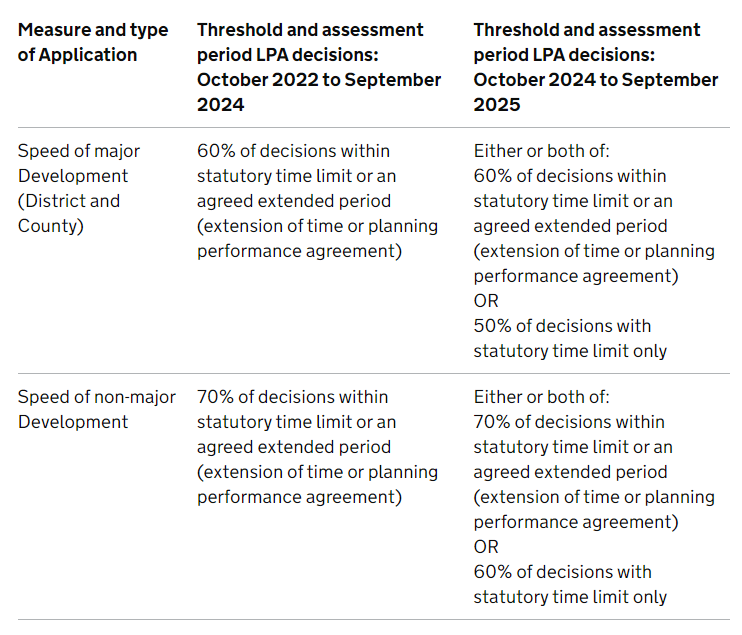


 SIMONICITY