“Building homes on brownfield land will be turbocharged under a major shake-up to planning rules to boost housebuilding while protecting the Green Belt. “
For a concise summary of today’s DLUHC announcements and all the links, see my Town Legal colleague Susie Herbert’s post.
I have seen some understandable cynicism about the proposed changes – along the lines of “it’s motivated by the politics” (obviously in part yes); and/or “it’s in dribs and drabs, why couldn’t this have been done as part of the December 2023 NPPF changes?” (well yes, although maybe better late than never?); and/or ”none of it will make a difference” (I’ll declare an interest having assisted British Land and Land Sec in a small way last year with their report More Growth, More Homes, More Jobs: how to reform the planning system to unlock urban regeneration – but I would have said this anyway – I think the announced changes could well make a difference – and in fact there are plenty more within that report that are worthy of consideration!).
There is of course already existing policy encouragement (albeit rather general) in paragraph 124 (c) of the NPPF, which states that planning policies and decisions should “give substantial weight to the value of using suitable brownfield land within settlements for homes and other identified needs.”
The Government proposes to strengthen that message with the following additional wording within paragraph 129 (c):
“local planning authorities should refuse applications which they consider fail to make efficient use of land, taking into account the policies in this Framework, especially where this involves land which is previously developed. In this context, when considering applications for housing, authorities should give significant weight to the benefits of delivering as many homes as possible and take a flexible approach in applying planning policies or guidance relating to daylight and sunlight and internal layouts of development, where they would otherwise inhibit making the most efficient use of a site (as long as the resulting scheme would provide acceptable living standards).” [new passages underlined]
I do think this does move the dial further with those references to “delivering as many homes as possible” and (particularly in London) the “flexible approach in applying planning policies or guidance relating to … internal layouts of development”.
The dial will then move into full “tilted balance” paragraph 11 (d) territory for those boroughs in London and those other 19 towns and cities subject to the urban uplift, where their Housing Delivery Test results (to be published in May) indicate that their delivery of housing was below 95% of the housing requirement over the previous 3 years.
This strengthening of the tests is likely to make a difference (even during this consultation period): it will influence the way that planning committees are advised when they come to make decisions; it will focus a broader spread of authorities on the potential consequences of not meeting delivery targets (admittedly not fully within their control, but certainly partly), and it will certainly influence how inspectors and the Secretary of State approach appeals and call-ins.
In London there is also much good analysis in the excellent report prepared by Christopher Katkowski KC and his panel. From the executive summary:
“6 The consequences of housing under-delivery have significant economic, societal and personal impacts, not least on those who face no alternative option but homelessness (living in temporary accommodation), or who are forced into poor-quality rental accommodation.
7 Public and private sector stakeholders are clear in their view that the London Plan is not the sole source of the problem: wider macro-economic conditions; fire safety; infrastructure constraints; statutory consultees; viability difficulties; and planning resourcing pressures have all contributed.
8 However, there is persuasive evidence that the combined effect of the multiplicity of policies in the London Plan now works to frustrate rather than facilitate the delivery of new homes, not least in creating very real challenges to the viability of schemes. We heard that policy goals in the Plan are being incorrectly applied mechanistically as absolute requirements: as ‘musts’ rather than ‘shoulds’. There is so much to navigate and negotiate that wending one’s way through the application process is expensive and time-consuming, particularly for SMEs who deliver the majority of London’s homes.
9 This position is exacerbated by the change in context since the London Plan was formulated. The London Plan’s ‘Good Growth’ policies were advanced on the basis of public and private sector investment assumptions that were described in 2019 as being “ambitious but realistic” by the London Plan Inspectors. But planning and housing delivery indicators suggest this strategy has not been sufficiently resilient to the subsequent change in circumstances. Housing schemes (and decision makers on applications) have struggled to reconcile the multiple policy exhortations, which create uncertainty and delay in the preparation, submission and determination of planning applications.”
Many will also welcome the Secretary of State including within his consultation paper the question as to whether the threshold for referral of applications to the Mayor should be raised:
“As part of the large scale development theme, a threshold for large scale residential development was first set in the previous regulations in 2000 as development providing more than 500 houses, flats, or houses and flats or residential development on more than 10 hectares. In 2008, this threshold was reduced to 150 houses, flats or houses and flats.
Through engagement, the government is aware that in some instances this threshold is considered to be too low, requiring what may amount to duplicative interactions by developers with the relevant London Borough and with the Greater London Authority which is not always considered proportionate to the nature of the development in question.
The government wants to make sure that this threshold is set at the right level, in order that it adds value to the process of determining applications for potential strategic importance (especially for residential development), and does not inadvertently slow down or disincentivise developments that could be appropriately determined by the London Borough.”
In conclusion, will building homes on brownfield land be “turbocharged under a major shake-up to planning rules”? It’s more a ratcheting-up of policy than a “major shake-up to planning rules” (thankfully). And whilst I refuse to engage with that ridiculous, very Boris Johnson, word “turbocharged” and whilst this is a very late initiative for a Government that is fast running out of road, let’s hope there is at least some acceleration as a result.
I was going to call this blog post National Lottery but then I remembered I’ve already used that strapline back in 2019. 7 years of this blog, 408 posts – round and round the same track we go.
Much has already been written about the Secretary of State’s decision letter dated 6 February 2024 in which he granted planning permission for the redevelopment of the former London Television Centre, on London’s south bank (NB paragraph 1 of the Secretary of State’s letter curiously describes it as an appeal against refusal of the application by Lambeth Council, which it was not – Lambeth was supportive and had resolved to grant planning permission before the Secretary of State intervened by calling in the application).
See eg Zack Simon’s post as to what the decision may tell us as to the question of “beauty”, Nicola Gooch’s post on severability (although maybe the applicant didn’t have Hillside severability in mind so much as simply phasing for CIL purposes?) and Andy Black’s post on the some of the wider implications of the decision.
I’m not going to duplicate any of those posts. I’m just going to use another aspect of the decision as a jumping off point both for sympathising with all parties who spend vast amounts of time and money at risk on these sorts of application and appeal processes and for giving a small jab at us lawyers.
Because the decision essentially turned on one thing: the Secretary of State having (crucially) found that there was compliance with the development plan as a whole (despite some conflict with individual policies), the pivot was whether there were material considerations which indicated that the proposal should be determined other than in accordance with the development plan – or, more basically, how much relative weight the Secretary of State decided to apply to the public benefits arising from the scheme as against the harms arising from the scheme (whilst applying the appropriate tests in relation to elements of “heritage” harm, for instance requiring “clear and convincing justification” by way of the public benefits arising). To quote the key paragraphs:
“35. Weighing in favour of the proposal are the employment generating opportunities for the Borough in the construction phase as well as the operational phase of the development, which both carry substantial weight, the placemaking benefits delivered by the public realm strategy which carry substantial weight, and the commitment towards an employment and skills strategy over and above the policy requirements as well as the provision of affordable creative workspace which carries moderate weight.
36. Weighing against the proposal is the less than substantial harm to the significance of the designated heritage assets of the RNT, the IBM building, Somerset House, the South Bank CA and the Roupell Street CA, which carries great weight. The Secretary of State has also found that the proposal would not provide a positive contribution to the townscape of the South Bank, which carries moderate weight.
37. The Secretary of State has considered the heritage balance set out at paragraph 208 of the Framework (formerly paragraph 202). He has noted public benefits deriving from the public realm strategy, as well as the other public benefits identified in paragraph 35 above. However, he has also identified less than substantial harm to the significance of the RNT, the IBM building and Somerset House, and to the South Bank CA and Roupell Street CA. Having carefully weighed up the relevant factors, he has concluded that the public benefits of the proposal do outweigh the harm to designated heritage assets. Therefore, in his judgement, the balancing exercise under paragraph 208 of the Framework (formerly paragraph 202) is favourable to the proposal.
38. Overall, in applying s.38(6) of the PCPA 2004, the Secretary of State considers that the accordance with the development plan and the material considerations in this case indicate that permission should be granted.”
Of course, a huge amount of expert evidence was given at the inquiry over 12 sitting days by the parties as to each of these matters and the weight to be applied to each of them, but if the Secretary of State had chosen to give less weight to the public benefits set out in paragraph 35, the decision would probably have gone the other way. How much weight the Secretary of State (or any decision maker) gives to such considerations is very difficult to predict – it is quintessentially a matter of planning (whisper political) judgment. (Similarly his decision as to whether, despite non-compliance with some individual policies, there was compliance with the development plan as a whole).
The weighting is particularly interesting, given that he was more bearish than the inspector (who had recommended that permission be granted) on various aspects, including:
whether “the scale of the building and the proposed massing provides an appropriate response to the site”
finding negative elements to the effects on townscape
disagreeing that “the proposed palette of materials and the aesthetic appearance of the building is appropriate for what is a very prominent and sensitive site. He disagrees with the Inspector that an attractive development would be delivered.”
The Planning Practice Guidance summarises the legal position as to the weight to be given to material considerations:
“What weight can be given to a material consideration?
The law makes a clear distinction between the question of whether something is a material consideration and the weight which it is to be given. Whether a particular consideration is material will depend on the circumstances of the case and is ultimately a decision for the courts. Provided regard is had to all material considerations, it is for the decision maker to decide what weight is to be given to the material considerations in each case, and (subject to the test of reasonableness) the courts will not get involved in the question of weight.
Paragraph: 009 Reference ID: 21b-009-20140306
Revision date: 06 03 2014”
And as for public benefits:
“What is meant by the term public benefits?
The National Planning Policy Framework requires any harm to designated heritage assets to be weighed against the public benefits of the proposal.
Public benefits may follow from many developments and could be anything that delivers economic, social or environmental objectives as described in the National Planning Policy Framework (paragraph 8). Public benefits should flow from the proposed development. They should be of a nature or scale to be of benefit to the public at large and not just be a private benefit. […]
“Planning decision-making is far from being a mechanical, or quasi-mathematical activity. It is essentially a flexible process not rigid or formulaic. It involves, largely, an exercise of planning judgment, in which the decision-maker must understand relevant national and local policy correctly and apply it lawfully to the particular facts and circumstances of the case in hand, in accordance with the requirements of the statutory scheme. The duties imposed by section 70(2) of the 1990 Act and section 38(6) of the 2004 Act leave with the decision-maker a wide discretion.”
We often pretend that planning decision-making to be a quasi-scientific, quasi-judicial process. But it’s really nothing of the sort. We lawyers can seek to ensure that all material considerations are taken into account, that immaterial considerations are not taken into account, that thresholds and criteria in specific statutory and policy tests are taken into account and that the decision-maker’s reasoning is adequate and rational. We can apply our forensic experience to ensure that the necessary evidence is brought forward and is presented as persuasively as possible – and can stress-test the evidence against us. But beyond that, rather than anything resembling the scales of justice, there is a black box in which there is simply the exercise of planning judgment. (I’m not complaining about that – that is the essence of the role of the planner I would have thought).
My jab at us lawyers is simply that perhaps we do not stress strongly and frequently enough to clients how unscientific the planning application and appeal process is. We are often asked to indicate what the odds are on a proposal finding favour with the decision-maker: what are the percentage prospects of success? This is an entire reasonable question to ask, because otherwise how can the client carry out a proper cost benefit analysis of whether the process is likely to be a worthwhile investment? But save for rare examples of cases which mainly turn on the correct interpretation of a particular policy, we have so little to go on other than analysis (which is often not sufficiently objective and evidence-based and possibly infected by eg optimism bias) of previous trends in decision-making to see what weight has previously been applied to various material considerations, in differing circumstances and permutations – trends which in any event do not amount to formal precedents.
I’m not even sure that appeal odds can be given which are much more than, say:
Less than 35 – 40% ie very unlikely to succeed given significant technical or legal hurdles to be overcome.
Circa 50% ie yes it’s arguable but it’s going to come down to whether there has been development plan compliance as a whole and the weight that the decision-maker gives to competing material considerations
Circa 60% – 65% ie a scheme which appears to be policy compliant and to meet the relevant legislative and policy tests
Would anyone be prepared to bet good money on the basis of assuming prospects materially higher than 65%? In my view it would need to be an unusual case turning on relatively binary issues.
Factors which lead to additional variability:
The scale of the development proposal, the range of potential issues and process timescale (will the decision maker or other circumstances in fact change along the way?!)
Cases where the principal live issues give rise to a large element of subjectivity, in relation to matters such as design or townscape
Is this a Secretary of State decision (ie in relation to an application which he has called in or an appeal he has recovered for his own determination)? – again this inevitably makes the outcome less predictable, both due to the influence of “politics” but due to the additional delays thereby arising (see above)
Political/media interest or pressure
Unusual proposals and/or where the decision-maker does not have a relevant or consistent track record.
When set against the scale of investment required to promote a large scheme at inquiry or indeed to defend against it, these may be sobering thoughts.
Simon Ricketts, 9 February 2024
Personal views, et cetera
PS Since I left Twitter I have experimented with a few social media platforms. None are ideal but, now that it is finally public access, you could give Bluesky a go. I share these posts there (my account is here) and on LinkedIn and you may find some related content.
The next London Mayoral election will be held on 2 May 2024.
As of 9 November 2023 Sadiq Khan held a 25 point lead over conservative candidate Susan Hall, according to a YouGov poll. Anything could of course happen between now and 2 May though, the greatest risk for Khan possibly being if Jeremy Corbyn stands as an independent candidate and splits the labour vote. The deadline for candidate nominations is 27 March so I suspect we will see increasing levels of speculation in the meantime…
To his left, Mr Corbyn. To his right, Mr Gove.
As part of the flurry of DLUHC announcements on 19 December 2023 (see my blog post that day, In DLUHC Jubilo: NPPF & Much More), the Secretary of State wrote to Mr Khan. The letter included the following passage:
“Due to the significant shortfall in housing supply and under delivery of housing in our capital, I have concluded that it may be necessary to take further action now, as a matter of urgency, to make sure London is delivering the homes our capital needs.
With this in mind, I have asked Christopher Katkowski KC to lead a panel of expert advisers comprising Cllr James Jamieson, Paul Monaghan, and Dr Wei Yang, to consider the aspects of your London Plan which could be preventing thousands of homes being brought forward, with a particular focus on brownfield sites in the heart of our capital. I have asked them to produce their report by January and will make sure that it is shared with you.
If you cannot do what is needed to deliver the homes that London needs, I will.”
The terms of reference given to the advisors were published on 22 December 2023. Lichfields have been appointed along with the advisors previously announced.
“The expert advisers will assess whether there are specific changes to London Plan policies that could facilitate urban brownfield regeneration in London for housing delivery in an appropriate manner and, if necessary, recommend changes to the London Plan accordingly.
The output of the review will be a short report, delivered by 15 January 2024, to the Secretary of State.”
The objectives of the work are as follows:
“To consider and, if appropriate, make recommendations for specific changes to the London Plan. The Secretary of State will share the recommendations with the Mayor to consider their implementation.
To work with Lichfields consultants to ensure that there is an evidence base which supports the recommendations of the expert advisers.
To complete a report on how, specifically, the London Plan could be improved to facilitate the delivery of new homes on brownfield sites.”
15 January! It will be interesting to see what emerges. I assume that aside from the implications of the detailed and prescriptive approach taken by the London Plan – a document which is instead meant to operate only at a strategic level – one potential area for investigation will be the extent to which the Mayor’s rigid approach to minimum levels of affordable housing, even in the face of agreed unviability, and/or his requirements as to review mechanisms which can cause difficulties with funders, is holding back delivery (although of course the Mayor’s response is always to point to the level of need for social housing). Will another be the Mayor’s resistance to development in the green belt? But this would only make sense in the context of Mr Gove’s letter if the focus is on previously developed land in the green belt – and even this would uncomfortably with the Government’s 19 December 2023 revision to the NPPF, absolving authorities of the need to review green belt boundaries when preparing local plans…
Are there possibly any clues in two recent Secretary of State decisions?
On 11 December 2023 the Secretary of State overturned inspector Jennifer Vyse’s recommendation and granted planning permission in relation to called-in applications for mixed use development at Homebase and Tesco Osterley, Syon Lane, Hounslow. His approach to the planning balance and overall conclusion in his decision letter is as follows:
“64. For the reasons given above, the Secretary of State considers that the application is not in accordance with LonP policies D9 and HC1 and LP policies CC3 and CC4 of the development plan, and is not in accordance with the development plan overall. He has gone on to consider whether there are material considerations which indicate that the proposal should be determined other than in line with the development plan.
65. Weighing in favour of the proposal is the regeneration of under-utilised brownfield land which carries substantial weight. Also weighing in favour is the delivery of up to 2,150 homes which carries substantial weight, and the delivery of 750 affordable homes designed to meet the current housing need profile in Hounslow, which each carry substantial weight. Economic benefits carry significant weight whilst the provision of open space and significant biodiversity net gain both carry moderate weight. Highway and transport improvements carry limited to moderate weight and the reprovision of an existing Tesco store and the provision of community space each carry limited weight.
66. Weighing against the proposal is less than substantial harm to a number of designated heritage assets which carries great weight. Moderate harm to the character and appearance of the area in relation to the Homebase scheme carries moderate weight. Heritage harm caused by the total loss of a non-designated heritage asset (the Homebase store) carries limited weight and the Secretary of State has considered paragraph 203 of the Framework in coming to this decision.
67. In line with the heritage balance set out at paragraph 202 of the Framework, the Secretary of State has considered whether the identified less than substantial harm to the significance of each designated heritage asset is outweighed by the public benefits of the proposal. Taking into the account the public benefits of the proposal as identified in this decision letter, the Secretary of State agrees with the Inspector at IR15.11 that the public benefits of the appeal scheme are more than sufficient to outweigh the identified harm, including cumulative harm, to the significance of the designated heritage assets. He considers that the balancing exercise under paragraph 202 of the Framework is therefore favourable to the proposal.
68. Overall, in applying s.38(6) of the PCPA 2004, the Secretary of State considers that despite the conflict with the development plan, the material considerations in this case indicate that permission should be granted.
69. The Secretary of State therefore concludes that planning permission should be granted.”
Note the weight placed on delivery of homes, including affordable homes, on under-utilised brownfield land, together with economic benefits, versus heritage harm.
On 4 December 2023 the Secretary of State agreed with his inspector’s recommendation and granted planning permission for the demolition of existing buildings and the comprehensive phased redevelopment of the site for a mix of uses including up to 1,049 residential units and up to 1,200 square metres of flexible commercial and community floorspace in buildings ranging from 3 to 18 storeys along with car and cycle parking, landscaping and associated works. His decision letter demonstrates a similar balancing exercise, in the additional context of Barnet Council not having a five year supply of housing land:
“35. Weighing in favour of the proposal is the delivery of market and affordable housing which each carry significant weight; the reduction in traffic, provision of open space, biodiversity improvements, regeneration benefits and employment provisions which each carry moderate weight; and improvement in healthcare facilities which carries minimal weight.
36. Weighing against the proposal is the less than substantial harm to the designated heritage asset which carries great weight.
37. In line with the heritage balance set out at paragraph 202 of the Framework, the Secretary of State has considered whether the identified less than substantial harm to the significance of the designated heritage asset is outweighed by the public benefits of the proposal. Taking into the account the public benefits of the proposal as identified in this decision letter, overall, the Secretary of State agrees with the Inspector at IR238 that the public benefits outweigh the identified less than substantial harm to the significance of the designated heritage asset, and that the proposal would secure the optimum viable use of the site (IR235). He therefore considers that the balancing exercise under paragraph 202 of the Framework is favourable to the proposal.”
Whatever we think of the Secretary of State’s reasoning in granting these permissions, let’s not give him credit for thereby speeding up the development process. These were both applications which had been resolved to be approved by Hounslow and Barnet respectively in 2021!
Finally, how about this for petty point scoring, in relation to the continuing political pawn which is the Mayor’s extended ULEZ scheme? The Secretary of State would like the Mayor to arrange for vehicles that are the subject of his scrappage scheme to be provided to Ukraine to help with its war effort. The Mayor’s position is that this is not within his legal powers. This is Mr Gove’s latest letter dated 21 December 2023 to the Mayor of London. I have no idea what the right answer is on this specific issue but in a year where there are too many real battle grounds around the globe, perhaps let’s try to avoid unnecessary domestic political battlegrounds? Even in an election year?
Simon Ricketts, 30 December 2023
Personal views, et cetera
PS It’s so often been the case that I’ve had some song going through my head when writing one of these posts that I thought as an end of year gift I would present to you this Spotify playlist – a track for each post this year – I’m sure you’ll be able to match them up…
God bless planners who have been waiting for this day all year. I hope you participated in the nppfestivities although to my mind the NPPF itself was the least interesting of what was published today (19 December 2023).
This is today’s publication list as it stands at 6 pm (ten items):
I’ve been reading the latest version of the NPPF as against the previous September 2023 version and against the amendments consulted on in December 2022. This is just a first quick take. I’ve just read the lines so far. The interesting bit is of course going back and reading between them. (A Landmark Chambers/Town Legal seminar is planned for 15 January 2024 with exactly this in mind – details here).
As compared to the December 2022 consultation (see my 22 December 2022 blog post) the changes are relatively limited, the main substantive ones being (in broad summary):
No further restrictions after all as to when the paragraph 11 tilted balance applies (although for an authority whose plan has reached at least regulation 18 stage the requirement to show five years’ worth supply of housing supply drops to four years). The consultation paper had suggested exclusions where meeting need in full “would mean building at densities significantly out of character with the existing area” and where there is “clear evidence of past over-delivery”.
The changes consulted upon to the “soundness” test for local plans, particularly the deletion of the “justified” requirement, are not being taken forward.
Whilst as per the consultation draft, the outcome of the standard method for assessing housing requirements for an area is expressed as an “advisory starting point”, the exceptional circumstances for departure make it clear that “the particular characteristics of an area” is in fact the “particular demographic characteristics of an area”.
References have been added, supportive of “community-led development”.
The “area character” point has instead been picked up in a new paragraph 130 which advises that “significant uplifts in the average density of residential development may be inappropriate if the resulting built form would be wholly out of character with the existing area. Such circumstances should be evidenced through an authority-wide design code which is adopted or will be adopted as part of the development plan.”
Substantively as per the consultation document, there is “no requirement for Green Belt boundaries to be reviewed or changed when plans are being prepared or updated”. How can this possibly work in Green Belt authorities with high levels of unmet housing need?
As per the consultation document there are plenty of exhortations as to beauty.
3. Consequential changes to the advice in the Government’s Planning Practice Guidance about the Green Belt and about traveller sites .
Much of the statement simply summarises the other documents covered in this blog post but the section on Cambridge is worth setting out in full:
“Cambridge
Finally, I want to provide an update on the Government’s vision for Cambridge 2040. In July, I outlined plans for a new urban quarter – one adjacent to the existing city – with beautiful Neo-classical buildings, rich parkland, concert halls and museums providing homes for thousands. This would be accompanied by further, ambitious, development around and in the city to liberate its potential with tens of thousands of new homes.
In the intervening months, Peter Freeman, the Chair of the Cambridge Delivery Group, has been developing our vision for the city, in collaboration with a whole host of local leaders and representatives. I am clear that delivering our vision means laying the groundwork for the long-term, and that starts now.
We plan to establish a new development corporation for Cambridge, which we will arm with the right leadership and full range of powers necessary to marshal this huge project over the next two decades, regardless of the shifting sands of Westminster.
We recognise the scale of development we are talking about will require support from across the public and private sectors, to realise our level of ambition.
And we must also ensure we have an approach towards water that reflects the nature of Cambridge’s geography. So today I am also announcing that we will review building regulations in Spring next year to allow local planning authorities to introduce tighter water efficiency standards in new homes. In the meantime, in areas of serious water stress, where water scarcity is inhibiting the adoption of Local Plans or the granting of planning permission for homes, I encourage local planning authorities to work with the Environment Agency and delivery partners to agree standards tighter than the 110 litres per day that is set out in current guidance.”
“We agree that housing delivery in London is far below the levels needed. Not only is delivery considerably short of your own London Plan target by approximately 15,000 homes per year, it was approximately 63,500 homes lower than actual need last year, as calculated by the standard method. This is not a national issue. London was the worst performing region in the Housing Delivery Test 2022. Fewer than half of the London Boroughs and Development Corporations delivered more than 95% of their appropriate housing requirement for the test over the three-year monitoring period. Areas like the West Midlands are overdelivering, while London continues to fall short.
This has a significant effect on the availability of homes for those wanting to live and work in the capital, as well as for the standard of housing available. London’s average house prices remain the most expensive in the UK – an average of £537,000 in September 2023. The average price was over 12.5 times average earnings last year. London has the lowest level of home ownership in England. Our capital also has, as you know, the highest proportion of renters. There are 60,040 homeless households in temporary accommodation, including over 80,000 children.
Under your leadership the GLA is failing to provide affordable homes for those that need them most.
While I welcome the commitments you made in your letter, as well as the ideas you have provided for Government to consider, they are not enough to change this woeful picture. In July, I asked my officials to review housing delivery in London to gain a greater understanding of the reasons for this significant under-delivery. We met stakeholders, including planning authorities, developers, and boroughs to identify the challenges they encounter in delivering housing. In the course of those discussions, a number of issues were raised which stakeholders believe are adversely affecting housing delivery in London.
Due to the significant shortfall in housing supply and under delivery of housing in our capital, I have concluded that it may be necessary to take further action now, as a matter of urgency, to make sure London is delivering the homes our capital needs.
With this in mind, I have asked Christopher Katkowski KC to lead a panel of expert advisers comprising Cllr James Jamieson, Paul Monaghan, and Dr Wei Yang, to consider the aspects of your London Plan which could be preventing thousands of homes being brought forward, with a particular focus on brownfield sites in the heart of our capital. I have asked them to produce their report by January and will make sure that it is shared with you.
If you cannot do what is needed to deliver the homes that London needs, I will.”
8. Local Plan intervention: Secretary of State’s letters to 7 local authorities directing them to revise their local plan timetables – Amber Valley. Ashfield, Basildon, Castle Point, Medway, St Albans and Uttlesford.
9. Direction preventing West Berkshire Council from withdrawing its emerging local plan at a meeting tonight.
I never thought I would live to see a chief executive of Marks and Spencer plc (Marks and Spencer plc!) issue a statement such as this:
““After a two-year process where our proposals were supported at every stage, our investment in 2,000 jobs, building one of the most sustainable buildings in London, improving the public realm and creating a flagship store, is now effectively in the deep freeze. Today the Secretary of State has ignored his appointed expert David Nicholson who recommended approval of our scheme.
When 42 of the 269 shops on what should be our nation’s premier shopping street sit vacant, disregarding the expert opinion and approval of the appointed planning inspector and playing to the gallery by kiboshing the only retail-led regeneration proposal is a short-sighted act of self-sabotage by the Secretary of State and its effects will be felt far beyond M&S and the West End. It is particularly galling given there are currently 17 approved and proceeding demolitions in Westminster and four on Oxford Street alone, making it unfathomable why M&S’s proposal to redevelop an aged and labyrinthian site that has been twice denied listed status has been singled out for refusal.
The suggestion the decision is on the grounds of sustainability is nonsensical. With retrofit not an option – despite us reviewing sixteen different options – our proposed building would have ranked in the top 1% of the entire city’s most sustainable buildings. It would have used less than a quarter of the energy of the existing structure, reduced water consumption by over half, and delivered a carbon payback within 11 years of construction. It is also completely at odds with the inquiry process where the analysis on sustainability, including from independent experts Arup, was accepted.
We cannot let Oxford Street be the victim of politics and a wilful disregard of the facts. At a time when vacancy rates on what should be the nation’s premier shopping street are 13% higher than the average UK high street and Westminster Council is pleading for help in managing the growing proliferation of sweet shop racketeers, the Secretary of State has inexplicably taken an anti-business approach, choking off growth and denying Oxford Street thousands of new quality jobs, a better public realm and what would be a modern, sustainable, flag-bearing M&S store.
There is no levelling up without a strong, growing Capital city, but the ripple effect extends well beyond Oxford Street. Towns and cities up and down the country will feel the full effects of this chilling decision, with decaying buildings and brownfield sites now destined to remain empty as developers retreat. The nation’s fragile economic recovery needs Government to give confidence to sustainable regeneration and investment as well as following due process; in London and across the UK. Today the Secretary of State has signalled he is more interested in cheap shot headlines than facts and if it weren’t so serious it would be laughable.
We have been clear from the outset that there is no other viable scheme – so, after almost a century at Marble Arch, M&S is now left with no choice but to review its future position on Oxford Street on the whim of one man. It is utterly pathetic.” (Stuart Machin, 20 July 2023)
Throughout this process there has been ferocious opposition to the scheme by some prominent groups and individuals – with detailed representations made; lobbying at each stage, and commentary in the media and social media.
I have often criticised the process whereby the Secretary of State can call-in an application, or recover an appeal, for his own decision-making.
What is the point of local democracy? What is the point of a hugely expensive, lengthy, quasi-judicial process, and a 109 page report by one of our most experienced planning inspectors, when you arrive at this sort of outcome?
If Secretary of State didn’t like the scheme when he called it in, and was going to refuse it in any event, why even the pretence of due process?
To dip into the decision. First point: of course it’s written with an eye to being watertight against legal challenge, by way of making sure that the conclusions revolve around the degree of weight to be attached to specific material considerations and around ultimately subjective assessments as to harm and significance (albeit assessments made without the benefit of hearing the evidence, of accompanied site visits or the ability to ask questions of witnesses). Time will tell if that objective has been secured.
Given that some may think (I couldn’t possibly comment) that this is how the Secretary of State reached his decision, I’m going to start with the overall conclusions (paragraph 51 onwards).
The first set of subjective conclusions (paragraph 51) are findings as to “overall conflict with development plan policies D3 and 38 which deal with design, and partial conflict with heritage policies HC1 and 39”.
That enables him to take the position that the scheme is in conflict with the development plan overall. With the onus shifted, the question for him is accordingly “whether there are material considerations which indicate that the proposal should be determined other than in line with the development plan.”
In favour of the proposal are (paragraph 52) “the advantages of concentrating development in such a highly accessible location, which attracts substantial weight; and the potential harm to the vitality and viability of the area which could follow from a refusal of permission, which attracts limited weight. The heritage benefits carry moderate weight, and the possibility of demolition attracts limited weight. The benefits to employment and regeneration through improved retail and office floorspace, and the benefits in terms of permeability and connectivity, safety and shopping experience and the public realm collectively carry significant weight.” As long as properly reasoned, the weight to be attached to each consideration is for the decision maker.
Against the proposal (paragraph 53) “is the Secretary of State’s finding that in terms of paragraph 152 of the Framework, the proposal would in part fail to support the transition to a low carbon future, and would overall fail to encourage the reuse of existing resources, including the conversion of existing buildings, which carries moderate weight. He has also found that harm arising from the embodied carbon carries moderate weight; and the future decarbonisation of the grid carries limited weight.”
In terms of assessing the heritage impacts of the proposal “the Secretary of State has taken into account the requirements of s.66 of the LBCA Act and the provisions of the Framework. He has found that in terms of paragraph 202 of the Framework, the harm to the settings, and so the significance, of the designated heritage assets would fall into the ‘less than substantial’ category. In respect of Selfridges and the Stratford Place CA, he has found the harm would be at the upper end of that category; in respect of the Mayfair CA it would be in the middle of that category; and in respect of the Portman Estate CA it would be at the lower end of the category. Overall he has found that the harm to the settings of, and significance of the designated heritage assets carries very great weight. He has further considered paragraph 202 of the Framework and has found that the public benefits of the proposal do not outweigh the harm to the significance of the designated heritage assets. The Secretary of State considers that harm from the loss of the nondesignated heritage asset of Orchard House attracts substantial weight and has considered paragraph 203 of the Framework in coming to this decision. In respect of paragraph 189 of the Framework, the Secretary of State considers that the proposal would overall fail to conserve the heritage assets in a manner appropriate to their significance, so that they can be enjoyed for their contribution to the quality of life of existing and future generations. He considers that the possibility of an Oxford Street CA attracts limited weight.”
So what did the scheme in was its design, its less than substantial harm to designated heritage assets which he gives “very great” weight, not outweighed by public benefits; harm from the loss of unlisted Orchard House which he gives substantial weight, and, in terms of climate change issues, the failure to support the transition to a low carbon future (moderate weight), failure to encourage the reuse of existing resources (moderate weight), harm arising from the embodied carbon (moderate weight) and future decarbonisation of the grid (limited weight).
Let’s look in more detail at how the Secretary of State reached some of those conclusions.
Design
His conclusion on non-compliance with policy D3 is said by him to follow from his conclusions on the impact on designated heritage assets (paragraph 43). Similarly policy 38 (paragraph 44). Aside from these conclusions, based on concerns as to heritage aspects, he reaches no conclusions on the design of the scheme.
Heritage
So let’s turn to heritage.
The Secretary of State agrees with the Inspector (paragraphs 12 to 15) as to the level of harm caused to designated heritage assets. However, he disagrees as to the weight to be given to any harm (paragraph 15): “Given the significance of Selfridges, and his conclusions in paragraphs 13-14 above, the Secretary of State considers that the harm to designated heritage assets in this case carries very great weight. He does not agree with the Inspector’s assessment that the harm to the setting and so to the significance of Selfridges, including with the additional harm to the settings of the CAs, carries only moderate weight (IR.13.11 and IR13.78).”
The Secretary of State agrees with Historic England rather than the inspector as to the significance of Orchard House as a non-designated heritage asset (paragraph 16) and considers that its loss attracts substantial weight. He recognises, some heritage benefits of the scheme, to which he ascribes moderate weight.
Carbon
This is the area where we need to pay particularly careful attention.
First, to note that he reaches no concluded view on whether the redevelopment would over the life of the building use less carbon than any replacement: “the Secretary of State has also taken into account the applicant’s argument that over the life of the building it would use less carbon than any refurbishment, which would have to rely on an inefficient building envelope (IR13.38). He agrees with the Inspector, for the reasons given in IR13.37 and IR13.39, that the understanding of WLC Assessments and the tools available for calculations are still developing, and therefore it is no surprise that there was disagreement over the lifetime carbon usage for the proposals and, more particularly, for a refurbishment.” (paragraph 21).
That might be seen as surprising given that surely it is the core issue.
It was said by some that redevelopment should be delayed until the grid is decarbonised, when “the extent of embodied energy, particularly from manufacturing materials, and from vehicle emissions would be much lower or eliminated. He agrees that the proposed development now would result in far more carbon emissions than after the UK has achieved a net-zero grid (IR13.99), because a fully renewably sourced electricity grid should allow most construction vehicles, and the manufacture of concrete, steel and other materials, to be undertaken using renewable energy rather than fossil fuels (IR13.40).” However, he recognised that would not be a practical general principle: “An assessment of the weight to give to the fact that development now will give rise to far more carbon emissions than in the future with a net-zero grid depends on the facts of the case and the planning policy context. Evidence has been put before the Secretary of State that the existing store is currently assessed as failing (IR13.71), and M&S has stated that it will not continue to occupy and trade from the store for very much longer if permission is refused (IR13.46). The Secretary of State has also concluded that the development is supported by some current and up to date development plan policies which aim to support the regeneration and economic development of the area (paragraph 26 below). Overall he considers that this matter carries limited weight against the proposal.” (paragraph 22)
Strangely, although possibly because of the lack of empirical evidence on the point at the inquiry, he gives no weight to any possible reduction in pressure for development elsewhere (paragraph 23).
Paragraph 24 is important:
“The Secretary of State agrees with the Inspector at IR13.43 that there should generally be a strong presumption in favour of repurposing and reusing buildings, as reflected in paragraph 152 of the Framework. In the circumstances of the present case, where the buildings in question are structurally sound and are in a location with the highest accessibility levels, he considers that a strong reason would be needed to justify demolition and rebuilding. However, he agrees that much must depend on the circumstances of the case, including how important it is that the use of the site should be optimised, and what alternatives are realistically available. Like the Inspector, the Secretary of State has gone on to consider whether there is a reasonable prospect of an alternative scheme going ahead.”
The Secretary of State’s position as to the prospect of an alternative scheme going ahead is vital to his overall decision:
“31. The Secretary of State considers that given the Inspector could not draw clear conclusions on this matter, and its importance in the determination of this application, a degree of caution ought to be exercised in drawing overall conclusions from the evidence, and considering the weight to be given to this issue. He finds the applicant’s evidence much less persuasive than the Inspector appears to have done in light of the gaps and limitations identified by the Inspector. He does not consider it appropriate to draw such firm and robust conclusions about this issue as the Inspector does (IR13.70- 13.75 and IR13.97). The Secretary of State is not persuaded that it is safe to draw the same conclusion reached by the Inspector, namely that ‘there is no viable and deliverable alternative’ (IR13.74), which leads to the Inspector’s overall conclusion that ‘there is unlikely to be a meaningful refurbishment of the buildings’ (IR13.97).
32. Overall, the Secretary of State concludes that the evidence before him is not sufficient to allow a conclusion as to whether there is or is not a viable and deliverable alternative, as there is not sufficient evidence to judge which is more likely. The Secretary of State also does not consider that there has been an appropriately thorough exploration of alternatives to demolition. He does not consider that the applicant has demonstrated that refurbishment would not be deliverable or viable and nor has the applicant satisfied the Secretary of State that options for retaining the buildings have been fully explored, or that there is compelling justification for demolition and rebuilding.
33. The Secretary of State notes that M&S has stated that it will not continue to occupy and trade from the store for very much longer if permission is refused (IR13.46). Whether or not M&S leave the store following the Secretary of State’s decision is a commercial decision for the company. However, taking into account the locational advantages of the site, the Secretary of State does not agree with the Inspector at IR13.75 that redevelopment is the only realistic option to avoid a vacant and/or underused site. He considers that there is potential for some harm to the vitality and viability of Oxford Street as suggested by the Inspector at IR13.46-47 and IR13.74. However, he does not agree with the Inspector that harm would be caused to the wider West End beyond Oxford Street (IR13.46) as he considers that this overstates the scale of the impact. He also does not agree with the Inspector’s conclusion that the harm would be substantial. The Secretary of State considers that potential harm to the vitality and viability of Oxford Street could arise from a refusal of permission but, unlike the Inspector, he considers that 8 the extent of any such harm would be limited. He attributes limited weight to this possibility.”
Time will tell if he is right.
I find his conclusion on the carbon which would go into construction materials unfathomable given that he failed to reach a conclusion on whether the new building would use less carbon than refurbishment of the existing building (paragraph 21 quoted earlier above):
“45. In respect of paragraph 152 of the Framework, the Secretary of State agrees that a substantial amount of carbon would go into construction (IR13.32), and that this would impede the UK’s transition to a zero-carbon economy (IR13.87). He has found that there has not been an appropriately thorough exploration of alternatives to demolition (paragraph 32 above). He has also taken into account that the carbon impacts would be to an extent mitigated by the carbon offset payments secured via the s.106 Agreement, which would be used to deliver carbon reductions (albeit it has not been demonstrated that the carbon reductions would fully offset the embodied carbon arising from this proposal). He has also taken into account the sustainability credentials of the new building (paragraph 21 above). Overall he concludes that in terms of paragraph 152 of the Framework, the proposal would in part fail to support the transition to a low carbon future, and would overall fail to encourage the reuse of existing resources, including the conversion of existing buildings. The Secretary of State considers that this carries moderate weight against the scheme.
46. The Secretary of State has also considered the Inspector’s conclusion at IR13.99 that of the material considerations in this case, the extent of embodied energy weighs most heavily against the scheme. He has taken into account that a substantial amount of embodied carbon would go into construction. He has also taken into account at paragraph 21 above the sustainability credentials of the new building, and has further taken into account that the carbon offset payments secured via the s.106 Agreement would be used to deliver carbon reductions (albeit it has not been demonstrated that the carbon reductions would fully offset the embodied carbon arising from this proposal). Given his conclusions on these matters, he considers, unlike the Inspector at IR13.99, that in the particular circumstances of this case, the embodied carbon carries moderate weight.”
Finally, a warning against treating this decision as too much of a precedent:
“47. The Secretary of State has considered the Inspector’s comments at IR13.94 that there is a ‘growing principle that reducing climate change should generally trump other matters’; and his comments at IR13.99 that as climate change policy is still developing, the Secretary of State is entitled to use his judgement to give this consideration greater weight than the Inspector has attributed to it. Policy in this area will continue to develop and in due course further changes may well be made to statute, policy or guidance. This decision letter sets out the Secretary of State’s judgement on the weight which attaches to these matters in the circumstances of this particular case.
48. The Secretary of State has considered the Inspector’s comment at IR13.95 that fear of precedent could be a material consideration of sufficient weight to justify dismissing the application. However, he is confident that any future decision-maker would pay attention to the whole decision and the detailed reasoning and not just to the outcome of the decision. In any event, the decision turns on its own very specific facts, including the relevant development plan policy matrix, the Inspector’s report and the evidence which was before the inquiry, which are all unlikely to be replicated in other cases.”
Easy to say but of course there will be attempts to read across these findings to other projects.
My overall prediction? An important part of Oxford Street may well indeed become vacant or subjected to uses which will do nothing for this vulnerable commercial area – which is currently frankly a disgrace. A project has been first stalled, then killed, brought forward by one of the country’s most respected companies, for reasons which aren’t even based on any finding that demolition and rebuild will lead to greater release of carbon over the lifetime of the building than a hypothetical refurbishment of the existing building – and, in so far as they are heritage-based, on the one hand ascribe a surprising amount of weight to the moderate levels of harm arising and on the other ascribe little weight to the public benefits that would surely arise from a twenty first century flagship department store in Oxford Street.
Some of you will get very upset by this blog post I’m sure. But not as upset as Mr Machin is about Mr Gove.
I have been commuting into Euston station for over twenty years, experiencing increasing frustration: at the past we have lost; the future that we are losing, and at the tatty and graceless perma-temp arrangement we have today.
I’m not sure that this week’s Public Affairs Committee report, HS2 Euston (7 July 2023), has yet had the attention it deserves and I’ll come back to that. But first:
But then so was the 1968 modernist version of Euston when it opened:
This 1968 British Rail brochure gushed with excitement at the wonders of the grill room, party catering room, “high class toilets with showers and baths” and underground car park, showing no regret for the previous building that had been swept away.
Since then, the modernist lines of the new station have of course long been lost by way of multiple interventions. It’s frankly a mess. And for the last few years, as you pull into the station by rail, to the right is a swathe of HS2 construction activity. If you walk out of the station towards Euston Square, via that unsignposted corridor past the left luggage place, through the door into the between the bicycle racks area, across Melton Street you have hoardings either side as you walk past where businesses have been acquired and demolished at the eastern end of Drummond Street – this really is HS2World.
Screenshot courtesy Google
The future
HS2 was going to be the future. Just as those in the 60s were seduced by the clean lines, the white heat of technology, the chance to wipe away the inefficiencies of the past, we were seduced by the idea of high speed rail, with Euston as its southern terminus.
From the Department for Transport’s March 2010 High Speed Rail command paper (foreword by then prime minister Gordon Brown and then Secretary of State for Transport Andrew Adonis):
“… HS2 Ltd’s recommended route for a London-Birmingham high speed line (‘High Speed Two’), which would run from a rebuilt Euston station in London to a new Birmingham City Centre station at Curzon/Fazeley Street, is viable, subject to further work on reducing specific impacts on the local environment and communities.”
“…effective integration with London’s current and planned transport networks is crucial, and that this is best delivered through the combination of a Euston terminus and a Crossrail Interchange station sited between Paddington and Heathrow, which would also provide a link to the Great Western Main Line.”
“…the new British high speed rail network should be connected to the wider European high speed rail network via High Speed One and the Channel Tunnel, subject to cost and value for money. This could be achieved through either or both of a dedicated rapid transport system linking Euston and St Pancras and a direct rail link to High Speed One. HS2 Ltd will carry out further work to assess the viability and cost of each of these, including a full assessment of the business case, prior to any public consultation.”
“The HS2 Y network (so named due to its shape) will provide direct high capacity, high speed links between London, Birmingham, Leeds and Manchester, with intermediate stations in the East Midlands and South Yorkshire.”
“The network will also provide improved links from the Midlands and the North to Heathrow Airport and the Channel Tunnel (via the existing High Speed 1 line). HS2 passengers will be able to travel directly to Heathrow and the Channel Tunnel without having to change trains.”
“Having reviewed the options again the Government’s conclusion remains that Euston is the right site for a London terminus, best serving passenger requirements and offering greater access to alternative onward travel networks than either Old Oak Common or Stratford. Any terminus other than Euston would offer a worse overall balance of costs and benefits.”
These aspirations weren’t properly tested. The Supreme Court held in R (HS2 Action Alliance) v Secretary of State for Transport (22 January 2014) that the white paper was not subject to any requirement for strategic environmental assessment as it was not a plan that “set the framework” for subsequent decision making. This is still one of the most disappointing litigation outcomes of my career and indeed the court’s consideration of Parliamentary sovereignty versus the effect of EU Directives was a forerunner of much of the subsequent debate over Brexit. I’m not sure that Parliamentary sovereignty has helped us achieve a good outcome on HS2…
I re-read yesterday the House of Commons second reading debate (28 April 2014) in relation to what was at that point the High Speed Rail (London–West Midlands) Bill (short title: “A Bill to make provision for a railway between Euston in London and a junction with the West Coast Main Line at Handsacre in Staffordshire, with a spur from Old Oak Common in the London Borough of Hammersmith and Fulham to a junction with the Channel Tunnel Rail Link at York Way in the London Borough of Islington and a spur from Water Orton in Warwickshire to Curzon Street in Birmingham; and for connected purposes.”) . Patrick McLoughlin (now Lord McLoughlin) was Secretary of State for Transport:
“…it is time to connect great cities such as Birmingham, Manchester, Sheffield and Leeds. It is time for better links between north and south and between east and west, and time to connect to world markets to make the most of their skills and talents. It is time for HS2; time for a new north-south railway line.”
With the benefit of hindsight, the two “on the money” contributions to the debate were from MPs from different sides of the political divide, now both sadly deceased, but both superb representatives of their constituents and true Parliamentarians:
Cheryl Gillan, then Conservative MP for Chesham and Amersham, focused on the implications of the choices as to route and extent of tunnelling for the Chilterns area of outstanding beauty, alternative horizontal and vertical alignments having been rejected for reasons which in my view would not have stood up to proper independent scrutiny (I’ve already mentioned the lack of strategic environment assessment at the white paper stage; the other issue was the Select Committee process for testing the detailed proposals in the Bill – see my 30 July 2016 blog post, HS2: The Very Select Committee)
Frank Dobson, then Labour MP for Holborn and St Pancras, focused on the implications for the area surrounding Euston station:
“I should point out the ridiculous situation whereby the hybrid Bill before the House proposes major works in my constituency, none of which the Government now intend to carry out. The Bill also provides for a link from HS2 to HS1. That ridiculous proposal has been abandoned altogether. The Bill provides for the option 8 design of the station at Euston. That ridiculous proposal, we are told, is shortly to be abandoned, but the design, cost and construction timetable for the alternative to it have not yet been worked out, so there’s nowt to vote on.
The neighbourhoods to the east and west of Euston station and its railway approaches are densely populated with a variety of uses. Most of the streets are overwhelmingly residential. They are home to large numbers of residents living in high densities in settled and varied communities, with a wide range of incomes, housing tenures, jobs, ethnic origins and religions. Most of those residents want to continue to live there. They rightly resent patronising references to their neighbourhood by the much lauded chair of HS2 Ltd and have asked me to remind him and everyone else that where they live is not like the Olympic site. It is not a brownfield site, ripe for redevelopment.
The HS2 project as now proposed would wreak havoc on those neighbourhoods. It would expand Euston station by 75 metres to the west, demolish the homes of 500 people and subject 5,000 more to living for a decade next to the construction site or beside roads that will be made intolerable by the heavy goods vehicles servicing the main site and the 14 satellite construction compounds. No consideration has been given to the cumulative harm that all this would do to the quality of life of my constituents. The proposed working hours regime enables work to proceed at any hour of the day or night. Every little park and play space near the site is to be taken over. Small, locally owned and locally staffed businesses, especially cafes, shops and restaurants in Drummond street, face financial disaster. Between 40% and 70% of their business is passing trade from pedestrians going to and from Euston station, which, for the duration of the works—10 years—will be cut off by a solid, 3.6 metre-high security fence.
The people I represent believe that HS2 should not go ahead. Failing that, they believe that HS2 should terminate at Old Oak Common, at least temporarily, to test its capacity and permit the assessment of any capacity needed at Euston to be based on experience rather than the guesswork used so far.”
Of course the Bill was passed in due course. There have been successive plans unveiled for Euston Station and then effectively abandoned:
Updated plans were then unveiled in March 2022 of a revised concept design by a design consortium made up of Arup, WSP, Grimshaw Architects, Haptic, and LDA Design, alongside HS2’s Station Construction Partner, Mace Dragados JV.
Despite nearly all of the disruption feared by Frank Dobson already having been caused by the construction works around Euston that are now well underway, Mark Harper, current Secretary of State for Transport, released a press statement on 9 March 2023, pausing new construction work at Euston for two years:
“The Government is prioritising HS2’s initial services between Old Oak Common in London and Birmingham Curzon Street to provide delivery of passenger benefits as soon as possible. We remain committed to delivering HS2 services to Euston, and will address affordability pressures to ensure the overall spending profile is manageable. We will therefore take the time to ensure we have an affordable and deliverable station design, delivering Euston alongside high-speed infrastructure to Manchester.”
“We remain committed to delivering HS2 services to Euston. We have decided not to proceed with construction at Euston over the next 2 years both to reduce expenditure during that period and to address the affordability challenge set out in the recent National Audit Office report. We will use this time to develop a more affordable scheme design that delivers for passengers, the local community and taxpayers.
The government will not be proceeding to construction on Phase 2a (West Midlands to Crewe) in the next 2 years to reduce expenditure. We will use the time to develop mature designs and delivery approaches to ensure that this section is delivered in the most cost-effective way.”
“As reported in the recent National Audit Office report on Euston, the latest proposed target price from the construction partner (Mace Dragados joint venture) is £4.8 billion – around £2.2 billion over HS2 Ltd’s budget and a higher cost than the previous design.
I visited the Euston site on 5 April 2023 and saw for myself the challenges of constructing a complex station in a dense urban environment that will integrate with the existing conventional station and London Underground and local transport, as well as enabling oversite development.
Nonetheless, the station is not affordable at this cost, nor in any case, does the government have the financial headroom to proceed with the construction over the next 2 years. We will, therefore, use the time to look again at the Euston station design to ensure it delivers for passengers, the local community and taxpayers. This will include considering how we might partner with the private sector to capture benefits for customers. It will require careful prioritisation of requirements and a willingness from stakeholders to compromise.”
It’s way over budget and they don’t know how to build it. And what delay do we think “two years” will turn into? Bodes well doesn’t it?
Which takes us to yesterday’s excoriating Public Accounts Committee’s report, HS2 Euston (7 July 2023).
Its summary:
“Despite being eight years into planning the High Speed 2 station at Euston, the Department for Transport (the Department) still does not know what it is trying to achieve with the station and what sort of regeneration it will support. It is clear now that the £2.6 billion budget HS2 Ltd set for the project was completely unrealistic, even before the impacts of inflation are considered. The Department will now need to reset the project for a second time in order to find a design that is realistic, affordable and provides value for money.
The Department does not know what the additional costs and impacts will be from its decision to pause construction at the station for two years. Working alongside HS2 Ltd, it now has a big task to identify what these costs and impacts are, including the impact on the supply chain and on local residents. It is essential for the Department to collect this information both to help it and HS2 Ltd manage the additional costs effectively and also to better inform any decisions in the future on whether to pause major projects.
Disappointingly, HS2 Euston station is yet another example of the Department making the same mistakes and failing to learn lessons from its management of other major rail programmes. Parliament has also not had the full transparency it needed on the likelihood of cost increases at Euston, despite the improvements the Department and HS2 Ltd have made in reporting on progress.”
The GLA has released consultation drafts of its new London Plan Guidance (LPG) on Affordable Housing and on Development Viability (4 May 2023). The consultation closes on 24th July 2023.
There is a huge amount of detail to take in.
I am very grateful indeed to my Town Legal colleague Susie Herbert for what follows:
Summary
The updated LPG documents will replace the GLA’s 2017 SPG on Affordable Housing and Viability. The new LPG comprises two documents with one covering Affordable Housing and the other covering Development Viability. The Affordable Housing document covers the threshold approach, tenure, grant funding and build to rent while the Development Viability document covers the viability assessment process, principles for undertaking viability assessments, viability assessment information, inputs and sense checking, the review mechanisms and the formulas.
While much of the draft is similar the 2017 SPG with updates to reflect the 2021 London Plan and and to incorporate other guidance that has been released in the interim (such as the 2018 Practice Note on Public Land), some of the proposed changes are of more substance.
These include much more detailed guidance on the process for and the inputs to viability reviews covering a wider range of inputs which suggests a more prescriptive and standardised approach, including more emphasis on optimising the viability of the development including exploring different testing alternative uses; a suggestion that financing costs should be treated differently for different types of developer, and an exclusion of risk items of development costs such as Rights of Light costs or asbestos removal. It is also made clear throughout the guidance that any public subsidy should be included in the development value but that the target return should not be applied to any public subsidy.
There is also more prescriptive guidance on section 106 agreements and to monitoring requirements for both applicants and LPAs with information to be reported to the Planning London Datahub.
There is a more prescriptive approach to mid-term reviews which are now expected for schemes over 500 dwellings as well as those expected to have a build programme of more than 5 years or for estate regeneration schemes. Any surplus return identified in a mid-stage review is expected to be used to deliver affordable housing.
In respect of early stage reviews, the draft guidance effectively rules out force majeure clauses so that the early stage review will apply whatever the reason for delay.
Turning to eligibility criteria, there is a greater emphasis on provision for key workers and the consultation also states that the GLA is considering raising the £60,000 threshold to £67,000 and comments are invited on this.
While the threshold approach remains in place, there is a change in respect of scheme changes which will allow schemes which were originally subject to viability review to follow the fast track route in respect of additional dwellings if there additional dwellings include enough affordable provision to meet the relevant threshold.
While co-living will generally be subject to viability review, there is the potential for it to be assessed under the fast track route if it provides affordable housing meeting the internal space standards and the requirements of policies H5 and H6.
The consultation questions generally ask for comments on and suggestions for improvement for the various sections although there are some specific questions in particular in respect of income caps for intermediate housing.
Affordable Housing Document
Threshold approach
The “threshold approach” first set out in the 2017 SPG remains. This means that the Fast Track Route (FTR) is available for schemes with the minimum of 35% or 50% for public-sector land and industrial sites where there would be a net loss of industrial capacity although the 35% no longer states that it has to be achieved without public subsidy.
There is a change compared to the 2017 SPG in respect of scheme changes for developments that did not qualify for the FTR. Previously any changes would also be subject to viability review but the draft LPG now suggests that if the proposed change is to increase the number of dwellings and that increase would include enough affordable housing meet the relevant threshold, then the FTR is available for the application to make the change to the scheme (paragraph 2.8.3).
The list of applications for which the FTR is specifically expressed not to be available and which must be subject to the Viability Tested Route (VTR) has also been expanded compared to the 2017 version to include co-living (large-scale, purpose-built, shared-living accommodation (LSPBSL) (in accordance with Policy H16) and also applications “where other relevant policy requirements are not met to the satisfaction of the LPA or the Mayor” which reflects Policy H5 C 3). There is further guidance on this at Appendix 2 of the draft LPG which does allow for the possibility of the FTR for co-living if it provides sufficient affordable housing.
Tenure
The draft LPG states that the Mayor’s preferred affordable housing tenure for low-cost rented homes is Social Rent and not London Affordable Rent as only Social Rent homes are eligible for grant funding under the London Affordable Homes Programme (AHP) 2921-26. This is slightly different from the London Plan 2021 which lists both Social Rent and London Affordable Rent as preferred affordable housing tenures (para 4.6.3).
Eligibility for intermediate housing
In terms of eligibility for intermediate housing which is currently subject to a maximum income cap of £60,000, the consultation survey states that the GLA is considering raising the income cap to £67,000 in line with changes to median incomes in London since 2017. Consultees are asked whether they agree with this and to provide comments.
The London Plan requires that intermediate housing is provided for a range of household incomes below the maximum caps for the first three months of marketing. The survey states that the GLA is considering setting out income levels below the maximum level which would apply where the relevant local planning authority has not published local income levels and the survey asks for views on whether this would be a helpful addition to the guidance.
LLR
The section on London Living Rent (LLR) states that rents should not be increased above the rate of the CPI including housing costs within tenancies and that on re-let the rent should revert to the LLR (or lower). It also states that if no tenant has purchased their current home within 10 years, the RP may sell the home to another eligible purchaser on a shared ownership basis.
Key workers
The draft LPG also “strongly encourages” local authorities and housing providers to prioritise key workers when setting eligibility and prioritisation criteria.
Affordability
The guidance covers the new model for shared ownership (SO) homes introduced by the Government in 2021 (which allows for the initial share to be a minimum of 10% rather than 25%) and confirms that only the new SO model homes will be funded by the AHP 2021-26 so the Mayor will expect SO homes to be provided on that basis.
Service Charges
The draft LPG contains a section on service charges which states that Applicants, LPAs and affordable housing providers should ensure that service charges are affordable for residents, and that they do not exceed the cost of the services provided. It also states that applicants should consult with affordable housing providers at an early stage to minimise service charges as part of design and management strategies.
The LPG also states that residents of affordable housing should be given the same rights of access to amenities and facilities within the scheme as occupiers of market housing at no additional charge other than service charges. If an LPA agrees that access to a facility would make service charges unaffordable for residents of affordable housing, this should be excluded from standard service charges and they should be given full optional rights of access at a fair and reasonable charge.
Key features document
A key features document should be provided to potential tenants and purchasers at the start of the marketing period. This should include detailed information on the tenure of a property and the length of any lease, as well as the full range of potential costs, including any expected service charges, permission fees and any other charges (including those relating to resales).
Grant
The draft LPG describes how the Mayor’s grant funding powers work alongside the threshold approach and describes the AHP 2016-23 and 2021-26. In terms of maximising delivery, the FTR is available where an applicant commits unconditionally to provide at least 40 per cent affordable housing with grant (or 50% on public or industrial land). However, if the s106 will allow for a lower level of affordable housing than the relevant threshold if grant is not available, the scheme must follow the VTR.
If grant is not available at the application stage but grant funding subsequently becomes available, the S106 should require that the level of affordable housing proposed in the grant application is provided.
Build to Rent
The BtR section has been updated and reflects the London Plan 2021 Policy H11.
Securing delivery
There is a new section on securing delivery which sets out what a section 106 agreement should include such as restrictions on occupation and ensuring that affordable housing is not concentrated in final phases. It states that the affordable housing should be sold to an RP on a freehold or long (990 years) leasehold basis. The section 106 agreement should secure obligation in line with the LPG and the Mayor’s standard section 106 clauses such as eligibility, affordability and review mechanisms. The section 106 should also provide for the recycling of subsidy in the event that a home is no longer provided as affordable housing.
Monitoring and implementation
There is also a section setting out the applicant’s and the LPA’s responsibilities in respect of monitoring and implementation. The applicant should submit information on the affordable housing to be provided and the outcome of any viability review in a standardised format specified by the GLA.
The section also expands on the requirement under London Plan Policy H7 for boroughs to have clear monitoring processes with annual publication of monitoring information. It is strongly recommended that this monitoring is undertaken by specialist officers or teams wherever possible and the costs of this should be met by applicants.
Development viability
Principles for undertaking viability assessments
The guidance in Section 3 on the principles for undertaking viability assessments is significantly more detailed than the equivalent sections in the 2017 SPG.
There are also additional sections on:
(a) how viability assessments should be objective and realistic with requirements for assessors;
(b) modelling sensitivity testing of assumptions and inputs and value growth and cost inflation;
(c) optimising the viability of development with detail of how applicants should demonstrate that the proposed scheme optimises site capacity through a design-led approach which may include testing different residential typologies such as BtR and build for sale; and
(d) sense-checking.
The consultation survey asks whether the approaches set out in these sections are practical and will help to ensure that viability assessments are robust.
Viability assessment information, inputs and sense-checking
Again there is further additional detail on the inputs for the viability review compared with the 2017 SPG including on affordable housing values. This section also includes new detailed guidance on sales values, investment values, commercial property, grant and public subsidy, development programme, finance costs and other development costs. There is also a further section on sense checking.
Review mechanisms
Early Stage Reviews
In respect of Early Stage Reviews, there is a new paragraph on substantial implementation which makes it clear that provisions that seek to delay the trigger date for an Early Stage Review should not be included in the section 106 agreement. The reasoning is that the review is intended to secure additional affordable housing where viability allows, regardless of the reason development may have been delayed. This means that force majeure clauses which had sometimes been agreed to in light of the disruption caused by the pandemic will no longer be accepted.
There may be more flexibility on the definition of substantial implementation as the paragraph now makes clear that the description of works is an example of substantial implementation rather than a definition of it.
Where a payment in lieu of on-site affordable housing is made following an ESR, the guidance states that this can be included as a cost in subsequent reviews.
Mid-Term Reviews
The 2017 SPG stated that LPAs should consider mid-term reviews for larger developments that will be built out over a number of phases. This is expanded in the draft LPG. The draft guidance states that Mid-Term Reviews should be provided for larger phased schemes including those that propose 500 or more residential units (or for mixed-use schemes, the equivalent amount of development in floorspace) and that there may be other circumstances where Mid-Term Reviews are required for example where the construction programme is five years or longer or for estate regeneration schemes.
The timing for Mid-Term Reviews is to be agreed with the LPA or the Mayor as applicable. For outline or hybrid schemes it may be appropriate for reviews to take place as part of reserved matters applications to enable affordable housing to be included within the design of the relevant phase or future phases.
Mid-Term Reviews should assess the scheme as a whole, taking into account actual values and costs for earlier phases, and estimated figures for subsequent phases. They will not be conditional on reaching a specific level of progress by a trigger date.
Terms of viability review mechanisms
This section sets out more detail on the terms of VRMs to be included in s106 agreements. This includes that any public subsidy is included in the development value figures but that the target return should not be applied to any public subsidy.
For Mid-Term Reviews, the guidance states that it is most appropriate that they follow Early Stage Reviews in that any surplus return should be applied to the delivery of affordable housing. For Late Stage Reviews it may be acceptable for an element of surplus return to be retained by the applicant but not exceeding 40%.
There is also an additional requirement to ensure reporting of information to the Planning London Datahub on the number and tenure of affordable housing by unit and habitable room secured in the application and the outcome of reviews including additional affordable housing, changes in tenure and any financial contributions.
The Formulas
Formula 1a – this is unchanged except for a note which states that the review GDV and build-costs figures should include the commercial component where relevant.
Formula 1b – the note now clarifies that the application and review stage GDV figures should include any public subsidy that is available at the time of the assessment but this should be excluded when calculating developer return.
Formula 3 on late stage reviews contains additional guidance on how the assessment should be adjusted for BtR if they were originally assessed as build for sale.
There is a new Formula 5 for Mid-Term Reviews based on Formula 2 but using actual values and costs for completed parts of the development at the time of the review and estimated figures for the rest of the scheme.
There is also a new Formula 6 for converting affordable housing to a more affordable tenure.
The specific BtR formulas from the 2017 SPG (Formulas 5 and 6) are not included.
In terms of viability deficits, the draft guidance states that deficits should not normally be accounted for in review mechanisms and should only be allowed exceptionally where agreed by the LPA (and the GLA). Deficits should not be included in reviews for schemes that have followed the FTR. The extent of any deficit should be determined by the LPA and the Mayor. A breakeven appraisal can be undertaken at application stage to assess the level of GDV and build costs at which the RLV equates to the BLV. The breakeven GDV and Build Costs should replace the application-stage GDV and build cost figures in the formulas.
Thank goodness we have a long weekend to take all this in! I’ll be testing you on Tuesday.
Simon Ricketts (with thanks again to honorary guest blogger Susie Herbert), 6 May 2023
It’s hard to plan when policies are continually in a state of flux, when there is uncertainty as to where the controls lie – via the planning system or via separate legislation – and when there is the possibility of inconsistency as between the differing regimes.
Take fire safety in relation to buildings for instance. The Government is proposing to tighten the Building Regulations – it published a consultation document on 23 December 2022 proposing various amendments to Approved Document B, which include recommending the inclusion of sprinklers in all new care homes, regardless of building height, as well as introducing a threshold whereby residential buildings above 30 metres in height should be designed and built with two staircases. A “very short” transition period is proposed:
“59. The transition period will allow time for schemes to be completed but should not allow the opportunity for developments to get off the ground ahead of the new requirements coming into effect.
60. We would encourage all developments to prepare for this change now.”
The consultation runs until 17 March 2023.
Why is 30 metres proposed as the threshold?
“56. 30 metres is an accepted threshold for increased safety measures such as increased fire resistance provisions and marks a recognised trigger representing an increase in the level of risks in buildings overall. We therefore propose to introduce a new trigger in Approved Document B making provisions such that new residential buildings more than 30 metres are provided with a second staircase.
57. There is no standard international approach to the provision of staircases within residential buildings of height. The approaches taken by other countries, varies greatly depending on other fire mitigation measures such as travel distances, provision of sprinklers, compartmentation, cavity barriers etc. Where other countries set a maximum height for the provision of single stairs, this ranges from 18m to 75m in height.”
This is all clear – or will be once the amended Approved Document B is published.
However, with operation of the planning system, and the inherent discretion given to decision makers within it, comes additional uncertainty.
My 3 July 2021 blog post Safety & Planning covered the requirements introduced by the Town and Country Planning (Development Management Procedure and Section 62A Applications) (England) (Amendment) Order 2021, which introduced a requirement for a fire statement to be submitted with applications for planning permission for development involving a building (1) contains two or more dwellings or educational accommodation and (2) contains 7 or more storeys or is 18 metres or more in height and which required consultation with the Health and Safety Executive before the grant of planning permission involving a high-rise residential building in certain circumstances.
In practice, HSE’s responses to local planning authorities provide its substantive response, setting out any specific significant areas of concern arising from the proposal, as well as “supplementary information for the applicant” which is more advisory in nature.
Whilst it is of course open to a decision maker to take into account the advice of a statutory consultee but to determine, with appropriate reasoning, why it is appropriate not to follow the advice, in matters of human safety it would be a brave officer, committee of councillors or inspector who were to take that approach. What the HSE has to say is therefore extremely important. But it is also important to ensure that its requirements do not go beyond what is reasonably required.
Just because the HSE is satisfied gives no certainty that there will be no fire brigade objection. Whilst not statutory consultees, the relevant local fire brigade, for instance, in London, the London Fire Brigade, may also choose to make representations in relation to a proposal and the same considerations apply. Whilst they are a statutory consultee under the Building Regulations, by the time that a proposed development has planning permission it may of course be too late to build into the design the additional measures that are required so one can well understand why it is sensible for concerns to be expressed at this stage, although again, plainly, they should not go beyond what is reasonably required.
Neither the NPPF nor national planning practice guidance sets out the criteria to be applied. Although this has no Government policy endorsement, the National Fire Chiefs Council’s position is that the maximum height for buildings with a single staircase should be 18 metres, rather than 30 metres. Its Single Staircases Policy Position Statement (15 December 2022) says this:
“NFCC believe, that 18 metres or has at least 7 storeys must become the threshold at which more than one staircase should be required in new residential buildings, and that this threshold should be kept under review alongside other situations addressing these issues, including evacuation management and lifts.”
“Multiple protected staircases create more resilience to support evacuation and firefighting operations. The need for unambiguous guidance is particularly important given the clear problem with culture and competency identified across the design and construction industry since the Grenfell Tower fire tragedy.
An 18 metre or has at least 7 storeys threshold would provide continuity of message and clarity across Government, aligning with definitions in the Building Safety Act as well as thresholds for certain provisions in the Fire Safety (England) Regulations and the Government’s ban on the use of combustible materials. This would also help to synchronise standards across the United Kingdom by aligning to rules in Scotland. While arguments exist for a range of thresholds, both higher and lower, 18 metres or has at least 7 storeys would bring the greatest harmonisation with the wider regulatory environment in the United Kingdom, and the greatest simplicity and certainty for industry at this time.”
So is it to be 30 metres, as consulted upon by the Government, for the purposes of the operation in due course of the Building Regulations – or 18 metres, as advocated by the National Fire Chiefs Council?
Policy D12B of the Mayor of London’s London Plan 2021 goes further than the statutory requirement for a fire statement and requires a separate, more detailed, fire statement to be submitted with any application for planning permission for “major development proposals”. It must be prepared by someone who is “third-party independent and suitably-qualified” – “a qualified engineer with relevant experience in fire safety, such as a chartered engineer registered with the Engineering Council by the Institution of Fire Engineers, or suitably qualified and competent professional with the demonstrable experience to address the complexity of the design being proposed.” The statement must set out how the proposed development will function in terms of:
• The building’s construction method and products and materials used
• Means of escape for all building users and evacuation strategy
• Passive and active fire safety measures
• Access and facilities for the fire and rescue service
• Site access for the fire and rescue service
• Future development of the asset and the ‘Golden Thread’ of information
So two separate fire statements. Appeals have been dismissed where this has not been done (see eg here).
The Mayor’s draft London Plan Guidance on fire safety does not (yet at least) specify in guidance the height of buildings a second staircase is required, but, following the NFCC’s statement, I understand that the Mayor’s office has taken the position last week that, until it has had further discussions with the Government on the issue, it will not take schemes to the Mayor for stage 2 sign off where the proposals are for 18m+ high residential buildings with single staircase access.
Isn’t this area a classic illustration of how, even for the best of reasons (people’s lives), looking to the planning system to address matters which are the proper domain of other legislation is so often a recipe for delay and confusion, particularly where there is no specific national guidance on the issue? Don’t we need:
Clear, robust standards
Clarity as to which regime will set out and police compliance with those standards
Clear signposting of any proposed changes to standards, with appropriate transitional arrangements?
….
In other news:
I hope plenty of people read my Town partner Clare Fielding’s blog post Still IL – if I draw a Venn diagram with a circle around those of you who are interested in the proposed Infrastructure Levy and a circle around those of you who are aficionados of the Smiths and if you are in the intersection between the circles, this is a must-read.
Thanks if you tuned into our clubhouse discussion last week on DLUHC’s 22 December announcements, where we went through the various proposed changes to the NPPF. Over 500 of you have listened so far. The link is here. However I think the best summary of the proposals that I have read so far is by Sam Stafford. His 50 Shades of Planning blog post, National Planning Policy Fudge (4 January 2023), is well worth a read (and I’ve got to be nice to him as he is tidying up the clubhouse recording for subsequent release in his podcast series).
Since then the antagonism seems to have increased and areas of common ground seem to reduced. Planning and heritage processes are frequently just another battleground in this time of global and cultural division.
But I’m just going to pick the most recent item from this week’s news. It’s possible that politics played as much a role as planning in the decision on 1 December 2022 by the London Borough of Tower Hamlets’ Strategic Development Committee, against officers’ recommendations, to refuse planning permission for the redevelopment of Royal Mint Court, near the Tower of London, to establish a new Chinese Embassy (replacing its existing embassy on Portland Place), including “the refurbishment and restoration of the Johnson Smirke Building (Grade II listed), partial demolition, remodelling and refurbishment of Seaman’s Registry (Grade II listed), with alterations to the west elevation of the building, the retention, part demolition, alterations and extensions to Murray House and Dexter House, the erection of a standalone entrance pavilion building, alterations to the existing boundary wall and demolition of substation, associated public realm and landscaping, highway works, car and cycle parking and all ancillary and associated works.”
51 objections had been received, raising a range of planning and non-planning objections. One has a sense of non-planning issues swirling around from the officer’s report which, after summarising the various planning and heritage based objections received, sets out the “non-material considerations” raised by objectors as including:
“Concerned about the building becoming a secret police station
Concerned about the violent assault of protesters at the Manchester Chinese Consulate
Concerned about the actions of the Chinese government in relation to other countries and human rights record
All phone calls and fibre optic cables will be listened to as the site is adjacent to a BT telephone exchange”.
The minutes are not yet available but I understand that the Committee resolved that the proposals would “affect the ‘safety and security’ of residents, such as those at next-door Royal Mint Estate, cause harm to heritage assets, impact the quality of the area as a tourist destination and have an impact on local police resourcing.”
What is going to happen next? The People’s Republic of China has owned the site outright since 2018 and they are hardly going to walk away from the project. Michael Gove could conceivably call the application in before the refusal notice is issued, or China could appeal against the refusal and the appeal would presumably be recovered for his determination following recommendations from an inspector who would hold a public inquiry.
The political sensitivities are surely going to ramp up, no matter what. Perhaps this application should have been called in by the Government at an earlier stage rather than leave committee members with (1) such a difficult decision, balancing local concerns against international diplomatic responsibilities, and (2) such power. But I’m sure the government would have loved to have left this particular hot potato well alone. And they thought that juggling an appearance of dealing with the housing crisis with an appearance of leaving communities in control of local housing numbers was difficult….
“When Britain built something big” is the sub-title to Dave Hill’s book Olympic Park, which tells the story of how an Olympic park was created in London’s Lower Lea Valley in time for London 2012. It is a detailed factual account, not just of the politics, planning, infrastructure engineering and deal-making that led up to that event, but of its implications in terms of urban regeneration and legacy.
I’m interviewing Dave about the book and its themes at 6 pm on Tuesday 30 August 2022 on the audio social-media app Clubhouse, and you’re welcome to listen in here and indeed we’d love to here your own accounts.
A number of things are striking to me, looking back.
The first is that huge things can be achieved if individuals and institutions collectively grasp a vision and secure the necessary buy-in. At a time when this country had perhaps lost its self-belief in being able to deliver a project successfully and on time, here we were setting ourselves up to fail – but we didn’t. By luck there was a new system of London regional government in place to facilitate London’s bid for the games (Ken Livingstone as mayor, not a sports fan at all but persuaded as to the regeneration potential of a London Games) with the full support (not easily secured by the indefatigable Tessa Jowell) of the Blair government, and with the individual host boroughs, with capable leaders, willing to come together as a Joint Planning Applications Team to determine massively complex planning applications within tight timescales.
The second is that there are inevitable trade-offs if a project such as the transformation of this huge area of east London was to be achieved by what was an immovable deadline. When London secured the Games, the London Olympic Games and Paralympic Games Act 2006 gave significant powers to unelected bodies, which has continued with the creation of the London Legacy Development Corporation in 2012. Many people’s homes and businesses were the subject of a compulsory purchase order, which was confirmed after a 41 day inquiry and which survived at least three legal challenges in the High Court. Should we have done it? Or should we have let community politics take their course?
The third is that whilst it is important to have the necessary statutory processes and a strategy, so much comes down to problem-solving, creativity and negotiation. Whilst the right calls may have been made in the negotiations necessary with the Stratford City development partners (at times a fragile partnership due to the takeover of Chelsfield during the process), was money wasted in deciding to proceed with a stadium design that did not easily allow for West Ham’s subsequent use – and just how good was West Ham’s eventual deal?
The fourth is that engineering constraints and their lead-in periods can cause headaches – for example the huge commercial, logistical and regulatory challenge of undergrounding electricity lines and removing pylons – achievements which we then utterly take for granted.
The fifth is the need for cross-party consensus – long-term projects can’t be the punchbag of short-term party politics. So there was the unholy alliance between Livingstone, expelled from the Labour party, and the New Labour government, both then replaced before the Games themselves by Johnson and the Conservative/Lib Dem coalition and now the approach to various legacy aspects being the domain of Sadiq Khan.
The sixth is that surely we need to learn from what went well and what perhaps didn’t, and to apply it to the immediate challenges around us: climate change, including renewables and making existing buildings more energy-efficient; and indeed the challenge of delivering a new generation of affordable homes. What more broadly should we learn about how our planning system needs to adapt?
There is so much more to talk about. Do join us, or read the book, or both.
Then do join us again a couple of weeks later for another book club special! At 6 pm on Monday 12 September 2022, we have barrister and broadcaster Hashi Mohamed, to talk about his book, A home of one’s own – his very personal take on the housing crisis, its causes and some possible solutions. Invitation here.
You can RSVP for the events on the clubhouse app via the links so as to be reminded when the event is starting, or just log in when the time comes


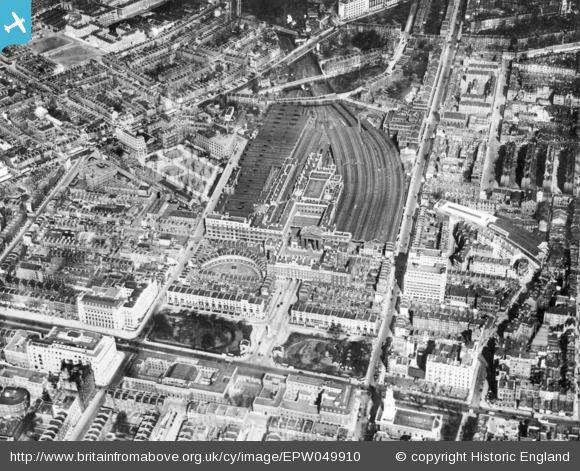


 SIMONICITY