Forthcoming Commercial To Resi Rules Tightened After Consultation

I have taken care over the heading of this piece about the Town and Country Planning (General Permitted Development etc.) (England) (Amendment) Order 2021, laid before Parliament on 31 March 2021, which introduces a new class MA into the GPDO, granting deemed planning permission for change of use from commercial and business use (class E) to residential (class C3) from 1 August 2021.

I have taken care because so much of the noise this week was about how the Government hasn’t listened to the responses it received to its 3 December 2020 consultation paper, whereas for me the news is that it has listened to much of the criticism it received. The final form of the regime is significantly constrained compared to the consultation version. Give credit where credit’s due!

I summarised the initial proposal in my 4 December 2020 blog post, E = C3, expressing a number of concerns. Responses to the consultation from all quarters expressed equivalent concerns – some of course going further, in questioning more fundamentally the role of the permitted development rights process.

Aside from the Order itself which saw the light of day later on that day, we have the 31 March 2021 press statement (at the now traditional one minute past midnight) and the Government’s response to the consultation process.

The RTPI and others were tweeting their reactions before the Order had even been published on line (although to be fair the headlines were in the press statement). A joint letter was sent yesterday, 1 April 2021, to the prime minister by the RTPI, RIBA, RICS and CIOB. I acknowledge that many have “in principle” concerns about the availability of fast-track permitted development rights procedures but isn’t the letter somewhat of an over-reaction? What do members of those organisations think? Call me a defeatist pragmatist, but the proposals could have been so much worse!

These were the Government’s objectives, as they were stated in the December consultation document:

“In his ‘Build, Build, Build’ statement of 30 June 2020 the Prime Minister said that we would provide for a wider range of commercial buildings to be allowed to change to residential use without the need for a planning application. To meet this aim, support housing delivery and bring more residential use into our high streets and town centres, boosting footfall and creating additional demand, we propose to introduce a new national permitted development right for the change of use from the new Commercial, Business and Service use class to residential use. The new right would help support economic recovery, housing delivery and the regeneration of our high streets and town centres.”

The proposals were always intended to be introduced much more quickly than the proposals in last year’s planning white paper – after all existing permitted development rights expire on 31 July 2021 in relation to changes of use from the classes that went to form the new class E:

“While Planning for the future sets out our longer-term ambitions, we want at the same time to continue to explore more immediate changes to the planning system to provide greater planning certainty and flexibility to ensure that it can effectively contribute to some of the immediate challenges facing the country.”

It is also worth remembering that the rights which expire on 31 July already include rights to convert offices (no floorspace limit), light industrial (500 sq m floorspace limit) and retail (150 sq m floorspace limit). The rules to be introduced from 1 August allow greater flexibility in a number of respects but are also significantly tighter than the existing rights in various ways.

My colleague Tom Brooks has prepared a detailed client summary in relation to all of the PD changes within the Order (this blog post is only dealing with class MA rather than the other excitements within). If you message or email me I will send it to you next week, but for the purposes of this blog post I set out below the Government’s summary of the proposed changes:

“We will introduce a new national permitted development right to create new homes through the change of use from Commercial Business and Service uses. The right will:

• have effect from 1 August 2021

• be subject to a size limit of 1,500 sq m of floorspace changing use

• apply to buildings that have been in Commercial, Business and Service uses for two years, including time in former uses now within that class

• apply to buildings that have been vacant for at least three continuous months

• apply in conservation areas, but not in other article 2 (3) land such as National Parks and Areas of Outstanding Natural Beauty

• be subject to prior approval by the local planning authority on specific planning matters

• attract a fee of £100 per dwellinghouse.”

The consultation proposals had:

• no size limit (and this size limit cuts back on what can already be achieved via the existing office to resi PD right)

• no requirement that the relevant building should have been in commercial , business and service uses (i.e. any of the uses that now make up class E) for the two years leading up to the date of the application for prior approval (for offices to residential, the cut off point in the existing rules is 29 May 2013).

• no requirement that the building must have been vacant for the three months leading up to the date of the application for prior approval (a requirement which has not existed in relation to existing PD rights).

There is also now an express carry-forward to 1 August 2022 of existing article 4 directions that restrict office to residential permitted development rights – addressing what would have been a significant loophole (see e.g. my 7 February 2021 blog post Art 4 Life).

Prior approval requirements will still include transport, contamination, flooding, noise, and adequate natural light. As trailed in the consultation proposals, prior approval will be required, where relevant, as to the impact on the character or sustainability of a conservation area caused by the change of ground floor use of a building within a conservation area. Where relevant, prior approval will also be required as to the impact on the intended residential occupiers if the area is considered important for “general or heavy industry, waste management, storage and distribution, or a mix of such uses” and as to the impact on local provision if there is a loss of services provided by a registered nursery or health centre.

Prior approval applications will need to include a floor plan indicating “the total floor space in square metres of each dwellinghouse” (and remember that the Government’s nationally described minimum space standard applies to any schemes which are the subject of a prior approval application from 6 April 2021 in any event).

For the first time, notices will need to be served on on any adjoining owner or occupier and, where the proposed development relates to part of a building, on any owner or occupier of the other part or parts of the building.

Remember that there is no exemption from CIL for permitted development, the usual rules apply – although most commonly the in-use buildings exemption will apply if at least part of the building has occupied for a use which is lawful for at least six months continuously in the last three years.

Mitigation cannot be secured as to matters that are not the subject of the prior approval process, so PD residential development is still free from affordable housing and other social infrastructure commitments (e.g. contributions to the cost of education facilities), but remember that the scale of development now permitted, with the 1,500 square metres cap, is far lower than the scale of conversions of office buildings that we have previously seen. The horse has bolted on that one.

The new rights do not limit in any way the need for planning permission for external works to the building that materially affect its external appearance, so finger-pointing as against the Government’s “beauty” aspirations is misdirected in my view.

What concerns are we left with? Yes, the new rules will allow residential development in potentially unsustainable locations. Yes, the new rules will allow commercial frontages in high streets to be converted to residential use in a way which may harm the traditional function of town centres (although subject to the need for a separate planning permission for the external treatment of the building). Yes, the new rules do limit in practice the role of the local planning authority in determining what are appropriate uses for a particular area. Yes, there will still be room for uncertainty and “gaming” of the system, particularly around the vacancy requirement. Set against these concerns, are the Government’s objectives in terms of enabling more homes to be delivered quickly and in finding new uses for redundant commercial floorspace and is the need for us all to acknowledge the various protections that are now (at last) in place, seeking to ensure that accommodation is to be delivered to at least a minimum standard (e.g. size of homes, light) and seeking to reduce the potential for the new rights to lead to unintended outcomes (e.g the floorspace cap, vacancy requirement).

Where does the balance lie? Are there now sufficient checks and balances? Are we going to see a final rush to make prior approval applications under the existing rules? Join a number of us on Clubhouse for a discussion on this very subject – from 6pm on Tuesday 6 April.

Simon Ricketts, 2 April 2021

Personal views, et cetera

Plug Pulled On Local Authority Meetings

I pointed out in my 23 January 2021 blog post Temporary Covid Measures – Planning, Traffic, Local Government: There May Be Trouble Ahead that after 6 May 2021 local authorities may not be able to hold virtual meetings given the expiry on that date of the temporary freedom provided by Regulation 5 of the Local Authorities and Police and Crime Panels (Coronavirus) (Flexibility of Local Authority and Police and Crime Panel Meetings) (England and Wales) Regulations 2020 , pursuant to section 78 of the Coronavirus Act 2020.

Let’s be clear – the Government has had ample time to bring forward emergency primary legislation to extend that regime if it considered that the issue was sufficiently important. But it doesn’t.

Instead, even in the face of litigation from local government bodies which is heading to a High Court hearing next month, MHCLG minister Luke Hall wrote to local authority leaders on 25 March 2021 to confirm that the power will not be extended.

The suggestions in the letter appear to be somewhat of a sticking plaster, compared to the proven solution of allowing meetings to be remotely conducted; appear to be pushing at the bounds of what is advised to be prudent in the Government’s roadmap out of lockdown, and leave us all without any Plan B.

To be clear, what we are talking about is not whether meetings should be able to be watched online – the letter encourages that in any event “to minimise the need for the public to attend meetings physically until at least 21 June, at which point it is anticipated that all restrictions on indoor gatherings will have been lifted in line with the Roadmap”.

Rather, the issue is whether participants in the meeting, whether councillors or other parties, need to be in physical attendance in order for the meeting to be lawfully conducted.

Meetings between 7 May until 17 May (or later)

If we go by the roadmap, when 7 May comes life will still be relatively restricted even assuming that by then we will have moved to step 2 of the roadmap. Whilst public buildings will be open again, people will still not be able to gather in groups, and wherever possible people will still be advised to work from home. Further opening up via step 3 will not be until 17 May or later.

The letter advises that during this period “options would include use of your existing powers to delegate decision making to key individuals such as the Head of Paid Service, as these could be used these to minimise the number of meetings you need to hold if deemed necessary. Additionally, some of you will be able to rely on single member decision making without the need for cabinet meetings if your constitution allows.”

As for annual meetings, for authorities without elections on 6 May, the letter suggests that these be brought forward to be held before 6 May (so they can still be held remotely). Otherwise, given the need to hold the meeting within 21 days of the election, the meeting can (just about) be held after 17 May (assuming that date doesn’t slip).

What does this mean for planning committee meetings? Well, even for authorities without elections, meetings between 7 and 17 May would now appear unlikely. For authorities with elections the process of selecting committee meetings at the annual meeting is going to be elongated, with committees not formed until after 17 May.

Meetings from 17 May (or later) to 21 June (or later)

The letter states:

The Government’s roadmap proposes that organised indoor meetings (e.g. performances, conferences) are permitted from 17 May, subject to Covid secure guidelines and capacity rules.”

A few problems with this…

⁃ The roadmap actually says “no earlier than” 17 May. If we’ve learned anything from this pandemic it is that covid doesn’t respect deadlines!

⁃ What about individual councillors and other participants who may not by then have been vaccinated and therefore reluctant to attend in person (after all, the guidance as to working from home will apparently not be reviewed until some time during this step 3) or indeed may be shielding?

There is a real risk that authorities will be reluctant during this period to hold potentially controversial meetings which may attract significant numbers of members of the public. Indeed many authority buildings do not lend themselves well to such events on a socially distanced basis.

From the Local Government Association’s statement (25 March 2021):

Councils are already actively considering the options the minister has suggested, including looking at alternative larger meeting venues at significant extra cost. The proposal to delegate significant decisions to officers is likely to be viewed as undermining democratic accountability due to the fact that such decisions are not subject to direct member involvement. Given the circumstances authorities find themselves in due to the imminent loss of virtual meeting provision, they now face unpalatable decisions, which include restricting member attendance and a reduction in members roles in decision making, whilst attempting to keep the machinery of local government moving. LLG & ADSO remain fully committed to presenting our case at the High Court Hearing timetabled to be heard before the end of April 2021.”

See also the Lawyers in Local Government’s statement The letter to Council Leaders from Luke Hall MP received yesterday (25th March 2021) does not change the need for our court hearing, in fact if anything, it makes the need for it more pressing (26 March 2021).

More generally

More generally, why let go of the flexibility that the current legal regime gives to local authorities, not just for public health reasons (although this is important, it would be foolhardy to think that from 21 June there will be no further outbreaks or no longer any need for caution) but equally for reasons of efficiency and inclusion?

The Government recognises the potential case for virtual meetings but instead kicks the can down the road by “launching a call for evidence on the use of current arrangements and to gather views on the question of whether there should be permanent arrangements and if so, for which meetings. There are many issues to consider and opinions on the detailed questions vary considerably. This will establish a clearer evidence base of opinion and enable all the areas to be considered before further decisions are made. The Government will consider all responses carefully before deciding to how to proceed on this issue.”

Don’t hold your breath then.

Simon Ricketts, 26 March 2021

Personal views, et cetera
Blackbushe Curtilage Limits

A church house, gin house, a school house, outhouse

To what extent were Ike & Tina Turner also referring to the curtilage of any of those buildings?

There are some words or expressions which are like an elephant; its essence is difficult to put into words, but you know it when you see it. “Curtilage” is a word of that nature.” – Andrews LJ in this week’s free text book from the courts: Blackbushe Airport Limited v Hampshire County Council (Court of Appeal, 18 March 2021).

The c word appears regularly in legislation, without definition. The Court of Appeal has done us all rather a service by gathering together the previous case law and attempting to arrive at common principles.

For instance, look at section 1 of the Planning (Listed Buildings and Conservation Areas) Act 1990: the definition of “listed building” includes “any object or structure within the curtilage of [a listed] building which, although not fixed to the building, forms part of the land and has done so since before lst July 1948”.

And it even appears in the NPPF: the definition of “previously developed land” includes “land which is or was occupied by a permanent structure, including the curtilage of the developed land…”

But what on earth does it mean?

In the Blackbushe case the question arose in relation to the operation of the Commons Act. Land can be deregistered as a village green if it can be shown to be “within the curtilage of a building”. The question was, as the airport owner claimed, 115 acres forming the operational part of Blackbushe Airport, could be deregistered on the basis that it is in the curtilage of “a two-storey terminal building, with a footprint of about 360 m2 and an overall floor area of about 760 m2, which serves as the airport’s operational hub.

The inquiry inspector had accepted the airport’s argument but his decision was quashed by Holgate J. The Court of Appeal agreed with Holgate J:

“If what is meant by “the curtilage of a building” is understood correctly, and all relevant factors are taken into account when determining whether the statutory requirements were satisfied in this case, the answer is no. This extensive area of operational airfield cannot properly be described as falling within the curtilage of the relatively small terminal building.

That common sense conclusion flows inexorably from the correct interpretation of the relevant provisions of the 2006 Act set out above, and their application to the facts. It is also consistent with the approach taken in the authorities in which the question of what falls “within the curtilage of a building” has been considered in other contexts, although none of them was directly concerned with this statute.

In deciding that the statutory criteria were met, the Inspector applied the wrong test by asking himself whether the land and building together “formed an integral part of the same unit” because he found that there was “functional equivalence” between them. That error is perhaps best demonstrated in paragraph 83 of his decision letter, where he described the operational area as “part and parcel with the building and an integral part of the same unit” instead of asking whether the land should be treated as if it were “part and parcel of the building”. The difference is critical, and it led to the Inspector addressing the wrong question, namely, whether the land and building together fell within the curtilage of the airport, rather than whether the land fell within the curtilage of the building.”

“Since it is the building which is to be treated as wrongly registered, the inference can be drawn that the relationship of the land to the building must be sufficiently proximate that a reference to that building – in this case, the terminal building – could be treated, without artifice, as including the land as well. So, for example, a reference to “Keeper’s Cottage” would naturally be taken to include a reference to the cottage garden. A reference to the terminal building at Blackbushe Airport would not be naturally understood as referring to the whole airport, or to 115 acres of operational land of which the terminal building occupies a very small part.

Looking at the matter from another perspective, in order to achieve the deregistration of the terminal building which is deemed by Parliament to have been wrongly registered as common land, whilst it would be reasonable and appropriate to include some of the surrounding land that might be referred to figuratively as “part and parcel of” the building, or “belonging to” the building, it is plainly unnecessary to deregister the whole of the rest of the operational area of the airport.”

“…just as one can tell immediately that a giraffe is not an elephant, it is probably far easier to recognise that something is not within the curtilage of a building than it is to say how far the curtilage extends. The present case is a good illustration.

“As Holgate J recognised in his judgment at [73] to [76], although “curtilage” is not a term of art, but is to be given its ordinary and natural meaning, its meaning is not completely provided by the dictionary. The concept has its origins in a small piece of land attached to a dwelling-house. Holgate J quoted the Oxford English Dictionary (“OED”) definition:

“A small court, yard, garth or piece of ground attached to a dwelling-house, and forming one enclosure with it, or so regarded by the law; the area attached to and containing a dwelling-house and its out-buildings.”


That definition begs the question of what the law would regard as “forming one enclosure” with a dwelling-house, or what is the ambit of the “area” in question.

In any event, as the Judge pointed out, in the 2006 Act (as in other legislation in which the expression is used) the “building” whose curtilage is being considered does not have to be a dwelling-house. Moreover, as will be seen, although the size of the land will be a relevant consideration, the extent of the curtilage of a building may vary with the nature and size of the building. To refer to the area as “small” (or conversely “large”) is not particularly helpful in a context where size is relative. What falls within the curtilage of a manor house, or a large industrial mill, or a factory, may not be the same as what falls within the curtilage of a dwelling house. What falls within the curtilage of a dwelling-house may depend on the size and configuration of the dwelling-house. Even so, proportionality, whilst relevant, may not be definitive; a small cottage will sometimes have a large garden, whereas a large townhouse may have a tiny terrace.”

“… the test is not whether the terminal building could function without an operational airport, nor whether the Application Land was necessary for the functioning of the airport. Nor is the test whether the Application Land and the terminal building together form one part of an operational unit or whether they fall within a single enclosure. The question whether, by reason of the association between them, the law would treat them as if they formed one parcel, or as an integral whole, depends on the application of the “part and parcel” test to the facts of the particular case.”

Holgate J was right to hold that the phrase “the curtilage of a building” in the 2006 Act requires the land in question to form part and parcel of the building to which it is related. The correct question is whether the land falls within the curtilage of the building, and not whether the land together with the building fall within, or comprise, a unit devoted to the same or equivalent function or purpose, nor whether the building forms part and parcel of some unit which includes that land. He therefore correctly concluded that the Inspector’s decision was fatally flawed by material errors of law.”

In a supporting judgment Nugee LJ added some useful guidance:

“If we want to know what a word’s ordinary meaning is, it is to my mind more helpful to ask how it is used in practice. This is after all what we do with everyday words. We do not know what the word house means because we have looked it up in the dictionary; we know what a house is because we have experience of how the word house is used. In the same way if we want to know what curtilage means, it is helpful to look at examples of how it has been used in practice. Such an exercise may not indicate the outer edges of its meaning with precision, but it does help to illustrate its central meaning.

Fortunately the extensive array of authorities cited to us on this appeal enables us to do this. We find for example that in the case of modest houses, the curtilage would not on the face of it extend to the whole of 10 acres of pasture land let with a cottage (Trim v Sturminster RDC [1938] 2 KB 508); that a field used for keeping cows was not part of a house (Pulling v London, Chatham and Dover Railway Co (1864) 3 De G J & S 661); and that paddocks have been held not to be part of the curtilage of houses in both Methuen-Campbell and Burford v Secretary of State for Communities and Local Government [2017] EWHC 1493 (Admin). On the other hand the curtilage does include a wall enclosing a recently expanded part of the garden (Sumption v Greenwich LBC [2007] EWHC 2776 (Admin)).

In grander houses, the curtilage would extend to “the house, the stables and other outbuildings, the gardens and the rough grass up to the ha-ha if there was one”, but not to the 100 acre park surrounding a mansion house (Dyer at 358F-G per Nourse LJ); thus it would include a wall forming part of a ha-ha (Watson-Smyth v Secretary of State for the Environment (1992) 64 P&CR 156); and a stable block even some distance away from the main house (Skerritts); but not 64½ acres of a park, meadow land and pasture land (Buck d. Whalley v Nurton (1797) 1 B & P 53); nor a 650m long fence along the driveway (Lowe v First Secretary of State [2003] EWHC 537 (Admin)). Admittedly a devise of a mansion-house to the testator’s wife was held to include three meadows let for grazing in Leach v Leach [1878] WN 79, but in Methuen-Campbell at 543F Buckley LJ said that he did not think, unless there was some special context, that this very liberal construction adopted by Malins V-C was good law.

When one moves away from dwelling-houses we find that the purpose-built residence of a medical superintendent within the boundary of a lunatic asylum was within the curtilage of the asylum (Jepson v Gribble [1876] 1 Ex D 151); but firemen’s houses outside the boundaries of the yard to a fire station were not within the curtilage of the fire station (Barwick). A courtyard and access to a warehouse and mill was part of the curtilage (Caledonian Railway Co. v Turcan [1898] AC 256); as was a piece of ground in front of a public house used for access (Marson v London, Chatham and Dover Railway Co (1868) LR 6 Eq 101); and two small open spaces in an oil depot (Clymo); but not a large hardstanding massively in excess of what was necessary for an undertaking in a modest building (Challenge Fencing). To these can be added Calderdale, which concerned a terraced row of houses physically linked to a mill by a bridge and within its boundaries, and which is extensively considered by Andrews LJ above.

A survey such as this is neither scientific nor comprehensive. Nor does it give any indication why in any particular case the Court decided as it did: that requires a consideration of the explanations given by the judge(s) in any particular case. Nor does it take account of the different statutory contexts in which the question may arise. Nor is it any substitute for a careful analysis of the question when it does arise. But that does not mean that it has no value. To my mind it gives a good idea of the concept of what it is for a piece of land to be within the curtilage of a building; it illustrates the natural and ordinary meaning of the word. I will not attempt to define it, but these are all examples of bits of land that go with a building, of “relatively limited” extent (Skerritts), that are “intimately associated” with it (Methuen-Campbell)”

What is so interesting is that whilst the Court of Appeal upheld Holgate J’s first instance judgment, they differed from him in one important respect – he had accepted that “curtilage” could have a broader and more expansive definition for the purposes of listed buildings legislation:

“For the reasons I have already given, I do not consider that the use of “curtilage” in the extended definition of “listed building” is analogous to its use in the de-registration and non-registration provisions in schedule 2 to the 2006 Act. The 2006 Act takes a balanced approach to the protection of, on the one hand, rights of common and public access to commons and town or village greens and, on the other, the interests of the owners of buildings on such land. There is no justification for adopting for the 2006 Act the “broad approach” to defining curtilage which the court expressly employed in Calderdale in order to promote the efficacy of listed building control.”

Contrast with Andrews LJ: “I do not accept that the test in a listed building case is any different…”

The, previously understood, extended definition with regard to listed buildings is reflected in current Historic England guidance – see for example this example they set out:

Surely this approach needs to be viewed with caution in the light of the Court of Appeal’s judgment: an elephant is or is not an elephant, curtilage is or is not curtilage.

Simon Ricketts, 19 March 2021

Personal views, et cetera
(courtesy Hampshire County Council)

Net Heritage Harm: Bramshill

Sometimes I think, why buy a legal text book when you can read it in a court judgment? Lindblom LJ has provided some useful practical guidance, in City & Country Bramshill Limited v Secretary of State (Court of Appeal, 9 March 2021), on how to go about the assessment, required by the NPPF, as to whether development proposals would be likely to cause harm to listed buildings and other heritage assets.

(The case also considers the interpretation of policies in the NPPF against the development of “isolated homes in the countryside” but I’m limiting this blog post to heritage aspects.)

The case arose out of a decision letter dated 31 January 2019 by inspector Vicki Hirst into no fewer than 33 appeals against refusals of planning permission and enforcement notices issued by the second respondent, Hart District Council, relating to development at Bramshill Park in Hampshire. The third and fourth respondents to the proceedings, Historic England and the National Trust, were objectors. The inquiry had sat for 26 days.

From Lindblom LJ’s judgment:

“The site, which extends to about 106 hectares, lies between the villages of Hazeley and Eversley. It was previously used as a national and international police training college. On it stands a grade I listed Jacobean mansion and various other buildings. It also contains a grade I registered park and garden. The proposed development included the conversion of the mansion to 16 apartments and the adjoining stable block to five (appeal 1), or its conversion to a single dwelling (appeal 2), or to class B1 office space (appeal 3); the construction of 235 houses in place of some of the existing buildings (appeal 4), 14 more to the south-west (appeal 5), and nine to the north of an existing lake (appeal 6); the use of 51 residential units – once occupied by staff employed at the training college – as separate dwellings (appeal 7), retaining those against which the council had taken enforcement action alleging a material change of use without planning permission (appeals 8 to 33).

The inspector held a long inquiry into the appeals, which ended in February 2018. In her decision letter, dated 31 January 2019, she allowed appeals 2 and 3, granting planning permission for those proposals. She also allowed appeals 15 and 17 to 33, quashing the enforcement notices in those appeals. She dismissed appeals 1, 4 to 14 and 16. In a separate decision letter dated 14 March 2019 she dismissed City & Country Bramshill’s application for costs against the council. City & Country Bramshill challenged her decisions on appeals 4 to 14 and 16, and on the application for costs. Waksman J. upheld the challenges to the decisions on appeals 7 to 14 and 16. He rejected those to the decisions on appeals 4 to 6 and on costs. The appeal before us is against that part of his order. Permission to appeal was granted by Lewison L.J. on 28 February 2020.

The key dispute before the court in relation to heritage policy was as follows:

“Historic England and the National Trust provided their evidence on the basis that paragraphs 195 and 196 of the [NPPF] would always be engaged where any element of harm was identified. The appellant held that this was not the correct approach […]. The appellant’s case is that an “internal heritage balance” should be carried out where elements of heritage harm and heritage benefit are first weighed to establish whether there is any overall heritage harm to the proposal. Paragraphs 195 and 196 would only be engaged where there is residual heritage harm. This should then be weighed against the public benefits of the scheme.”

I’m now handing the microphone over to my Town Legal colleague, Victoria McKeegan – the rest of this post is largely hers.

So, the key matter was whether, prior to engaging paragraphs 195 and 196 of the NPPF (which apply to cases where a development proposal will lead to substantial / less than substantial harm), an ‘internal heritage balance’ should be carried out where elements of heritage harm and benefit are first weighed up to establish whether there is any overall heritage harm. The appellant argued that this was the case and, as such, that these paragraphs are only engaged where there is residual heritage harm, this then being weighed against the public benefits of the scheme. Put another way, only if “overall harm” (i.e. net harm) emerges from the weighing of “heritage harms” against “heritage benefits” must the “other public benefits” of the development be weighed against that “overall harm“.

On this point, the Court held as follows:

Like the judge, I cannot accept those submissions. It is not stipulated, or implied, in section 66(1), or suggested in the relevant case law, that a decision-maker must undertake a “net” or “internal” balance of heritage-related benefits and harm as a self-contained exercise preceding a wider assessment of the kind envisaged in paragraph 196 of the NPPF. Nor is there any justification for reading such a requirement into NPPF policy. The separate balancing exercise for which Mr Strachan contended may have been an exercise the inspector could have chosen to undertake when performing the section 66(1) duty and complying with the corresponding policies of the NPPF, but it was not required as a matter of law. And I cannot see how this approach could ever make a difference to the ultimate outcome of an application or appeal.

There is also some useful commentary regarding the s66(1) duty and the concepts of ‘harm’ in the NPPF, which I set out below:

1. Matters of weight:

• Section 66(1) duty

Section 66 does not state how the decision-maker must go about discharging the duty to “have special regard to the desirability of preserving the building or its setting …”. The courts have considered the nature of that duty and the parallel duty for conservation areas in section 72 of the Listed Buildings Act, and the concept of giving “considerable importance and weight” to any finding of likely harm to a listed building and its setting. They have not prescribed any single, correct approach to the balancing of such harm against any likely benefits – or other material considerations weighing in favour of a proposal. But in Jones v Mordue this court accepted that if the approach in paragraphs 193 to 196 of the NPPF (as published in 2018 and 2019) is followed, the section 66(1) duty is likely to be properly performed.

• NPPF paragraph 193

The concept in paragraph 193 – that “great weight” should be given to the “conservation” of the “designated heritage asset”, and that “the more important the asset the greater the weight should be” – does not predetermine the appropriate amount of weight to be given to the “conservation” of the heritage asset in a particular case. Resolving that question is left to the decision-maker as a matter of planning judgment on the facts of the case, bearing in mind the relevant case law, including Sullivan L.J.’s observations about “considerable importance and weight” in Barnwell Manor.

2. The concepts of “substantial harm” and “less than substantial harm

The same can be said of the policies in paragraphs 195 and 196 of the NPPF, which refer to the concepts of “substantial harm” and “less than substantial harm” to a “designated heritage asset”. What amounts to “substantial harm” or “less than substantial harm” in a particular case will always depend on the circumstances. Whether there will be such “harm”, and, if so, whether it will be “substantial”, are matters of fact and planning judgment. The NPPF does not direct the decision-maker to adopt any specific approach to identifying “harm” or gauging its extent. It distinguishes the approach required in cases of “substantial harm … (or total loss of significance …)” (paragraph 195) from that required in cases of “less than substantial harm” (paragraph 196). But the decision-maker is not told how to assess what the “harm” to the heritage asset will be, or what should be taken into account in that exercise or excluded. The policy is in general terms. There is no one approach, suitable for every proposal affecting a “designated heritage asset” or its setting.

3. Identifying benefits

Identifying and assessing any “benefits” to weigh against harm to a heritage asset are also matters for the decision-maker. Paragraph 195 refers to the concept of “substantial public benefits” outweighing “substantial harm” or “total loss of significance”; paragraph 196 to “less than substantial harm” being weighed against “the public benefits of the proposal”. What amounts to a relevant “public benefit” in a particular case is, again, a matter for the decision-maker. So is the weight to be given to such benefits as material considerations. The Government did not enlarge on this concept in the NPPF, though in paragraph 196 it gave the example of a proposal “securing [the heritage asset’s] optimum viable use”.

Plainly, however, a potentially relevant “public benefit”, which either on its own or with others might be decisive in the balance, can include a heritage-related benefit as well as one that has nothing to do with heritage. As the inspector said (in paragraph 127 of the decision letter), the relevant guidance in the PPG applies a broad meaning to the concept of “public benefits”. While these “may include heritage benefits”, the guidance confirms that “all types of public benefits can be taken together and weighed against harm”.

Cases will vary. There might, for example, be benefits to the heritage asset itself exceeding any adverse effects to it, so that there would be no “harm” of the kind envisaged in paragraph 196. There might be benefits to other heritage assets that would not prevent “harm” being sustained by the heritage asset in question but are enough to outweigh that “harm” when the balance is struck. And there might be planning benefits of a quite different kind, which have no implications for any heritage asset but are weighty enough to outbalance the harm to the heritage asset the decision-maker is dealing with.

4. Interaction with the overall planning balance and statutory duties

One must not forget that the balancing exercise under the policies in paragraphs 195 and 196 of the NPPF is not the whole decision-making process on an application for planning permission, only part of it. The whole process must be carried out within the parameters set by the statutory scheme, including those under section 38(6) of the Planning and Compulsory Purchase Act 2004 (“the 2004 Act”) and section 70(2) of the 1990 Act, as well as the duty under section 66(1) of the Listed Buildings Act. In that broader balancing exercise, every element of harm and benefit must be given due weight by the decision-maker as material considerations, and the decision made in accordance with the development plan unless material considerations indicate otherwise (see City of Edinburgh Council v Secretary of State for Scotland [1997] 1 WLR 1447). Within that statutory process, and under NPPF policy, the decision-maker must adopt a sensible approach to assessing likely harm to a listed building and weighing that harm against benefits.”

Thanks Victoria. Me again now. With the retirement of Lord Carnwath from the Supreme Court, Lindblom LJ is now our most senior “planning” judge. It is good to see him underlining yet again that it is for the decision maker to take a rational course through the various NPPF policy tests, based on judgment and circumstances – surely we all now know that, although great care is required to take into account what the individual paragraphs in the framework require (for what can go wrong see e.g. my 12 December 2020 blog post Where’s The Harm In That: Misreporting Heritage Effects), this should not be an overly technocratic or legalistic exercise with only one correct methodology?

Simon Ricketts, 12 March 2021

Personal views, et cetera

London Plans

Surely planning becomes a democratic irrelevance when the plan making process is slower than the electoral cycle? That’s pretty much the position in London. After all, Sadiq Khan wouldn’t have managed it if he hadn’t been gifted a further year in post by virtue of the postponement of the May 2020 elections.

Election: 7 May 2016. First consultation document: October 2016. Adopted plan 2 March 2021.

But it doesn’t have to be that way. In fact, it shouldn’t be this way. The plan “must deal only with matters which are of strategic importance to Greater London” (section 334(5), Greater London Authority Act 1999).

My 23 April 2017 blog post Make No Little Plans: The London Plan heralded the imminent publication of initial non-statutory consultation in relation to the new London Plan. The hope at that stage was to have an adopted plan in place by Autumn 2019. I referred to the 400 pages or so of the then current plan and expressed the hope that its replacement would be shorter. Hmm, not so.

One of the issues with this process has certainly been of the Mayor’s making – the sheer bloated nature of the plan, with its excessive layers of detail. What can be done to make sure that this never happens again?

But the other issue has not entirely been of the Mayor’s making. For the whole of his period in office he has faced opposition from Government, which has been placing pressure on him to increase planned housing numbers well beyond the already ambitious and probably unachievable numbers that he has been planning for. See for instance the previous Secretary of State’s 27 July 2018 letter and Robert Jenrick’s 13 March 2020 letter directing that a series of amendments be made to the draft plan.

“I had expected you to set the framework for a step change in housing delivery, paving the way for further increases given the next London Plan will need to assess housing need by using the Local Housing Need methodology. This has not materialised, as you have not taken the tough choices necessary to bring enough land into the system to build the homes needed.

Having considered your Plan at length my conclusion is that the necessary decisions to bring more land into the planning system have not been taken, the added complexity will reduce appetite for development further and slow down the system, and throughout the Plan you have directly contradicted national policy. As you know, by law you must have regard to the need for your strategies to be consistent with national policies.

For these reasons I am left with no choice but to exercise my powers to direct changes.

Your Plan must be brought to the minimum level I would expect to deliver the homes to start serving Londoners in the way they deserve. However, this must be the baseline and given this, I ask that you start considering the next London Plan immediately and how this will meet the higher level and broader housing needs of London.”

Then most recently, only after the Mayor had chased on 9 December 2020 for a response from Government to his April 2020 proposed amendments to address those March 2020 directions, the Secretary of State wrote again on 10 December 2020 with further directions.

But, to accentuate the positive, we now have an adopted new London Plan (542 pages of it).

This is a good Lichfields blog post on it. I did also like this Tom Pemberton post that summarised some of its implications in seven slides.

The whole process will now have to start again, as soon as we are past the 6 May elections, given the Government’s expectation of an immediate review to take into account the current NPPF and the housing numbers deriving from the revised standard method (including indeed its additional 35% figure for London and other major towns and cities). The new numbers are truly challenging/unrealistic (93,500 per annum as against the 52,000 figure in the new plan and annual delivery of less than 37,000).

What a political dilemma for the next Mayor to face – to broker some sort of solution with Government, boroughs, communities, authorities surrounding London and, for so long as there are going to be the range of onerous requirements that are set out in the new plan, developers and funders. On top of all the other challenges post-pandemic, post- Brexit and in the midst of a climate emergency.

And yet numerous candidates have thrown their hats in the ring for 6 May 2021 and we haven’t yet reached the 30 March deadline for delivery of nomination papers (fancy a go?).

I’m chairing a Planning Futures hustings event at 2pm on 9 March 2021, where we will have a number of the candidates or their representatives. It will focus on planning/housing/built environment policies. The event is free so do register and join me.

In preparation I did a little googling to see what the main candidates might be saying that might give some hope that the scale of the challenges ahead are publicly acknowledged.

⁃ Sadiq Khan’s campaign was launched on 4 March, focusing on listing the achievements of his first term rather than setting out any significant new direction or pledges.

⁃ Conservative candidate Shaun Bailey’s campaign website – 100,000 shared ownership homes to be sold at £100,000 each – a London Infrastructure Fund to fund long-term transport projects.

⁃ Green Party candidate Sian Berry’s campaign website – would set up “a People’s Land Commission to find small sites for new homes, green spaces and community support”. “In addition to using existing powers including compulsory purchase orders, I will also continue to lobby central Government for a devolved or national “community right to buy” which will create new rights for local community groups to buy any land or property that is neglected, empty and needed for community uses”.

Liberal Democrat party candidate Luisa Porritt’s campaign includes “homes in the heart of the city”, “a green roadmap” and “reinvent the high street”.

⁃ Women’s Equality Party candidate Mandu Reid: “Stand with us to make sure no woman is turned away from refuge, to close the pay gap in a generation, to balance work and family life for everyone, and to make London the first gender equal city in the world.”

⁃ UKIP candidate Peter Gammons will “will focus on new housing in every borough, holding developers accountable for providing affordable housing and prioritising Londoners.” He has apparently written a book, “London – a road map for recovery”, although I couldn’t find it on Amazon.

I think we need to get beyond these platitudes, and that is what I shall attempt to do on Tuesday….

Simon Ricketts, 6 March 2021

Personal views, et cetera

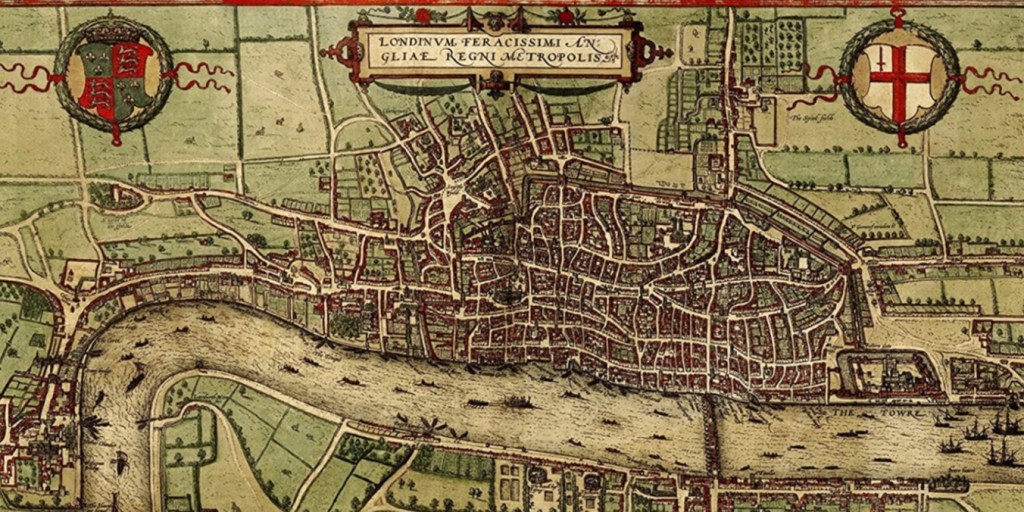
London, 1572. Those were the days.

Art 4 Life

Article 4 directions are a small but essential cog in the complicated machine that is the English planning system. With the more widespread reliance by Government on permitted development rights, it falls to local planning authorities to make article 4 directions to disapply, where appropriate, those rights in relation to specific types of developments and/or in specific areas.

From 1 August 2021, we are potentially approaching a breakdown in this machine in the face of the proposed class E to class C3 permitted development right which I wrote about in my 4 December 2020 blog post E = C3.

But first a few basic points to note about the way these cogs work:

1. Article 4 directions do not have to be approved by the Secretary of State but he can intervene where he considers that a direction is inappropriate.

2. Unless an article 4 direction takes effect at least a year after it was first publicised, in certain circumstances the authority can be liable to claims for compensation where someone can show they incurred abortive expenditure or otherwise suffered loss or damage as a result of the direction.

3. For permitted development rights where prior approval of certain matters is required before the right can be relied upon, the prior approval needs to be secured before the direction takes effect and needs to be completed within three years of prior approval.

The role of article 4 directions has increased with the gradual spread of “resi conversion” permitted development rights since 2013.

The office to residential permitted development right was first introduced in May 2013. At that time the legislation included a specific list of “excepted areas” within which the right did not apply, for instance London’s central activities zone. The Government was not adverse to threatening intervention where authorities sought to introduce blanket article 4 directions in relation to other areas, for instance its well publicised spat at the time with the London Borough of Islington.

In 2016 the right was made permanent. The list of excepted areas was scrapped but only as from 30 May 2019 so as to give affected authorities time to put article 4 directions in place as appropriate (see Lichfields’ 14 March 2016 blog post Office to Residential Permitted Development Right Made Permanent.

There is now indeed a patchwork of article 4 directions across the country, disapplying “resi conversion” permitted development rights in relation to many areas of the country. Focusing on central London, here is how the “offices to resi” rights is disapplied in RBKC and in Westminster for instance.

When Class E was introduced from 1 September 2020 (see my 24 July 2020 blog post E Is For Economy for more detail) existing permitted development rights were kept in place until 31 July 2021 (applying to what the uses would have been categorised as prior to the creation of Class E) so as to give the Government time to introduce new permitted development rights that apply to Class E.

The consultation period on the proposed new development rights closed on 28 January 2021 and the Government has come under fire from many quarters for the intended breadth of the new rights (for instance, here is the British Property Federation’s response). The statutory instrument to introduce the new rights (and in part replace the old rights, which will expire) has not seen the light of day and we are now around six months away from what might be termed PD-Day, 1 August 2021.

Some big questions arise and discussions within Town with Duncan Field and other partners and colleagues have been really useful. I’m not going to give away for free our entire Town “house view” but I’m just going to state the obvious:

⁃ the existing permitted development rights that attached to uses now within Class E will fall away after 31 July 2021, the end of the “material period” in the Town and Country Planning (Use Classes) (Amendment) (England) Regulations 2020, unless secondary legislation extends the material period for those purposes, as a stop gap.

⁃ it is questionable whether existing article 4 directions would restrict the operation of any new permitted development rights that are introduced, even where the change is still, say, offices to residential (and some changes that, according to the Government’s consultation proposals, will now be possible are entirely new, e.g. restaurant, indoor sports hall or creche to residential).

⁃ As a matter of principle an article 4 direction cannot be made in relation to a future permitted development right, so authorities’ hands are tied until the statutory instrument containing the new rights is actually made.

⁃ plainly there is no time for authorities to give a year’s advance notice in relation to any new article 4 direction that is to take effect from 1 August 2021, so any more immediate restrictions would expose authorities to the risk of compensation claims (unless there is some specific transitional arrangement in the new rights, for instance if the new rights would permit development that before 1 August 2021 have been restricted by an article 4 direction, but that will not be straight-forward at all).

It is interesting that when the “excepted areas” system was abolished in 2016 authorities were given sufficient time to put article 4 directions in place. In the rush this time round, either this issue has been overlooked or the Government is seeking to sidestep the article 4 direction process and create some kind of gold rush for prior approvals before directions can be introduced and take effect. After all its antipathy towards article 4 directions in the “resi conversions” area, save where exceptionally justified, is plain from its recent consultation on proposed changes to the NPPF:

Article 4 directions

“We also propose clarifying our policy that Article 4 directions should be restricted to the smallest geographical area possible. Together these amendments would encourage the appropriate and proportionate use of Article 4 directions.”

“The use of Article 4 directions to remove national permitted development rights should

• where they relate to change of use to residential, be limited to situations where this is essential to avoid wholly unacceptable adverse impacts

• [or as an alternative to the above – where they relate to change of use to residential, be limited to situations where this is necessary in order to protect an interest of national significance]

• where they do not relate to change of use to residential, be limited to situations where this is necessary to protect local amenity or the well-being of the area (this could include the use of Article 4 directions to require planning permission for the demolition of local facilities)

• in all cases apply to the smallest geographical area possible.”

The flexibility introduced by permitted development rights is necessary and welcome but let’s not focus on that lever without making sure that there isn’t going to be an almighty crunch when it is pulled. What am I missing here folks?

Simon Ricketts, 27 February 2021

Personal views, et cetera

PS If you’re on Clubhouse, I’ll be joined by some other friendly planning solicitors, barristers and planners to talk about this and other topical planning law issues at 6pm on Tuesday 2 March, details here. Do join us!

Arc

Well here’s an interesting R number: regional planning for the Oxford-Cambridge Arc.

Last week MHCLG published Planning for sustainable growth in the Oxford- Cambridge Arc: An introduction to the Oxford-Cambridge Arc Spatial Framework (18 February 2021). “Spatial framework” is a regional plan by any other name. The document is only a precursor to the plan itself. A (fast) timeline is set out, as follows:

The accompanying statement indicates that the Government’s ambition for the Arc is expressed in cautiously generic language:

“There is an opportunity, recognised by government and local partners, to build a better economic, social and environmental future for the area. With high-quality, well-connected and sustainable communities making the Arc an even more beautiful place to live, work and visit.”

“To achieve this ambition, the government alongside local partners, is going to:

• Develop a Spatial Framework for the Arc; a long-term regional plan to help coordinate the infrastructure, environment and new developments in the area. We are committed to working with local communities throughout so we can create beautiful and sustainable places for residents and workers to enjoy.

• Explore the creation of an Arc Growth Body; that would be a clear economic leadership voice for the Arc, championing its talent and assets internationally, supporting businesses, and fostering innovation.”

Government announcements these days invariably comprise a series of related statements and documents. So for completeness there was also a separate MHCLG press statement on the same day, Government plan to transform Oxford-Cambridge Arc into UK’s fastest growing economic region (18 February 2021)

The documents say this about the likely nature and governance of the Arc Growth Body and of its likely delivery structure:

To realise the full opportunities – and overcome the challenges – will require coordination of planning functions across the region. Local councils cannot do this on their own because of the level of coordination needed across the area, and because they do not have all the levers needed to develop a genuinely integrated plan. Government needs to play a supporting role to bring together a strategic approach at the Arc level to support better planning and ultimately better outcomes for the economy, environment and communities.”

“Over the next two and a half years, a specialist team in the Ministry of Housing, Communities and Local Government will work with communities and local partners to develop a robust, evidence-based Spatial Framework. “

“The nature and content of the Spatial Framework will be subject to the outcome of both detailed consultation and sustainability appraisal.”

We will seek to implement the Spatial Framework as spatially specific national planning policy. Local planning authorities preparing local development documents (including local plans) will have to have regard to the Spatial Framework, as they do with other national policies and guidance.”

“We have […] made a commitment to examine the case for development corporations, linked to the new transport hubs around East West Rail stations.”

“Specifically, the Spatial Framework will:

• provide an assessment of existing employment land, planned growth and anticipated future need

• set policies to support local planning authorities in allocating these as Strategic Business Zones or Strategic Industrial Locations, as appropriate

• set policies to support different land uses for different sectors and sizes of business”

“The Spatial Framework will also outline policies to enable sustainable, transport-led development. This will include policies to enable:

• new settlements to come forward at the scale and speed needed

• new development to support habitat recovery, delivery of Local Nature Recovery Strategies, and provision of good-quality green space within schemes

brownfield redevelopment and densification, and expansion of existing settlements, in sustainable locations or locations that can be made more sustainable by enhanced access to sustainable transport modes

housing needs to be met in full, including delivery of much-needed affordable housing”

To put a little flesh on the bones, it’s worthwhile looking back what was said in its March 2020 budget policy paper:

The OxCam Arc

2.128 The government has designated the corridor of land connecting Oxford, Milton Keynes, Bedford and Cambridge (the OxCam Arc) as a key economic priority. Earlier this year, the government announced the East West Rail Company’s preferred route for the new line between Bedford and Cambridge. The government will also, subject to planning consents, build a new rail station at Cambridge South, improving connectivity to the world-leading research facilities of the Cambridge Biomedical Campus – the largest cluster of medical and life sciences research in Europe.

2.129 The Budget announces plans to develop, with local partners, a long-term Spatial Framework to support strategic planning in the OxCam Arc. This will support the area’s future economic success and the delivery of the new homes required by this growth up to 2050 and beyond. The government is also going to examine and develop the case for up to four new Development Corporations in the OxCam Arc at Bedford, St Neots/Sandy, Cambourne and Cambridge, which includes plans to explore the case for a New Town at Cambridge, to accelerate new housing and infrastructure development.”

Indeed, earlier this month, MHCLG started a tender process for a “planning/engagement specialist to support the Government in developing an approach to engaging local audiences (both stakeholder groups and the public) throughout the process of developing up to four new or expanded settlements in the Oxford-Cambridge Arc (OxCam Arc) aligned with new stations along the East West Rail (EWR) Central Section. The specific locations under consideration are Bedford, St Neots/Tempsford, Cambourne and Cambridge.”

“3.5 The objectives of this commission are […] to:

3.5.1 develop an evidence-based engagement strategy for the programme that sets out the phases and methods of activity until delivery vehicles have been established at the chosen locations (~mid 2022);

3.5.2 clearly set out a route for the programme to meet any statutory requirements for consultation across the area and specifically each of the four potential development sites Bedford, St Neots/Tempsford, Cambourne and Cambridge; and

3.5.3 secure local buy-in for the strategy by working with local partners to build on established channels of engagement and recommending methods to engage hard to reach groups.”

[Statement of Requirements, 5 February 2021].

There are so many interesting elements to what is proposed:

⁃ The Government, through the Arc Growth Body, is going to prepare the framework itself and take it through to adoption. Who is going to lead the body and what will be its make-up?

⁃ It will have equivalent status to the NPPF in relation to plan making and decision making.

⁃ The Government has accepted that there will be stages of consultation and the sustainability appraisal (opening itself up to the rigours of the legal requirements in relation both to consultation and strategic environmental assessment) but it appears that there will be no independent examination of the draft framework.

⁃ Success is inevitably going to be dependent on securing a sufficient level of support or acceptance from local politicians and communities, meaning that it is important that the 2019 joint declaration holds firm, “entered into between the Government, local authorities across the Oxford to Cambridge Arc, Cambridgeshire and Peterborough Combined Authority, the Arc’s four local enterprise partnerships (LEPs), and England’s Economic Heartland.

⁃ We can expect to see up to four development corporations.

⁃ the document references the Government’s Planning For The Future proposals and I am sure we will see the process used in part as a showcase as to its proposed approach to plan making, for instance:

“3.12 First, we will use data and digital technology to support our policy-making. We intend to support development of an open source, digital platform for data and evidence to support collaboration between government, businesses, local councils and communities in decision-making. We will work with local partners to create an accessible digital platform for economic, planning and environmental data, and easy-to-use tools so that people – including the public and businesses – can engage meaningfully in the process.

3.13 Second, it means using digital engagement processes to make it easy for people to raise their views about proposals in the spatial framework, including on smartphones.

3.14 Third, it means the spatial framework will be visual and map-based, standardised, and based on the latest digital technology, so that it is easy to access and understand.”

Neil Young and Crazy Horse once released a terrific, if noisy album: Arc-Weld. Civil servants’ welding skills will certainly be needed to build the structure so far outlined, at the pace identified.

Simon Ricketts, 20 February 2021

Personal views, et cetera

Local Zoomocracy

My team has proved capable of losing 9-0 in any conditions but, because it is another angle on what I was going to write this morning, I was still interested to see this piece yesterday: Premier League’s home edge has gone in pandemic era: The impact of fan-less games in England and Europe (ESPN, 12 February 2021).

Wouldn’t it be interesting to see some statistics on the impacts of virtual local authority meetings and PINS hearings and inquiries on decision making outcomes?

Would that Handforth Parish Council meeting have been any less chaotic if Aled’s iPad, guitars man or Handforth PC Clerk had all been sitting around the same table? A subsequent letter from Land Promoters and Developers Federation policy director John Acres in Planning magazine The Handforth debacle shows that local democracy is too often placed in the wrong hands (registration only) seeks to draw wider conclusions.

I mentioned in my 23 January 2021 blog post Temporary Covid Measures – Planning, Traffic, Local Government: There May Be Trouble Ahead that after 6 May 2021 local authorities may not be able to hold virtual meetings given the expiry on that date of temporary freedom provided by Regulation 5 of the Local Authorities and Police and Crime Panels (Coronavirus) (Flexibility of Local Authority and Police and Crime Panel Meetings) (England and Wales) Regulations 2020 , pursuant to section 78 of the Coronavirus Act 2020.

In response to that blog post, Hugh Richards (No 5 Chambers) rightly, and probably rhetorically, asked whether local authorities need statutory authority to hold virtual meetings in any event. Well, I took it as a rhetorical question and didn’t reply at the time after I disappeared down a legal rabbit hole trying to arrive at an answer.

I’m pleased to see that the Lawyers in Local Government and Association of Democratic Services Officers are taking urgent steps to try to avoid what would be an unfortunate hiatus – they have obtained an opinion from James Strachan QC, a summary of which is reported as follows:

“(1) There are forceful arguments that can be made that the pre-existing legislation governing local authority meetings under Schedule 12 of the Local Government 1972 Act, and meetings of an executive or a committee of an executive under the Local Authorities (Executive Arrangements (Meetings and Access to Information) (England) Regulations 2012, enable local authorities to hold meetings remotely.

(2) For the present situation to continue after 7 May 2021 with the use of remote meetings, the optimum position would be for further legislation to be passed to make the position clear.

(3) In the absence of such legislation, one resolution would be to obtain a declaration from the courts to obtain clarity as to the legal position under the pre-existing legislation.

(4) The Secretary of State does have (a) power under section 16 of the 1999 Act to make an Order to modify or disapply those restrictions for best value authorities and (b) power under the 2000 Act to make regulations governing executive decision-making bodies to hold remote meetings.”

(LLG & ADSO Obtain Legal Opinion on Virtual Meeting Provisions, 5 February 2021).

The LLG and ADSO intend to seek a declaration from the High Court. Without such a declaration (or legislation) there is inevitably going to be a question-mark over the lawfulness of any local authority resolution passed on or after 7 May by way of a virtual meeting. This is a risk that most applicants would wish to avoid in relation to any contentious planning application.

6 May is of course an important date because local government elections will definitely be proceeding (as far as “definitely” is a word that any of us can still use). The Local Government Association has published much information and guidance relating to the May 2021 local government elections.

Ahead of those elections will be the usual period (previously known as the “purdah period”, now simply and dully, “pre-election period”) when there is heightened sensitivity over decision making. The period will start at the latest on 27 March (22 March for the London elections). Again, the Local Government Association has published detailed guidance.

The period is shorter when it comes to actions and decisions taken being by central Government. As set out in the Commons Library research briefing Pre-election period of sensitivity (23 November 2020), the relevant civil service guidance is as follows:

“The period of sensitivity for UK Government civil servants preceding scheduled local and mayoral elections each May is not fixed to any particular date, but the general convention is that particular care should be taken in the three weeks preceding the elections.”

Applying that ESPN Premier League analysis, it will be fascinating to see the influence of the current restrictions upon election outcomes. Fortunately I don’t have a team. Simon’s iPad will not be making its first appearance at my local parish council meeting this Spring.

Simon Ricketts, 13 February 2021

Personal views, et cetera

Tilt!

Tilt” in pinball is an example of a good rule: in order to discourage an unwanted outcome (cheating), transgression (sloping the table) leads to a predictable penalty (game over).

The purposes of the NPPF’s “tilted balance” (the phrase just being planners’ jargon) are to discourage local planning authorities from:

⁃ relying on out of date local plans

⁃ not maintaining (potentially with an additional buffer) at least five years’ housing land supply (now watered down to a minimum of three years’ housing supply if there is an up to date neighbourhood plan that allocates land for housing development) and

⁃ (since the introduction of the housing delivery test) not ensuring that a defined number of homes are delivered each year.

Where the tilted balance applies, it should in many circumstances be easier for developers to secure planning permission which is not in accordance with the relevant local plan and/or neighbourhood plan, in that paragraph 11 (d) of the NPPF provides as follows:

“(d) where there are no relevant development plan policies, or the policies which are most important for determining the application are out-of-date, granting permission unless:

i. the application of policies in this Framework that protect areas or assets of particular importance provides a clear reason for refusing the development proposed; or

ii. any adverse impacts of doing so would significantly and demonstrably outweigh the benefits, when assessed against the policies in this Framework taken as a whole.

There is a footnote to “out-of-date”: “This includes, for applications involving the provision of housing, situations where the local planning authority cannot demonstrate a five year supply of deliverable housing sites (with the appropriate buffer, as set out in paragraph 73); or where the Housing Delivery Test indicates that the delivery of housing was substantially below (less than 75% of) the housing requirement over the previous three years.

There is another crucial footnote, to (d)i: “The policies referred to are those in this Framework (rather than those in development plans) relating to: habitats sites (and those sites listed in paragraph 176) and/or designated as Sites of Special Scientific Interest; land designated as Green Belt, Local Green Space, an Area of Outstanding Natural Beauty, a National Park (or within the Broads Authority) or defined as Heritage Coast; irreplaceable habitats; designated heritage assets (and other heritage assets of archaeological interest referred to in footnote 63); and areas at risk of flooding or coastal change.

Already, that description surely begins to raise obvious questions:

⁃ Is the rule sufficiently clear and understood, such that the risk of the penalty actually influences council members’ and officers’ decision making so as to discourage those unwanted outcomes: to encourage up to date plans, the maintenance of an adequate housing land supply, sufficient homes being built? If the public doesn’t understand it, it’s going to have no effect at the ballot box – so how do we expect it to influence councillors, for whom being seen to protect their local areas from change will usually be a more potent vote winner?

⁃ To what extent can the authority avoid those unwanted outcomes in any event, given for instance the slowness of the local plans system even for a authority wishing to make swift progress and given the reliance on the private sector not only to promote suitable sites but then proceed to build them out?

⁃ The footnote to (d)i reduces the impact of the rule in constrained areas which usually turn out to be those where the documented need for housing is greatest.

⁃ Should there be a different penalty other than to make it more likely that development will take place in a way which is unplanned for and often unpopular? What are the most direct “carrots and sticks” that could be deployed?

Four years ago this month my thoughts were wandering in these directions, while sitting in the Supreme Court in the Suffolk Coastal case, acting for Richborough Estates (thank you Paul Campbell and Chris Young). The case was a turning point in the consideration of how the tilted balance is intended to work. It relates to the original 2012 version of the NPPF but the principles still hold true. The judgment in Suffolk Coastal District Council v Hopkins Homes Limited, Richborough Estates Partnership LLP v Cheshire East Borough Council (Supreme Court, 10 May 2017) is a masterpiece in cutting through what had been a series of conflicting rulings by the lower courts as to how the tilted balance was to be interpreted in order to pull us all back to the basic principles. I tried to summarise them in a blog post at the time, but for instance:

⁃ Let’s not overstate the influence of the test: the NPPF is no more than “guidance” and is no more than a “material consideration” for the purposes of section 70(2) of the 1990 Act: “It cannot, and does not purport to, displace the primacy given by the statute and policy to the statutory development plan. It must be exercised consistently with, and not so as to displace or distort, the statutory scheme”. (Lord Carnwath, paragraph 21) (i.e. there’s a get-out so that a decision maker can determine that, notwithstanding the tilted balance, planning permission should not be granted).

⁃ Deprecation of the “over-legalisation of the planning process, as illustrated by the proliferation of case law on [the tilted balance]. This is particularly unfortunate for what was intended as a simplification of national policy guidance, designed for the lay-reader.” (Lord Carnwath, para 23) (i.e. the court will always be reluctant to interfere with the judgment arrived at by the decision maker).

⁃ As long as decision makers apply it lawfully (which means they first have to understand it – not easy!) the application of the tilted balance test engages matters of planning judgement, not legal interpretation. (i.e. legal challenges to the decision maker’s judgment, have to be based on unlawful or irrational reasoning on the part of the decision maker – never easy).

⁃ the basis for the test arises from the importance that the NPPF places on boosting the supply of housing. “The message to planning authorities is unmistakeable”. (Lord Gill, paragraph 77). He refers to “the futility of authorities’ relying in development plans on the allocation of sites that have no realistic prospect of being developed within the five year period”. (paragraph 78). (i.e. the test has a real world objective which we must not lose sight of – boosting the supply of housing).

⁃ “If a planning authority that was in default of the requirement of a five-years supply were to continue to apply its environmental and amenity policies with full rigour, the objective of the Framework could be frustrated”. (Lord Gill, paragraph 83). (i.e. the outcome of the test may well be that planning permissions are granted notwithstanding an authority’s policies – that’s the whole point of it).

The cases have kept coming. Already, in 2021, there have been no fewer than three rulings from the Court of Appeal – on a test in a non statutory policy document – this is surely ridiculous. Does this arise from its unnecessary complexity and “angels dancing on the head of a pin” abstractions, or from the way that in practice the so-called tilted balance hardly seems to provide any tilt at all, even in areas with a severe under-supply of housing, perhaps contrary to the original objective?

Three 2021 Court of Appeal cases:

Gladman Developments Limited v Secretary of State (Court of Appeal, 3 February 2021)

The case raised “two main issues: first, whether a decision-maker, when applying the “tilted balance” under paragraph 11d)ii, is required not to take into account relevant policies of the development plan; and second, as a connected issue, whether it is necessary for the “tilted balance” and the duty in section 38(6) of the Planning and Compulsory Purchase Act 2004 to be performed as separate and sequential steps in a two-stage approach. There is a further issue: whether the “tilted balance” under paragraph 11d)ii excludes the exercise indicated in paragraph 213 of the NPPF, which requires that policies in plans adopted before its publication should be given due weight, “according to their degree of consistency with [it]“.

Answers from the court: no, no and (on the further issue) no.

R (Monkhill Limited) v Secretary of State (Court of Appeal), 27 January 2021)

The case raised “one principal issue […]: whether the inspector was wrong to interpret the first sentence of paragraph 172 of the NPPF, which says “great weight should be given to conserving and enhancing landscape and scenic beauty” in an AONB, as a policy whose application is capable of providing “a clear reason for refusing” planning permission under paragraph 11d)i of the NPPF.

Answer from the court: no.

Paul Newman New Homes Ltd v Secretary of State (Court of Appeal, 12 January 2021)

Ever since a NPPF was first introduced in March 2012, the interpretation of its provisions has provided a fertile hunting ground for planning lawyers. The 2018 version was intended to produce greater clarity and simplicity, but unfortunately it has not been entirely successful. The effect of the appellant’s argument was that if there is only one relevant policy in the local plan, the developer gets the benefit of the tilted balance (absent the operation of one of the exceptions). Mr Lockhart-Mummery eschewed any suggestion that this was a “numbers game” but he also very fairly accepted that it is virtually unknown for a single policy in a local plan to embrace all the material considerations that would suffice to enable a decision-maker to determine a planning application, especially if that application is to build houses.”

Answer from the court: no. (“… at the end of the day there is nothing inherently unfair to an applicant or contrary to the overall scheme of the NPPF or the 2004 Act, both of which afford primacy to the local plan, about the balancing exercise being carried out under section 38(6) in circumstances where an experienced Planning Inspector has found that there is a policy in the development plan that is relevant, important and up-to-date. For those reasons I would uphold the interpretation of Paragraph 11d) adopted by the Judge and applied by the Inspector).”

Housing delivery test:

The Government has now published the results of its 2020 housing delivery test measurement (19 January 2021). The figures are important, because if the housing delivery test indicates that the delivery of housing was less than 85% of the housing supply requirement over the last three years, a buffer of 20% has to be added to that requirement. If delivery was less than 75% of the housing requirement over the previous three years, that is a trigger for the application of the tilted balance.

As an adjustment to recognise at least to some extent to effects of Covid this past year, authorities’ requirements this year were reduced by a month.

This year there are (by my count) 55 authorities for whom the tilted balance applies following these latest measurements.

Has that featured in the relevant local press? What are authorities doing about it? I would be pleased to hear.

And what of the obvious flaw, highlighted by Zack Simons in his 21 January 2021 blog post Elephants in the Room: Green Belts vs. the Housing Delivery Test – the obvious correlation between green belt authorities and those that are failing the delivery test?

I just wonder whether it might not be better to sweep all of this complexity away and replace it with a policy that provides for an enhanced presumption in favour of development if relevant housing land supply figures are not met: the higher the shortfall, the more weighty the presumption? Leave the detail to decision makers, including to inspectors on appeal – attempts at greater prescription are doomed to fail and are not understood by the public.

There should also be additional consequences for authorities that fail to meet these targets, and their councillors – but also a new transparency on the part of the Government as to (1) the basis for its national target and (2) the need for frank annual reporting to Parliament as to its performance as against that target.

To encourage desirable outcomes, we need rules that everyone understands. Plan positively = great places. A failure to plan positively = intervention, remedial steps.

But enough of this quixotic tilting.

Simon Ricketts, 6 February 2021

Personal views, et cetera
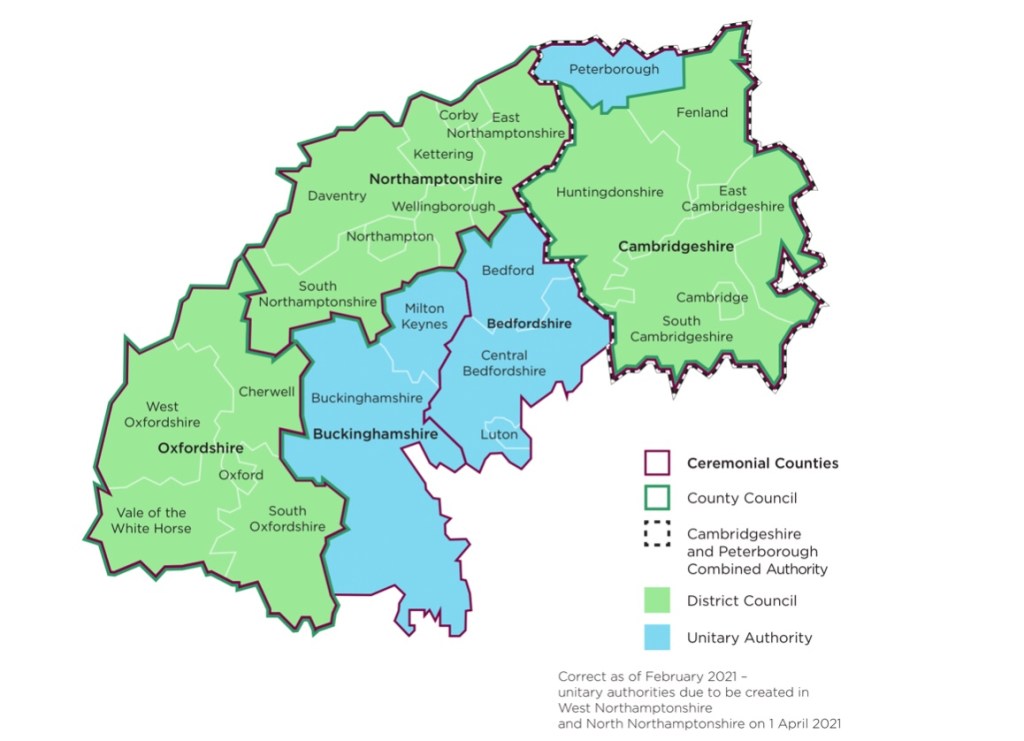
Beautiful Day

I threw those curtains wide, drinking in the morning emails and there it was: MHCLG press release 30 January 2021, All new developments must meet local standards of beauty, quality and design under new rules.

Consultation is now running until 27 March 2021 on:

National Planning Policy Framework and National Model Design Code: consultation proposals

National Planning Policy Framework Draft text for consultation

Draft national design code

Guidance notes on design codes

The proposals seek to give effect to the Building Better Building Beautiful Commission’s recommendations that I summarised in my 1 February 2020 blog post Beauty Duty.

“The National Model Design Code is intended to form part of the government’s planning practice guidance. It is not a statement of national policy. However, once finalised, the government recommends that the advice on how to prepare design codes and guides is followed.”

I will leave others to comment on the draft national design code and the proposed “beauty” related changes to the NPPF (the consultation proposals identify the changes and the draft revised text is helpfully marked-up to show all the textual changes).

However, you should note that the draft NPPF changes go wider:

“We have also taken this opportunity to make a number of environment-related changes, including amendments on flood risk and climate change. The amendments also include a small number of very minor changes arising from legal cases, primarily to clarify the policy. A few minor factual changes have also been made to remove out-of-date text (for example, the early thresholds for the Housing Delivery Test), to reflect a recent change made by Written Ministerial Statement about retaining and explaining statues, and an update on the use of Article 4 directions.

As summarised in the consultation proposal, the draft revised text:

Implements policy changes in response to the Building Better Building Beautiful Commission recommendations

• Makes a number of changes to strengthen environmental policies – including those arising from our review of flood risk with Defra

• Includes minor changes to clarify policy in order to address legal issues

• Includes changes to remove or amend out of date material

• Includes an update to reflect a recent change made in a Written Ministerial Statement about retaining and explaining statues.

• Clarification on the use of Article 4 directions

Some points that immediately leapt out (this is not a comprehensive list):

Overarching objectives of the planning system

Paragraph 8 of the NPPF has been amended to refer to refer to “beautiful, well-designed and safe places” (previously “a well-designed and safe built environment”).

The presumption in favour of sustainable development

Paragraph 11 (a) has been amended to read:

“all plans should promote a sustainable pattern of development that seeks to: meet the development needs of their area; align growth and infrastructure; improve the environment; mitigate climate change (including by making effective use of land in urban areas) and adapt to its effects”.

(The previous wording was “plans should positively seek opportunities to meet the development needs of their area, and be sufficiently flexible to adapt to rapid change”).

Article 4 directions

“We also propose clarifying our policy that Article 4 directions should be restricted to the smallest geographical area possible. Together these amendments would encourage the appropriate and proportionate use of Article 4 directions.”

This is really interesting, particularly in the context of the proposed class E to C3 permitted development right. The proposed wording is pretty tight:

The use of Article 4 directions to remove national permitted development rights should

• where they relate to change of use to residential, be limited to situations where this is essential to avoid wholly unacceptable adverse impacts

• [or as an alternative to the above – where they relate to change of use to residential, be limited to situations where this is necessary in order to protect an interest of national significance]

• where they do not relate to change of use to residential, be limited to situations where this is necessary to protect local amenity or the well-being of the area (this could include the use of Article 4 directions to require planning permission for the demolition of local facilities)

• in all cases apply to the smallest geographical area possible.”

Larger scale residential proposals

There is an amendment to paragraph 73 to require that these should include “a genuine choice of transport modes”.

Isolated homes in the countryside

The design should now be “outstanding”. The “or innovative” is gone.

Affordable home ownership

“Paragraph 64 has been amended to clarify that, where major development involving the provision of housing is proposed, planning policies and decisions should expect at least 10% of the total number of homes to be available for affordable home ownership. This is to address confusion as to whether the 10% requirement applies to all units or the affordable housing contribution.”

Neighbourhood plan allocations

Paragraph 69 has been amended to remove any suggestion that neighbourhood plans can only allocate small or medium sites. This was not the policy intention, so the wording has therefore been amended to clarify that neighbourhood planning groups should also give particular consideration to the opportunities for allocating small and medium-sized sites (of a size consistent with paragraph 68a) suitable for housing in their area.

Trees

A new paragraph 130:

“Trees make an important contribution to the character and quality of urban environments, and can also help mitigate and adapt to climate change. Planning policies and decisions should ensure that new streets are tree-lined [Unless, in specific cases, there are clear, justifiable and compelling reasons why this would be inappropriate], that opportunities are taken to incorporate trees elsewhere in developments (such as community orchards), that appropriate measures are in place to secure the long- term maintenance of newly-planted trees, and that existing trees are retained wherever possible. Applicants and local planning authorities should work with local highways officers and tree officers to ensure that the right trees are planted in the right places, and solutions are found that are compatible with highways standards and the needs of different users.”

The “well-designed” test

Paragraph 133:

“133. Development that is not well designed should be refused, especially where it fails to reflect local design policies and government guidance on design, taking into account any local design guidance and supplementary planning documents which use visual tools such as design guides and codes. Conversely, significant weight should be given to:

a) development which reflects local design policies and government guidance on design, taking into account any local design guidance and supplementary planning documents which use visual tools such as design guides and codes; and/or

b) outstanding or innovative designs which promote high levels of sustainability,, or help raise the standard of design more generally in an area, so long as they fit in with the overall form and layout of their surroundings.”

Development affecting the setting of national parks and AONBs

“New paragraph 174 has been amended in response to the Glover Review of protected landscapes, to clarify that the scale and extent of development within the settings of National Parks and Areas of Outstanding Natural Beauty should be sensitively located and designed so as to avoid adverse impacts on the designated landscapes.”

Historic statues, plaques and memorials

(which was going to be the subject of this week’s blog post until the curtains/drinking in the emails moment)

“New paragraph 196 has been added to clarify that authorities should have regard to the need to retain historic statues, plaques or memorials, with a focus on explaining their historic and social context rather than removal, where appropriate.”

This of course supplements Robert Jenrick’s statement to the House of Commons (18 January 2021) and MHCLG’s 17 January 2021 press statement, New legal protection for England’s heritage.

As a draft for consultation in my view the consultation material so far has only limited weight for decision makers and, as is usually and appropriately the case, the final documents may be subject to change. However, there is much for us all to get to grips with – and comments on the national design code are for another day.

Simon Ricketts, 30 January 2021

Personal views, et cetera