“Building homes on brownfield land will be turbocharged under a major shake-up to planning rules to boost housebuilding while protecting the Green Belt. “
For a concise summary of today’s DLUHC announcements and all the links, see my Town Legal colleague Susie Herbert’s post.
I have seen some understandable cynicism about the proposed changes – along the lines of “it’s motivated by the politics” (obviously in part yes); and/or “it’s in dribs and drabs, why couldn’t this have been done as part of the December 2023 NPPF changes?” (well yes, although maybe better late than never?); and/or ”none of it will make a difference” (I’ll declare an interest having assisted British Land and Land Sec in a small way last year with their report More Growth, More Homes, More Jobs: how to reform the planning system to unlock urban regeneration – but I would have said this anyway – I think the announced changes could well make a difference – and in fact there are plenty more within that report that are worthy of consideration!).
There is of course already existing policy encouragement (albeit rather general) in paragraph 124 (c) of the NPPF, which states that planning policies and decisions should “give substantial weight to the value of using suitable brownfield land within settlements for homes and other identified needs.”
The Government proposes to strengthen that message with the following additional wording within paragraph 129 (c):
“local planning authorities should refuse applications which they consider fail to make efficient use of land, taking into account the policies in this Framework, especially where this involves land which is previously developed. In this context, when considering applications for housing, authorities should give significant weight to the benefits of delivering as many homes as possible and take a flexible approach in applying planning policies or guidance relating to daylight and sunlight and internal layouts of development, where they would otherwise inhibit making the most efficient use of a site (as long as the resulting scheme would provide acceptable living standards).” [new passages underlined]
I do think this does move the dial further with those references to “delivering as many homes as possible” and (particularly in London) the “flexible approach in applying planning policies or guidance relating to … internal layouts of development”.
The dial will then move into full “tilted balance” paragraph 11 (d) territory for those boroughs in London and those other 19 towns and cities subject to the urban uplift, where their Housing Delivery Test results (to be published in May) indicate that their delivery of housing was below 95% of the housing requirement over the previous 3 years.
This strengthening of the tests is likely to make a difference (even during this consultation period): it will influence the way that planning committees are advised when they come to make decisions; it will focus a broader spread of authorities on the potential consequences of not meeting delivery targets (admittedly not fully within their control, but certainly partly), and it will certainly influence how inspectors and the Secretary of State approach appeals and call-ins.
In London there is also much good analysis in the excellent report prepared by Christopher Katkowski KC and his panel. From the executive summary:
“6 The consequences of housing under-delivery have significant economic, societal and personal impacts, not least on those who face no alternative option but homelessness (living in temporary accommodation), or who are forced into poor-quality rental accommodation.
7 Public and private sector stakeholders are clear in their view that the London Plan is not the sole source of the problem: wider macro-economic conditions; fire safety; infrastructure constraints; statutory consultees; viability difficulties; and planning resourcing pressures have all contributed.
8 However, there is persuasive evidence that the combined effect of the multiplicity of policies in the London Plan now works to frustrate rather than facilitate the delivery of new homes, not least in creating very real challenges to the viability of schemes. We heard that policy goals in the Plan are being incorrectly applied mechanistically as absolute requirements: as ‘musts’ rather than ‘shoulds’. There is so much to navigate and negotiate that wending one’s way through the application process is expensive and time-consuming, particularly for SMEs who deliver the majority of London’s homes.
9 This position is exacerbated by the change in context since the London Plan was formulated. The London Plan’s ‘Good Growth’ policies were advanced on the basis of public and private sector investment assumptions that were described in 2019 as being “ambitious but realistic” by the London Plan Inspectors. But planning and housing delivery indicators suggest this strategy has not been sufficiently resilient to the subsequent change in circumstances. Housing schemes (and decision makers on applications) have struggled to reconcile the multiple policy exhortations, which create uncertainty and delay in the preparation, submission and determination of planning applications.”
Many will also welcome the Secretary of State including within his consultation paper the question as to whether the threshold for referral of applications to the Mayor should be raised:
“As part of the large scale development theme, a threshold for large scale residential development was first set in the previous regulations in 2000 as development providing more than 500 houses, flats, or houses and flats or residential development on more than 10 hectares. In 2008, this threshold was reduced to 150 houses, flats or houses and flats.
Through engagement, the government is aware that in some instances this threshold is considered to be too low, requiring what may amount to duplicative interactions by developers with the relevant London Borough and with the Greater London Authority which is not always considered proportionate to the nature of the development in question.
The government wants to make sure that this threshold is set at the right level, in order that it adds value to the process of determining applications for potential strategic importance (especially for residential development), and does not inadvertently slow down or disincentivise developments that could be appropriately determined by the London Borough.”
In conclusion, will building homes on brownfield land be “turbocharged under a major shake-up to planning rules”? It’s more a ratcheting-up of policy than a “major shake-up to planning rules” (thankfully). And whilst I refuse to engage with that ridiculous, very Boris Johnson, word “turbocharged” and whilst this is a very late initiative for a Government that is fast running out of road, let’s hope there is at least some acceleration as a result.
God bless planners who have been waiting for this day all year. I hope you participated in the nppfestivities although to my mind the NPPF itself was the least interesting of what was published today (19 December 2023).
This is today’s publication list as it stands at 6 pm (ten items):
I’ve been reading the latest version of the NPPF as against the previous September 2023 version and against the amendments consulted on in December 2022. This is just a first quick take. I’ve just read the lines so far. The interesting bit is of course going back and reading between them. (A Landmark Chambers/Town Legal seminar is planned for 15 January 2024 with exactly this in mind – details here).
As compared to the December 2022 consultation (see my 22 December 2022 blog post) the changes are relatively limited, the main substantive ones being (in broad summary):
No further restrictions after all as to when the paragraph 11 tilted balance applies (although for an authority whose plan has reached at least regulation 18 stage the requirement to show five years’ worth supply of housing supply drops to four years). The consultation paper had suggested exclusions where meeting need in full “would mean building at densities significantly out of character with the existing area” and where there is “clear evidence of past over-delivery”.
The changes consulted upon to the “soundness” test for local plans, particularly the deletion of the “justified” requirement, are not being taken forward.
Whilst as per the consultation draft, the outcome of the standard method for assessing housing requirements for an area is expressed as an “advisory starting point”, the exceptional circumstances for departure make it clear that “the particular characteristics of an area” is in fact the “particular demographic characteristics of an area”.
References have been added, supportive of “community-led development”.
The “area character” point has instead been picked up in a new paragraph 130 which advises that “significant uplifts in the average density of residential development may be inappropriate if the resulting built form would be wholly out of character with the existing area. Such circumstances should be evidenced through an authority-wide design code which is adopted or will be adopted as part of the development plan.”
Substantively as per the consultation document, there is “no requirement for Green Belt boundaries to be reviewed or changed when plans are being prepared or updated”. How can this possibly work in Green Belt authorities with high levels of unmet housing need?
As per the consultation document there are plenty of exhortations as to beauty.
3. Consequential changes to the advice in the Government’s Planning Practice Guidance about the Green Belt and about traveller sites .
Much of the statement simply summarises the other documents covered in this blog post but the section on Cambridge is worth setting out in full:
“Cambridge
Finally, I want to provide an update on the Government’s vision for Cambridge 2040. In July, I outlined plans for a new urban quarter – one adjacent to the existing city – with beautiful Neo-classical buildings, rich parkland, concert halls and museums providing homes for thousands. This would be accompanied by further, ambitious, development around and in the city to liberate its potential with tens of thousands of new homes.
In the intervening months, Peter Freeman, the Chair of the Cambridge Delivery Group, has been developing our vision for the city, in collaboration with a whole host of local leaders and representatives. I am clear that delivering our vision means laying the groundwork for the long-term, and that starts now.
We plan to establish a new development corporation for Cambridge, which we will arm with the right leadership and full range of powers necessary to marshal this huge project over the next two decades, regardless of the shifting sands of Westminster.
We recognise the scale of development we are talking about will require support from across the public and private sectors, to realise our level of ambition.
And we must also ensure we have an approach towards water that reflects the nature of Cambridge’s geography. So today I am also announcing that we will review building regulations in Spring next year to allow local planning authorities to introduce tighter water efficiency standards in new homes. In the meantime, in areas of serious water stress, where water scarcity is inhibiting the adoption of Local Plans or the granting of planning permission for homes, I encourage local planning authorities to work with the Environment Agency and delivery partners to agree standards tighter than the 110 litres per day that is set out in current guidance.”
“We agree that housing delivery in London is far below the levels needed. Not only is delivery considerably short of your own London Plan target by approximately 15,000 homes per year, it was approximately 63,500 homes lower than actual need last year, as calculated by the standard method. This is not a national issue. London was the worst performing region in the Housing Delivery Test 2022. Fewer than half of the London Boroughs and Development Corporations delivered more than 95% of their appropriate housing requirement for the test over the three-year monitoring period. Areas like the West Midlands are overdelivering, while London continues to fall short.
This has a significant effect on the availability of homes for those wanting to live and work in the capital, as well as for the standard of housing available. London’s average house prices remain the most expensive in the UK – an average of £537,000 in September 2023. The average price was over 12.5 times average earnings last year. London has the lowest level of home ownership in England. Our capital also has, as you know, the highest proportion of renters. There are 60,040 homeless households in temporary accommodation, including over 80,000 children.
Under your leadership the GLA is failing to provide affordable homes for those that need them most.
While I welcome the commitments you made in your letter, as well as the ideas you have provided for Government to consider, they are not enough to change this woeful picture. In July, I asked my officials to review housing delivery in London to gain a greater understanding of the reasons for this significant under-delivery. We met stakeholders, including planning authorities, developers, and boroughs to identify the challenges they encounter in delivering housing. In the course of those discussions, a number of issues were raised which stakeholders believe are adversely affecting housing delivery in London.
Due to the significant shortfall in housing supply and under delivery of housing in our capital, I have concluded that it may be necessary to take further action now, as a matter of urgency, to make sure London is delivering the homes our capital needs.
With this in mind, I have asked Christopher Katkowski KC to lead a panel of expert advisers comprising Cllr James Jamieson, Paul Monaghan, and Dr Wei Yang, to consider the aspects of your London Plan which could be preventing thousands of homes being brought forward, with a particular focus on brownfield sites in the heart of our capital. I have asked them to produce their report by January and will make sure that it is shared with you.
If you cannot do what is needed to deliver the homes that London needs, I will.”
8. Local Plan intervention: Secretary of State’s letters to 7 local authorities directing them to revise their local plan timetables – Amber Valley. Ashfield, Basildon, Castle Point, Medway, St Albans and Uttlesford.
9. Direction preventing West Berkshire Council from withdrawing its emerging local plan at a meeting tonight.
That timescale assumed that the Levelling-up and Regeneration Bill would receive Royal Assent that Spring. Ho ho ho. The Act finally received Royal Assent on 26 October 2023, although, as set out in my 4 November 2023 blog post Act Up!, nothing substantive has yet come into force, most elements requiring secondary legislation with only limited sections being switched on from Boxing Day. (My firm has prepared a detailed summary of the planning reform aspects of the Act, running to some 41 pages. Do message or email me if you would like a copy.)
Judging from the tone of DLUHC’s 28 November 2023 response to the Levelling Up, Housing and Communities Committee’s reforms to national planning policy report, together with Mr Gove’s appearance before the Levelling Up, Housing and Communities Committee on 6 December 2023, we assume that the final version of the NPPF will reflect quite closely the December 2022 draft, but time will tell.
Of course, barring a general election in the meantime, in 2024 we will then have consultation on further proposed revisions to the NPPF, to reflect LURA’s proposed reforms to plan-making, and consultation on much else besides.
In the meantime, 2023 has seen yet more ministerial changes with Rachel Maclean sacked in favour of an expanded role for Lee Rowley. There have been at best sporadic attempts to discourage local authorities from withdrawing emerging plans (Spelthorne and Erewash). There has been a self-styled long-term plan for housing. There have been sporadic culture wars – for example the swipe at South Cambridgeshire District Council for its four-day working week trial (anyone remember localism? I have an old book to flog).
Spotify-style, I looked back at which simonicity posts were most widely read, last year. Perhaps this list tells its own story – one of procedural hurdles, unnecessary complexity and political climbdowns. In order:
M&S Mess (21 July 2023). We wait to see what the High Court makes of Mr Gove’s 20 July 2023 decision letter.
The Government’s Big Move On Nutrient Neutrality – Now We Have Seen The Government’s LURB Amendment (29 August 2023). The subsequent defeat suffered by the Government on this in the House of Lords was possibly DLUHC’s most embarrassing moment of the year, when taken with the subsequent, aborted, attempt by the Government to introduce a fresh Bill.
Euston We Have A Problem (8 July 2023). Subsequent to the post there was then of course the Government’s total abandonment of proposals for HS2 north of Birmingham (see my 4 October 2023 blog post, Drive Time) and wishful thinking as to a privately funded terminus for HS2 at Euston. It will be interesting to see what happens this coming year to the idea of a new “Euston Quarter” Development Corporation.
Incidentally, thank you everyone for continuing to read this blog, now in its eighth year (with more daily views than ever before), and for occasionally saying nice things about it. Believe me, I would otherwise have given up a long time ago. I did hope that I could pass it over to chatGPT next year but from early experimentation I suspect not:
It’s obvious now why the Levelling Up and Regeneration Bill was named as it was. Having now received Royal Assent on 26 October 2023 it is formally the Levelling Up and Regeneration Act 2023, or Lura to its friends.
I consulted the oracle which is The Bump website:
“Origin: German
Meaning: Alluring temptress
Lura is a feminine name of German origin that means “alluring temptress.” A variation of the traditional name Lorelei, Lura is a modern alternative with the same fascinating history and connotations. In legends, Lorelei was the name of a maiden who would lure fishermen to their deaths by singing her haunting song. Today, Lorelai is the name of a rock face along the Rhine River in Germany. With connotations of otherworldly beauty and natural wonder, Lura is an excellent option for your little one.”
Very clever Mr Gove, very clever.
(Although there is also the LURA, which is the Leeds University Rocketry Association. And there is a Portuguese singer, Lura. Planning law is going to get even more confusing).
As is usual, it will take a bit of time for the Act to be printed. In the meantime you either have to trawl through the various sets of amendments on the Parliament website, take your chances with the Government’s press statement or (more usefully) delve into the various summaries already on social media. I would recommend for instance:
Lichfields’ summary of the planning-related sections
I also very much recommend, as a wider update, the latest Planning Law (With Chickens) podcast episode, recorded that day by my Town colleagues, Victoria McKeegan and Nikita Sellers. The chat covers Lura but also much else of what has been happening in our world over the last few months.
Because it isn’t all about the Act, the operation of which is dependent on much further secondary legislation to come. The Act will only change the system’s hardware. A software update, in the form of an updated version of the NPPF following the December 2022 consultation draft, is expected any day now.
In the meantime, Michael Gove’s letter to local planning authorities dated 8 September 2023 is worth a read if you haven’t seen it. I’m not sure it was initially online. For instance:
“First and foremost, this Government is unashamedly supportive of development and regeneration in and around existing town and city centres. This is how we will get homes built where it makes sense, support growth, and enable people to get on the property ladder.
And making it easier to progress such developments is front of mind as we finalise the update to the National Planning Policy Framework (NPPF), following our consultation which attracted more than 26,000 responses. In that context, and ahead of the publication of the refreshed NPPF in the autumn, I wanted to make clear my expectation that:
• development should proceed on sites that are adopted in a local plan with full input from the local community unless there are strong reasons why it cannot;
• councils should be open and pragmatic in agreeing changes to developments where conditions mean that the original plan may no longer be viable, rather than losing the development wholesale or seeing development mothballed; and
• better use should be made of small pockets of brownfield land by being more permissive, so more homes can be built more quickly, where and how it makes sense, giving more confidence and certainty to SME builders.”
[That viability statement is particularly topical].
“My intention is for the regulations, policy and guidance necessary for the preparation of the first new-style local plans to be in place by Autumn 2024. In the new system, planning authorities will need to prepare, consult on and adopt plans within a 30-month timeframe – and follow the same process for each subsequent update of their plans, including examination by PINS.
In the interim, we want local authorities to continue adopting ambitious local plans, which is why we set out fair transitional arrangements in our current consultation on implementing the plan-making reforms. As part of these arrangements, we confirmed our intent that the last day to submit a plan under the current system will be 30 June 2025. I want to reiterate that local authorities without an up-to-date local plan are likely to be subject to the presumption in favour of sustainable development when facing applications.”
A vision softly creeping, left its seeds while I was sleeping:
Why don’t we test the whole local plans system against the soundness requirement in paragraph 35 of the National Planning Policy Framework?
Of course it’s not an exact fit but what’s sauce for the goose is sauce for the gander (an expression which also occurs to me whenever we have criticism from Government directed at local authorities for not moving faster). Is the current local plans system, for instance:
positively prepared
justified
effective
consistent with national policy?
Plainly not.
Is it a strategy which, as a minimum, seeks to meet the country’s objectively assessed needs? First of all, the 300,000 homes target, whilst undoubtedly being too low, has not been objectively assessed (so as, if nothing else, to reassure the sceptical) and secondly there is an increasing disconnect between that aspiration and local plan making reality.
Is it an appropriate strategy, taking into account the reasonable alternatives, and based on proportionate evidence? Reasonable alternatives? Evidence? Not how national policy-making seems to work.
Deliverable? Of course not.
Consistent with (other) national policy? Given the vital policy objectives to be delivered by proper forward planning – housing, economic growth, climate change mitigation, levelling up – again it’s a no.
I also query whether the proposed changes in the Levelling-up and Regeneration Bill and more detailed implementation proposals, currently being consulted upon, would get to the root of the problems.
This thought occurred when reading the Tandridge local plan inspector’s 10 August 2023 letter to the council’s chief executive, in which the inspector (Philip Lewis) concludes that his concerns as to the soundness of the plan are such that he invites the council to withdraw it, failing which he will write a report setting out his reasoning.
His letter follows a procedural meeting on 27 July 2023 which you can watch on line here . A detailed paper was provided for the inspector by the council ahead of that meeting as a final, unsuccessful, attempt to avoid this outcome. The council issued a statement on 22 August 2023 indicating that it will look to resolve its response to the inspector’s letter at a meeting of the council’s planning policy committee on 21 September 2023.
I was taken back to the opening day of that examination, 8 October 2019, on legal compliance. I’m not sure that I have ever been at a local plan examination session with quite so many lawyers in attendance (not a good thing).
Mr Lewis’ concerns include:
unresolved highway capacity issues following the subsequent refusal of HIF funding for transport infrastructure, including works to junction 6 of the M25 on which the deliverability of the south of Godstone new settlement option was predicated– together with the consequent need for further lengthy transport assessment and modelling work
the need for the sustainability appraisal to reconsider reasonable alternatives in the light of the change in circumstances
the need for the council’s 2017 Gypsy and Traveller Accommodation Assessment to be updated.
The fact that we are already half way through the plan period of the submitted plan which is 2013 to 2033 (incidentally is there anything more absurd than these plans which literally are planning for the past?)
The fact that much of the evidence base for the plan is now out of date, given for instance changes in the Use Classes Order.
Of course, it took time for the scale of the problems facing the council to become clear, particularly on the question of the deliverability of the south of Godstone new settlement proposal once the Government had refused HIF funding for the necessary infrastructure improvements. I know that it is in the public interest that plans generally should not be found unsound and that time should be given to enable plan-making authorities to do what may be needed to arrive at a sound plan, but was it necessary for the process to take almost four years before we finally get to a conclusion that has seemed on the cards for a long time now, sending the authority right back to the beginning?
I don’t want to make this a piece about the Tandridge plan and its site-specific issues. Because, if you have been out of the country for a few years I can reassure you that the York examination is also still underway – the first hearing session having been on 10 December 2019 – and indeed the Welwyn Hatfield examination is still underway – the first hearing session having been on 21 September 2017!
There is a common factor with all three examinations: these are authorities with large areas of green belt within their boundaries and where their local housing needs cannot be met without releasing land from the green belt, leading to politically-charged debates as to
the extent to which any planned shortfall is acceptable;
whether sufficiently exceptional circumstances can be demonstrated so as to justify release;
the selection of appropriate sites (including the extent to which there is reliance on new settlements rather than more dispersed patterns of growth); and as to
whether the selected sites are in fact deliverable.
In areas where housing supply is so constrained, and without any definitive Government guidance as to how these matters are to be resolved, or required timescale for so doing, or consistent, credible, penalties for not having an up to date plan in place, is it any wonder that we are where we are?
To the extent that the Government’s planning reforms would:
weaken the role of the standard method as a starting point for determining how many homes need to be planned for;
remove any requirement for authorities to review green belt boundaries to meet housing needs;
replace the duty to cooperate with an undefined “alignment” test, and
propose removing the “justified” limb of the soundness test
how precisely would these changes assist in say Tandridge, York or Welwyn Hatfield? Would the idea be to allow the authority the freedom to plan to undershoot its local needs by a huge margin and simply accept the consequences of the lack of supply of homes for those needing to live in those areas – for family connections or work or for the sake of achieving balanced communities rather than the lucky few behind a raised drawbridge, perish the thought – to allow the situation to reach boiling point? The process improvements set out in the LURB will help at the margins but will not ease (1) the difficult local politics of arriving at a sensible plan for submission or (2) the difficult task of the inspector at examination (it’s not the local development management policies, or the lack of digital planning, or even the extent of supporting evidence required, which has held up these plans!).
Not only have we had these marathon local plan examinations, akin to the infamous (at the time, maybe now forgotten) Leeds local plan inquiry, the length of which I recall as one of the catalysts for the 2004 Act system in the first place, but we are also seeing authorities trying to read between the lines as to the latitude they perceive that they may now have.
For instance, take Three Rivers Council which has now torn up its draft plan and published a statement announcing that is starting work on an alternative plan that will “protect 98% of [its] precious green belt”, proposing that “the new housing figure for the district over the next 18 years should be 4,852 as opposed to the Government’s high target of 11,466.”
Or take Lichfield District Council which today (25 August 2023) announced that it was proposing to withdraw its submitted plan from examination:
“Councillor Alex Farrell, Portfolio Holder for Housing and the Local Plan, says “It is clear to me that our proposed new Local Plan is not suitable, and I’d like to see a new approach to housing that suits our local communities. We want to explore the idea of a new settlement in the district, as opposed to the current approach that is suffocating local communities with a disproportionate amount of housebuilding without sufficient infrastructure.”
He continues “It’s clear that the proposed new Local Plan 2040, which was submitted for examination last year, was not appropriate given both the changes that we have seen (and continue to see take place) in government national policy in the four years since it was initiated, plus the level of dissatisfaction we heard from residents about it in its current form. It became evident that the proposed Local Plan no longer resonates with the evolving needs of our district, and we needed to change.
“We only have two options. One; progress with the currently submitted plan or two, regroup and build a strong, strategic vision for the district that people can support and adopt. We recommend that we take the second option to deliver a strategy that is appropriate for the district today, and in the future, and therefore our recommendation is to withdraw the current plan and work in consultation with our residents and stakeholders to develop a new approach.”
When is the Government going to stabilise what, in local plan making terms, seems to me to be equivalent to a run on the markets? (Although in the world of planning that’s obviously a very slow walk rather than anything approaching a run). I’ve previously described Michael Gove’s statements on planning reform as akin to Trussenomics in terms of the (presumably wholly unintended) effect that they have been having on plan making. How else to describe it? Doesn’t something need to be said…?
I never thought I would live to see a chief executive of Marks and Spencer plc (Marks and Spencer plc!) issue a statement such as this:
““After a two-year process where our proposals were supported at every stage, our investment in 2,000 jobs, building one of the most sustainable buildings in London, improving the public realm and creating a flagship store, is now effectively in the deep freeze. Today the Secretary of State has ignored his appointed expert David Nicholson who recommended approval of our scheme.
When 42 of the 269 shops on what should be our nation’s premier shopping street sit vacant, disregarding the expert opinion and approval of the appointed planning inspector and playing to the gallery by kiboshing the only retail-led regeneration proposal is a short-sighted act of self-sabotage by the Secretary of State and its effects will be felt far beyond M&S and the West End. It is particularly galling given there are currently 17 approved and proceeding demolitions in Westminster and four on Oxford Street alone, making it unfathomable why M&S’s proposal to redevelop an aged and labyrinthian site that has been twice denied listed status has been singled out for refusal.
The suggestion the decision is on the grounds of sustainability is nonsensical. With retrofit not an option – despite us reviewing sixteen different options – our proposed building would have ranked in the top 1% of the entire city’s most sustainable buildings. It would have used less than a quarter of the energy of the existing structure, reduced water consumption by over half, and delivered a carbon payback within 11 years of construction. It is also completely at odds with the inquiry process where the analysis on sustainability, including from independent experts Arup, was accepted.
We cannot let Oxford Street be the victim of politics and a wilful disregard of the facts. At a time when vacancy rates on what should be the nation’s premier shopping street are 13% higher than the average UK high street and Westminster Council is pleading for help in managing the growing proliferation of sweet shop racketeers, the Secretary of State has inexplicably taken an anti-business approach, choking off growth and denying Oxford Street thousands of new quality jobs, a better public realm and what would be a modern, sustainable, flag-bearing M&S store.
There is no levelling up without a strong, growing Capital city, but the ripple effect extends well beyond Oxford Street. Towns and cities up and down the country will feel the full effects of this chilling decision, with decaying buildings and brownfield sites now destined to remain empty as developers retreat. The nation’s fragile economic recovery needs Government to give confidence to sustainable regeneration and investment as well as following due process; in London and across the UK. Today the Secretary of State has signalled he is more interested in cheap shot headlines than facts and if it weren’t so serious it would be laughable.
We have been clear from the outset that there is no other viable scheme – so, after almost a century at Marble Arch, M&S is now left with no choice but to review its future position on Oxford Street on the whim of one man. It is utterly pathetic.” (Stuart Machin, 20 July 2023)
Throughout this process there has been ferocious opposition to the scheme by some prominent groups and individuals – with detailed representations made; lobbying at each stage, and commentary in the media and social media.
I have often criticised the process whereby the Secretary of State can call-in an application, or recover an appeal, for his own decision-making.
What is the point of local democracy? What is the point of a hugely expensive, lengthy, quasi-judicial process, and a 109 page report by one of our most experienced planning inspectors, when you arrive at this sort of outcome?
If Secretary of State didn’t like the scheme when he called it in, and was going to refuse it in any event, why even the pretence of due process?
To dip into the decision. First point: of course it’s written with an eye to being watertight against legal challenge, by way of making sure that the conclusions revolve around the degree of weight to be attached to specific material considerations and around ultimately subjective assessments as to harm and significance (albeit assessments made without the benefit of hearing the evidence, of accompanied site visits or the ability to ask questions of witnesses). Time will tell if that objective has been secured.
Given that some may think (I couldn’t possibly comment) that this is how the Secretary of State reached his decision, I’m going to start with the overall conclusions (paragraph 51 onwards).
The first set of subjective conclusions (paragraph 51) are findings as to “overall conflict with development plan policies D3 and 38 which deal with design, and partial conflict with heritage policies HC1 and 39”.
That enables him to take the position that the scheme is in conflict with the development plan overall. With the onus shifted, the question for him is accordingly “whether there are material considerations which indicate that the proposal should be determined other than in line with the development plan.”
In favour of the proposal are (paragraph 52) “the advantages of concentrating development in such a highly accessible location, which attracts substantial weight; and the potential harm to the vitality and viability of the area which could follow from a refusal of permission, which attracts limited weight. The heritage benefits carry moderate weight, and the possibility of demolition attracts limited weight. The benefits to employment and regeneration through improved retail and office floorspace, and the benefits in terms of permeability and connectivity, safety and shopping experience and the public realm collectively carry significant weight.” As long as properly reasoned, the weight to be attached to each consideration is for the decision maker.
Against the proposal (paragraph 53) “is the Secretary of State’s finding that in terms of paragraph 152 of the Framework, the proposal would in part fail to support the transition to a low carbon future, and would overall fail to encourage the reuse of existing resources, including the conversion of existing buildings, which carries moderate weight. He has also found that harm arising from the embodied carbon carries moderate weight; and the future decarbonisation of the grid carries limited weight.”
In terms of assessing the heritage impacts of the proposal “the Secretary of State has taken into account the requirements of s.66 of the LBCA Act and the provisions of the Framework. He has found that in terms of paragraph 202 of the Framework, the harm to the settings, and so the significance, of the designated heritage assets would fall into the ‘less than substantial’ category. In respect of Selfridges and the Stratford Place CA, he has found the harm would be at the upper end of that category; in respect of the Mayfair CA it would be in the middle of that category; and in respect of the Portman Estate CA it would be at the lower end of the category. Overall he has found that the harm to the settings of, and significance of the designated heritage assets carries very great weight. He has further considered paragraph 202 of the Framework and has found that the public benefits of the proposal do not outweigh the harm to the significance of the designated heritage assets. The Secretary of State considers that harm from the loss of the nondesignated heritage asset of Orchard House attracts substantial weight and has considered paragraph 203 of the Framework in coming to this decision. In respect of paragraph 189 of the Framework, the Secretary of State considers that the proposal would overall fail to conserve the heritage assets in a manner appropriate to their significance, so that they can be enjoyed for their contribution to the quality of life of existing and future generations. He considers that the possibility of an Oxford Street CA attracts limited weight.”
So what did the scheme in was its design, its less than substantial harm to designated heritage assets which he gives “very great” weight, not outweighed by public benefits; harm from the loss of unlisted Orchard House which he gives substantial weight, and, in terms of climate change issues, the failure to support the transition to a low carbon future (moderate weight), failure to encourage the reuse of existing resources (moderate weight), harm arising from the embodied carbon (moderate weight) and future decarbonisation of the grid (limited weight).
Let’s look in more detail at how the Secretary of State reached some of those conclusions.
Design
His conclusion on non-compliance with policy D3 is said by him to follow from his conclusions on the impact on designated heritage assets (paragraph 43). Similarly policy 38 (paragraph 44). Aside from these conclusions, based on concerns as to heritage aspects, he reaches no conclusions on the design of the scheme.
Heritage
So let’s turn to heritage.
The Secretary of State agrees with the Inspector (paragraphs 12 to 15) as to the level of harm caused to designated heritage assets. However, he disagrees as to the weight to be given to any harm (paragraph 15): “Given the significance of Selfridges, and his conclusions in paragraphs 13-14 above, the Secretary of State considers that the harm to designated heritage assets in this case carries very great weight. He does not agree with the Inspector’s assessment that the harm to the setting and so to the significance of Selfridges, including with the additional harm to the settings of the CAs, carries only moderate weight (IR.13.11 and IR13.78).”
The Secretary of State agrees with Historic England rather than the inspector as to the significance of Orchard House as a non-designated heritage asset (paragraph 16) and considers that its loss attracts substantial weight. He recognises, some heritage benefits of the scheme, to which he ascribes moderate weight.
Carbon
This is the area where we need to pay particularly careful attention.
First, to note that he reaches no concluded view on whether the redevelopment would over the life of the building use less carbon than any replacement: “the Secretary of State has also taken into account the applicant’s argument that over the life of the building it would use less carbon than any refurbishment, which would have to rely on an inefficient building envelope (IR13.38). He agrees with the Inspector, for the reasons given in IR13.37 and IR13.39, that the understanding of WLC Assessments and the tools available for calculations are still developing, and therefore it is no surprise that there was disagreement over the lifetime carbon usage for the proposals and, more particularly, for a refurbishment.” (paragraph 21).
That might be seen as surprising given that surely it is the core issue.
It was said by some that redevelopment should be delayed until the grid is decarbonised, when “the extent of embodied energy, particularly from manufacturing materials, and from vehicle emissions would be much lower or eliminated. He agrees that the proposed development now would result in far more carbon emissions than after the UK has achieved a net-zero grid (IR13.99), because a fully renewably sourced electricity grid should allow most construction vehicles, and the manufacture of concrete, steel and other materials, to be undertaken using renewable energy rather than fossil fuels (IR13.40).” However, he recognised that would not be a practical general principle: “An assessment of the weight to give to the fact that development now will give rise to far more carbon emissions than in the future with a net-zero grid depends on the facts of the case and the planning policy context. Evidence has been put before the Secretary of State that the existing store is currently assessed as failing (IR13.71), and M&S has stated that it will not continue to occupy and trade from the store for very much longer if permission is refused (IR13.46). The Secretary of State has also concluded that the development is supported by some current and up to date development plan policies which aim to support the regeneration and economic development of the area (paragraph 26 below). Overall he considers that this matter carries limited weight against the proposal.” (paragraph 22)
Strangely, although possibly because of the lack of empirical evidence on the point at the inquiry, he gives no weight to any possible reduction in pressure for development elsewhere (paragraph 23).
Paragraph 24 is important:
“The Secretary of State agrees with the Inspector at IR13.43 that there should generally be a strong presumption in favour of repurposing and reusing buildings, as reflected in paragraph 152 of the Framework. In the circumstances of the present case, where the buildings in question are structurally sound and are in a location with the highest accessibility levels, he considers that a strong reason would be needed to justify demolition and rebuilding. However, he agrees that much must depend on the circumstances of the case, including how important it is that the use of the site should be optimised, and what alternatives are realistically available. Like the Inspector, the Secretary of State has gone on to consider whether there is a reasonable prospect of an alternative scheme going ahead.”
The Secretary of State’s position as to the prospect of an alternative scheme going ahead is vital to his overall decision:
“31. The Secretary of State considers that given the Inspector could not draw clear conclusions on this matter, and its importance in the determination of this application, a degree of caution ought to be exercised in drawing overall conclusions from the evidence, and considering the weight to be given to this issue. He finds the applicant’s evidence much less persuasive than the Inspector appears to have done in light of the gaps and limitations identified by the Inspector. He does not consider it appropriate to draw such firm and robust conclusions about this issue as the Inspector does (IR13.70- 13.75 and IR13.97). The Secretary of State is not persuaded that it is safe to draw the same conclusion reached by the Inspector, namely that ‘there is no viable and deliverable alternative’ (IR13.74), which leads to the Inspector’s overall conclusion that ‘there is unlikely to be a meaningful refurbishment of the buildings’ (IR13.97).
32. Overall, the Secretary of State concludes that the evidence before him is not sufficient to allow a conclusion as to whether there is or is not a viable and deliverable alternative, as there is not sufficient evidence to judge which is more likely. The Secretary of State also does not consider that there has been an appropriately thorough exploration of alternatives to demolition. He does not consider that the applicant has demonstrated that refurbishment would not be deliverable or viable and nor has the applicant satisfied the Secretary of State that options for retaining the buildings have been fully explored, or that there is compelling justification for demolition and rebuilding.
33. The Secretary of State notes that M&S has stated that it will not continue to occupy and trade from the store for very much longer if permission is refused (IR13.46). Whether or not M&S leave the store following the Secretary of State’s decision is a commercial decision for the company. However, taking into account the locational advantages of the site, the Secretary of State does not agree with the Inspector at IR13.75 that redevelopment is the only realistic option to avoid a vacant and/or underused site. He considers that there is potential for some harm to the vitality and viability of Oxford Street as suggested by the Inspector at IR13.46-47 and IR13.74. However, he does not agree with the Inspector that harm would be caused to the wider West End beyond Oxford Street (IR13.46) as he considers that this overstates the scale of the impact. He also does not agree with the Inspector’s conclusion that the harm would be substantial. The Secretary of State considers that potential harm to the vitality and viability of Oxford Street could arise from a refusal of permission but, unlike the Inspector, he considers that 8 the extent of any such harm would be limited. He attributes limited weight to this possibility.”
Time will tell if he is right.
I find his conclusion on the carbon which would go into construction materials unfathomable given that he failed to reach a conclusion on whether the new building would use less carbon than refurbishment of the existing building (paragraph 21 quoted earlier above):
“45. In respect of paragraph 152 of the Framework, the Secretary of State agrees that a substantial amount of carbon would go into construction (IR13.32), and that this would impede the UK’s transition to a zero-carbon economy (IR13.87). He has found that there has not been an appropriately thorough exploration of alternatives to demolition (paragraph 32 above). He has also taken into account that the carbon impacts would be to an extent mitigated by the carbon offset payments secured via the s.106 Agreement, which would be used to deliver carbon reductions (albeit it has not been demonstrated that the carbon reductions would fully offset the embodied carbon arising from this proposal). He has also taken into account the sustainability credentials of the new building (paragraph 21 above). Overall he concludes that in terms of paragraph 152 of the Framework, the proposal would in part fail to support the transition to a low carbon future, and would overall fail to encourage the reuse of existing resources, including the conversion of existing buildings. The Secretary of State considers that this carries moderate weight against the scheme.
46. The Secretary of State has also considered the Inspector’s conclusion at IR13.99 that of the material considerations in this case, the extent of embodied energy weighs most heavily against the scheme. He has taken into account that a substantial amount of embodied carbon would go into construction. He has also taken into account at paragraph 21 above the sustainability credentials of the new building, and has further taken into account that the carbon offset payments secured via the s.106 Agreement would be used to deliver carbon reductions (albeit it has not been demonstrated that the carbon reductions would fully offset the embodied carbon arising from this proposal). Given his conclusions on these matters, he considers, unlike the Inspector at IR13.99, that in the particular circumstances of this case, the embodied carbon carries moderate weight.”
Finally, a warning against treating this decision as too much of a precedent:
“47. The Secretary of State has considered the Inspector’s comments at IR13.94 that there is a ‘growing principle that reducing climate change should generally trump other matters’; and his comments at IR13.99 that as climate change policy is still developing, the Secretary of State is entitled to use his judgement to give this consideration greater weight than the Inspector has attributed to it. Policy in this area will continue to develop and in due course further changes may well be made to statute, policy or guidance. This decision letter sets out the Secretary of State’s judgement on the weight which attaches to these matters in the circumstances of this particular case.
48. The Secretary of State has considered the Inspector’s comment at IR13.95 that fear of precedent could be a material consideration of sufficient weight to justify dismissing the application. However, he is confident that any future decision-maker would pay attention to the whole decision and the detailed reasoning and not just to the outcome of the decision. In any event, the decision turns on its own very specific facts, including the relevant development plan policy matrix, the Inspector’s report and the evidence which was before the inquiry, which are all unlikely to be replicated in other cases.”
Easy to say but of course there will be attempts to read across these findings to other projects.
My overall prediction? An important part of Oxford Street may well indeed become vacant or subjected to uses which will do nothing for this vulnerable commercial area – which is currently frankly a disgrace. A project has been first stalled, then killed, brought forward by one of the country’s most respected companies, for reasons which aren’t even based on any finding that demolition and rebuild will lead to greater release of carbon over the lifetime of the building than a hypothetical refurbishment of the existing building – and, in so far as they are heritage-based, on the one hand ascribe a surprising amount of weight to the moderate levels of harm arising and on the other ascribe little weight to the public benefits that would surely arise from a twenty first century flagship department store in Oxford Street.
Some of you will get very upset by this blog post I’m sure. But not as upset as Mr Machin is about Mr Gove.
I think I can point to something good that came out of Liz Truss’s premiership.
On 26 September 2022 she appointed former energy minister Chris Skidmore MP to carry out an “Independent review of net zero delivery by 2050 aims to ensure delivery of legally-binding climate goals are pro-growth and pro-business” and to “scrutinise green transition to make sure investment continues to boost economic growth and create jobs as well as increase energy security”.
Some of us may have feared the worst as to what lay behind this. Was the intention to back-end progress on the net zero by 2050 target?
The final report, Mission Zero: Independent Review of Net Zero, was published on 13 January 2023. I’m no expert but it seems to me – and to many better-informed commentators (although some of course express disappointment that the recommendations could be more radical) – to be a remarkably thorough and practical piece of work – running to 340 pages of waffle-free analysis and recommendations, with (such is the modern way of these things):
7 conclusions
10 priority missions
6 pillars
A “25 by 2025” set of recommendations
It only needed a golden thread and … bingo!
There is this good House of Lords library summary published on 20 January 2023 ahead of a short debate on the document that is due to take place on 26 January 2023.
Actually, if one looks more closely, there is a golden thread to the report: the need for urgent reform of the planning system so as to make the path to decarbonisation smoother and faster.
From the paragraph 12 of the executive summary:
“We have made great progress decarbonising already with success stories in offshore wind and electric vehicles and it is essential we continue these. However, too often, we heard of problems hampering business and local areas from going as far and as fast as they want to. Whether it is lack of policy clarity, capital waiting for investible propositions, infrastructure bottlenecks, or delays in the planning system, it is clear that we need action to catalyse the deployment of clean solutions, particularly if we want British companies to capture the economic benefits.”
See priority mission 7: ““unblocking the planning system and reforming the relationship between central and local government to give local authorities and communities the power they need to act on net zero”.
From pillar 4, “Net Zero and the Community”:
“There is plenty of regional, local and community will to act on net zero, but too often government gets in the way. The UK government must provide central leadership on net zero, but it must also empower people and places to deliver. Place-based action on net zero will not only lead to more local support but can deliver better economic outcomes as well.
Key recommendations
1. Government should simplify the net zero funding landscape by the next Spending Review
2. Government should fully back at least one Trailblazer Net Zero City, Local Authority and Community, with the aim for these places to reach net zero by 2030
3. Government should reform local planning and the National Planning Policy Framework now”
See recommended action 21 in the “25 by 2025” list:
“Local and regional Reform the local planning system and the National Planning Policy Framework now. Have a clearer vision on net zero with the intention to introduce a net zero test, give clarity on when local areas can exceed national standards, give guidance on LAEP, encourage greater use of spatial planning and the creation of Net Zero Neighbourhood plans, and set out a framework for community benefits.”
See also commentary like this:
“Planning system presents major barrier to net zero action. View of system on net zero is unclear and does not give sufficient weight to net zero as a national priority. Often slow and difficult to navigate, especially for individuals and communities.
Central government should reform the local planning system and the NPPF now. Have a clearer vision on net zero with the intention to introduce a net zero test, give clarity on when local areas can exceed national standards, give guidance on LAEP, encourage greater use of spatial planning and the creation of Net Zero Neighbourhood plans, and set out a framework for community benefits. Government should undertake a rapid review of the bottlenecks for net zero and energy efficiency projects in the planning system, and ensure that local planning authorities are properly resourced to deliver faster turnaround times”
“817. While the National Planning Policy Framework (NPPF) references climate change, it does not reference net zero specifically and the Review heard that the vision of the planning system on net zero is not clear. Too often there are conflicting or unclear messages, with important points relegated to footnotes.
818. The planning system should be an essential tool in delivering the changes needed for net zero. A system that appears ambivalent to net zero will not be capable of delivering the scale of change required.
819. The planning system should move towards implementing a test for all developments to be net zero compliant, ensuring enough lead-in time to prevent adverse economic consequences or stalling of current development plans. Across the economy the cost of building to net zero standards and using net zero technologies is coming down. Providing clarity and certainty on net zero requirements in the planning system could help drive further action and build supply chains, making net zero development the norm.
“Planning can be a driving force for not only net zero but for growth as well, helping to unlock opportunities across the country […] The reputation of planning in the UK would only be furthered if it were given the ability and position to be a key driving force for net zero. Our own research suggests that planning brings in millions to the UK and has the potential to have a much larger impact if the passion and expertise of our consultancies both large and small were showcased as one of our key exports” – the Royal Town Planning Institute.
820. There is also confusion over whether, where and how local authorities can exceed national standards on planning. The litigious nature of the planning system means local authorities are often unwilling to take risks, and so the system effectively puts a ceiling on local ambition.
821. For example, the Review heard from several stakeholders about the difficulty faced by West Oxfordshire District Council in their plans for the Salt Cross Garden Village.568 The Council had proposed that development at Salt Cross would be required to demonstrate net zero carbon, with submission of a validated and monitored energy strategy. However, in May 2022 the Planning Inspectorate provisionally found that such a policy was not ‘consistent with national policy or justified’ and the plan was modified as a result. This is a clear example of the planning system being unclear in its support for net zero.
“Local authorities are wary of the threat of legal challenge, this means to make confident use of their powers, they have to undertake rigorous legal checks, which slows delivery, adds expense and makes some of them risk averse” – Climate Change Committee (CCC).
822. Similarly, some local authorities felt that planning requirements on viability presented a hindrance to net zero development. These local authorities felt that some developers use viability requirements to reject proposed net zero improvements. These local authorities suggested that such viability considerations should be reformed or scrapped, and that net zero should be a fundamental consideration when determining the viability of a project. Current guidance states that viability assessments “should not compromise sustainable development.” This language should be strengthened to ensure that viability assessments actively encourage sustainable and net zero developments, and that assessments take a longer-term approach to determining what is viable.
823. Reforms to the planning system should therefore make it clear when local authorities can exceed standards and provide guidance on how local areas could go further should they wish to.”
(and there is more, through to paragraph 836 in the document, but you get the picture).
So how joined-up is this with current proposals to reform the planning system?
In summing up on behalf of the Government at the end of the House of Lords second reading debate on the Levelling-up and Regeneration Bill on 17 January 2023 Baroness Scott said this on climate change:
“The Government recognise the challenge of climate change. It is critical that the planning system must address this effectively. Through the Climate Change Act 2008 the Government have committed to reduce emissions by at least 100% of 1990 levels by 2050 and to produce national adaptation programmes every five years that respond to economy-wide climate change risk assessments. The Bill sets out that local plans “must be designed to secure that the development and use of land in”— the local planning authority area — “contribute to the mitigation of, and adaptation to, climate change.”
Our new outcomes-based approach to environmental assessment will ensure that the ambitions of the Environment Act and the 25-year environment plan are reflected in the planning process, placing the Government’s environmental commitments at the centre of decision-making.
The National Planning Policy Framework is already clear that plans should take a proactive approach to mitigating and adapting to climate change, taking into account the long-term implications for flood risk, coastal change, water supply, biodiversity and landscapes, and the risk of overheating from rising temperatures, in line with the objectives and provisions of the Climate Change Act 2008. The National Planning Policy Framework must be taken into account in preparing the development plan and is a material consideration in planning decisions. This includes the framework’s current policies related to climate change mitigation and adaptation. Furthermore, as committed to in the net-zero strategy, we will carry out a full review of the National Planning Policy Framework to ensure it contributes to climate change mitigation and adaptation as fully as possible. This will be consulted on as part of wider changes to the National Planning Policy Framework to support the ambitions in the Levelling-up and Regeneration Bill.”
Does this go far enough? Chris Skidmore’s report is a useful reminder of the importance of a properly functioning, resourced and managed planning system and I hope he has a hand in shaping the current reforms.
There is much to take on board. By way of indication, the consultation document lists 58 questions. It’s 32 pages or so long.
But don’t panic!
Consultation doesn’t close until 3 March 2023. There is plenty of time for thinking to percolate and indeed to assist with that we have the special Planning Law Unplanned clubhouse discussion at 4pm on 4 January 2023 featuring various planners and planning lawyers. Join the event via this link – do RSVP in the link and get it in your diaries.
I am relieved that for once what we have been presented with is comprehensive and well explained. This is no longer a “prospectus” as to what the nature of the proposed changes but includes the actual proposed wording of the revised NPPF itself (this revision at least – another revision is already promised). The changes are by and large not a surprise, having been heavily trailed since Michael Gove resumed office. I urge you to scroll through the indicative mark-up of the NPPF – the changes are easy to spot, for instance:
watering down of the paragraph 11 (d) tilted balance and of the requirements on local planning authorities to maintain an adequate housing supply and meet housing delivery targets
watering down of the local plan “soundness” test
references to the standard method as only an “advisory starting point“
express references to the needs for retirement housing, housing with care and care homes
References to “beauty” and a weirdly specific passage extolling the virtues of mansard roofs
“Green Belt boundaries are not required to be reviewed and altered if this would be the only means of meeting the objectively assessed need for housing over the plan period“
Changes in relation to climate change and renewable energy
“The availability of agricultural land used for food production should be considered, alongside the other policies in this Framework, when deciding what sites are most appropriate for development“.
Important transitional arrangements in paragraph 225 and 226
But what is being consulted upon does not stop at the proposed changes to the NPPF but also covers various other longer term aspects of the reform agenda.
If one thing shines through the consultation document it is that re-construction of the system is going to be underway for some years. An indicative timeline:
Consultation closes: 3 March 2023
Government response to consultation and publication of revised NPPF: Spring 2023
Changes to take effect that are being consulted upon in the current document as to:
Increasing the emphasis on provision of social rented housing
More older people’s housing
More small sites for small builders
Greater emphasis on the role that community-led development can have in supporting the provision of more locally-led affordable homes
Consultation on proposed changes to the rest of the NPPF and on more detailed policy options and proposals for National Development Management Policies (supported by environmental assessments), once the Levelling-up and Regeneration Bill is passed through all its Parliamentary stages: from Spring 2023 (NB there is much already in the consultation document which helps in setting out more clearly than previously the intended scope of national development management policies, which will be in a separate document to the NPPF)
Three further measures to be introduced, via changes to the NPPF to encourage developers to build out “as soon as possible”:
“a) We will publish data on developers of sites over a certain size in cases where they fail to build out according to their commitments.
b) Developers will be required to explain how they propose to increase the diversity of housing tenures to maximise a development scheme’s absorption rate (which is the rate at which homes are sold or occupied).
c) The National Planning Policy Framework will highlight that delivery can be a material consideration in planning applications. This could mean that applications with trajectories that propose a slow delivery rate may be refused in certain circumstances.”
There will be “a separate consultation on proposals to introduce a financial penalty against developers who are building out too slowly”.
Changes to the soundness test will apply to local plans which have not reached pre-submission consultation stage within 3 months of the revised NPPF: summer 2023
Further updates to the NPPF: later in 2023
Whilst flexibility as to the use of the standard method will be in place from Spring 2023 as part of the revised NPPF, there will be a review of standard method for calculating local housing need, once 2021 census is published: 2024 (NB “It remains our intention to publish the 2022 Housing Delivery Test results. However, given our proposed changes and consultation on the workings of the Housing Delivery Test, we would like to receive views on whether the test’s consequences should follow from the publication of the 2022 Test or if they should be amended, suspended until the publication of the 2023 Housing Delivery Test, or frozen to reflect the 2021 Housing Delivery Test results while work continues on our proposals to improve it. We will take a decision on the approach to the Housing Delivery Test and the implementation of any the proposed changes in due course, once we have analysed consultation responses”).
Implementation of the LURB plan-making reforms: late 2024
Transitional arrangements will mean that for the purposes of decision-making, “where emerging local plans have been submitted for examination or where they have been subject to a Regulation 18 or 19 consultation which included both a policies map and proposed allocations towards meeting housing need, those authorities will benefit from a reduced housing land supply requirement. This will be a requirement to demonstrate a 4-year supply of land for housing, instead of the usual 5”: two year transitional period, so until Spring 2025
Deadline of 30 June 2025 for plan makers to “submit their local plans, neighbourhood plans, minerals and waste plans, and spatial development strategies for independent examination under the existing legal framework; this will mean that existing legal requirements and duties, for example the Duty to Cooperate, will still apply.
We are also proposing that all independent examinations of local plans, minerals and waste plans and spatial development strategies must be concluded, with plans adopted, by 31 December 2026. These plans will be examined under the current legislation.”
Latest date for any old-style local and minerals and waste plans to be adopted (or in the case of Strategic Development Strategies, published): April 2027
Latest date when LPAs must begin the new style plan-making process (if their previous plan was adopted on 31 December 2026): 31 December 2031
Of course these dates, all of them taken from or derived from the consultation document, could slip (surely not!) and priorities could move in an entirely different direction, but somehow I sense that this is a package of reforms which is more likely to stick. So let’s have a rest for a week or so after a ridiculous year, maybe tune in on 4 January, but in any event do some constructive thinking over the next couple of months ahead of that consultation deadline. It’s a serious set of proposals which deserves a serious response. Since I came off Twitter I think I may be getting a bit soft….
I mentioned in the blog post a letter which he had written to all MPs the previous day which had gone into more detail that the statement. I hadn’t included a link to the letter. It is here. What is even more interesting is that there is another letter, of the same date, written just to Conservative MPs. The link to that one is here.
The introduction to the letter to Conservative MPs makes the intended policy direction very clear. For instance:
“Whatever we do at a national level, politics is always local and there is no area that demonstrates this more than planning. Through reforms made by Conservative-led governments since 2010, we have a locally-led planning system – for instance, by scrapping policies like top-down regional targets that built nothing but resentment – and introducing neighbourhood planning. These reforms have delivered a record of which Conservatives can be proud. I also do not need to remind you that under the last Labour government, housebuilding reached its lowest rate since the 1920s.
But there is much more to do to ensure we can build enough of the right homes in the right places with the right infrastructure, and to ensure that local representatives can decide where – and where not – to place new development. As Conservatives, we recognise both the fundamental importance of home ownership and that we can only deliver the homes we need if we bring the communities we represent with us. These are the promises on which we stood in our manifesto and ones that I and the Prime Minister are determined to deliver.
I am therefore writing to set out the further changes I will be making to the planning system, alongside the Levelling Up and Regeneration Bill, which address many colleagues’ concerns. They will place local communities at the heart of the planning system.
As you know I share the views of many colleagues about the current system. That it does not provide the right homes in the right places, and at its worst risks imposing ever more stretching housing targets that are out of touch with reality – leading to developers taking advantage through planning by appeal and speculative development. Communities feel that they are under siege, and I am clear that this approach will never be right or sustainable if we want to build the homes that our communities want and need.”
This Government weaves around planning reform like Kylian Mbappe. First the 2020 white paper, then the u-turn after the Chesham and Amersham by-election, then the Kwarteng “growth growth growth” plan – and now placing house-building delivery firmly in the hands of “communities” – in reality, at root, existing home owners – with a weakened process for local plan examination:
“I will ensure that plans no longer have to be ‘justified’, meaning that there will be a lower bar for assessment, and authorities will no longer have to provide disproportionate amounts of evidence to argue their case.”
Is all of this just another feint, a shimmy past the Tory rebel MPs to ensure that planning reform can actually progress? Or genuine capitulation – genuflection to the election pamphlet needs of political colleagues? Zack Simons doesn’t mince his words in his 8 December 2022 blog post Notes on reform: the Government gives up – essential reading.
The matters to be consulted upon in the forthcoming prospectus are numerous. Steve Quartermain and I were counting them this week and ran out of fingers – the letters include commitments to consultation as to at least the following matters:
Changes to the method for calculating local housing need figures
Dropping the requirement for a 20% buffer to be added to housing land supply numbers for both plan making and decision taking
What should be within the scope of the new National Development Management Policies
Each new National Development Management Policy before it is brought forward
Detailed proposals for increases in planning fees
A New planning performance framework that will monitor local performance across a broader set of measures of planning service delivery, including planning enforcement
Further measures (i) allowing local planning authorities to refuse planning applications from developers who have built out slowly in the past and (ii) making sure that local authorities who permission land are not punished under the housing delivery test when it is developers who are not building
A new approach to accelerating the speed at which permissions are built out, specifically on a new financial penalty
How to address the issue of the planning system being “undermined by irresponsible developers and landowners who persistently ignore planning rules and fail to deliver their commitments to the community”.
Amending national policy to support development on small sites, particularly with respect to affordable housing
Further measures that would prioritise the use of brownfield land
Details of how a discretionary registration scheme for short term lets in England would be administered
Reviewing the Use Classes Order so that it “enables places such as Devon, Cornwall and the Lake District to better control changes of use to short term lets if they wish“.
There is a lot to take in here – both what is written and what is between the lines. To try to help make sense of the prospectus when it lands, there will be a special Planning Law Unplanned clubhouse discussion at 4pm on 4 January 2023 featuring various planners and planning lawyers, including myself, Zack, Steve and many more. Join the event via this link – do RSVP in the link and get it in your diaries.
A deal has been reached between the Government and those rebel MPs who had threatened to derail the Levelling-up and Regeneration Bill. And so we have Michael Gove’s written statement to the House of Commons today 6 December 2022, in the wake of a letter written to all MPs on 5 December 2022 and a 5 December 2022 press statement. Of course, when we talk about the Bill, that is short-hand for the reform package as a whole, including most crucially the proposed amendments to the National Planning Policy Framework.
Those proposed amendments are soon to be fleshed out in the National Planning Policy Framework prospectus, “which will be put out for consultation by Christmas” (i.e. by the time that the Commons rises on 20 December 2022). It is going to be thin gruel for those of us who believe that this country has a housing crisis and that part of the solution to that crisis is to build more homes, where they are most needed.
I’ll just summarise here what the written ministerial statement covers. The letter to MPs goes into further detail.
There will be an amended method for calculating local housing need, which will be “advisory”. “It will be up to local authorities, working with their communities, to determine how many homes can actually be built, taking into account what should be protected in each area – be that our precious Green Belt or national parks, the character of an area, or heritage assets. It will also be up to them to increase the proportion of affordable housing if they wish.”
Of course it is not currently mandatory that local authorities plan for the level of local housing need arrived at via the current standard method, but there is a heavy onus on authorities to justify departures.
Paragraph 35 of the current NPPF sets out the “soundness test”, including that plans are “positively prepared”, meaning that they are “providing a strategy which, as a minimum, seeks to meet the area’s objectively assessed needs; and is informed by agreements with other authorities, so that unmet need from neighbouring areas is accommodated where it is practical to do so and is consistent with achieving sustainable development.”
Paragraph 61 of the current NPPF says this:
“To determine the minimum number of homes needed, strategic policies should be informed by a local housing need assessment, conducted using the standard method in national planning guidance – unless exceptional circumstances justify an alternative approach which also reflects current and future demographic trends and market signals. In addition to the local housing need figure, any needs that cannot be met within neighbouring areas should also be taken into account in establishing the amount of housing to be planned for.”
It is plain that those circumstances are now to be widened, in ways which are more subjective, eg relying on perceived capacity constraints based on “the character of an area” (the letter to MPs gives the example of for instance “new blocks of high-rise flats which are entirely inappropriate in a low-rise neighbourhood” and talks of the need for “gentle densities”). It will be open season for authorities and/or local campaigners to press the case for lower numbers to be adopted and/or for the required proportion of affordable housing to be set at such a financially onerous level that in practice chokes off the prospect of development. The proposed abolition of the duty to cooperate and its replacement by an “alignment” mechanism yet to be articulated just increases the plain jeopardy here. Open question: how will the Government be able to hold to its 300,000 homes a year target if significant numbers of authorities adjust their numbers downwards? Another open question: how important is mitigating the housing crisis to the Government versus fending off internal rebellions and having constituency-friendly developer-phobic policies?
Five year housing land supply requirement:
“We will end the obligation on local authorities to maintain a rolling five-year supply of land for housing where their plans are up-to-date. Therefore for authorities with a local plan, or where authorities are benefitting from transitional arrangements, the presumption in favour of sustainable development and the ‘tilted balance’ will typically not apply in relation to issues affecting land supply.
I also want to consult on dropping the requirement for a 20% buffer to be added for both plan making and decision making – which otherwise effectively means that local authorities need to identify six years of supply rather than five. In addition, I want to recognise that some areas have historically overdelivered on housing – but they are not rewarded for this. My plan will therefore allow local planning authorities to take this into account when preparing a new local plan, lowering the number of houses they need to plan for.”
“…Where authorities are well-advanced in producing a new plan, but the constraints which I have outlined mean that the amount of land to be released needs to be reassessed, I will give those places a two year period to revise their plan against the changes we propose and to get it adopted. And while they are doing this, we will also make sure that these places are less at risk from speculative development, by reducing the amount of land which they need to show is available on a rolling basis (from the current five years to four).”
“I will increase community protections afforded by a neighbourhood plan against developer appeals – increasing those protections from two years to five years…”
Ensuring timely build out:
“I already have a significant package of measures in the Bill to ensure developers build out the developments for which they already have planning. I will consult on two further measures:
i) on allowing local planning authorities to refuse planning applications from developers who have built slowly in the past; and
ii) on making sure that local authorities who permission land are not punished under the housing delivery test when it is developers who are not building.
I will also consult on our new approach to accelerating the speed at which permissions are built out, specifically on a new financial penalty.”
Character of a developer:
“I have heard and seen examples of how the planning system is undermined by irresponsible developers and landowners who persistently ignore planning rules and fail to deliver their legal commitments to the community. I therefore propose to consult on the best way of addressing this issue, including looking at a similar approach to tackling the slow build out of permissions, where we will give local authorities the power to stop developers getting permissions.”
Brownfield first:
“I will consult to see what more we can do in national policy to support development on small sites particularly with respect to affordable housing and I will launch a review into identifying further measures that would prioritise the use of brownfield land. To help make the most of empty premises, including those above shops, I am reducing the period after which a council tax premium can be charged so that we can make the most of the space we already have. I will also provide further protection in national policy for our important agricultural land for food production, making it harder for developers to build on it.”
Tourist accommodation/short-term lets
“I intend to deliver a new tourist accommodation registration scheme as quickly as possible, working with DCMS, starting with a further short consultation on the exact design of the scheme. I will also consult on going further still and reviewing the Use Classes Order so that it enables places such as Devon, Cornwall, and the Lake District to control changes of use to short term lets if they wish.”






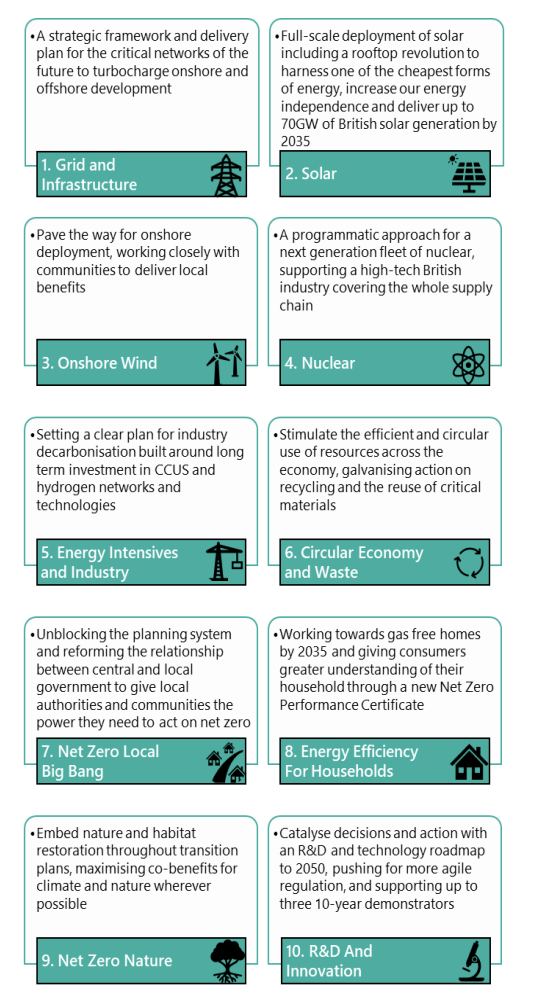



 SIMONICITY