The Secretary of State finally said it out loud on 11 November 2025: the proposed National Development Management Policies will be non-statutory. There will be more detail in a speech he will give “in a couple of weeks” and consultation as part of consultation on the NPPF (which presumably the NDMPs will either form part of or partly replace) “later this year” (which I take to mean Christmas Eve, again).
So, sections 93 and 94 of The Levelling-up and Regeneration Act 2023 will not be brought into force, we assume. What a lot of wasted energy that was. I’m not going to comment in this post on the rights and wrongs of statutory versus non-statutory NDMPs (even I’m getting bored of that one). But simply to note this latest reminder that we can place too much weight on legislation as an agent of change. Rolling forward, I hope people appreciate that it will take years for much of the Planning and Infrastructure Bill to come into force and to have any real effect. And that some of it inevitably will either never get that far or will be subsequently repealed. How much of the long running debate over Part 3, environmental delivery plans, will turn out to be time well spent?
Anyway, let’s move quickly on to my main topic, because I never want to be controversial.
One thing that the government has steadfastly declined to address by way either of legislation, policy or guidance is the question of whether the accommodation by the Home Office of asylum seekers in hotels constitutes, in planning law terms, a material change of use. It would have been easy to signpost a position in one direction or the other. The conclusion that must have been reached is that sometimes the best thing to say is to say nothing at all.
When I last wrote about the saga in my 29 August 2025 blog post Court of Appeal Cuts Down Epping Forest the Court of Appeal in August overturned the interim injunction that the High Court had imposed earlier that month (see my 20 August 2025 blog post Planning Law Is Being Used For Politicking About Asylum Seekers), that would have required the use of the Bell Hotel in Epping for the accommodation of asylum seekers to cease, pending a full hearing into its claim for a final injunction and a declaration that the use was in breach of planning control.
We now have the High Court’s judgment as to whether a final injunction and/or a declaration should be granted: Epping Forest v Somani Hotels Limited (Mould J, 11 November 2025). And the High Court’s ruling is: no and no.
Mould J set out the position under section 187B of the Town and Country Planning Act 1990, which provides that where “a local planning authority consider it necessary or expedient for any actual or apprehended breach of planning control to be restrained by injunction, they may apply to the court for an injunction” and that, whilst “the court must not re-assess for itself the local planning authority’s planning judgment which formed the basis for that authority’s decision to apply for the injunction … the factors which, on the evidence before the court, weighed with the local planning authority in making their planning judgment may properly be considered by the court, in the context of reaching its own judgment as to whether the circumstancesof the case are such as to justify the grant of an injunction. Moreover, where as in the present case, the Defendant questions the validity of the local planning authority’s decision to apply for an injunction on public law grounds, the court may properly consider the points raised in the exercise of its discretion whether or not to grant the injunction.”
Mould J went through the various considerations:
whilst he was prepared to accept that the “local planning authority had at least a reasonable basis for alleging and asserting that the current use of the Bell as contingency accommodation for asylum seekers is in breach of planning control”, this “is not a case in which conventional enforcement measures taken by the local planning authority over a lengthy period of time have failed to secure the effective remediation of a clear breach of planning control, which has resulted in and continues”
there were serious gaps in the record of the decision making which led to the conclusion that an injunction should be sought;
contrary to the council’s assertions, in the light of the actual chain of events and communications the hotel had not “acted in flagrant breach of planning control”
any harm to the green belt and conservation area by way of the security fencing in place was “limited by the fact that it is localised and very likely to be temporary in its duration, with the fencing likely to be removed no later than by April 2026, when the Defendant’s current contract with CTM comes to an end. Moreover, the fencing was installed in response to street protests, rather than being an integral requirement of the use of the Bell as contingency accommodation for asylum seekers”
in terms of retaining existing visitor accommodation “the degree of harm resulting from that can be argued to be limited both by the temporary nature of the current use of the Bell and by virtue of the economic advantage to the Defendant of that current use, which is expected to assist in bringing the hotel back into conventional use in the longer term”
“I have heard no evidence to support the concern that the current use of the Bell is placing local GP, health, social and community services under undue pressure, to the detriment of the settled population of Epping. There is no evidential basis at all for the assertion that asylum seekers as a cohort have a greater propensity than the settled population to engage in criminal or anti-social behaviour”
“I have carefully considered the degree of planning and environmental harm which may reasonably be said to result from the actions or alleged actions of the three individuals accommodated at the Bell who have been convicted or charged with criminal offences since April 2025 … I accept that, in the light of those actions or alleged actions, the fears and concerns of local residents of which I have been made aware in evidence have a reasonable basis. However, the resulting degree of planning and environmental harm is limited, in my view. It has not been established that those fears and concerns are grounded in the use of the Bell as contingency accommodation for asylum seekers. They are properly to be regarded as the understandable reaction of local residents to the well-publicised criminal behaviour, actual and alleged, of three individuals who happen to have been accommodated there”
“Public opposition to the development of land, even if that opposition manifests itself in street protests, is not in itself evidence of planning or environmental harm generated by the development to which there is such strong objection”
“There are countervailing factors in this case which are properly to be weighed in the balance against the planning and environment harm which may reasonably be said to result from the postulated breach of planning control. In particular, the evidence before me clearly establishes that there is a continuing need to source contingency accommodation for asylum seekers from hotels, to enable the Home Secretary to discharge her statutory responsibilities under the 1999 Act. That consideration carries significant weight”
There is “no duty as such placed upon a local planning authority to enforce against unauthorised development simply because it is considered to be in breach of planning control. An informed planning judgment is required of the local planning authority as to whether enforcement action is appropriate; and, if so, as to whether the harm caused by the unauthorised development is of such a degree as to merit restraint by injunction. Proper and effective planning control is not undermined by the normal enforcement regime, which permits a person served with an enforcement notice to appeal against that notice and, unless a stop notice is served, to continue with the alleged breach of planning control at least until that appeal has been determined by the Secretary of State”
Bringing all that together:
“I have reached the clear conclusion that this is not a case in which it is just and convenient for this court to grant an injunction. I give due respect to the Claimant’s judgment that the current use of the Bell as contingency accommodation for asylum seekers constitutes a material change in the use of those premises which requires planning permission. Nevertheless, I have not been persuaded that an injunction is a commensurate response to that postulated breach of planning control. The breach is far from being flagrant. Conventional methods of enforcement have not been taken. Taking a broad view, the degree of planning and environmental harm resulting from the current use of the Bell is limited. The continuing need for hotels as an important element of the supply of contingency accommodation to house asylum seekers in order to enable the Home Secretary to discharge her statutory responsibilities is a significant counterbalancing factor. This is decidedly not a case in which there is an abuse of planning control resulting in serious planning or environmental harm which now demands an urgent remedy. In my judgment, it is not appropriate to grant an injunction on the Claimant’s application for the purpose of restraining the use of the Bell as contingency accommodation for asylum seekers.”
“It remains open to the Claimant as local planning authority to consider the expediency of taking enforcement action by issuing an enforcement notice. It is also open to the Defendant to reconsider whether it would be appropriate to apply for retrospective planning permission; or to apply to the Claimant for a certificate of lawfulness of the existing use of the Bell pursuant to section 191 of the 1990 Act. Each of those possible courses of action would enable the planning issues raised by this case to be evaluated by the local planning authority, through the transparent and consultative decision-making processes with public participation which apply under the 1990 Act and its attendant regulations.”
As for the application for a declaration that “the current use of the Bell does not amount to use as a hotel within the meaning of Use Class C1”:
Given the statutory procedures available for this to be determined, either by way of applications for certificates of lawfulness or by way of the making of an enforcement notice (and if necessary the determination of appeals to the Planning Inspectorate) “it will rarely be appropriate for this court to seek to resolve them beforehand through the grant of declaratory relief. In the present case, I consider that there is at least a real possibility that the Claimant and the Secretary of State on an appeal may be called upon, in the context of those statutory procedures, to determine the ongoing dispute as to whether the current use of the Bell constitutes development requiring planning permission. I have found it to be neither necessary nor appropriate to reach my own conclusions on those questions for the purpose of determining the Claimant’s application for an injunction. Instead, I have ultimately deferred to the Claimant’s judgment as local planning authority in alleging and asserting a breach of planning control. I have already addressed the propriety of the Claimant’s conclusion that it was necessary or expedient for that alleged and asserted breach of planning control to be restrained by an injunction.”
Practical outcome: the question remains unanswered by the courts as to whether, and in what circumstances, the accommodation of asylum seekers in a hotel amounts to a material change of use. Indeed, I would venture to suggest that the judgment seeks, by way of its dissection of the issues, to dampen down the moral panic that led to officer and councillor decisions to bring this litigation in the first place instead of relying on the usual statutory planning framework and processes.
Will the legal question ever be determined by the courts? I suppose it might, but most likely by way of a legal challenge to an inspector’s decision following an appeal arising from an enforcement notice or from refusal of a certificate of lawfulness. And even then, that determination will be specific to the facts and to the application of relevant local policies.
Finally, for the avoidance of doubt, I do like flags as much as the next person. I flagged these two passages in particular:
“There is no evidential basis at all for the assertion that asylum seekers as a cohort have a greater propensity than the settled population to engage in criminal or anti-social behaviour”
“Public opposition to the development of land, even if that opposition manifests itself in street protests, is not in itself evidence of planning or environmental harm generated by the development to which there is such strong objection”
Another MHCLG planning reform working paper this fine Sunday morning (25 May 2025), Speeding Up Build Out together with accompanying technical consultation (deadline for responses: 7 July 2025).
After the various policy changes and measures in the Planning and Infrastructure Bill aimed at seeking to encourage local planning authorities to plan for more homes and to encourage decision makers (whether local planning authorities or planning inspectors) to grant planning permission for more homes, this paper turns the spotlight onto developers.
“We know that slow build out is of great frustration to many local planning authorities and communities that rightly expect homes, infrastructure and services that have been promised as part of a planning approval to be delivered as quickly as possible. We also know that developers are responsive to commercial incentives and build out homes at a rate that is beneficial to their business and reflective of the wider economic environment.
This paper therefore invites views on options the government could pursue to ensure the right incentives exist in the housing market, and local planning authorities have the tools they need, to encourage homes to be built out more quickly. In addition to the transparency and accountability measures set out in the technical consultation, this includes incentivising and supporting models of development that build out faster, such as partnership models, greater affordable housing, public sector master-planned sites, and smaller sites. We also invite views on giving local authorities the ability – as a last resort – to charge developers a new ‘Delayed Homes Penalty’ when they fall materially behind pre-agreed build out schedules.”
The paper unpacks the issues; land banks (to the limited extent that option agreements may be a barrier to entry for SME developers); delayed or stuck sites (to which the New Homes Accelerator initiative is aimed, as well as further potential reforms to the CPO process) and slow build out. The paper focuses on how to:
“a) overcome absorption constraints to get more homes built more quickly
b) continue to strengthen the local authority toolkit to unblock stalled and stuck sites.”
The government intends to bring into force various provisions contained in the Levelling-up and Regeneration Act 2023, namely:
The requirement to submit a build out statement (in LURA a “development progress report” – section 90B Town and Country Planning Act 1990 as introduced by section 1154 of LURA) with prescribed categories of planning applications
To notify LPAs before development is commenced through a commencement notice (section 93G of the TCPA as introduced by section 111 of LURA)
To report annually to LPAs on housing delivery via a development progress report (see above)
To give LPAs the power to decline to determine planning applications made by persons who applied for, or who are connected to, an earlier planning permission for the development of land in the LPA’s area which has not been built out at a reasonable rate (section 70D of the TCPA as introduced by section 113 of LURA)
To simplify the process for LPAs to issue completion notices “to require developers to complete their development within a certain period of time if the LPA considers it will not be completed in a reasonable time, otherwise the planning permission will cease – a form of “use it or lose it”.” (section 93H of the TCPA as introduced by section 112 of LURA).
The government is consulting on introducing in policy a “site size threshold above which sites must deliver on a mixed tenure basis”.
On CPO, the government intends to bring forward secondary legislation later this year to implement provisions in LURA “to allow the conditional confirmation of CPOs. This will allow the compelling case for use of CPOs to be established earlier in the land assembly process on sites where alternative proposals have been put forward by landowners.“
“The conditional confirmation of CPOs could be used to ensure landowners progress their alternative proposals within certain timescales, which would be made clear when an individual CPO is conditionally confirmed. Where they fail to do so, CPO powers could then be switched on. We believe the conditional confirmation power will de-risk use of CPOs on stalled sites because the existence of alternative proposals will no longer carry the same weight in the decision-making process.”
So far, the above proposals go no further legislatively than was proposed by the previous government.
However, the government has announced in today’s documents that it is “exploring the possibility of introducing a new tool for local authorities: the “Delayed Homes Penalty”. This would effectively be a last resort measure, which we hope not to have to implement, but may be needed if industry does not sufficiently adapt and fulfil their commitment to deliver homes more quickly.
The Delayed Homes Penalty would be available to local authorities for development which falls materially behind pre-agreed build out schedules, as set out through the transparency measures. While subject to further work, including drawing on responses to this working paper, we are considering the following framework for the Delayed Homes Penalty.
a. The Penalty would apply only to sites over a threshold size and only where there is evidence of a developer falling substantially behind a build out schedule, pre-agreed with the LPA.
b. Agreement and monitoring of build out rates would be aligned to the new transparency measures, which will require developers to pre-agree a build out schedule with the local planning authority before consent, provide a commencement notice before the development begins and then annual development progress reports.
c. If a site falls substantially behind the pre-agreed build out schedule in a given year (to 90% or less of the agreed delivery), then the developer would be required to justify the slower build out rate to the planning authority. If this cannot be shown to have been caused by an external factor – such as unusually severe weather, or an unexpected site issues – the developer could become liable for the Delayed Homes Penalty.
d. The relevant external factors would be nationally set out in guidance and could be informed by those already used in contracts between Homes England and developers under the ‘build lease’ model.
e. If the Delayed Homes Penalty were applied, the relevant party (developer or landowner) would be charged for each home behind the pre-agreed build out schedule. Penalties could be based on a percentage of the house price, or via reference to local Council Tax rates, given the loss of income that a local authority incurs when homes are not built and occupied at the expected rate (although this would not be applied via the Council Tax system itself).
It would be important in the introduction of any Delayed Homes Penalty that industry was confident in when and how this would be applied, to ensure that they did not disincentivise land being brought forward for development. We therefore intend to use all views expressed in response to this working paper to inform further policy development, and if the government decided to take this proposal forward, we would propose to undertake further consultation.”
In my personal view, none of this should be regarded as controversial by the private sector. The quid pro quo for the policies and initiatives introduced to seek to ease the allocation of land for housing, and the approval of development proposals, has to be a recognition on the part of those who promote development or seek planning permission that this is not a one-way street and that participation in the system brings with it certain responsibilities. Of course, we do need to make sure that measures of last resort (compulsory purchase of stalled sites, penalties) do not unnecessarily spook funders and investors so as to ensure that the measures are not counter-productive – which will need for there to be appropriate protections in the legislation and clear communication from ministers as to the limited circumstances in which the government envisages that these sticks should actually be applied.
It was disappointing to read, in the BBC’s online coverage this morning, New rules may take unfinished housing sites off developers (in itself a bit of a tabloid-style headline – not a new rule, just the previous government’s legislation being brought into force), the quoted response from Conservative shadow Secretary of State Kevin Hollinrake. Being charitable, perhaps he hadn’t had time to be briefed or understand the policy context or indeed read his previous government’s legislation) but what about this for dogwhistle politics (and nothing on what is actually proposed)?
“Shadow housing secretary Kevin Hollinrake claimed that “many hardworking Brits will be shut out of the housing market forever” as “Labour’s open door border policy” meant “many of these houses will end up going to migrants”.
He added: “In the same week that Angela Rayner has been caught red-handed plotting to raise everyone’s taxes, it’s clear she doesn’t have the interests of working people at heart.”
(This in a week where net migration was reported to have halved in 2024).
What planning reform needs so desperately is cross-party consensus. This week’s 50 Shades of Planning Shades of Planning podcast episode , Sam Stafford’s recent 45 minutes long interview one-on-one with Lord Michael Gove is a must-listen – not just for Gove’s honest and detailed reflection on what went wrong under his tenure but also for his fair assessment as to the current government’s direction of travel in terms of planning reform. Does every policy proposal really have to be a pawn in a now multi player chess game?
I hope that there is wide engagement with the government’s technical consultation, particularly: “Are there wider options you think worth worthy of consideration that could help speed up build out of housing?”
Until this morning’s announcement I was going to focus on various discussions I had in Leeds this week, which were exactly on the theme as to the nature of some of those “wider options”. Sam Stafford (now as of this week the new LPDF chief executive – congratulations) has been calling for a development management “snagging list”. There are so many incremental improvements to be made – now is the opportunity with that 7 July 2025 response deadline – and wouldn’t it be good if there were as much private/public sector consensus as possible in coming up with that list. Watch this space for some of the items on mine…
We should be constantly pinching ourselves at the good fortune of (1) living in, what was to previous generations, the future, and (2) having been given the privilege and responsibility of in turn helping to shape a small part of the world in which future generations will live and work.
It wasn’t so long ago that the life of a planning lawyer used to entail posting out cheques for copies of local plans and decision notices (having first had various telephone conversations – yes telephone conversations – to work out the price) or, if it was a rush job, turning up at the local authority’s offices to go through the paper files, or (the horror) sit at their microfiche machine. And sometimes we actually had to sit in a library, with books.
The Planning Portal, individual local authority planning portals and the Planning Inspectorate’s Appeals Casework Portal have been a game changer – but we are on the cusp of bigger improvements in terms of efficiency, transparency of information and the potential for better informed public engagement.
Last week at Town Legal we co-hosted a breakfast roundtable discussion with Gordon Ingram and Claire Locke from Vu.City to discuss digital 3D planning but the discussion went wider to discuss where we are with digital planning data more widely as well as the Planning Inspectorate’s recent guidance as to the use of artificial intelligence. We had a range of participants from the private and public sectors but I was particularly grateful to Nikki Webber, digital planning lead at the City of London who subsequently shared some of the links to resources that I will now use in this post.
There has been discussion about digitising the planning system for so long that there’s a risk of taking it all for granted, or of not focusing on the vision and how achievable it now is. But huge advantages in terms of efficiency, transparency and quality of decision-making surely flow from (and indeed are already starting to flow from):
Ensuring that data that enters the planning system is available for wider public use and that common standards are adopted wherever possible
Using technology (1) to give decision-makers and the public a better understanding of the policy options before them and the ability to visualise development proposals in context and (2) to enable better and more straight-forward opportunities for the public to express their views, on the basis of a better understanding of the issues
As the old British Rail slogan went, we’re getting there.
MHCLG’s Digital Planning Programme is doing great, practical, work. Its planning data platform is still at beta testing stage but is already useful, showing planning and housing information provided by local authorities on a single interactive map. It also announced on 18 October 2024 that it is now turning to developing data specifications for planning applications, looking into “where specifications are required, and define them clearly, taking into account how this data will be used by the planning community. This will build on the work that we have already started, such as the draft specifications for planning applications and decisions , and planning conditions .”
Section 84 gives the Secretary of State and devolved administrations “the power to regulate the processing of planning data by planning authorities, to create binding “approved data standards” for that processing. It also provides planning authorities with the power to require planning data to be provided to them in accordance with the relevant approved data standards.”
“Example (1):
A planning authority creating their local plan: Currently planning authorities do not follow set standards in how they store or publish local plan information. Through these powers, contributions to the preparation of a local plan and the contents of a local plan will be required to be in accordance with approved data standards. This will render local plan information directly comparable, enabling cross-boundary matters to be dealt with more efficiently as well as the process of updating a local plan as planning authorities will benefit from having easily accessible standardised data.
Example (2):
Central government trying to identify all conservation areas nationally: In the existing system, planning authorities name their conservation areas using different terms (e.g., con area, cons area) making it hard for users of this data, such as central government to identify which areas are not suitable for development and what restrictions are in place. By setting a data standard which will govern the way in which planning authorities must name their conservation areas, and planning authorities publishing this machine-readable data, a national map of conservation areas can be developed which can be used to better safeguard areas of special importance.”
Section 85 allows planning authorities, by published notice, to require a person to provide them with planning data that complies with an approved data standard, that is applicable to that data.
Section 86 allows regulations to be made “requiring a relevant planning authority to make such of its planning data as is specified or described in the regulations available to the public under an approved open licence”.
Whilst these sections are already technically in force, they cannot fully take effect until the government determines what those specific approved data standards will be. Section 87 is also important but not yet in force, which gives the Secretary of State the power to approve software, that is in accordance with data standards, to be used by planning authorities in England. Clearly there is great advantage in consistency of approach as between public authorities as to the software used, so as to ease the user experience and presumably to make providers’ investment in technology more viable but this is to be balanced as against the risks arising from any particular provider being able to exploit a dominant position. Is not a private/public sector approach possibly the most appropriate, as per the Planning Portal (a joint venture between MHCLG and TerraQuest Solutions Limited)?
MHCLG’s Digital Planning Programme has also been funding local authorities’ digital planning projects and its website has links to various case studies. For instance, take a look at Southampton City Council’s work on increasing accessibility and understanding to improve public engagement, using a Vu.City developed 3D model to help local residents understand what proposals may look like in situ and potentially ease concerns about increased densities. How transformative it would be if local people could see the different options that here might be to accommodate local housing and employment development needs within an area. Or in terms of development management and transparent public engagement, look at London Borough of Camden’s beta testing as to the information it can provide as to major applications in its area (particularly look at the use of images of the proposal and at the “How could this affect you?” section).
With progress of course comes the need for caution. These tools need to be based on accurate information and the risks are accentuated where outputs are the result of modelling and extrapolation of data, rather than taking the form of simply making the raw data more easily available. Any inputs and algorithmic influences need to be capable of being tested. Technology is requiring us all to be additionally cautious in all that we do. In my world for instance, the Law Society has published some useful, detailed, advice as to Generative AI: the essentials to provide a “broad overview of both the opportunities and risks the legal profession should be aware of to make more informed decisions when deciding whether and how generative AI technologies might be used”. As a firm we now have a policy on the use of AI; no doubt yours does too.
Understanding of the issues has in some ways already moved on greatly since my 27 May 2023 blog post You Can Call Me AI but the risks have increased now that use of Chat GPT and its competitors has become more mainstream. AI is undoubtedly being used by some to generate text for objections to planning applications. I’ve had prospective clients who mention in passing that before asking me the particular question they have looked online and “even Chat GPT didn’t have the answer” (these things are just large language models folks! Would you rely on predictive text as anything more than an occasional short-cut? I don’t like to think about what it must be like to be a GP these days).
Until recently I hadn’t thought about the additional risks arising from generative AI, of false images and documents being relied upon as supposed evidence in planning appeals. So I was pleased to see the Planning Inspectorate’s guidance on Use of artificial intelligence in casework evidence (6 September 2024).
The guidance says:
“If you use AI to create or alter any part of your documents, information or data, you should tell us that you have done this when you provide the material to us. You should also tell us what systems or tools you have used, the source of the information that the AI system has based its content on, and what information or material the AI has been used to create or alter.
In addition, if you have used AI, you should do the following:
Clearly label where you have used AI in the body of the content that AI has created or altered, and clearly state that AI has been used in that content in any references to it elsewhere in your documentation.
Tell us whether any images or video of people, property, objects or places have been created or altered using AI.
Tell us whether any images or video using AI has changed, augmented, or removed parts of the original image or video, and identify which parts of the image or video has been changed (such as adding or removing buildings or infrastructure within an image).
Tell us the date that you used the AI.
Declare your responsibility for the factual accuracy of the content.
Declare your use of AI is responsible and lawful.
Declare that you have appropriate permissions to disclose and share any personal information and that its use complies with data protection and copyright legislation. “
AI is defined in the document very loosely: “AI is technology that enables a computer or other machine to exhibit ‘intelligence’ normally associated with humans”.
If I can carp a little, whilst the thrust of the guidance and its intent is all good, are we really clear what is and isn’t AI? What about spell-check and other editing functions, what about the photo editing that goes on within any modern camera? Do you know whether the information you are relying upon has itself been prepared partly with the benefit of any AI tool however defined and if AI has been used on what basis are you confirming that “its use complies with data protection and copyright legislation” given the legal issues currently swirling around that subject as to the material upon which some of these AI models are being trained? Perhaps some examples would be helpful of the practical issues on which PINS is particularly focusing.
Tech isn’t my specialism. Planning and planning law probably isn’t a specialism of those actually developing the technical systems and protocols. But I think we need to make sure that we are all engaging as seamlessly as possible across those professional dividing lines, so that the opportunities to create a better, more efficient, more engaging, possibly even more exciting planning system are fully taken. These are the things that dreams are made of.
I know, it’s the hope that kills you. We still await any real detail as to the new government’s proposed reforms of the planning system, despite the King’s Speech and background briefing paper (17 July 2024) and despite newspaper headlines, TV news vox pops and much earnest speculation from many of us. But it’s early days and we should be patient.
In this post I just want to focus on the proposed reforms to compulsory purchase compensation which would in some cases remove the ability of landowners to recover “hope value”.
We know that there will be a Planning and Infrastructure Bill. We do not know anything more as to its likely contents than is set out on pages 17 to 19 of the background briefing document. It is intended to “accelerate housebuilding and infrastructure delivery” by:
streamlining the delivery process for critical infrastructure including accelerating upgrades to the national grid and boosting renewable energy, which will benefit local communities, unlock delivery of our 2030 clean power mission and net zero obligations, and secure domestic energy security. We will simplify the consenting process for major infrastructure projects and enable relevant, new and improved National Policy Statements to come forward, establishing a review process that provides the opportunity for them to be updated every five years, giving increased certainty to developers and communities.
further reforming compulsory purchase compensation rules to ensure that compensation paid to landowners is fair but not excessive where important social and physical infrastructure and affordable housing are being delivered. The reforms will help unlock more sites for development, enabling more effective land assembly, and in doing so speeding up housebuilding and delivering more affordable housing, supporting the public interest.
improving local planning decision making by modernising planning committees.
increasing local planning authorities’ capacity, to improve performance and decision making, providing a more predictable service to developers and investors.
using development to fund nature recovery where currently both are stalled, unlocking a win-win outcome for the economy and for nature, because we know we can do better than the status quo. Our commitment to the environment is unwavering, which is why the Government will work with nature delivery organisations, stakeholders and the sector over the summer to determine the best way forward. We will only act in legislation where we can confirm to Parliament that the steps we are taking will deliver positive environmental outcomes. Where we can demonstrate this, the Bill will deliver any necessary changes.”
All we are told so far about reform of compulsory purchase compensation is in that second bullet point. But of course, the Levelling-up and Regeneration Act 2023 already goes some way in this direction. Section 190 (“power to require prospects of planning permission to be ignored”) amended the Land Compensation Act 1961 to enable an acquiring authority, when submitting a compulsory purchase order for confirmation, to include a direction that the prospect of planning permission is to be ignored where the underlying project will deliver the provision of a specified number of affordable housing units. If the acquiring authority does not deliver the scheme it promised (including the provision of specific numbers of affordable housing units) within 10 years of the issuing of the original direction, or earlier where there is no realistic prospect that the scheme can be delivered within 10 years, affected landowners may ask the Secretary of State (or the Welsh Ministers for CPOs in Wales) to issue a direction that additional compensation may be paid to them by the local authority. The Act also provides for an equivalent mechanism in relation to some CPOs for NHS purposes or educational purposes. These provisions all came into force on 30 April 2024. (How did a Conservative government arrive at this incursion into the traditional compulsory purchase principle of “equivalence”? See eg my 11 June 2022 blog post Land Value Capture Via CPO which tracks the proposal back to at least the Conservative May 2017 manifesto and for a deeper historical dive into the vexed issue of land value capture I recommend Richard Harwood KC’s brilliant paper delivered to the Compulsory Purchase Association in April 2018, Land Value Capture).
So how might the new government go further? The Labour manifesto simply said “We will take steps to ensure that for specific types of development schemes, landowners are awarded fair compensation rather than inflated prices based on the prospect of planning permission”. It seems to me that the government has deliberately left itself the scope to widen the categories of CPO for which compensation can exclude any element of land value attributable to the prospect of “no scheme world” development. The Planning and Infrastructure Bill would be a straight-forward vehicle to achieve this, by amendment of section 190 of the 2023 Act.
“Fairness” is of course a loaded word, going to the heart of the political as well as practical issues which land value capture inevitably gives rise to. To what extent should the state be able to take land without paying the owner what that land is worth in the open market? The nuanced answer to that question probably lies in the wording of the European Convention on Human Rights. The right to respect for private and family life and our home is qualified: “except such as is in accordance with the law and is necessary in a democratic society in the interests of national security, public safety or the economic well-being of the country, for the prevention of disorder or crime, for the protection of health or morals, or for the protection of the rights and freedoms of others.” The right not to be deprived of our possessions is similarly qualified: “except in the public interest and subject to the conditions provided for by law and by the general principles of international law.” And the state has the right to “enforce such laws as it deems necessary to control the use of property in accordance with the general interest or to secure the payment of taxes or other contributions or penalties.”
I can see that the “public interest” argument can be made in relation to affordable housing, the NHS and schools (although of course it is still at root a political decision to fund these projects in part via land value capture rather than by way of public spending paid for by other taxation measures). It will be interesting to see how much further the new government looks to go. New towns? Green Belt? Shrugged shoulders emoji.
Aside from the politics (which are beyond my pay grade), there are the practical issues (which are well within it). How will the spectre of compulsory acquisition of land, for less than what in the real world it is worth, influence the strategies of the participants? Will developers look to work pro-actively with local authorities to explore the potential for using the mechanism to achieve viable projects? Will land owners and promoters be discouraged from early land promotion activity for fear that the value gains they achieve will not be realised by them? Will processes become even more contentious given even higher stakes, particularly where land owners can show that they can bring forward development without the need for exercise for exercise by the local authority of its compulsory purchase powers?
All should be clearer before too long – at least, here’s hoping.
Simon Ricketts, 21 July 2024
Personal views, et cetera
Extract, courtesy Wikipedia, from Shepard Fairey’s Barack Obama 2008 electoral campaign poster, featuring the word “hope“.
The amendments to the planning system introduced by LURA are being brought into force gradually. I summarised the first two sets of commencement regulations in my 4 February 2024 blog post Treasure Hunt: LURA Commencement Regulations & Transitional Provisions . The third set of commencement regulations were then made on 18 March 2024 and now we have this fourth set of commencement regulations. Irwin Mitchell’s Nicola Gooch is the LURA commencement order queen and summarises the latest changes here with an updated table as to when the various planning-related provisions within LURA come into force (to the extent yet known).
Various changes to the planning enforcement system come into force on 25 April 2024. The most important one of general interest is possibly the “Ten Years After” ((c) Simonicity) provision: the time period in which local planning authorities can take enforcement action against unauthorised development in England is now, in all cases, 10 years (formerly four years in the case of unauthorised operational development or the change of use of any building (which includes any part of a building) to use as a single dwelling). The ability for this period to be extended in cases of concealment is unchanged.
The transitional provisions in Regulation 5 of the commencement regulations are important:
The amended time period does not apply in the case of operational development where the operations were substantially completed before 25 April 2024. The amended time period does not apply in the case of unauthorised change of use to a dwelling where the breach occurred before 25 April 2024. The latter appears more lenient than I was expecting – it seems that if the unauthorised use started say on 24 April 2024 it would be potentially lawful if not enforced against by 24 April 2028 and that if it were to start on 25 April 2024 it would be potentially lawful if not enforced against by 25 April 2034. Some difference. For owners of buildings potentially affected by the change, it will be important to have evidence of unlawful use (or, as the case may be, of unlawful operational development having been substantially completed), on or before 24 April.
I referred earlier to the 1971 Act – which was still in force for a few years when I first started practising. Looking back at it I’m reminded that enforcement time limits have constantly fluctuated over the years (and, my word, looking back, how much longer each Act is than its predecessor – eg see how the relevant section number appear later and later in the legislation):
1971 Act, section 87 : before the end of 1963 in the case of unauthorised change of use (this was getting progressively more difficult to prove when I started practice) or four years in the case of operational development, breach of condition and change to a dwelling
1990 Act (as amended), section 171B : ten years in the case of unauthorised change of use or breach of condition, or four years in the case of operational development or change to a dwelling, with the power for a Magistrates Court to make a planning enforcement order extending the deadline for enforcement in the case of deliberate concealment.
Back to the latest commencement regulations…
The other main planning enforcement changes being brought into force on 25 April are:
A local planning authority which suspects unauthorised works were carried out on a listed building will be able to issue a temporary stop notice requiring the works to stop for up to 56 days
Temporary stop notices will be able to have effect for up to 56 days rather than 28 days
A new power for a local planning authority in England to issue an enforcement warning notice asking the person concerned to submit a retrospective planning application within a specified period
Reduced ability for a person to lodge an appeal against an enforcement notice issued in England on ground “(a)” – that planning permission ought to be granted or that the condition or limitation imposed on the grant of permission ought to be discharged.
A new power for the Secretary of State to dismiss an appeal in relation to an enforcement notice or an appeal relating to a lawful development certificate in England, where it appears that the appellant is causing undue delay to the appeals process.
Increased fines.
All of this is by way of amendments to the 1990 Act. Wouldn’t a consolidating Act be helpful, 34 years after?
Whether tis nobler in the mind to suffer the slings and arrows of outrageous fortune. Or to take arms against a sea of troubles by amending your permission to reflect current market or occupier requirements? Because, of course, in the equally timeless words of Gary Barlow, everything changes.
The main part of this blog post is a detailed examination by my Town Legal colleague Susie Herbert of the potential opportunities arising from use of section 73B of the 1990 Act, introduced by way of the Levelling-up and Regeneration Act 2023, and its potential limitations and ambiguities versus section 73. It’s an important part of DLUHC’s current consultation as to an accelerated planning system which I said I would come back to in my 9 March 2024 post that covered the rest of the proposals.
But first, an interesting appeal decision letter from last week. You may remember that for a temporary period (2013 to 2016) there was a specific statutory procedure, section 106BA, which allowed developers to apply to modify or discharge planning obligations in a section 106 agreement on the basis that they made the development unviable.
Since the repeal of section 106BA the question often arises as to how we might still achieve the same ends. After all, an application under section 106A to amend a section 106 agreement can only be made if the agreement is at least five years’ old. Otherwise, in proposing a deed of variation to the existing agreement, you are in the local planning authority’s hands with no right of appeal.
The alternative options would be to make an entirely fresh application for planning permission (an onerous process) or, conceivably, to make an application under section 73 for removal or variation of a condition attached to the previous planning permission and to use the application as a vehicle for proposing an amended form of planning obligation. The section 73 route was accepted by an inspector in a decision letter dated 25 March 2024 in relation to a proposed development in Thornton Heath, Croydon. There is an existing planning permission for 57 new dwellings , with a section 106 agreement requiring 35% of the homes to be delivered as affordable housing. A Section 73 application was made to amend condition 2 attached to the permission which set out a list of the approved drawings, proposing amended drawings increasing the proportion of three bedroom homes and external alterations to fenestration and elevations. A section 106 unilateral undertaking was put forward proposing no affordable housing, on the basis of a viability appraisal, which had been reviewed and accepted by the local planning authority. The application was not determined within the statutory period and the developer appealed. The authority resisted the appeal on the basis that a section 73 application was not the appropriate means to reduce the level of affordable housing previously secured.
Having reviewed the relevant case law in relation to section 73, the inspector allowed the appeal:
“In this instance, a change in policy has not made it appropriate or essential to amend the obligation. However, there has been a significant change in circumstances relating to the viability of the scheme. It seems to me that it is a matter of planning judgment whether the change in circumstances makes it appropriate, essential or desirable to enter into a planning obligation in different terms to the original. Given the case law outlined above, the terms of a new obligation may be connected to or intertwined with the amendments sought to the drawings, but there is nothing of substance to suggest they must. Consequently, it would be going too far to suggest an amended obligation must be a consequence of, or directly related to, changes flowing from the proposed alterations detailed on the new drawings.
There is no dispute between the Council and appellant that since the original permission was approved, and the evidence underpinning it prepared, construction costs have rapidly risen whilst house prices have remained static. This has had a significant impact on the viability of the scheme. As mentioned above, the situation is so altered that the Council and appellant agree the scheme can no longer provide affordable housing and remain viable. Moreover, there is also common ground that the provision of affordable housing is not a benefit, alone or taken with other factors, which is required to outweigh any harmful impacts emulating from the scheme. Indeed, the Council has only identified limited harm in respect of the housing mix, which is outweighed by other considerations in any event. In these circumstances, altering the level of affordable housing would not be a fundamental change to the proposal.
Therefore, the current circumstances are such that there is a need for a planning obligation in different terms to the original to facilitate delivery. The altered terms of the planning obligation would be consistent with the development plan taken as a whole. The consequence being that the change would not have a bearing on whether the scheme would be acceptable. Thus, the amended planning obligation is necessary, reasonable, supported by development plan policy and proportionate in the context of the prevailing circumstances. Therefore, it is desirable, essential and appropriate to consider a planning obligation in different terms to the original, namely the provision of 0% affordable housing with a review mechanism as required by the LP. In conclusion, the s73 application is an appropriate means in this instance to reduce the level of affordable housing relative to that previously secured.”
The case is another example of the potential flexibility of the existing section 73 procedure, notwithstanding the constraints imposed by the courts – particularly by way of Finney (the inability to use section 73 where the desired changes would be inconsistent with the description of development on the face of the existing permission (leading to a workaround in practice, with a willing authority, by way of use of section 96A in conjunction with section 73 – see my previous blog post here for more information).
Section 73B
So will the new section 73B procedure be the solution. Over to my colleague Susie Herbert for the detail…
On Budget Day, 6 March 2024, DLUHC launched a consultation on accelerating the planning system which closes on 1 May 2024. As well as proposals relating to the application process, this includes a consultation on the implementation of section 73B to vary planning permissions and on the treatment of overlapping permissions. This post concentrates on the proposals concerning variations to planning permissions via the new section 73B and the proposals for overlapping permissions.
Section 73B was introduced by the Levelling-up and Regeneration Act 2023 (“LURA”). The provision is headed “Applications for permission not substantially different from existing permission”. It is not yet in force and secondary legislation is required to specify the application procedure including consultation arrangements, information requirements and the application fee as well as amendments to the CIL regulations. The government proposes to implement section 73B following the consultation “as soon as parliamentary time allows”.
The consultation asks questions on:
The scope of the proposed Planning Practice Guidance relating to section 73B;
Procedural arrangements for a section 73B application;
Application fees for section 73B applications;
CIL and section 73B applications.
As background, the introduction to this section of the consultation notes “The ability to vary planning permissions in a proportionate, transparent and timely manner is an important feature of the development management system. It is common for developments, particularly if they are large, to require variations to the planning permission in response to further detailed design work, new regulatory requirements, and changing market circumstances. Without this flexibility, development risks being delayed or abandoned as the only option would be the submission of a brand new application for the development which would create uncertainty, delay and further costs.”
The consultation notes that the current legislative routes to varying planning permissions are section 73 and section 96A. In 2009, guidance was introduced on “Greater Flexibility for Planning Permission”. It was at this point that section 96A was introduced into the legislation to allow for “non-material” amendments to existing planning permissions. The guidance envisaged that section 73 could be used for “minor-material” amendments by varying a condition that listed the approved plans by substituting new plans that showed the varied scheme.
However, in 2020, the Courts confirmed that section 73 cannot be used to amend the description of development (Finney). Therefore, the scope to use section 73 to make “minor material amendments” by varying a condition which lists the approved plans is limited.
Although not expressly explained in the consultation document, the reason that the inability to use section 73 to amend the description of development causes such difficulties in practice is because the case law has established that a permission granted under section 73 cannot introduce a condition which creates a conflict or is inconsistent with the description of development. It has therefore become standard practice to minimise the level of detail provided in the description of development and thereby reduce the potential for future scheme amendments to conflict with the description. In some cases an original description of development can be amended via s96A to remove detail from the description of development into a condition and thereafter amend this condition via section 73.
Section 73B is intended to deal with this issue by allowing both the description of development and the conditions to be varied in a single process. The restriction on the use of section 73B is that the amended development cannot be “substantially different” from the existing development.
“Subtantially different”
A key point in the consultation is that the Government does not propose to provide prescriptive guidance on is what is meant by “substantially different”. The consultation notes that section 73B does not provide a definition of the test and that it will depend on the scale of the changes required in the context of the existing permission. Factors that could be relevant are location and the scope of the existing permissions and the proposed changes.
It is not clear where “substantially different” will sit on the scale of potential changes. We note that this term was used in the 2009 guidance on flexible planning permissions in respect of what was meant by a “minor material amendment” which stated:
“We agree with the definition proposed by WYG: “A minor material amendment is one whose scale and nature results in a development which is not substantially different from the one which has been approved.” This is not a statutory definition.”
This suggests that the intention may have been that section 73B was intended to align with the minor material amendments that the guidance envisaged to be made under section 73 with the additional ability to amend the description of development (to make “non-substantial” changes).
However, since this drafting was introduced into the Levelling Up and Regeneration Bill, the Armstrong and Fiske cases have confirmed that section 73 is not restricted to minor material amendments. It is helpful that at footnote 4, the document expressly states that “the department acknowledges that section 73 is not limited in scope to minor material amendments” following the recent cases of Armstrong and Fiske. The judge in Fiske held that there is a restriction on the scope of section 73 which is whether the alteration is fundamental (while in Armstrong the judge had considered that even this restriction did not apply and the only restriction is consistency with the description of development).
Therefore, if the scope of changes allowed by section 73B is intended to be similar to “minor material amendments”, there is the possibility that section 73 would actually allow more flexibility as it extends to “not fundamental” amendments (provided always that it is possible to remain within the description of development).
While it is understandable that the Government does not propose to provide prescriptive guidance on the meaning of “substantially different” because it will be a matter of judgement dependent on the context (as for section 96A), it is clear that the application and interpretation of this provision by each LPA is going to be a key to how useful this provision is in practice.
The consultation states that the government’s proposed objective is for the section 73B route to replace the use of section 73 to deal with proposals for general material variations while the use section 73 would return to focus on the variation of specific conditions and that it proposes to introduce guidance to this effect.
It would therefore be helpful if the scope of changes allowed under section 73B was not less that the scope of changes that could be made via a section 73/ section 96A approach: otherwise the end result of the changes would be more complexity but less flexibility. It does not seem that it would be overly prescriptive for the Government to provide guidance to this effect. It would also be consistent with the general proposed approach of treating a section 73B application in a similar way to a section 73 application in terms of procedure (as detailed below).
Features of section 73B
The consultation summarises the key legal features of section 73B as follows:
a section 73B application must identify the existing permission (which cannot be a section 73, section 73A or other section 73B permission, or permission granted by development order), and can propose conditions for the new permission;
as an application for planning permission to a local planning authority, the determination of a section 73B application is subject to section 70 and other decision making duties. But the local planning authority cannot grant permission for a section 73B application if the effect of the section 73B permission would be substantially different from the existing permission, and when determining the application, they must limit their consideration to the variation between the application and the existing permission; and
like a section 73 permission, a section 73B permission is a separate permission to the existing permission (and any other section 73 or 73B permissions related to the existing permission) so the granting of a section 73B permission does not affect the validity of the existing permission (or other section 73 or 73B permissions).
The provision also applies to applications for permission in principle.
Proposed general approach
As noted above, the Government’s proposed objective is for the section 73B route to replace the use of section 73 to deal with proposals for general material variations while the use section 73 would return to focus on the variation of specific conditions. The consultation notes that because section 73 cannot be used to amend the description of development, it has become common practice to submit generic descriptions of development which do not specify key feature such as the number of dwellings with those details set out in conditions to allow them to be varied via section 73. The consultation identifies that a benefit of using section 73B would be to allow a return to clear and more specific descriptions which would help improve the transparency of development proposals for local communities.
The Government therefore proposes to use Planning Practice Guidance to encourage the use of clearer, more transparent descriptors of development and the use of section 73B to deal with general material changes to development granted planning permission. The consultation asks “do you agree that guidance should encourage clearer descriptors of development for planning permissions and section 73B to become the route to make general variations to planning permissions (rather than section 73)? (Question 26)” and “also for any further comments on the scope of the guidance (Question 27)”. This includes the question of whether the guidance should discourage the use of the, now standard, condition which lists approved plans which was introduced to facilitate minor-material amendments via section 73. The consultation states that they are not minded to discourage the use of this condition and that it is beneficial to help support effective planning enforcement, particularly in relation to design.
Procedural arrangements
The aim is for the procedural requirements set out in regulations for a section 73B application to be “proportionate reflecting the position that the development proposed in the application is a material variation to an existing permission while still ensuring there is transparency about the proposed variation” and that “Local communities should be aware of proposed variations so they can make representations: the section 73B route is not a mechanism to undermine scrutiny.”
The proposal is:
information requirements will be generally the same as other applications for planning permission but certain requirements (such as a design and access statement) will not be required.
publicity requirements will be the same as other applications for the type of development (i.e. if it is a variation to major development, the major development publicity requirements would apply).
Consultation with statutory consultees would follow the approach of section 73 applications where there is a duty on the local planning authority to consult a statutory consultee if they consider appropriate (reflecting the position that a proposed variation may only engage specific issues which of an interest to only some statutory consultees and so it would be disproportionate to require those statutory consultees without an interest to respond) although the footnote states that applications would automatically be in scope of the consultation duty between counties and district LPAs, the consultation arrangements for parishes and neighbourhood forums and the arrangements for applications of potential strategic importance under section 2A TCPA 1990 for the Mayor of London and those combined authorities which have section 2A powers.
EIA and HRA requirements would apply as for section 73 permissions and a similar approach would be taken to Biodiversity Net Gain.
The consultation asks whether consultees agree with this proposed approach to procedural requirements.
Fees
The proposal is to align the fee for a section 73B application with the fee for a section 73 application. The alternative approach of setting a higher fee for a section 73B application was considered on the basis that the section 73B route could be the default route for general material variations while section 73 focuses on the variation of a specific condition. However, the higher fee could encourage applicants to continue to use section 73, undermining the purpose of the reform.
However, it is proposed to change the current flat fee approach for a section 73 application (£293) so that there would be three separate fee bands for householder, non-major development and major development.
The householder fee would be reduced to £86 (double the fee for discharge of condition and removing the anomaly that an original householder application fee is lower than the section 73 fee). The non-major development fee would remain at £293.
For major development, there would be a higher fee which would be less than the fee for the original application and proportionate to the work necessary to consider the proposed variation (without exceeding full cost recovery). The consultation asks for views about where this fee should be set, including evidence from local planning authorities for the typical work which is involved dealing with an average section 73 application for a major development.
CIL
It is proposed that CIL would apply to section 73B in the same way that it applies to section 73 permissions. This would mean that “if the section 73B permission does not change the CIL liability, the chargeable amount is that shown in the most recent liability notice issued in relation to the previous permission. But if the section 73B permission does change the CIL liability, the most recently commenced or re-commenced scheme is liable for the levy.”
Overlapping permissions and section 73B
The consultation refers to the recent Hillside and Dennis cases on overlapping permissions [see previous simonicity blog posts respectively here and here] and how these judgments have questioned the ability to use ‘drop in’ permissions where a subsequent permission is granted for an alternative development on a section of a larger development previously granted permission and still being implemented.
It summarises Hillside as confirming existing caselaw that “full planning permissions are not usually severable. That is to say, parts of the permission cannot be selectively implemented and that, if a new permission which overlaps with an existing permission in a material way commences, should the carrying out of the new permission make it physically impossible to carry out the rest of the existing permission, it would be unlawful to continue further development under the existing permission. The Court then went on to say, if someone wanted to change part of the development, they should seek to amend the entire existing permission.” And notes that Dennis considered the implications for outline planning permissions and the question of severability further.
It notes that “drop in permissions have often been used during the implementation of outline planning permissions for large scale phased residential and commercial developments where a new development is proposed through a separate application for a phase outside the scope of the outline planning permission while the rest of the phases continue to be implemented under the outline permission. This approach has provided a flexible way of enabling changes to a specific phase to be managed through planning without having to seek a new planning permission for the entire development, particularly when the scale of change is outside the scope of a section 73 application.”
In terms of section 73B, “The government believes that the new section 73B route provides a new way of dealing with such changes to a specific phase of a large scale development granted through outline planning permission in many cases. While the use of section 73B is constrained by the substantively different test, these changes often continue to fit within the existing masterplan which underpins the outline permission and do not necessarily fundamentally change this permission – for instance, changing a phase of commercial development (use class E) to a cinema (use class – sui genesis) where the outline permission only allows class E uses. In this case, the section 73B application would provide details of the proposed variation to the outline planning permission and the consideration by the local planning authority would focus on the merits of this variation.”
However it is recognised that “there could be circumstances where the section 73B route may not be appropriate – for instance, if the change could be considered to be substantially different or there are wider financial and legal relationships between the master developer, land owners and investors which makes the preparation of a section 73B application difficult.”
The consultation asks for views about the extent to which the section 73B route could be used to grant permission for changes for outline planning permission in practice and what the constraints are.
It is clearly helpful that the consultation acknowledges that a new use could be introduced via section 73B which gives more potential flexibility and simplicity than a section 73 approach. However, as noted, changes may well be considered “substantially different” even if they allow the remainder of a masterplan to be developed without amendment. There are also undoubtably complications in obtaining a new planning permission (even a section 73B) for an entire site where development has started and different plots are being developed by different developers, particularly if a section 106 agreement is required to be varied.
The final section of the consultation is a proposal to create a framework through a new general development order to deal with circumstances that cannot be addressed via section 73B. This general development order would deal with overlapping permissions in certain prescribed circumstances. It notes that the Secretary of State has broad powers under section 59 of the Town and Country Planning Act to provide for the granting of planning permission through an order, including classes of development. This may be for a specific development or for a class of development.
The consultation asks for views on whether the focus of such an approach should be on outline permissions for largescale phased development or whether there are any other categories of development which could benefit from an alternative approach.
The consultation questions are:
Question 33. Can you provide evidence about the use of the ‘drop in’ permissions and the extent the Hillside judgment has affected development?
Question 34. To what extent could the use of section 73B provide an alternative to the use of drop in permissions?
Question 35. If section 73B cannot address all circumstances, do you have views about the use of a general development order to deal with overlapping permissions related to large scale development granted through outline planning permission?
It is not clear what the general development order proposal would entail but it is clear that an alternative approach for circumstances where section 73B cannot be used would be valuable and it is encouraging that the government is exploring further options to address the Hillside issue.
Thanks Susie for the above. Given ongoing concerns that I suspect many of us have both as to the need for a proportionate procedure for amending permissions but also more specifically to find a solution to the unnecessary complexities we all face by way of Hillside and Dennis, this is going to be an important consultation process.
The uncertainties as to whether “minor material” “substantially different” and “fundamental alteration” also bring to mind the consideration given recently by the Planning Court to whether, in the NPPF, “substantial” has a different meaning to “significant“, in Ward v Secretary of State (Lang J, 25 March 2024) (answer, after lengthy and unnecessary confusion which could have been prevented by accurate language used at the outset: nope).
Simon Ricketts, 1 April 2024
Personal views, et cetera
Edwin Booth as William Shakespeare’s Hamlet, circa 1870, courtesy Wikipedia
Peter Ellis sent me overnight a judgment in the Chancery Division of the High Court from Friday: Cotham School v Bristol City Council (HHJ Paul Matthews, 2 February 2024) – part of the convoluted saga of whether some school playing fields had been wrongly registered as a town green. Peter particularly liked, as do I, the judge’s quote from George Bernard Shaw (paragraph 12):
“This kind of legal treasure hunt, searching in the interstices of secondary legislation for the text of the currently applicable law, and holding several inconsistent ideas in your mind simultaneously, is certainly not for the faint-hearted. How lay people can deal with it is beyond me. Little wonder that George Bernard Shaw once wrote that professions “are all conspiracies against the laity” (Preface to The Doctor’s Dilemma, 1906).”
Nice one. Whether we’re laity or lawyers, “treasure hunt” is exactly how it feels as we try to work out when, how and if elements of the Levelling-up and Regeneration Act 2023 will be brought into force.
As of 31 January 2024 a whole range of provisions relevant to the planning system has been switched on, namely:
“(a) [ ]
(b) [ ]
(c)section 94 (national development management policies: meaning);
(d)section 106 (street votes), so far as it confers a power to make regulations and so far as it relates to the provisions of Schedule 9 brought into force by paragraph (q);
(e)section 107 (street votes: community infrastructure levy), so far as it confers a power to make regulations;
(f)section 123 (duty in relation to self-build and custom housebuilding);
(g)section 129 (hazardous substances consent: connected applications to the Secretary of State);
(h)section 140 (enforcement of community infrastructure levy);
(i)section 180 (acquisition by local authorities for purpose of regeneration);
(j)section 181 (online publicity), so far as it confers a power to make regulations;
(k)section 184 (corresponding provision for purchases by Ministers), so far as it relates to the provisions of Schedule 19 brought into force by paragraph (r);
(l)section 185 (time limits for implementation);
(m)section 186 (agreement to vary vesting date);
(n)section 187 (common standards for compulsory purchase data);
(o)section 188 (‘no-scheme’ principle: minor amendments);
(p)Schedule 5 [ ]
(q)paragraph 1 (Town and Country Planning Act 1990), sub-paragraphs (6) to (10) of Schedule 9 (street votes: minor and consequential amendments), so far as they confer a power to make a development order;
(r)paragraph 1 (online publicity) of Schedule 19 (compulsory purchase: corresponding provision for purchases by Ministers), so far as it confers a power to make regulations.”
However, care is needed. In most cases, the bringing into force of these sections simply enables the Secretary of State to introduce the actual changes without any changes yet “on the ground”. Looking through the sections, the only exceptions to that in the above list (save for some minor and unexciting tweaks to the wording of some provisions) appear to be various provisions in relation to compulsory purchase – eg acquisition for “improvement” can include “regeneration”; the possibility for the confirming authority to provide for an implementation deadline of more than three years, and the possibility for the authority to agree a postponed vesting date and minor amendments to the “no scheme” principle in section 6D of the Land Compensation Act 1961 (from the explanatory notes at the end of the Regulations: “These sections provide that where land is acquired for regeneration or redevelopment which is facilitated or made possible by a relevant transport project, the ‘scheme’ includes the relevant transport project. The amendments ensure that the definition of ‘scheme’ includes any re-development, regeneration and improvement that form part of the ‘scheme’).
As of 12 February 2024 the biodiversity net gain regime is switched on (albeit, as we know, with later dates for minor development and for NSIPs).
As of 30 April 2024, section 190 of the Act (power to require prospects of planning permission to be ignored) comes into force, in relation to England. This is the big “ignore hope value in some situations” one – from the explanatory notes: “The amendments allow confirming authorities, in relation to certain public sector acquiring authorities exercising certain CPO powers, to direct that the value associated with the following matters are not payable, provided doing so is in the public interest: (a) the prospect of the grant of a planning permission; and (b) compensation for the loss of the potential of development for which there was a reasonable expectation that planning permission would have been granted in the absence of the CPO”) and as of 31 January 2025 section 189 of the Act (prospects of planning permission for alternative development) comes into force (from the explanatory notes: “The amendments make various changes including to when prospective planning permission is to be treated as certain, what certificates of appropriate alternative development should contain, to clarify when the relevant planning date falls, whether account should be taken of the expenses incurred in the issue of a certificate, and corresponding amendments to the process of appeals to the Upper Tribunal against certificates”)– I’ll leave others to look at these in more detail. There are transitional provisions set out in Regulation 6 of the Regulations.
Ugh, that was hard yards. NB if you want to understand what drives me to continue writing these interminable posts, you might want to listen to the latest Hitting the High Notes/50 Shades of Planning podcast, where Sam Stafford interviews me and asks me exactly that question, maybe not quite in those terms. Listen here .
I know we are all trying to wind down, or maybe are slumped there fully unwound already, I do know that, I do see you. However, I couldn’t let a DLUHC consultation paper just slip out unnoticed on 22 December…
The consultation paper summarises as follows how SVDOs will work in practice:
“11. A group of residents which meets certain requirements will be able to come together with a proposal for permission to be granted for development on their street, for example the addition of an extra storey to properties. The proposal can be put forward by the group of residents directly or with the assistance of an individual such as an architect.
12. The proposal will be examined by the Planning Inspectorate on behalf of the Secretary of State to check that the proposed development is in scope and that requirements prescribed in secondary legislation are met. These requirements will help ensure that development meets high design standards and that local impacts are taken into account.
13. If the proposal passes the examination, it is then put to a referendum. Where the required threshold of votes is met, subject to any final checks, the Planning Inspectorate will make the street vote development order on behalf of the Secretary of State. Once the street vote development order is made, granting planning permission, a person with control of the land can then decide whether they want to take forward development.
14. Where street vote development takes place, local authorities will be able to capture value from the new development via the Community Infrastructure Levy and, when it is introduced, the new Infrastructure Levy, and use it to fund infrastructure that will support the local area.”
The Government proposes that for the procedure to be available there will need to be at least ten residential properties in the street, with rules as to the minimum size of the qualifying group of voters and percentage of votes required as follows:
It is proposed that any proposal must include:
“a signed and witnessed letter from members of the qualifying group declaring that they support the proposal, where a proposal has been submitted on their behalf
a map which identifies the street area and the land in that street area to which the proposal relates
a draft order which includes a description of the development to which the order relates and any proposed planning conditions
any necessary supporting information such as impact assessments or statements. Further information is set out in the “Managing local impacts” section of this consultation
details of any consultation with statutory bodies
a declaration that the qualifying group has engaged with the local community”
“21. In addition, we propose that qualifying groups (or those acting on their behalf) must submit a street design code that sets out illustrated design parameters for physical development within the street area such as number of floors, plot use and the facade treatment of buildings.
22. We also propose qualifying groups (or those acting on their behalf) will have the option to submit a detailed specification of the elevations visible from public spaces for new or extended buildings that are permitted in the street area. If these are submitted, they must include at least one detailed elevation drawing for facades facing public spaces. Specifications of elevations not facing public spaces are optional. Qualifying groups may provide various façade options if a varied streetscape is desired.
23. If plot widths in the street area vary, the specification must include requirements on how the elevations can be adapted to deal with such variation. If they wish, qualifying groups may also choose to include permitted elevations for wider buildings that can be created by merging plots e.g. an elevation for a small mansion block created by merging three existing plots.”
A ”street area” is to be defined as “the properties on each stretch of road starting or ending at a crossroads or as a minor road at a T-junction or where there is a gap between buildings of more than 50 metres. A street is treated as terminated if the continuous stretch of buildings is broken by a bridge wider than 3 metres. This applies to both the street running beneath and over the bridge. A residential property is counted as being in a street area if any part of its boundary runs along the highway. The street area must have at least 10 residential properties within its boundary. We also propose that adjoining streets could be joined together to form one street area, for example, joining together two streets that have fewer than 10 residential properties.”
Detailed design requirements are set out in a table at paragraph 35 of the consultation document, informed by six design principles:
Supporting a gradual evolution in the character of neighbourhoods
Limiting impacts on neighbours
Preserving green space and increasing outdoor space (including balconies)
Celebrating heritage
Promoting active travel
Creating sociable neighbourhoods
If you look at the paragraph 35 table you will see that there is much detail as to for instance, the maximum number of extra storeys (dependent on the density of the area); setbacks; basements; angled light planes; ceiling heights and corner properties.
It is proposed that “street vote development orders should be permitted to go beyond that which might be permitted under the local development plan where the impacts are broadly acceptable in the view of the Secretary of State according to national policy, and it will not cause problems with the implementation of the local plan.”
If the proposal survives examination and the necessary referendum, the Government hasn’t yet decided how long property owners will have to commence development:
“Option A: Development must be commenced within 10 years of the order being made. This is longer than is typically allowed for planning permission granted through existing consent routes because the permission will potentially apply to properties under many different owners, some of which may not be able to commence development within a shorter period (e.g. 3 years). The qualifying group would also have the option to propose an increase to this period as part of its proposal if it takes the view more time is needed to commence development;
Option B: Development must be commenced within a specified period (e.g.10, 20 or 30) years of the order being made. The qualifying group would also have the option to apply to the local planning authority after the order has been made to extend the commencement period; and
Option C: No time period. Permission granted through a street vote development order would be permanent.”
In summary, there’s a lot here for local planning authorities, planning professionals and (above all) home owners to get their heads around. The concept has been widely lobbied for by eg Policy Exchange, Create Streets and YIMBY. I’ll be interested to see the extent to which ultimately there is take-up and, aside from the inevitable definitional problems with any rules-based process such as this, of course there are some open questions as to the extent to which this process, alongside continuing extensions of permitted development rights and the prospect of national development management policies, further marginalises the role of the local planning authority. And does anyone remember neighbourhood development orders and all of that malarkey…?
But something to be picked up again on the other side, as they say.
In the meantime, peace to all in 24 – even to those I may be seeing across a planning inquiry or court room!
That timescale assumed that the Levelling-up and Regeneration Bill would receive Royal Assent that Spring. Ho ho ho. The Act finally received Royal Assent on 26 October 2023, although, as set out in my 4 November 2023 blog post Act Up!, nothing substantive has yet come into force, most elements requiring secondary legislation with only limited sections being switched on from Boxing Day. (My firm has prepared a detailed summary of the planning reform aspects of the Act, running to some 41 pages. Do message or email me if you would like a copy.)
Judging from the tone of DLUHC’s 28 November 2023 response to the Levelling Up, Housing and Communities Committee’s reforms to national planning policy report, together with Mr Gove’s appearance before the Levelling Up, Housing and Communities Committee on 6 December 2023, we assume that the final version of the NPPF will reflect quite closely the December 2022 draft, but time will tell.
Of course, barring a general election in the meantime, in 2024 we will then have consultation on further proposed revisions to the NPPF, to reflect LURA’s proposed reforms to plan-making, and consultation on much else besides.
In the meantime, 2023 has seen yet more ministerial changes with Rachel Maclean sacked in favour of an expanded role for Lee Rowley. There have been at best sporadic attempts to discourage local authorities from withdrawing emerging plans (Spelthorne and Erewash). There has been a self-styled long-term plan for housing. There have been sporadic culture wars – for example the swipe at South Cambridgeshire District Council for its four-day working week trial (anyone remember localism? I have an old book to flog).
Spotify-style, I looked back at which simonicity posts were most widely read, last year. Perhaps this list tells its own story – one of procedural hurdles, unnecessary complexity and political climbdowns. In order:
M&S Mess (21 July 2023). We wait to see what the High Court makes of Mr Gove’s 20 July 2023 decision letter.
The Government’s Big Move On Nutrient Neutrality – Now We Have Seen The Government’s LURB Amendment (29 August 2023). The subsequent defeat suffered by the Government on this in the House of Lords was possibly DLUHC’s most embarrassing moment of the year, when taken with the subsequent, aborted, attempt by the Government to introduce a fresh Bill.
Euston We Have A Problem (8 July 2023). Subsequent to the post there was then of course the Government’s total abandonment of proposals for HS2 north of Birmingham (see my 4 October 2023 blog post, Drive Time) and wishful thinking as to a privately funded terminus for HS2 at Euston. It will be interesting to see what happens this coming year to the idea of a new “Euston Quarter” Development Corporation.
Incidentally, thank you everyone for continuing to read this blog, now in its eighth year (with more daily views than ever before), and for occasionally saying nice things about it. Believe me, I would otherwise have given up a long time ago. I did hope that I could pass it over to chatGPT next year but from early experimentation I suspect not:
Following royal assent on 26 October 2023, the Levelling-up and Regeneration Act 2023 was finally published on 3 November 2023.
My, this has been some development project. The Bill was introduced into Parliament on 11 May 2022. Due particularly to the amendments introduced at report stage in the House of Lords and subsequent ping pong between the Commons and Lords (which saw all except one of those ultimately rejected), tracking through to work out the final form of the provisions has not been straight forward without sight until yesterday of the final version,
This is still not of course a completed development. The Act just gets the majority of its contents to “shell and core”. Secondary legislation will be needed to complete the job. Timescales for the substantive changes being brought into force? Shrugging shoulders emoji.
Nicola Gooch’s updated commencement table , drawing on section 255 (commencement and transitional provisions) is a useful guide to where we are with most of the planning-related provisions. Some additional comments:
Chapter 2 of Part 3 of the Bill (sections 92 to 101) covers development plans, national development management policies, the London Plan and neighbourhood plans and none of this will come into force until such day as the Secretary of State appoints by way of Regulations. The reality is that the Government first needs to conclude its detailed position on implementing the proposed plan-making reforms, following its 25 July 2023 consultation paper. The transitional arrangements announced in that consultation paper were as follows:
“We confirm our intention that the latest date for plan-makers to submit local plans, minerals and waste plans, and spatial development strategies for examination under the current system will be 30 June 2025. We also confirm our intention that those plans will, in general, need to be adopted by 31 December 2026. As referred to above, these dates are contingent upon Royal Assent of the Levelling Up and Regeneration Bill, as well as Parliamentary approval of the relevant regulations. However, we are setting this out now to provide planning authorities with as much notice as possible of these dates.”
“We confirm our intention to have in place the regulations, policy and guidance by autumn 2024 to enable the preparation of the first new-style local plans and minerals and waste plans. As set out above, this deadline is contingent upon Royal Assent of the Levelling Up and Regeneration Bill, as well as Parliamentary approval of the relevant regulations.”
The Government consulted on options for a phased roll-out of new local plans, to ensure a smooth transition. We don’t yet know the outcome of this.
In terms of protection from speculative development in the meantime:
“We also intend to set out that plans that will become more than 5 years old during the first 30 months of the new system (i.e. while the local planning authority is preparing their new plan), will continue to be considered ‘up-to-date’ for decision-making purposes for 30 months after the new system starts.
Additionally, where a plan has been found sound subject to an early update requirement, and the Inspector has given a deadline to submit an updated plan within the first 30 months of the new system going live, this deadline will be extended to 30 months after the new system goes live. This will ensure that local planning authorities are protected from the risk of speculative development while preparing their new plan.”
This could be extended, depending on the roll-out option adopted.
There has been some discussion around the planning enforcement provisions, particularly as to the extension in England to ten years of the current four years’ deadline for enforcement in the case of building operations and unauthorised change of use of a building to a dwelling. The change will come into force on such day as the Secretary of State appoints by way of Regulations. We don’t yet know whether the Regulations will include any transitional protection – I wouldn’t bet on it. Accordingly, if you are currently in that four to ten year danger zone you might think about applying for a certificate of lawfulness.
Fast track DCOs will in theory be possible from 26 December 2023, together with the power for the Secretary of State to make non-material changes to DCOs, which is when sections 127 and 128 come into force. In practice I assume that we will need the Government to have concluded its detailed thinking on reforms to the DCO process following its 25 July 2023 consultation paper.
Part 4 of the Act deals with the infrastructure levy and, like much of the Act, will not come into force until the Secretary of State introduces Regulations to that effect. Again we await the outcome of the consultation process which took place earlier this year, as to the detail.
This is just a first and very much incomplete dip into the Act, now that we finally have it to hand. I look forward to publication of the official accompanying explanatory notes and, no doubt, a winter blizzard of summaries as to what it all will mean in practice. Part of the difficulty arising from this long LURB soap opera period since last May is that we do need to come back to the final text with fresh eyes so as to work out what it is likely to mean for what we do – and most importantly, when!
And still we wait for the final version of the updated NPPF…
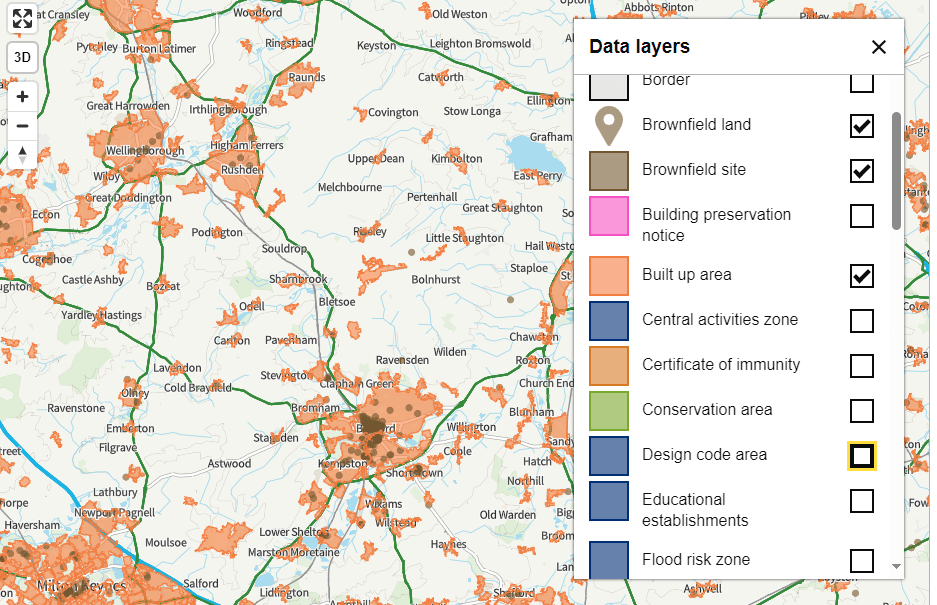







 SIMONICITY