The Only Way Is Ethics – What Is The Role Of The Professional Witness?

In preparing for a 50 Shades of Planning podcast episode we are recording this week on the wider subject of ethics in planning I looked back on an interesting case on the position of those who give evidence as an expert in the High Court on planning issues in circumstances where they have previously been involved as a consultant in the project.

The position under the High Court’s Civil Procedure Rules is certainly tighter than the position in relation to those giving evidence at planning inquiries, for instance, but perhaps there are still lessons, or reminders at least, for the latter. The case is Freeman & Others v Home Farm Ellingham Limited (HHJ Claire Jackson (sitting as a High Court Judge in the Business and Property Courts in Newcastle-upon-Tyne, 17 April 2025) and it was brought to my attention by a LinkedIn post by James Maurici KC who I hope I will not mind my reproducing it in full as follows:

Interesting recent judgment that I have just come across for those who give expert evidence in the High Court on planning and development related issues.

In Freeman v Home Farm Ellingham Ltd [2025] EWHC 878 (Ch) the Court was considering a claim for specific performance of an obligation to procure the adoption of an access road to a housing development. Of wider interest is the decision of the Court (HHJ Claire Jackson sitting as a Deputy High Court Judge) to rule inadmissible the evidence of one of the experts for the parties. The expert evidence for the claimant was challenged on the basis that he was partisan in his evidence and failed to therefore comply with his duties as an expert under CPR Part 35: see paras. 32 – 44 of the judgment.

The Court noted that the expert was heavily involved in the planning processes which led to the housing development in issue but that this did not in itself preclude his acting as an expert in the Court proceedings under CPR Part 35. The Court gives a useful summary of the principles applicable to the issue of independence of experts (see paras. 36 – 39). The Judge went on to rule the expert evidence inadmissible on the basis that (see para. 40) the claimant’s expert “was a partisan witness who both wrote his report and gave evidence at trial for his client in a non-impartial way” and that he (ibid) “did not act simply as an expert in the case, he acted as an advocate for the Claimant. This was obvious both from his written report and his oral testimony, where frequent criticism can be made of [the expert] for the tenor, tone and content of his evidence.” The Judge gives a list of examples of her concerns with the evidence (including among a number of matters that he “orchestrated the production of what appears to be factual evidence”). She concluded (see para. 41) he was “not impartial but rather acted to prefer the interest of the Claimant as his client and to advocate a case for it. This lack of impartiality affected both the preparation and presentation of [his] evidence, his assessment of the evidence and his findings” and (see para. 42) that the “partiality and desire to act as an advocate for the Claimant” had “permeated his entire report and his oral evidence and therefore it is not on this occasion appropriate to admit [his] report or oral testimony as admissible“.  

So an important case for those who give expert evidence in the development field at High Court level. And it is a reminder that the requirements of CPR Part 35 are perhaps more stringent than those that apply to the giving of expert evidence at planning inquiries and similar processes: see PEBA’s “Good Practice Memorandum 2: Guidance for barristers on dealing with experts at Planning and Other Similar Inquiries“.

The issue is a practical one: the local planning authority’s expert witnesses will often have been heavily engaged in the matter at application stage and sometimes may have publicly given advice to councillors on the issues, only for the advice to have been overturned. But it is potentially no easier for the appellant’s expert witnesses: the planning witness may have been heavily engaged in advising their client initially on the suitability of the site, perhaps making representations through the local plan process, coordinating the preparation of the application and so on – often having a long term relationship with the client, which may be affected by the outcome of the appeal (and of course may indirectly benefit from a successful outcome by way of follow-on work in relation to the project). In a system where professional, objective, opinions are at a premium, how to ensure that the inspector or Secretary of State gives weight to the evidence which professionals give on relatively subjective matters, where they are not coming at the issues from a fresh, entirely independent, perspective?

The Planning Inspectorate’s Planning Appeals Procedural Guide has only brief advice:

15. Expert evidence

15.1. Expert evidence is evidence that is given by a person who is professionally qualified to express an opinion on a particular subject. It can be used in all appeals.

15.2. It is the duty of an expert to help the Inspector. This duty overrides any duty the expert may have to the party that involved them in the appeal or that is paying them.

15.3. The evidence should be accurate, concise, and complete and should represent the expert’s honest and objective opinion. If the expert belongs to a professional body that has a code of practice on professional conduct dealing with giving evidence, the expert is expected to comply with the code.

15.4. Expert evidence should include an endorsement such as that set out below or similar (such as that required by a particular professional body):

“The evidence which I have prepared and provide for this appeal reference APP/xxx (in this proof of evidence, written statement or report) is true [and has been prepared and is given in accordance with the guidance of my professional institution] and I confirm that the opinions expressed are my true and professional opinions.” This will enable the Inspector and others involved in an appeal to know that the material in a proof of evidence, written statement or report is expert evidence.

15.4.1. Giving expert evidence does not prevent an expert from acting as an advocate so long as it is made clear through the endorsement or otherwise what is expert evidence and what is not.”

For the purposes of this post I am just focusing on expert planning evidence, rather than other professional disciplines (but the same holds true right down the expert witness batting order).

RTPI members are subject to its code of conduct which includes the following:

“Independent professional judgement

11. Members must exercise fearlessly and impartially their independent professional judgement to the best of their skill and understanding.

12. Members must not make or subscribe to any statements or reports which are contrary to their own genuine professional opinions, nor knowingly enter into any contract or agreement which requires them to do so.

13. Members must base their professional advice on relevant, reliable and supportable evidence and present the results of data and analysis clearly and without improper manipulation.”

There is also more specific practice advice on ethics and professional standards, within which section 5 specifically deals with giving evidence at inquiries:

The Code requires RTPI Members to act with integrity and express their own professional view.  As an ‘expert witness’ at a planning inquiry or hearing, you are there to give evidence in the form of facts and professional opinion. Facts must be true and professional opinion must be first hand. If the evidence is someone else’s opinion e.g. an assistant planning officer giving evidence of a chief officer’s recommendation to the local authority they can only do so as evidence of a matter of fact. There may be times where you must deal with a situation where your professional view is under scrutiny.

For RTPI Members employed by a public body (such as a local planning authority) in particular, you may be asked to defend a decision that differs from the public report you wrote recommending an alternative view. This can sometimes be referred to as a ‘committee overturn’. For RTPI Members employed in a private consultancy, a client may commission you to represent or ‘advocate’ their interests where, on balance, in your opinion the proposal that is being tabled at appeal needs improvement.

Dealing with committee overturns

When appearing as an expert witness you must disclose your independent professional opinion and should endorse this upfront in your witness statement or report. Advice from the Planning Inspectorate on ‘what is expert evidence’ and how to endorse the evidence you give is a useful guide for any professional planner regardless of which legal system you work within.

RTPI Members representing a decision that is a committee overturn and therefore contrary to their officer report should take care to avoid giving the impression any evidence they are presenting is their own professional view. Instead you may feel comfortable stating information as the ‘council’s view’ and therefore acting as an advocate for the case.

Clearly the RTPI Member whose professional opinion does not conform with recommendations the evidence is supposed to support is unlikely to be the best witness in such circumstances. You should discuss this possible situation with your manager who will want to consider the consequences for the employer if any difference in professional judgement comes to light during the appeal process. Concerns should be raised in good time to allow for any changes in personnel to be arranged.

The authority may still consider asking the officer to give technical evidence at the inquiry, but call someone else who is in the position to speak with conviction of the planning reasons for the authority’s decision. This could be either another council employee who is quite appropriately able to form a different professional view or, in some instances, the local politician who, as Chair of the Planning Committee, made the decision.

An authority may alternatively employ a planning consultant to undertake the task who can weigh up the information, development plan policy and other material considerations and also form a different professional view.

Planners as advocates

The role of an advocate is quite different from acting as an expert witness and involves taking the wider role of presenting to the inquiry or hearing what the authority or client would say for

themselves. An RTPI Member who takes on the role of advocate will need to have skills in advising on case content and presenting a case, and may need to seek further legal advice.

It is possible that you may be asked to act as an advocate and appear as an expert witness at a hearing or inquiry. You must decide whether the two roles are reconcilable, possibly after discussion with colleagues. You must have confidence that you are able to retain professional integrity, whilst serving the best interests of your client or employing organisation.

RTPI Members may still act as an advocate in cases where their professional views differ from the evidence being advanced, provided that they do not wilfully mislead the inquiry or fail to give the inspector or other officer the help they are entitled to receive.”

Still quite brief.

RICS members are subject to more detailed professional requirements, set out in a practice statement and guidance note for expert witnesses. I’ve previously noted – see my 20 October 2018 blog post Planning Inquiries: Expert Witnesses & Success Fees that was written on the back of a judgment of Holgate J (as he then) was in relation to a business rates case- that, unlike with the RTPI, the RICS professional guidance expressly prohibits success fees tied to the relevant dispute outcome, although surely this impliedly applies across the board.

It seems to me that transparent, enforced, rules governing the conduct of professional expert witnesses are essential given the nature of our system where ultimately most decisions on appeals turn upon issues of professional judgment. And in practice surely the more that the expert can demonstrate their professional independence and integrity and that their evidence is not influenced by any desire to advocate the client’s position, the more likely it is that the decision maker will give due weight to that evidence.

Sorry, that was all a bit dull. Hashi Mohamed is chairing our podcast chat – it will be much better. Stay tuned.

Simon Ricketts, 13 September 2025

Personal views, et cetera

Lessons From The Heathrow Cases

In my 15 October 2016 blog post Airports & Courts I made the obvious prediction that publication by the Secretary of State for Transport of the Airports National Policy Statement (“ANPS”) would inevitably lead to litigation. The ANPS is important because under the Planning Act 2008 it sets the policy basis for a third runway at Heathrow to the north west of the current runways (the “NWR Scheme”).

It was always going to be important for the High Court to be able to rise to the (in a non-legal sense) administrative challenge of disposing of claims efficiently and fairly. The purpose of this blog post is to look at how that was achieved (no easy feat) and what we can learn more generally from the court’s approach to the litigation

The ANPS was designated on 26 June 2018 and five claims were brought seeking to challenge that decision:

⁃ A litigant in person, Neil Spurrier (a solicitor who is a member of the Teddington Action Group)

⁃ A group comprising the London Borough of Richmond-upon-Thames, the Royal Borough of Windsor and Maidenhead, the London Borough of Hammersmith and Fulham, Greenpeace and the Mayor of London

⁃ Friends of the Earth

⁃ Plan B Earth

⁃ Heathrow Hub Limited and Runway Innovations Limited [unlike the other claimants above, these claimants argue for an extension of the current northern runway so that it can effectively operate as two separate runways. This scheme was known as the Extended Northern Runway Scheme (“the ENR Scheme”)]

Arora Holdings Limited joined as an interested party to each set of proceedings in pursuance of their case for a consolidated terminal facility to the west of the airport.

The Speaker for the House of Commons intervened in the Heathrow Hub Limited claim to object to various statements made to Parliament and Parliamentary Committees being admitted in evidence.

The first four claims raised 22 separate grounds of challenge. The fifth claim raised a further five grounds of challenge.

As Planning Liaison Judge, ie effectively lead judge within the Planning Court, Holgate J in my view has played an extremely effective role. Following a directions hearing, ahead of a subsequent pre-trial review three months later, he laid down a comprehensive set of directions on 4 October 2018 which provided for:

⁃ the first four claims to be heard at a single rolled up hearing, followed by the fifth claim

⁃ the cases to be heard by a Divisional Court (ie two or more judges, normally a High Court Judge and a Lord Justice of Appeal. In the event, the four claims were heard by a Divisional Court comprising Hickinbottom LJ and Holgate J. The fifth claim was heard immediately afterwards by a Divisional Court comprising Hickinbottom LJ, and Holgate and Marcus Smith JJ.)

⁃ video link to a second court room and (paid for jointly by the parties in agreed proportions) live searchable transcripts of each day’s proceedings

⁃ procedure to be followed in relation to expert evidence sought to be submitted in support of the first claim

⁃ statements of common ground

⁃ amended grounds of claim, with strict page limits and against the background of a request from the judge to “review the extent to which they consider that any legal grounds of challenge previously relied upon remain properly arguable in the light of the Acknowledgments of Service“, and with specific claimants leading on individual issues

⁃ bundles and skeleton arguments complying with strict page limits and other requirements

⁃ payment of security for costs by Heathrow Hub Limited in the sum of £250,000

⁃ cost capping in the other claims on Aarhus Convention principles

The main proceedings were heard over seven days in March, with the Heathrow Hub proceedings then taking a further three days (followed by written submissions). As directed by Holgate J, hearing transcripts were made publicly available.

Less than six weeks after close of the Heathrow Hub hearing, judgment was handed on 1 May 2019 in both case:

R (Spurrier & others) v Secretary of State (Divisional Court, 1 May 2019)

R (Heathrow Hub Limited & Runway Innovations Limited) v Secretary of State (Divisional Court, 1 May 2019)

The transcript of the first judgment runs to 184 pages and the transcript of the second judgment runs to 72 pages.

I am not going to summarise the judgments in this blog post but happily there is no need as the court at the same time issued a summary, which serves as a helpful précis of the claims and the court’s reasoning for rejecting each of them.

The Divisional Court found that all but six grounds were unarguable (the six being two Habitats Directive grounds from the first case, two SEA grounds from the first case and two from the second case (legitimate expectation and anti-competition). “All the other grounds were not considered not to have been arguable: the claimants may apply for permission to appeal against the Divisional Court’s decision concerning those grounds to the Court of Appeal within 7 days. The remaining six grounds were ultimately dismissed. The claimants may apply to the Divisional Court for permission to appeal within 7 days. If the Divisional Court refuses permission to appeal to the Court of Appeal, the claimants may re-apply directly to the Court of Appeal.”

The Secretary of State for Transport gave a written statement in the House of Commons on the same day, welcoming the judgments.

The two judgments will be essential reading in due course for all involved in similar challenges; the 29 grounds, and various additional preliminary points, cover a wide range of issues frequently raised in these sorts of cases and each is carefully dealt with, with some useful textbook style analysis.

In the Spurrier judgment:

– the scope for challenge of an NPS (paras 86 to 90)

⁃ relationship between the NPS and DCO process (paras 91 to 112)

⁃ extent of duty to give reasons for the policy set out in the NPS (paras 113 to 123)

⁃ consultation requirements in relation to preparation of an NPS (paras 124 to 140)

⁃ standard of review in relation to each of the grounds of challenge (paras 141 to 184)

⁃ the limited circumstances in which expert evidence is admissible in judicial review (paras 174 to 179)

⁃ whether updated information should have been taken into account (paras 201 to 209)

⁃ whether mode share targets were taken into account that were not realistically capable of being delivered (paras 210 to 219)

⁃ the relevance of the Air Quality Directive for the Secretary of State’s decision making (paras 220 to 285)

⁃ compliance with the Habitats Directive (paras 286 to 373)

⁃ compliance with the Strategic Environmental Assessment Directive (paras 374 to 502)

⁃ whether consultation was carried out with an open mind (paras 503 to 552)

⁃ whether the decision to designate the ANPS was tainted by bias (paras 553 to 557)

⁃ the relevance of the Government’s commitments to combat climate change (paras 558 to 660)

⁃ whether there was a breach of the European Convention on Human Rights (paras 661 to 665)

In the Heathrow Hub judgment:

⁃ legitimate expectation (paras 113 to 138)

⁃ use of Parliamentary material in the context of Article 9 of the Bill of Rights (paras 139 to 152)

⁃ competition law (paras 157 to 209).

As we wait to see whether any of these claims go further, I note that Arora has commenced pre application consultation ahead of submitting a draft DCO for a “consolidated terminal facility to the west of the airport, which we are calling Heathrow West, related infrastructure and changes to the nearby road and river network.” Now that is going to be another interesting story in due course. I’m not sure we have previously seen duelling DCOs…

Simon Ricketts, 4 May 2019

Personal views, et cetera

A Reasonable Prospect of Planning Permission: The Right To Possession Under Ground (f)

Even when it’s your day job in our planning world of imprecisely worded policies and the uncertainties of local and national politics, it can be hard enough to answer the question as to whether a proposed development project has a reasonable prospect of planning permission. But what if you are a county court judge? And when the law throws in some hypothetical assumptions?

One of the grounds under section 30(1) of the Landlord and Tenant Act 1954 which a landlord can rely on in opposing the grant to of a new tenancy to an existing business tenant is on the ground that “on the termination of the current tenancy the landlord intends to demolish or reconstruct the premises comprised in the holding or a substantial part of those premises or to carry out substantial work of construction on the holding or part thereof and that he could not reasonably do so without obtaining possession of the holding.”

The courts have held that the landlord must show that (1) it has the intention to demolish or reconstruct at least a substantial part of the premises and (2) there is a reasonable prospect of being able to bring about that intention.

That “reasonable prospect” second limb of the test was the subject of Warwickshire Aviation Limited and others v Littler Investments Limited (Birss J, 25 March 2019) and I will deal with that in a moment.

However, first to note that the Supreme Court late last year caused a minor earthquake in terms of how the first limb is to be interpreted, namely whether the landlord has a sufficient “intention“.

For a long time now it has been the practice of some landlords to come up with demolition or redevelopment schemes just to satisfy the test, schemes which they are prepared to undertake to the court that they will carry out (an undertaking which they will not need to give if, as has been usual, in the face of an evidenced intention the tenant resigns itself to defeat and cuts a deal – in which case the scheme can be abandoned).

As a result of S Franses Limited v The Cavendish Hotel (London) Limited (Supreme Court, 5 December 2018), that practice has been rendered much more difficult.

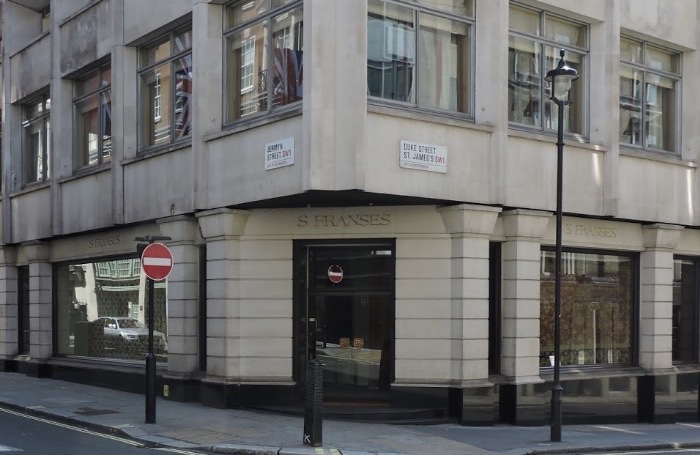
The case concerned a textiles dealership and consultancy in Jermyn Street, Mayfair, comprising the ground floor and basement of what is otherwise the Cavendish Hotel. It was refused a new tenancy on the basis that its landlord “intended” to carry out an absurd set of works, arrived at because of the difficulties in obtaining planning permission for earlier proposals to create new retail units. The landlord ended up proposing a set of works that did not require planning permission. First, the proposed “internal wall dividing the two proposed retail units stopped two metres short of the shopfront at ground floor level; and there was no external door to one of the units, so that it could be accessed only through the other. Secondly, the new scheme added more extensive internal works, many of which were objectively useless. They included the artificial lowering of part of the basement floor slab, in a way which would achieve nothing other than the creation of an impractical stepped floor in one of the units; the repositioning of smoke vents for no reason; and the demolition of an internal wall at ground floor level followed by its immediate replacement with a similar wall in the same place. The cost of the scheme was estimated by the landlord at £776,707 excluding VAT, in addition to statutory compensation of £324,000 payable to the tenant.

It is common ground that the proposed works had no practical utility. This was because, although the works themselves required no planning permission, it would be impossible to make any use of them at all without planning permission for change of use, which the landlord did not intend to seek. Planning permission would have been required because the scheme involved combining premises permitted for hotel use with premises permitted for sui generis use. In addition, one of the retail units was unusable without an entrance from the street. In accordance with a common practice in this field, the landlord supported its evidence of intention with a written undertaking to the court to carry out the works if a new tenancy was refused. The sole purpose of the works was to obtain vacant possession. The landlord’s evidence was that it was prepared to run the risk that the premises occupied by the tenant would be rendered unusable “in order to secure its objective of undertaking [the third scheme] and thereby remove the claimant from the premises.” The landlord submitted that “the works are thoroughly intended because they are a way of obtaining possession. That is all there is to it.” As the landlord’s principal witness put it, the third scheme was “designed purely for the purpose of satisfying ground (f).”

The landlord argued that its motives were irrelevant – all that mattered was its intention to carry out the works. However, the Supreme Court disagreed.

Lord Sumption: “the landlord’s intention to demolish or reconstruct the premises must exist independently of the tenant’s statutory claim to a new tenancy, so that the tenant’s right of occupation under a new lease would serve to obstruct it. The landlord’s intention to carry out the works cannot therefore be conditional on whether the tenant chooses to assert his claim to a new tenancy and to persist in that claim. The acid test is whether the landlord would intend to do the same works if the tenant left voluntarily.”

In consequence in future cases there will surely be a greater need for expert evidence in county court proceedings as to why a particular scheme of works has some commercial utility to the landlord other than just as a basis for a ground (f) opposition to a new tenancy.

Back to the second limb and the Warwickshire Aviation case. The case had started in the county court, with seven separate aviation-related tenants of premises at Wellesbourne Mountford Airfield all faced with ground (f) opposition by their landlord to the grant of new tenancies on the basis that it intended to demolish their premises. There was a trial of the preliminary issue as to whether ground (f) had been made out. Planning permission for demolition would be required because permitted development rights had been taken away by way of an Article 4 direction. The landlord wished to bring to an end any aviation use on the airfield and instead to promote the site for residential development. The central issue at the four day trial was whether, against the planning policy background, there was a reasonable prospect that the local planning authority would grant planning permission for demolition, in the face of policies which included support for “enhancement of the established flying functions and aviation related facilities” at the airfield. Planning consultants gave expert evidence for the two sides, with very different conclusions.

One complication was the necessary hypothetical assumption that at the time of the notional planning application for demolition the tenants would have vacated and the current aviation related uses would have ceased. Given the landlord’s objectives, the county court judge found “there appears on legitimate and substantial economic/commercial grounds to be no realistic prospect, if consent for demolition was refused, of the Defendant re-instating aviation related use of the buildings. That would be a material consideration for the decision maker to have regard to” in the light of the relevant policies and therefore he concluded that there was a reasonable prospect that planning permission would be granted.

On appeal from the Birmingham County Court to the High Court, the tenants argued that “in planning terms the landlord’s future intentions are irrelevant and do not amount to a “material consideration” within s70(2) of the TCPA and s38(2) of the PACP. They argue while the land owner may well have sound commercial reasons for wanting to increase the profitability of its landholding and prevent further aviation use, those are quintessentially private rather than public interests.”

The judge on appeal rejected the argument. The relevant policy “rather than requiring developers to retain and support existing aviation related facilities at the airfield regardless of the circumstances, only states that developers are expected to contribute to the achievement of that objective “where it is appropriate and reasonable for them to do so”. As Littler submits, those words are wide enough to allow a developer to tell the decision maker that it does not intend to return the buildings to their previous aviation related uses for commercial reasons. The decision maker will assess if that stance is appropriate and reasonable in the circumstances. If the reasons are found to be genuine (as here), in that case it would be open to the decision maker to accept the stance of the developer. The result could well be that it would not be appropriate and reasonable to expect the developer to contribute to the achievement of the objective of retaining aviation related uses at Wellesbourne in that instance. Therefore the judge was entitled to approach the matter in the way he did.

Contrary to the […] appellants’ submission, this does not mean that the entire planning system can be subverted or frustrated because a landowner would always be able to succeed in obtaining planning permission for demolition or change of use simply by asserting an intention not to continue its existing use. That submission ignores the discretion in the relevant planning policy, ignores the fact that there were a range of other uses available not requiring planning permission (this is addressed in Ground C below) and ignores the fact that the judge specifically considered whether the reasons given by Littler were substantial and genuine.”

The appeal judge agreed with the county court judge that policies in a recently adopted neighbourhood plan did not make a significant difference to the issues.

Finally the appeal judge rejected the submission that the judge at first instance had applied too stringent a test in assessing the likelihood of aviation related uses resuming if permission for demolition were to be refused.

Regardless of what the correct answer actually was on the evidence, one can see the difficulties inherent in determining the hypothetical question on which the case turned. I’m no landlord and tenant lawyer but isn’t “reasonable prospect” just setting the bar too low? Of course the landlord is going to be dead-set against a continuation of the relevant use – that’s why it has gone to the expense of opposing a new tenancy. If that is relevant, doesn’t that leave the landlord holding all the cards? Or is the reality that business tenants have to accept that their right to a new tenancy will always be precarious? Another issue for the Supreme Court one day perhaps?

Landlord and tenant lawyers, you are welcome to set me straight on any of this.

Simon Ricketts, 20 April 2019

Personal views, et cetera

Planning Inquiries: Expert Witnesses & Success Fees

If you give evidence as an expert at planning inquiries, I recommend that you read the judgment of Holgate J in Gardiner and Theobald LLP v Jackson (VO) (Upper Tribunal (Lands Chamber), 3 August 2018).

In the superficially different context of a rating dispute, he sets down unambiguously the perils that await any expert witness whose remuneration is in any way contingent on the outcome of the dispute. This reflects the position in the RICS code of conduct.

The question I then asked myself is whether the position can be any less strict in relation to any planning dispute, where someone is giving evidence as an expert (most commonly a planning inquiry but in my view equivalent considerations apply where a report is provided, on the basis that it is to be relied upon as independent expert evidence, in other proceedings that may appear less formal, such as hearings, examinations and written representations procedures).

The RTPI position is less explicit than that of the RICS (whose code equally applies to expert evidence in planning maters). I haven’t researched other professional codes of conduct (after finding that the Chartered Institution of Highways and Transportation does not appear to have a code of conduct on-line I gave up on that line of research for a Saturday morning).

In reading the judgment, bear in mind of course that Holgate J is both President of the Upper Tribunal Lands Chamber and the Planning Court’s Planning Liaison Judge (ie head of the Planning Court).

The position in relation to expert evidence given in court proceedings is clear. Holgate J refers to the R (Factortame) v Secretary of State (Court of Appeal, 3 July 2002) case, which related to an attempt by accountants to recover, as part of a costs claim, success-related fees that they had secured from Anglo-Spanish fishing companies though their work in relation to judicial review proceedings stemming from a dispute as to entitlements to fish in British waters. One of the matters for the court to consider was the extent to which the fees related to work which the firm had carried out that could be categorised as giving expert evidence.

The Court of Appeal held on the facts that it was not, but said this:

 “Expert evidence comes in many forms and in relation to many different types of issue. It is always desirable that an expert should have no actual or apparent interest in the outcome of the proceedings in which he gives evidence, but such disinterest is not automatically a precondition to the admissibility of his evidence. Where an expert has an interest of one kind or another in the outcome of the case, this fact should be made known to the court as soon as possible. The question of whether the proposed expert should be permitted to give evidence should then be determined in the course of case management. In considering that question the Judge will have to weigh the alternative choices open if the expert’s evidence is excluded, having regard to the overriding objective of the Civil Procedure Rules.”

“To give evidence on a contingency fee basis gives an expert, who would otherwise be independent, a significant financial interest in the outcome of the case. As a general proposition, such an interest is highly undesirable. In many cases the expert will be giving an authoritative opinion on issues that are critical to the outcome of the case. In such a situation the threat to his objectivity posed by a contingency fee agreement may carry greater dangers to the administration of justice than would the interest of an advocate or solicitor acting under a similar agreement. Accordingly, we consider that it will be in a very rare case indeed that the Court will be prepared to consent to an expert being instructed under a contingency fee agreement.”

Holgate J identifies that whether the Factortame approach is to be applied by the Upper Tribunal is a question for the Upper Tribunal (or, on appeal, the Court of Appeal). There is the question, not previously conclusively determined, as to whether the existence of a contingency fee arrangement goes to the weight to be given to the evidence or whether it is to be admissible in the first place.

He sets out some of the potential advantages and disadvantages of each approach before concluding:

These issues would need to be the subject of well-considered submissions following detailed research. We also raise them for consideration by, and discussion amongst, the Tribunal’s users and the various professional bodies involved. No doubt there will be other matters to consider which we have not identified.

However, one thing is certainly clear. Whatever approach this Tribunal decides to adopt on the issues raised by Factortame, it remains wholly unacceptable for an expert witness, or the practice for which he or she works, to enter into a conditional fee arrangement, without that fact being declared (and in sufficient detail) to the Tribunal and any other party to the proceedings from the very outset of their involvement in the case. The Tribunal will treat such a failure as a serious matter.”

In the Gardiner and Theobald case, the expert engaged by G&T had not disclosed to the Valuation Tribunal that whist he was not charging on a contingent basis for his expert witness role before the VTE, his firm would still benefit from success-related fees flowing from his previous work.

The judgment is pretty scathing in its terms. Nor was the expert able to hide behind any argument that it was all the fault of his firm’s standard terms of engagement:

This aspect was not investigated during the hearing and so we make no finding about it. No doubt many surveyors and other experts, particularly those in larger practices, will operate on an assumption that standard form conditions will have been drafted by the practice so as to comply with the requirements of the tribunals before whom they appear and of the professional bodies to which they belong.  In practice, an individual expert may not consider questioning the content of the standard conditions which are regularly used by the firm for which he or she works.  But that cannot override or detract from the obligations which each individual expert personally owes, not only to the relevant tribunal or court, but also under any professional code of conduct. All these considerations only serve to emphasise the importance of a practice ensuring that its standard terms of engagement are drafted with care and clarity so that they do indeed comply with those obligations. Furthermore, individual experts must ensure that any specific terms agreed for individual cases, whether varying or supplementing the standard conditions of a practice, also meet the same requirements.”

Holgate J restates the principles that apply to expert witnesses, as set down in the Ikarian Reefer case:

The expert’s duty to help the Tribunal, which overrides any obligation to the client (rule 17(1) of the 2010 Rules), connotes an obligation to act independently and without bias.  The obligation is so similar to that in CPR 35.3 that it is helpful to refer to the related commentary in “Civil Procedure” (2018).  Because this obligation is fundamental to the duty of an expert giving evidence in the Tribunal, it is appropriate to set out certain of the key principles summarised in the “Ikarian Reefer” [1993] 2 Lloyd’s Rep 455: –

1. Expert evidence presented to the Court should be, and should be seen to be, the independent product of the expert uninfluenced as to form or content by the exigencies of litigation (Whitehouse v. Jordan [1981] 1 WLR 246at p. 256, per Lord Wilberforce).


2. An expert witness should provide independent assistance to the Court by way of objective, unbiased opinion in relation to matters within his expertise (seePolivitte Ltd. v. Commercial Union Assurance Co. plc [1987] 1 Lloyd’s Rep. 379 at p. 386 per Garland J and Re J [1990] FCR 193 per Cazalet J). An expert witness in the High Court should never assume the role of an advocate.


3. An expert witness should state the facts or assumptions upon which his opinion is based. He should not omit to consider material facts which could detract from his concluded opinion (Re J supra).


4. An expert witness should make it clear when a particular question or issue falls outside his expertise.


5. If an expert’s opinion is not properly researched because he considers that insufficient data is available, then this must be stated with an indication that the opinion is no more than a provisional one (Re J supra). In cases where an expert witness, who has prepared a report, could not assert that the report contained the truth, the whole truth and nothing but the truth without some qualification, that qualification should be stated in the report (Derby & Co. Ltd. v Weldon The Times 9 November 1990 per Staughton LJ).


6. If, after exchange of reports, an expert witness changes his view on a material matter having read the other side’s expert’s report or for any other reason, such change of view should be communicated (through legal representatives) to the other side without delay and when appropriate to the Court.”

Holgate J stresses the importance of the statement of truth (which I will come back to):

Any notion that, by way of example, the inclusion and signing of an expert’s declarations in his or her report is a mere formality, or something which may be dealt with perfunctorily, needs to be completely dispelled.”

So how does all of this apply to planning inquiries?

It seems to me that the position for chartered surveyors as expert witnesses is clear, in the light of RICS Practice Statement and Guidance Note: Surveyors acting as expert witnesses. The practice statement sets out the tribunals to which it applies, which includes evidence given to “inspectors, commissioners and reporters (for example, in planning proceedings, including inquiries, hearings, examinations in public – independent panels; independent examination and proceedings of the Infrastructure Planning Commission, and Planning and Water Appeals Commissions).

As quoted by Holgate J, the practice statement deals with conditional fees in the following terms:

“10.1 You should not undertake expert witness appointment on any form of conditional or other success-based arrangement including where those instructing you are engaged on such a basis.

10.2 It is inappropriate to be remunerated by way of a conditional fee arrangement when acting as an expert witness but it may be an appropriate fee basis when acting as an advocate.  When acting in a dual role as an expert witness and advocate, where permitted in lower tribunals, a conditional fee arrangement may be acceptable because it will be seen as attached to the role of advocate.  Such a dual role improves access to justice by reducing costs and therefore a conditional fee payment can be supported in these limited and strict circumstances.

10.3 When acting in a dual role and where a conditional fee arrangement has been agreed, this must be declared to the tribunal.

10.4 It is unlikely that a dual role will be permitted in higher tribunal formats and consequently previously agreed conditional fees when the surveyor has appeared in a lower tribunal will, at the point of transferring to the superior or higher tribunal, need to be commuted and replaced by an hourly rate or fixed fee arrangement.”

The statement of truth that is required by the RICS to be included in expert reports includes: “I confirm that I am not instructed under any conditional or other success-based fee arrangement.”

It is interesting to note that the Planning Inspectorate’s Planning Appeals Procedural Guide does not include any advice on the question of success-related fees and the recommended wording, within Annex O, for the statement of truth, is simply:

The evidence which I have prepared and provide for this appeal reference APP/xxx (in this proof of evidence, written statement or report) is true [and has been prepared and is given in accordance with the guidance of my professional institution] and I confirm that the opinions expressed are my true and professional opinions.”

As it happens, the RTPI recently updated guidance for its members, Practice Guidance September 2018, Planners as expert witnesses, but again there is nothing explicit on the question of success-related fees (although there is useful advice on, for example, the issues arising where evidence is given on behalf of the witness’s employer or, in the case of local authority planners, in support of a decision by councillors in the face of officers’ recommendations). Perhaps it will be said that it is implicit in one of the RTPI’s core principles: “Members must not make or subscribe to any statements or reports which are contrary to their own bona fide professional opinions, nor knowingly enter into any contract or agreement which requires them to do so.” But surely, particularly following that invitation from Holgate J to professional bodies, consideration should now be given to a much clearer statement? After all, situations inevitably arise where, even though the expert has no direct success-related fee arrangement, further work and fees will inevitably arise from a particular outcome, and where is the dividing line to be drawn?

So, I conclude, tentatively (do put me right, please) as follows:

There is no specific legal authority to support any proposition that expert evidence to a planning inquiry is inadmissible if the expert (or his or her firm) stands to gain in some way from a specific outcome from the proceedings. However, RICS members are subject to an express prohibition; members of other professional organisations may be under implied restrictions, and at the very least the decision maker is in any event liable to place significantly less weight on evidence which is given on a success-related fee basis – and such a basis should certainly be disclosed.

Simon Ricketts, 20 October 2018

Personal views, et cetera