The blog posts, clubhouse events, any webinars you might have sat through in desperation through the last 18 months, they are all free, no charge.
Weirdly enough, planning lawyers just love talking about planning law.
Why did we become lawyers? Not so weirdly, but maybe we don’t talk about it enough, it wasn’t just for the sheer joy of sometimes winning an argument, completing a cryptic-crossword-puzzle of an agreement or working out what some statutory provision actually means. It wasn’t just because for us in the private sector of course there’s the money. It was because, maybe just a bit, maybe sometimes forgotten in the thrill of the CIL Regulations, at the root of it all we know that…
law matters.
It’s the law that protects those who find themselves homeless through no fault of their own, in a financial tangle not of their own making, discriminated against, exploited or needing legal protection from those around them.
And if you have a problem like that, you don’t need a well-paid planning lawyer, you need a proper hero of a lawyer, often just working as an unpaid volunteer, within a law centre or pro bono agency.
My ask is that, if you have got any value out of any of this stuff – the blog posts, the on line events – in all conscience please do consider clicking on this link and donating £10, or whatever you think fit, to the London Legal Support Trust. It’s never been more necessary.
I’m doing the London Legal Walk on Monday with 22 colleagues. 10 km is no big deal as an endurance event, this is no marathon but it’s still a big deal in terms of the hundreds of thousands of pounds that it raises. In previous years there have been 15,000 or so lawyers taking part. Perhaps a good afternoon to stay away from EC4.
We are walking with the Lord Chief Justice and thousands of lawyers to raise funds for the London Legal Support Trust which funds Law Centres and pro bono agencies in and around London.
Two-thirds of the UK population don’t know how to get legal advice and 14 million people who live in poverty can’t afford to pay for it. The London Legal Walk raises vital funds to ensure access to justice for some of our communities’ most poor and vulnerable people.
Your support is needed now more than ever with the long-term challenges brought on by the Covid-19 pandemic. Reduced funding in the charity sector means advice agencies are doing all they can to meet rising need despite a drastically restricted income.
The event supports over 100 legal advice agencies in London and the South East. We know that these agencies do a fantastic job in preventing homelessness, resolving debt problems, gaining care for the elderly, fighting discrimination and exploitation.
Please sponsor our walkers as generously as you are able.
Many thanks for your support.
Sorry that there’s no planning law in this post. More round the corner I’m sure! And be sure to tune into Clubhouse at 6 pm this Tuesday 19 October 2021 , when Charles Banner QC will be leading a session on all things Hillside – it’s been almost a year since the Court of Appeal’s judgment. Now that the dust has settled (has it?) and while we still wait to see whether the Supreme Court will grant permission to appeal, what are its practical implications? Link to app here.
Simon Ricketts, 15 October 2021
Personal views, et cetera
Extract from photograph by Craig Whitehead, courtesy Unsplash
Just as solutions are beginning to emerge to unlock the development embargos that have been in place in many areas due to the nutrient neutrality issue, areas of Sussex now have a new problem: water.
For over two years now, where the integrity of special areas of conservation or special protection areas (areas of nature conservation importance previously protected at EU level) are already under stress due to nitrate or phosphate pollution (usually due to historic farming practices), Natural England has been advising local planning authorities that an appropriate assessment cannot be reached under regulation 63 of the Conservation of Habitats and Species Regulations 2017 to the effect that further development, causing additional sewage or surface water run-off will not affect the integrity of nearby SACs and SPAs unless measures will are secured to achieve neutrality, either on or off site. Under the 2017 Regulations, unless a development can pass that appropriate assessment test it’s stuffed, no go.
Developers on large sites have increasingly looked for suitable onsite measures and some authorities have been able to make available offsite measures to allow development to proceed.
Topically, HBF’s director for cities, James Stevens, has written an article Wading through the effluent in the October 2021 edition of Housebuilder magazine as to the problems being caused to housebuilders by needing to achieve nutrient neutrality, even where a technical solution can be found – the average costs being apparently over £5,000 per dwelling.
But those involved with development in Horsham, Crawley and Chichester, which fall within the Sussex North Water Supply Zone, are all now faced with an even more challenging issue: the potential need to demonstrate water neutrality. Natural England has become increasingly concerned as to the impact of groundwater abstraction on the Arun Valley SPA, SAC and Ramsar site. It has recently published its Position Statement for Applications within the Sussex North Water Supply Zone – interim approach (September 2021):
“Natural England has advised that this matter should be resolved in partnership through Local Plans across the affected authorities, where policy and assessment can be agreed and secured to ensure water use is offset for all new developments within Sussex North. To achieve this Natural England is working in partnership with all the relevant authorities to secure water neutrality collectively through a water neutrality strategy.
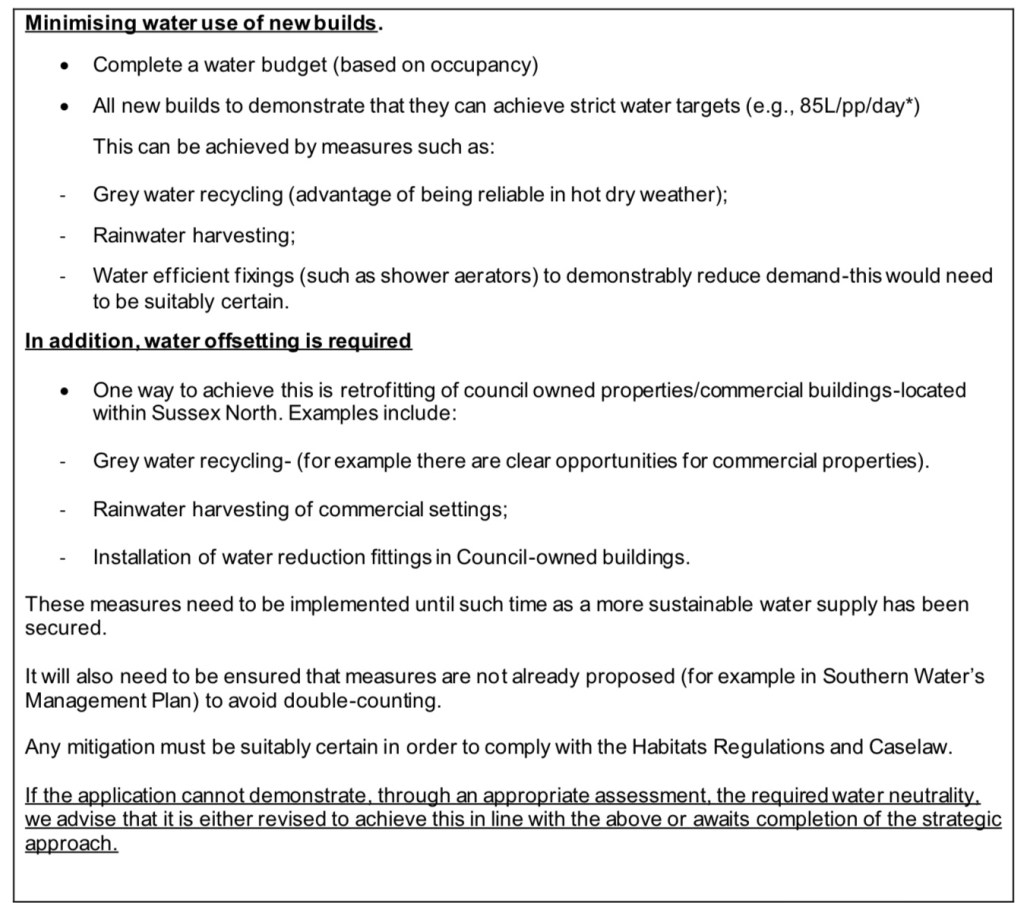
Whilst the strategy is evolving, Natural England advises that decisions on planning applications should await its completion. However, if there are applications which a planning authority deems critical to proceed in the absence of the strategy, then Natural England advises that any application needs to demonstrate water neutrality. We have provided the following agreed interim approach for demonstrating water neutrality:
The relevant authorities are now advising applicants accordingly. Crawley Borough Council’s website for instance now says this:
“Developers / planning applicants who can demonstrate water neutrality such as having significant water efficiency measures built into their development and by providing offsetting measures to reduce water consumption from existing development, and who are able to enter into legal obligations to secure these measures, would be able to proceed, subject to the planning process. The onus is on developers and planning applicants to demonstrate that they can deliver water neutrality for their proposals. For applications in these circumstances which are not able to do this, the Local Planning Authority [the council] when determining a decision, would unfortunately have no choice but to refuse them, as a matter of law, in light of the Natural England Statement.
The Local Planning Authority [the council] has written urgently to agents of affected applicants advising them of Natural England’s position and advising them that, for the time being, all applications where a positive decision / recommendation was / is to be made on an application will have to be delayed if they are within the Southern Water supply zone, until the matter of water neutrality can be addressed.”
Without speedy solutions, this is going to create real problems both for individual developers in the area and for authorities in bringing forward deliverable local plans.
No doubt there will be solutions in due course (and questions do have to be asked as to whether the issue really lies with the water abstraction licences, which presumably were the subject of appropriate assessment under the 2017 Regulations and their statutory predecessors, rather than with those who are seeking to have access the abstraction of which has already been licensed!) but how long will that take and at whose cost?
In the meantime, what an unplanned mess.
Simon Ricketts, 9 October 2021
Personal views, et cetera
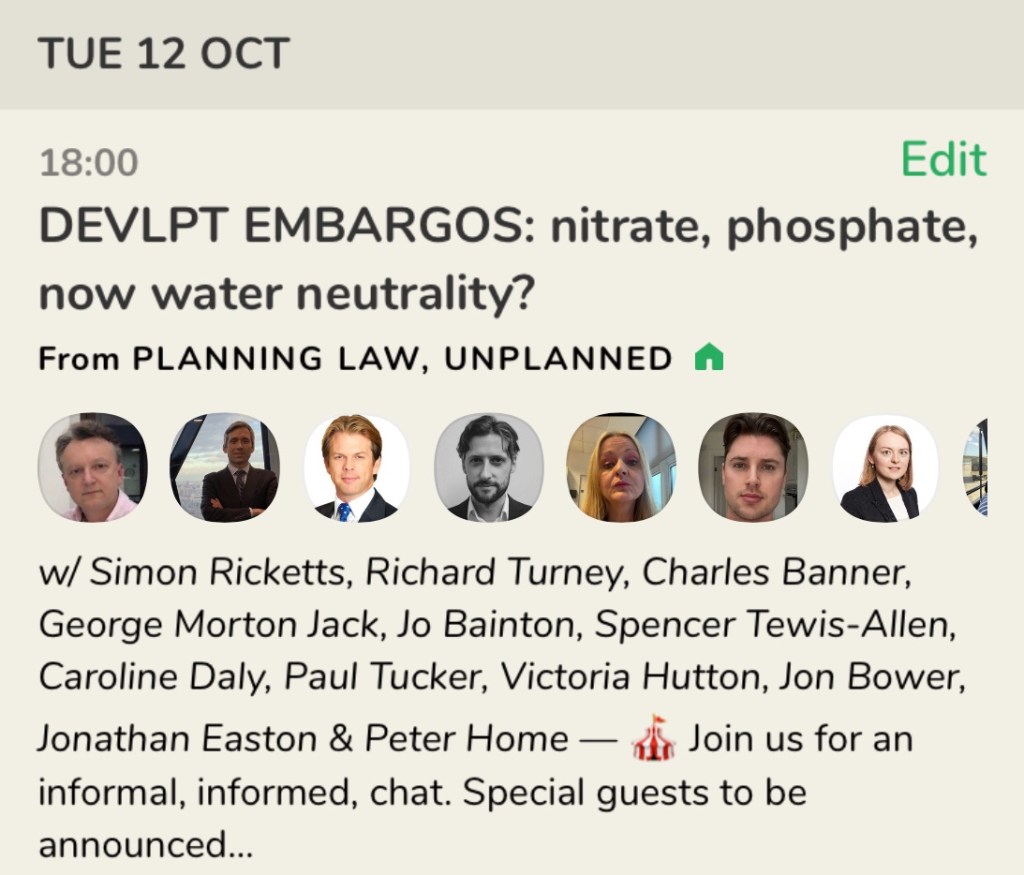
Talking of Planning Law Unplanned…our clubhouse session will tackle this subject in more detail with practical, authoritative, input from special guests including Peter Home (mentioned above), Tim Goodwin, Charlie Banner QC, Richard Turney and others. Do join us at 6 pm on Tuesday 12 October. Link to app here.
We’re probably all increasingly familiar with the basic principles of biodiversity net gain. Even ahead of the statutory system being introduced which is the focus of this post, there is a growing policy basis for authorities to use at least a basic version of what is set out in the Environment Bill (although without any formal national prescription yet as to, for instance, the extent of net gain required or national process for the purchasing of credits).
The Environment Bill is reaching its final stages – report stage in the House of Lords is on 13 October 2021 and it then finally returns to the Commons (subject to the possibility of there then being some ping ponging between the Houses in relation to the Lords amendments I referred to in my 17 September 2021 blog post On Reshuffle Day, In Another Part Of The Forest) before receiving Royal Assent.
DEFRA indicated back in 2019 that once the Bill is enacted there will be a two year transitional period before the provisions on biodiversity net gain come into effect, but in that period there is going to be a lot of important stuff happening (and with the delays to the Bill whilst progress has been made on other aspects of the system might there be a prospect of that two years being abbreviated?). The robustness, and workability, of the system depends on:
⁃ sensible and efficient, but water-tight, administrative processes being set out in secondary legislation by way of regulations, for instance in relation to the pricing, availability and use of biodiversity credits
⁃ the availability of good data and methodologies (in relation to which Natural England has made good progress)
⁃ standardised, arrangements for securing long term (30 years plus) management arrangements by way of conservation covenants (not covered in this post but another crucial element of the Bill) and, our old friend, section 106 agreements
⁃ a workable system of monitoring and enforcement.
Before I briefly summarise the provisions on BNG in the Bill, given that the BNG system is going to live on for some time on a purely policy basis, I thought it was worth setting out that policy basis.
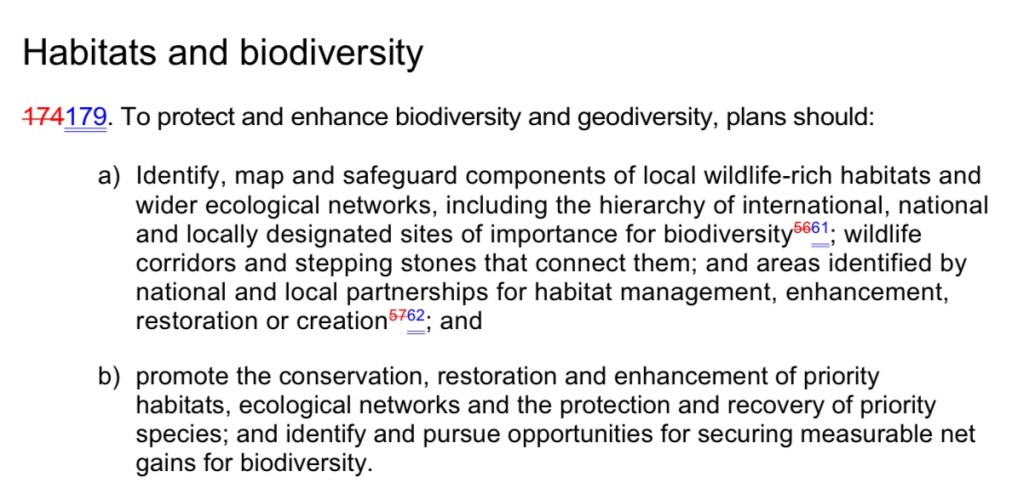
First of all there are relatively general references in the NPPF (extracts below showing amendments from the 2019 version).
There is more useful detail in the “net gain” passages within the natural environment section of the Government’s planning practice guidance.
Local authorities are under a general duty under Section 40 of the Natural Environment and Rural Communities Act 2006 to have regard, in the exercise of their functions, to the purpose of conserving biodiversity, but the level to which they can prescribe particular approaches to BNG and the level of net gain required depends on whether they have policies in place addressing these matters – with the weight to be attached to the policy depending on the nature of the document.
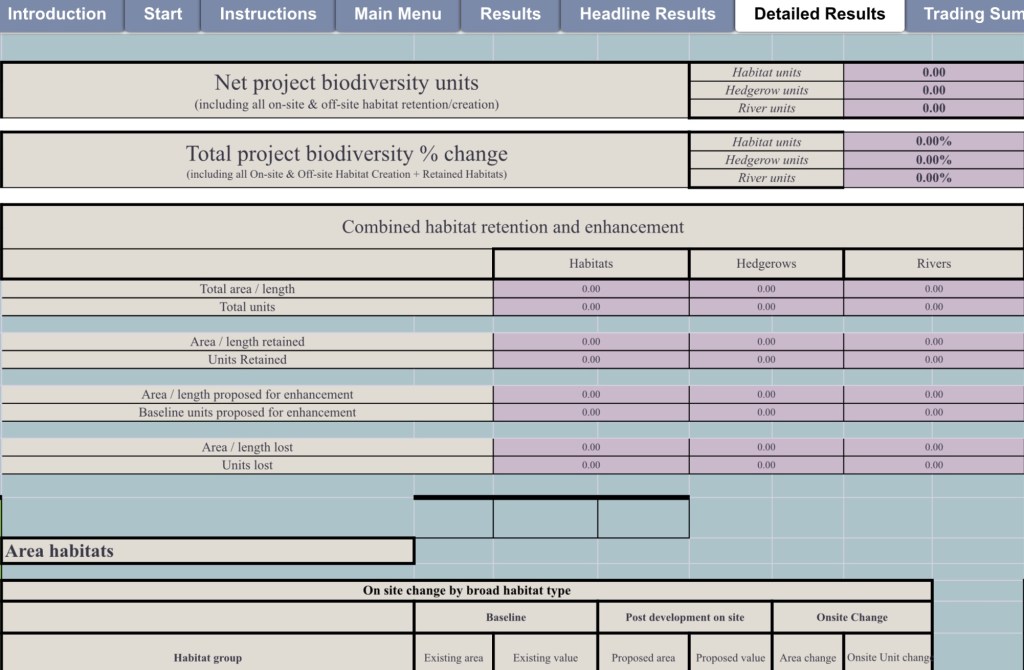
Pre-legislation we already of course have Natural England’s biodiversity metric 3.0 to work from, with much accompanying guidance, including guidance on using the calculation tool.
Turning to the Bill itself, the provisions on biodiversity net gain comprise clauses 99 to 104 and schedules 14 and 15
In brief:
Standard condition on planning permissions
Clause 99 introduces schedule 14, the effect of which I briefly summarise as follows:
• “The biodiversity gain objective is met in relation to development for which planning permission is granted if the biodiversity value attributable to the development exceeds the pre-development biodiversity value of the onsite habitat by at least the relevant percentage” which is 10% or such other percentage as is set out in regulations.
• The biodiversity value attributable to a development is “the post-development biodiversity value of the onsite habitat, (b) the biodiversity value, in relation to the development, of any registered offsite biodiversity gain allocated to the development”, and (c) the biodiversity value of any biodiversity credits purchased for the development”.
• The biodiversity metric is a document for measuring biodiversity value and it is to be published and updated from time to time by the Secretary of State.
• Pre-development biodiversity value for the site is measured as at the date of an application for planning permission (or the applicant and local planning authority may agree an earlier date). If activities are carried out on the land on or after 30 January 2020 without planning permission which reduce the biodiversity value of the onsite habitat, the biodiversity value is to be taken to be that which was the case immediately before those activities (a measure to avoid land owners intentionally reducing the pre-development biodiversity value).
• Post-development biodiversity value is “the projected value of the onsite habitat as at the time the development is completed”. There must be a condition or planning obligation requiring the habitat enhancement to be maintained for at least 30 years.
• Registered offsite biodiversity gain means any habitat enhancement where there is a legal commitment to carry it out and the enhancement is recorded in the biodiversity gain site register (see below).
• “Every planning permission granted for the development of land in England shall be deemed to have been granted subject to the condition” that a biodiversity gain plan has been submitted to and approved by the relevant planning authority.
• The biodiversity gain plan must show how the biodiversity gain objective is to be met either through on site enhancement by registered offsite biodiversity gain or by purchase of biodiversity credits. Regulations will set out the procedure the planning authority is to follow in determining whether to approve a biodiversity gain plan and the factors to be taken into account. At the moment there is no prioritising as between on-site, off-site and the purchasing of credits.
• The standard condition does not apply to development approved under a development order, on Crown land or any type of development which is specified within regulations as exempted.
• Regulations may modify or exclude these provisions for “irreplaceable habitat” and “must make provision requiring, in relation to any such development, the making of arrangements for the purpose of minimising the adverse effect of the development on the biodiversity of the onsite habitat”.
• There will be provisions in regulations to deal with the outline planning permissions, retrospective planning permissions and so on.
NSIPs
Clause 100 introduces schedule 15, which sets out how BNG works with in relation to nationally significant infrastructure projects, and the effect of which I briefly summarise as follows:
• If there is a national policy statement covering the type of development, it will be down to whether the national policy statement contains a biodiversity gain statement, in which case the biodiversity gain objective contained in the statement must be met.
• If there is no national policy statement covering the type of development, it will be down to whether the Secretary of State has made a biodiversity gain statement for that type of development, in which case the biodiversity gain objective contained in the statement must be met.
Biodiversity gain register
Clause 101 enables the Secretary of State to make regulations providing for a register of biodiversity gain sites – land which is legally required by conservation covenant (a binding mechanism provided for elsewhere in the Bill) or planning obligation to be maintained for habitat enhancement for at least 30 years and the “enhancement is made available to be allocated (conditionally or unconditionally, and whether for consideration or otherwise) in accordance with the terms of the covenant or obligation to one or more developments for which planning permission is granted”. The regulations will provide for the register to be open to the public, who should maintain it (the Secretary of State, Natural England “or any other person”), the information it includes and the procedure to be followed for a site to be placed on the register.
Biodiversity credits
Clause 102 allows the Secretary of State to “make arrangements under which a person who is entitled to carry out the development of any land may purchase a credit from the Secretary of State for the purpose of meeting the biodiversity gain objective”, including the biodiversity value of a credit, its pricing and procedural arrangements, including “reimbursement for credits purchased for development which is not carried out”. “In determining the amount payable under the arrangements for a credit of a given value the Secretary of State must have regard to the need to determine an amount which does not discourage the registration of land in the biodiversity gain sites register.” Payments must only be used by the Secretary of State for the carrying out of habitat enhancement works on land in England, purchasing the necessary land and operating the arrangements. He must report annually on payments received/used.
This is such a big subject and it’s only going to get bigger.
👋 For some further listening and discussion on this very subject, do join our clubhouse Planning Law Unplanned event at 6 pm on 5 September. Join the app here.
See also these tweets today from the Daily Telegraph’s chief political correspondent Christopher Hope (thank you for alerting me, Mike Best):
Congratulations to the 42% in the ITV poll but for the rest of us this is all no surprise. The House of Commons BEIS Committee’s 22 July 2021 report Post-pandemic economic growth: Levelling up lays it bare:
From the introduction:
“On his appointment as Prime Minister in July 2019, Rt Hon Boris Johnson MP said in a speech, on the steps of Downing Street, that he would “answer the plea of the forgotten people and the left behind towns” and “level up across Britain” by unleashing the “the productive power not just of London and the South East but of every corner of England, Scotland, Wales and Northern Ireland””.
From the summary:
“Levelling up—meaning, in our view, the spreading of economic and social opportunities more evenly across the country—is laudable and should be a priority for any Government.
However, whilst recognising the understandable impact the pandemic has had on Government capacity, we are disappointed at how little detail has been put forward to explain what the Government sees levelling up to mean and how it will be delivered.”
“As such, we have made several recommendations to Government, including recommendations to:
• Urgently publish the Levelling Up White Paper, so that we are clear on what the Government defines levelling up to mean and what its priorities are.
• Work with the Office for National Statistics, the Cities and Local Growth Unit in the Business Energy and Industrial Strategy department and the National Audit Office to agree a set of metrics for the routine reporting of progress in delivering levelling up priorities.
• Establish the functioning of a Cabinet Committee on levelling up, that collaborates with devolved, regional, and local leaders.
• Recognise that inequalities exist across the whole of the UK, including within cities, and that levelling up priorities should therefore not be focussed on only some regions or sub-regions of the UK.
• Ensure that each region in England has the capacity to competitively bid for Government funding, given that some areas in England have a greater capacity to engage with Whitehall than other areas.
The levelling up agenda has been described by the Government as its ‘most important mission’. It is now imperative for Ministers to translate this from a political promise into a deliverable programme for Government. The forthcoming Levelling Up White Paper, which we understand will now include the previously announced Devolution White Paper, gives the Government the opportunity to be bold and progressive. We look forward to its publication and, in future, engagement with Ministers on their delivery of levelling up.”
From the main part of the report:
“Giles Wilkes, former industrial and economic special adviser to former Prime Minister Rt Hon Theresa May MP, noted that the Government’s use of the phrase levelling up was so widespread that it had become nothing more than a generic term for “make things better”. Rafael Behr of the Guardian referred to levelling up as a “rhetorical zeppelin”, which was “floating on the political horizon, carrying no cargo of policy”.
“The current available documents on the policy instruments the Government aims to use to level up—the Conservative Party Manifesto, its submission to this inquiry and the 2021 Queen’s Speech—show a wide ranging and disjointed programme of random policies from an obesity strategy, an increase in police officers, to funding on A roads and the creation of Freeports. Although these policies are all very interesting and welcome, it is difficult to see how they all tie together under one over-arching strategy. The cohesion of the whole has not been well described to identify how these fit together. If the Government is serious about levelling up and for it to be a substantive strategy rather than merely a slogan, it must spell out a coherent ‘plan’ as a matter of urgency”
Is this unfair? Possibly not. Motherhood is good and it’s clear from the Conservative 2019 manifesto that levelling up is good:
“Our plan means making sure people have access to world-class public services, that they feel safe on the streets, that working families get to keep more of their own money, and that we help with cost of living pressures.
But it also means making sure that we share prosperity across the country, addressing the longstanding economic challenges in parts of the country. We will invest responsibly and prudently in the infrastructure that can make a difference, and ensure communities in every corner of the United Kingdom are pleasant, safe and prosperous. And we will invest far more in helping workers train and retrain for the jobs and industries of the future. Investing in people, restoring the fabric of our towns and cities, building the homes we need, supporting science and industry, strengthening the great Union between the United Kingdom’s four nations – that is how we will unleash our country’s full potential.”
“…in his first months as Prime Minister, Boris Johnson has set out an agenda for levelling up every part of the UK – not just investing in our great towns and cities, as well as rural and coastal areas, but giving them far more control of how that investment is made. In the 21st century, we need to get away from the idea that ‘Whitehall knows best’ and that all growth must inevitably start in London. Because we as Conservatives believe you can and must trust people and communities to make the decisions that are right for them.”
There is of course the £4.8 billion Levelling Up Fund, announced as part of the 2020 Spending Review. As set out in the March 2021 Levelling Up Fund Prospectus:
“The Fund will focus on capital investment in local infrastructure thereby building on and consolidating prior programmes such as the Local Growth Fund and Towns Fund. It will have a visible, tangible impact on people and places, and support economic recovery. In doing so, it will also create opportunity across the country, prioritising bids that invest in regeneration and growth in places in need and areas of low productivity and connectivity.”
The first round of the fund is focusing on smaller transport projects; regeneration and town centre investment, and cultural investment : £4 billion for England for the next four years to 2024-2025 and at least £800,000 for Scotland, Wales and Northern Ireland. Save in Northern Ireland, funding will be delivered via local authorities. The fund is jointly managed by HMT, DLUHC and DfT.
The prospectus was published alongside a list of local authorities by priority category. There is also a June 2021 prioritisation of places methodology note. The Good Law Project secured permission from Bourne J on 19 August 2021 to take to a full hearing its judicial review of the methodology, which is reported to be based on its allegations that (according to the news piece) “the Government is using the £4.8bn fund to funnel money into regions and towns of political benefit to the Conservative Party. The not-for-profit legal group alleges that the Government is guilty of ‘pork barrel politics’. They cite, for example, the fact that 22 of 26 places that received funds from the Towns Fund are represented by Conservative MPs.”
I won’t comment on that allegation but do note that there is an unusual bidding criterion for local authorities, which gives MPs an important role in the allocation of monies:
“We expect bidding authorities to consult local Members of Parliament as part of their bid; though such support from local MPs is not a necessary condition for a successful bid. MPs can have a positive role in prioritising bids and helping broker local consensus. When considering the weighting given to bids, the expectation is that an MP will back one bid which they see as a priority, and any bid may have priority backing from multiple MPs and local stakeholders. But Members of Parliament may also want to support any or all schemes that would have a benefit to their constituencies in the usual way.”
The levelling up agenda is currently a potent political theme for Conservative MPs, 40 of whom formed a “Levelling Up Taskforce” in September 2020, the launch of which was marked by the publication by Onward of a report by MP Neil O’Brien, Measuring up for levelling up.
Neil O’Brien was subsequently appointed in May 2021 by the prime minister as Levelling Up Adviser. The announcement was made within a 4 May 2021 government press statement which referred to a “landmark” levelling up white paper “later this year, articulating how bold new policy interventions will improve opportunity and boost livelihoods across the country as we recover from the pandemic.” “The White Paper – which will be led by the Prime Minister – will focus on challenges including improving living standards, growing the private sector and increasing and spreading opportunity.” This white paper of course will partly be a rebadged version of the white paper which was originally promised for publication last year on “devolution and local recovery”. As of the date of the press statement, a “new No10 – Cabinet Office Unit [was to] be set up to drive through work on the White Paper.”
I am not sure how much “driving through” has since taken place but Neil O’Brien of course has been now appointed as a minister within the new Department for Levelling Up, Housing and Communities. In the Government’s 19 September 2021 press statement announcing the name of the new Department (massively symbolic in itself) and make-up of its ministerial team it was stated that former Bank of England chief economist (and incoming chief executive of the RSA) Andy Haldane has been appointed as a permanent secretary in the Cabinet Office for six months to “head up the Levelling Up Taskforce that will report jointly to the Prime Minister and the Secretary of State for Levelling Up, Housing and Communities.”
“The Prime Minister, Boris Johnson MP, said:
This government is committed to uniting and levelling up every part of the UK and I am determined that as we build back better from the pandemic we are geared up with the teams and expertise to deliver on that promise.
Andy is uniquely qualified to lead our efforts to raise living standards, spread opportunity, improve our public services and restore people’s sense of pride in their communities. I look forward to working with him, and with my new ministerial team, to deliver the opportunities this country needs.”
Andy Haldane is a serious individual and it is a significant appointment, if only for a short period of time – blink and it’s gone.
I’m sure I’m not the only person utterly frustrated that the main engine of government in our specialist area of interest is now named, for party political reasons, after such an amorphous concept. I’m still not clear as to what levelling up is (or, rather, what it isn’t) but I sense that for the Government it is at the very heart of its political agenda in a way that will define its priorities in terms of housing and economic growth (and therefore its thinking in relation to reform of the planning system). I’m sorry to reduce it to this because the aspirations are, as the BEIS Committee said, laudable but… is it about any less than “making things better” in such a general sense as to be meaningless, or about any more than focusing on issues are relevant to voters in marginal seats in such tactical ways as have no strategic coherence?
Insights very welcome.
Simon Ricketts, 24 September 2021
Personal views, et cetera
For our Planning Law Unplanned clubhouse event at 6pm on Tuesday 28 September, we are picking up on a comment made by DLUHC minister Eddie Hughes this week that there would be a “full review” of the NPPF. Our theme is NPPF “full review”: what to expect in reality/your dreams? and our special guests will include Steve Quartermain, Nicola Gooch and Mike Best as well as our usual stellar panel. Link to app here.
“If a tree falls in a forest and no one is around to hear it, does it make a sound?”
Maybe the biggest news this week wasn’t the replacement of Robert Jenrick by Michael Gove as Secretary of State for Housing, Communities and Local Government and the consequent likely pause of the still-paused-anyway planning law reforms.
Maybe it was the difficulties which the Government is having with its Environment Bill (original progenitor one M Gove). Aspirations of enactment by the time of November’s COP26 are surely fading fast in the light of a series of defeats for the Government at the report stage of the Bill in the House of Lords. On Monday (13 September 2021) it was already being reported in a Green Alliance blog post, on the back of a Daily Telegraph story, that the Government was reluctant to accept the amendments which had been passed which could ultimately lead to the Bill entering into a period of ping pong (less fun than it sounds) between the Lords and Commons.
– making interim targets for nature, air, water and waste legally binding;
– requiring the Government to make a formal declaration of a biodiversity and climate emergency;
– a more ambitious approach to targets in air pollution;
– making soil health a priority;
– removing exemptions for the Treasury and Ministry of Defence from taking into account environmental principles in policy making.
However, on the day of the reshuffle, 15 September 2021 the Lords continued its scrutiny of the Bill and inflicted a further four defeats by way of voting for amendments which in various ways seek to introduce greater environmental protections. Two of the issues are intertwined with matters to do with planning and development and I thought I would give them a bit of airtime – after all, these days can you be a planning lawyer without being an environmental lawyer? And surely DEFRA and MHCLG are going to have to work with each other in ever closer ways.
Habitats Regulations: limits on powers to amend
Baroness Young, chair of the Woodland Trust and former chief executive of the Environment Agency, moved an amendment to ensure “that powers to amend the Habitats Regulations may only be used for the purposes of environmental improvement following consultation. It ensures that the level of environmental protection that must be maintained includes protection for important habitats, sites and species as well as overall environmental protection”
It was passed 201 to 186.
The amendment provides that the Secretary of State may only amend the regulations
“for the purposes of—
(a) securing compliance with an international environmental obligation, or
(b) contributing to the favourable conservation status of species or habitats or the favourable condition of protected sites;
(c) if the regulations do not reduce the level of protection provided by the Habitats Regulations, including protection for protected species, habitats or sites; and
(i) following public consultation and consultation with—
(ii) the Office for Environmental Protection,
(iii) Natural England,
(iv) the Joint Nature Conservation Committee, and
(v) other relevant expert bodies.”
Duty to implement an enhanced protection standard for ancient woodland in England
Baroness Young moved an amendment “intended to address the more than 800 ancient woodlands in England that are currently threatened by development. As a large number of these threats result from indirect effects of development next to ancient woodland, these changes will improve the weight afforded to protecting these irreplaceable habitats in planning policy.”
It was passed 193 to 189.
The amendment introduces the following additional clause into the Bill:
(1) The Government must implement an enhanced protection standard for ancient woodland, hereafter referred to as the “ancient woodland standard” in England as set out in subsections (2), (3) and (4) and this must have immediate effect.
(2) The ancient woodland standard must set out the steps necessary to prevent further loss of ancient woodland in England.
(3) The ancient woodland standard commits the Government to adopting a Standard of protection which must be a requirement for all companies, persons or organisations involved in developments affecting ancient woodlands in England.
(4) This standard must be that—
(a) any development that causes direct loss to ancient woodland or ancient woodland and ancient and veteran trees must be refused unless there are wholly exceptional reasons and, in addition, a suitable compensation strategy must be in place prior to development commencing,
(b) any development adjacent to ancient woodland must incorporate a minimum 50-metre buffer to provide protection, reduce indirect damage and provide space for natural regeneration,
(c) any ancient or veteran trees must be retained within a development site, including a root protection area and appropriate buffer zone.
(5) This buffer zone must be whichever is greater of—
(a) an area which is a radius of 15 times the diameter of the tree with no cap, or
(b) 5 metres beyond the crown.”
The debate is here and Parliament’s summary of the House of Lords report stage is here.
(Incidentally, Ruth Keating (39 Essex Chambers) gave a very clear summary of the Environment Bill at today’s (virtual) Joint Planning Law Conference. Watch out for the paper in due course.)
As a further indication of how environmental matters are going to take centre stage in coming months, Duncan Field brought to my attention yesterday that Lord Frost made a statement to the House of Lords (16 September 2021) as to the Government’s approach in relation to various areas of retained EU law. A supporting paper, Brexit opportunities: regulatory reforms contains references which may be of interest to those in the planning and environmental areas:
“Environmental Licencing [sic] and Permitting – Defra is continuing to rationalise the existing Environmental licensing and permitting (ELP) regimes so they are more streamlined and easier for businesses and users to navigate, whilst maintaining and even enhancing environmental protections.
Promote a flexible, market-based trading system for biodiversity offset credits – Biodiversity Net Gain (BNG) is a critical part of Defra’s strategy for enhancing the natural environment and promoting sustainable growth. Defra will shortly be publishing a consultation on our plans for implementing BNG. This consultation will include proposals for a market-based approach to delivery of biodiversity offset units.”
That latter is interesting in the context of the biodiversity net gain provisions within the Environment Bill, which do not currently refer explicitly to any notion of a structured “market-based trading system for biodiversity offset credits”.
Keep your ears open is all I’m saying…
Simon Ricketts, 17 September 2021
Personal views, et cetera
And on the theme of ears, do join our clubhouse Planning Law Unplanned event at 6pm this Tuesday 21 September 2021, whether to listen or participate. We will be returning to the big news story and associated question – “ALL SYSTEMS GOVE! What to expect from our new Secretary of State?”. We have a planoply of leading commentators lined up to give their views including Catriona Riddell, Matthew Spry, Zack Simons, Wyn Evans and Nick Cuff as well as our usual planel. Link to app here.
It was hard not to laugh – and back in February 2021 laughs were in short supply. But that Handforth Parish Council viral video was also deeply depressing as a vignette of the planning system in action and hardly a recruitment drive for parish councils.
This has been another bad week for the planning system in the media.
• “Staff at Swale Council, Kent accidentally rejected or approved five applications
• Blunder was made by a ‘junior’ staff member at Mid Kent Planning Support team
• The person was trying to resolve software issues, but in doing so, five ‘dummy’ decisions, used to test the website was working, were accidentally published
• Among them included the rejection of an animal sanctuary to stay on its site
• Two Kent pubs were also given permission to be demolished or part-demolished
• A butcher’s change-of-use application in Sittingbourne was turned down
• A farm was granted planning permission with 20 conditions, listed just as 1 – 20”
It’s certainly not very clever that anyone untrained was left unsupervised with access to the business end of the local planning authority’s IT system. This has obviously caused a big legal mess. Nicola Gooch sets out the law in her 10 September 2021 LinkedIn blog post.
Older lawyers can’t help thinking in Latin, unwelcome in the courts these days but handily concise:
• Functus officio – the LPA has made its final decision (to issue the planning permission or refusal notice) and can’t re-open it.
• Administrative decisions are very rarely treated by the court as void ab initio (of no legal effect from the date they were purported to be made, even without a quashing order from the court), no matter how absurd – it takes a formal application to the court for judicial review to undo the mistake by quashing the decision, enabling it to be re-taken.
Accordingly, even with no arguments being made to the contrary by any interested parties, proceedings will need to be issued in the High Court on behalf of the council, a consent order agreed by the parties and then (usually after a wait of several weeks) rubber-stamped by the court – much money and much time wasted.
As Nicola identifies, this is by no means the first example of this sort of thing, although I do find it bewildering – was each decision not only generated by the system but then actually transmitted, without approval of a senior officer with the necessary delegated authority?There is surely a failing in the council’s internal system.
Local Government Lawyer reported in November 2020 as follows on the South Cambridgeshire examples she mentions:
“South Cambridgeshire District Council is to commence proceedings in the High Court after discovering two planning permission errors.
The local authority said one mistake had led to planning permission for an extension and annexe in Steeple Morden being issued in error. The permission was granted despite the application still being open for people to comment on.
“This planning decision, issued without the relevant authorisation, was caused by human error when the wrong box was ticked on the planning computer system,” it explained.”
“The second case saw a planning permission being issued without the accompanying conditions. It related to the landscaping, layout and other details around eight new homes in Great Abington.”
Another mistake was the subject of a ruling by the Scottish Court of Session (Outer House) in Archid Architecture and Interior Design v Dundee City Council (20 August 2013). The Council had intended to refuse an application but instead granted planning permission but with reasons for refusal. It tried to get away with simply issuing a second notice, refusing permission. However, the applicant succeeded in obtaining a declaration from the court upholding the validity of the first notice. The court decided that a decision issued by a planning authority, however legally flawed, is to be treated as valid unless and until it is overturned in court proceedings.
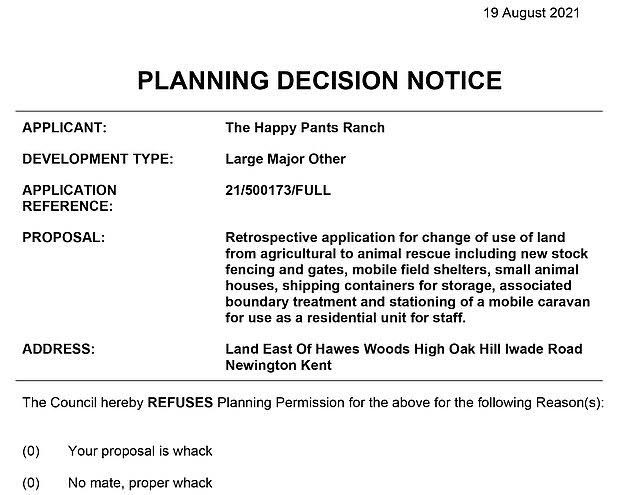
When taken to extremes, this does start to look absurd. Whilst of course people should be able to rely on a planning permission or refusal notice that on the face of the document looks legitimate, the concept is strained when you have a refusal notice with the reason for refusal being “No mate, proper Whack” or, in another Swale example, a planning permission issued with the conditions: “(2) Incy (2) Wincy (3) Spider”. What if he or she had issued a planning permission for development in another district – in South Cambridgeshire, say – would that also be valid until quashed?
Any argument for the “voidable not void” approach on the basis that there needs to be certainty in the system (that a permission is valid until quashed, and that there is a short deadline for legal challenge after which the permission can be relied upon as valid) begins surely to lose some legitimacy when planning permissions are quashed after many years as happened in the Thornton Hotel case I mentioned in my 7 April 2018 blog post Fawlty Powers: When Is A Permission Safe From Judicial Review or this year’s Croyde Area Residents Association, R (On the Application Of) v North Devon District Council (Lieven J, 19 March 2021) where a 2014 planning permission was quashed that had mistakenly authorised development in relation to a wider area than had been intended.
“I hope Al Qaeda bombs the f…… ugly thing”
Chaotic scenes at planning meeting as anger erupts over new West Hampstead development (Camden New Journal, 9 September 2021). The video of two local objectors screaming vitriol at Camden’s Planning Committee last night makes uncomfortable viewing. If you want to understand what the scheme actually was, perhaps read the officer’s report (from page 191) in relation to the application and in particular the plans and images from page 235 to page 257. In my view it is an excellent scheme but that’s nothing really to do with it – there was no excuse for that reaction. We are all entitled to our own views but it is depressing that individuals feel driven to scream at their locally elected representatives like this. I do not use the often unfairly insulting and counter-productive “NIMBY” insult, but you can see why people do.
By this afternoon, the Secretary of State himself was tweeting about it:
Thank you to everyone who attended our fantastic Clubhouse event last week with Graham Stallwood, Bridget Rosewell, Alice Lester and James Cross. It was a hard one to beat. This week’s will be a more informal session – do turn up if you would like to say hello – and maybe join some chat about what’s happening in the literally whacky world of planning. Link here.
Faithful reader, life’s hard enough and I’m giving you another week off from a proper blog post. However…
The High Court rulings and planning appeal decisions keep coming and it’s worth subscribing to the Town Library free weekly updates for those, including great summaries of every High Court ruling, prepared by my Town Legal colleagues.
I know I go on about clubhouse but do join one of our Planning Law Unplanned sessions if you can. I suppose that in tone it’s a cross between a live podcast (there’s no subsequent recording – miss it and it’s gone), a radio phone-in show and an after-work chat in the pub around a (large) table. Clubhouse recently upgraded their audio system to what they call spatial audio and if you listen now on earphones on an iphone or ipad you’ll notice that there is indeed the sense that you are in a room with the voices coming from different directions, as if around the table.
This Tuesday’s (7 September 2021, 6 to 7.15 pm) is genuinely unmissable: “Planning application/appeal timescales – tell us your tales”. It follows on from my last blog post, How Long Has This Been Going On and features the following special guests: Graham Stallwood (director of operations at The Planning Inspectorate), Bridget Rosewell (chair of the 2018 independent review into planning appeal inquiries), Alice Lester (director regeneration at Brent Council) & James Cross (strategic sites project planner, Arun District Council).
Timing is all, so they say. What are people’s current experiences of “the system”, good & bad?
In relation to appeals, PINS these days publishes excellent data but where are the pinchpoints that people experience in practice (without referring to specific cases)? Post lockdown, are we now on our way back to the improved timescales for appeal inquiries that were being achieved as a result of the Rosewell reforms? What about hearings and written reps appeals? How are we finding the move back from wholly screen-based events?
In relation to applications, what approaches by applicants and/or LPA can help avoid undue delays? How can we speed up negotiation of section 106 agreements? What is the role for pre-app discussions and early public engagement?
Please join us for a good-natured, positive but hopefully probing session. You are free just to listen or to participate in the discussion. Indeed we would love to hear your tales, of woe or joy! Link to app here.
Finally, clubhouse obviously is a platform for all sorts of discussions on all manner of topics. Nothing to do with work – any reference to planning or law, or indeed whatever work you do, is entirely banned – but tomorrow evening (Sunday 5 September, 8 pm) a few of us are hosting the third in an occasional series of events I’ve called Sound Recommendations, which is basically just chats about music, around a theme, as a result of which we put together a spotify playlist of what’s been mentioned (search for Sound Recommendations #1 and #2 on spotify). Tomorrow night’s theme is: “GIGS: first, best, last, next”. Do join us for that one too! Link here. (And if you’re only reading this after the event you’ll have to console yourself by searching for the Sound Recommendations #3 playlist).
Maybe next week I’ll get round to a proper post again….
Time is money. Time is unmet needs. Time is unrealised public benefits.
I just wanted to capture some of the current, frankly depressing, data that is out there on application and appeal timescales.
The purpose of this post is to underline that there is a significant problem to be addressed. What to do about it will be for another post – there is certainly much that can be done that does not require (1) legislation (2) additional resources or (3) any procedural shortcuts.
Applications
A piece from yesterday’s Planning daily online: Council signs off 2,380-home urban extension almost four years after committee approval (£). Four years is certainly going it some but I can confirm from constant first-hand experience how difficult it can be to move a project from resolution to grant to permission at any speed. The larger or more complex the project, the longer those negotiations over the section 106 agreement and associated aspects can end up taking.
My colleague Lida Nguyen has been looking at the position in London. She has looked at all applications for planning permission which were referred to the Mayor between 3 January and 11 December 2020, so applications of potential strategic importance as defined in the Mayor of London Order 2008 and, for those which were then approved by the relevant borough (without intervention by the Mayor or secretary of State), she has looked at the average time that the application took from validation to the borough’s resolution to approve and from the borough’s resolution to approve to permission being issued. Discarding a few anomalous cases, this left 88 to be analysed.
In my humble view the statistics are appalling, but not surprising:
Application submission to resolution to approve
Median: 228.5 days
Mean: 269 days
Resolution to approve to grant of permission
Median: 218.5 days
Mean: 259 days
It’s rather deflating for applicants and (when you stand back from the detail) surely absurd that resolution to grant in reality only marks the halfway point to a permission in relation to significant projects in London. Wouldn’t it be a start for boroughs, the Mayor and those acting for applicants to set a target of halving each of those figures and agreeing the necessary steps to achieve that reduction?
Appeals
My 25 May 2019 blog post Pace Making: Progress At PINS reported on Bridget Rosewell’s recommendation, adopted by the Planning Inspectorate, that inquiry appeals decided by an inspector (i.e. not recovered by the Secretary of State) should be decided within 24 weeks of receipt and that where the Secretary of State is to be the decision-maker, inspectors’ reports should be submitted to the Secretary of State within 30 weeks of receipt of the appeal. Initial progress was really impressive – until the first lockdown struck in March 2020. After a slow start (see my 2 May 2020 blog post There Is No E In Inquiry), PINS of course eventually, to the massive credit of all involved, embraced virtual hearings, inquiries and examinations and the risk of an impossible backlog was averted. However, it is clear from the latest Planning Inspectorate statistical update (19 August 2021) that there is still much work to do:
“The mean average time to make a decision, across all cases in the last 12 months (Aug 20 to Jul 21), was 27 weeks. The median time is 23 weeks.
The median time to decide a case decreased by 0.6 weeks between June and July 21, with the median being 21.4 weeks.
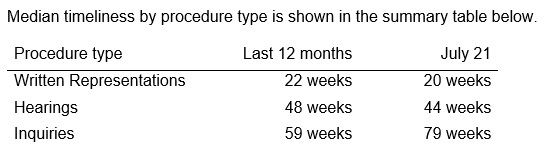
Median timeliness by procedure type is shown in the summary table below.
Performance since April 21 against the median measure has only varied by 0.7 weeks, between 21.4 weeks and 22.1 weeks. Performance had been improving between November 20 and March 21. For inquiries, in the last two months, cases have taken longer to decide as a result of very old enforcement inquiry cases being decided.
Enforcement decisions made in the last 12 months had a median decision time of 34 weeks. Looking at the annual totals, the median and mean time to decision for specialist decisions have been broadly the same as for enforcement decisions, and longer than the median for planning decisions. Since February 21 there has been a change in this trend, with Specialist cases being quicker than Enforcement.
The median time for planning appeals decided by inquiry under the Rosewell Process over the 12 months to July 21 is 35 weeks. This is quicker than other types of casework decided by inquiry.”
Whilst the extent of statistical information provided these days is welcome, it is difficult sometimes to track the figures through the different tables so as to work out what the likely timescale outcome for a prospective appellant will turn out to be. I have also looked in vain within the statistics for any information as the time being taken between appeal receipt and validation – a traditional black hole when it comes to appeal timescales. I’m also struggling to see any breakdown as to what the “Rosewell” inquiries were (35 weeks average) as compared to inquiries overall (79 weeks!).
That overall 27 weeks average is deceptively encouraging for anyone looking at anything other than a written representations appeal. Because those appeals make up 95% of the total of course they massively skew the mean figure. But even then, although not reflected in these statistics, my own anecdotal impression is that validation of appeals which proceed by way of written representations or hearing is very slow indeed, raising a large question mark over the overall statistics. Possibly something to do with the focus on Rosewell inquiry appeal targets. Am I being unfair? What solid information on this is there out there? If there isn’t any, why not??
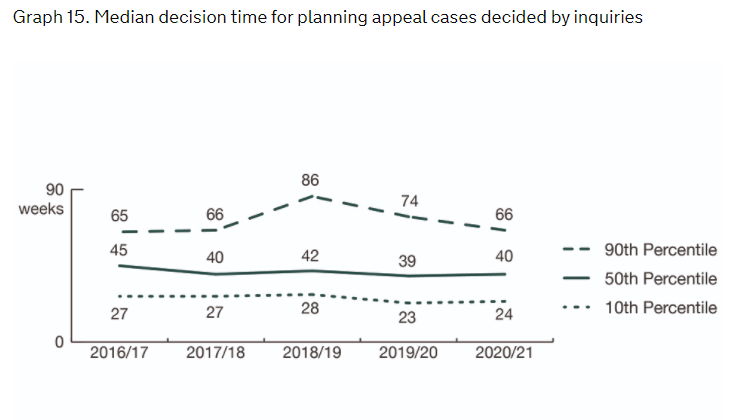
The Planning Inspectorate Annual Report and Accounts (July 2021) contains further statistical information, with tables such as these looking back at the changing position over the last five years:
In order to meet Rosewell targets, surely on that last table the 90th percentile needs to come down from 66 weeks to 24 weeks – and to be measured from receipt of appeal rather than validation?
Again, as with timescales for major applications in London, with appeal inquiries, surely we are looking at the need to more than halve current timescales?
All tables above have been taken from PINS documentation, for which thanks.
Simon Ricketts, 20 August 2021
Personal views, et cetera
Planning Law Unplanned is having a summer break this week, before returning at 6pm on Tuesday 31 August for somewhat of a BECG/DP9 special, London Elections 2022: Politics Meets Planning. Join the club here for notifications of this and future clubhouse Planning Law Unplanned events.
Westminster City Council’s deputy leader Councillor Melvyn Caplan resigned yesterday (12 August 2021) over the summer fiasco of the temporary viewing platform that has been built next to Marble Arch, in the middle of the gyratory roundabout where Park Lane meets Oxford Street. From WCC’s press statement Westminster City Council update on Marble Arch Mound:
“The Mound opened too early, and we have apologised for that. It has become clear that costs have risen more than anticipated and that is totally unacceptable. Our original forecast cost was £3.3m. Total costs are now £6m, covering every aspect of the project: construction, operation and eventual removal.”
All credit to Councillor Caplan for taking that honourable step. However, so many questions arise from this:
• On the one hand, is it right for one person to carry the can, but, on the other hand, why don’t we see more examples of leadership like this in local or national government when bigger things go wrong?
• Doesn’t the Council deserve at least some credit for being innovative, in the face of the challenges faced by Oxford Street and the west end? There’s surely nothing wrong with “off the wall” projects as a matter of principle as long as behind the scenes they are as de-risked as possible and it will be a shame if the crushing “computer says no” answer to every idea will now be “remember the mound”.
• When is it appropriate for a public authority to take on this sort of project and when should it de-risk via the private sector? Didn’t it in fact ring alarm bells that a private operator wasn’t prepared to speculate on the project, or weren’t they even given the opportunity?
• Did the computer generated imagery serve to oversell the initial experience?
This project did seem to get an exceptionally easy ride.
The application for planning permission was resolved to be approved on 30 March 2021 and planning permission issued later that day, with the application only having been submitted on 19 February (which was the first time, as far as I know, the project entered the public domain). So applications can be determined quickly (in less than six weeks) under the current system then, even for an eight storey high temporary structure on metropolitan open land next to a grade 1 listed building and with the lead-in to a committee meeting! We’ll all have some of that please.
“The location of the structure is sensitive due to its setting adjacent to the Grade 1 Listed Marble Area [sic] and location on Metropolitan Open Land (MOL). However, the provision of a temporary visitor is aimed at attracting visitors back to the Oxford Street District by increasing footfall, and supporting economic recovery following the Covid -19 pandemic. This is a clear planning benefit which is considered to outweigh the less than substantial harm that would be caused to the designated heritage assets.”
I don’t particularly quibble with the fact that planning permission was granted (and I note that it did have much business support – after all it really wasn’t in principle a bad idea), although it is interesting to see the light touch applied to the sustainability of the project in the officer’s report:
“Sustainability:
“Relocation of trees, grass, wood and soil. The proposal is that elements used in the construction of the structure, namely wood, soil, grass, and trees will all find new uses in nearby gardens and parks. The submission refers to ‘a co-ordinated dismantling programme to enable the transplanting of the numerous plants and trees used in landscaping of the hill to other projects in and beyond the Oxford Street District for the benefit of its communities’.
The focus will be on greening school environments, community spaces, and housing amenity areas. The planting used on this project will meet the City Council’s priorities for health and wellbeing. It is envisaged that the project as a whole can then contribute to the development and illustration of the Council’s Green Infrastructure Strategy.
The Head of Arboricultural Services advises that there are limitations on suitable space available for such material and attempting to transplant living plant material is likely to result in a high mortality rate. Therefore, this is unlikely to be a practical proposition. In the circumstances whilst the intention to re-use as much of the structure as possible is welcomed and encouraged. Given potential practical difficulties highlighted it is not recommended that this is secured by condition.”
After planning permission was granted, the final go-ahead for the project was given by cabinet in May 2021.
This what was said about costs:
“The current indicative construction costs for the mound are approximately £1.998m. These will be met from the £150m investment in Oxford Street District approved by Full Council in March 2019. Capital expenditure of c£522k will ensure a number of permanent legacy improvements are delivered across the district and this will be met from the approved Highways capital budgets. The potential for significant income generation has been further developed. This will be offset against operational and construction costs to reduce the overall net cost.”
To these costs were to be added the costs of the operator contract.
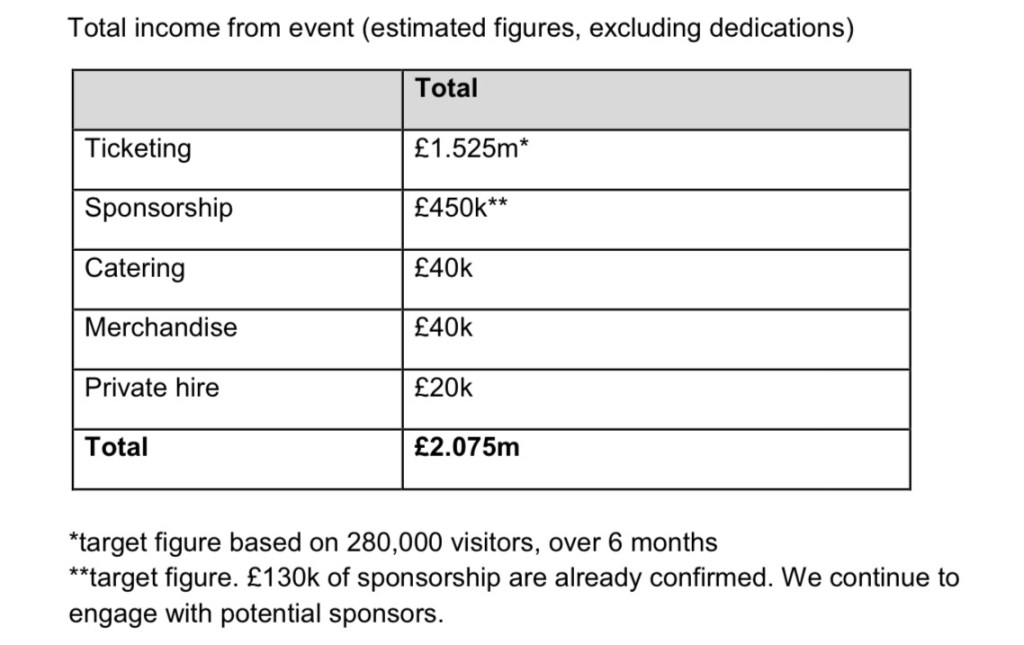
Cabinet were informed as to the prospect of income in the order of £2m being generated by the attraction.
Given that entrance is now going to be free for the duration of August, sadly the figures currently look on the optimistic side.
Why wasn’t there more scrutiny of the budget? Was everyone just caught up in the moment and conscious of the narrow window for pressing the “go” button? After all, warning bell surely, the architects, MVRDV, had previously proposed a very similar scheme for the Serpentine Gallery in 2004, which was abandoned for financial and health and safety reasons (see MVRDV’s proposed 2004 Serpentine Gallery Pavilion was “a heroic failure” (Dezeen, 8 November 2015) ).
My final question was as to the computer generated imagery used to “sell” the project. It looks instagram-amazing – and with a project like this the detail was always going to make the difference between success and failure. It is always going to be about that initial opening day wow factor: wasn’t the real problem (as per the first part of that WCC press statement) just that it really wasn’t ready to be unveiled? Worse things have happened, but it’s obviously difficult when you make a false, and unusual, step in such a high profile location.
Picture courtesy Westminster City Council
Who knows, it might turn out largely as illustrated (just late, like everything) and after all (although perhaps a stretch in this instance), perhaps all publicity is indeed good publicity. I’ll pay a visit to see what all the fuss is about, with maybe a little retail therapy en route (which after all is what it’s all about). Overall it is obvious that mistakes have been made, but (1) (oldest of sayings) let who is without sin cast the first stone and (2) (newest of sayings) don’t you just hate to see a combined media and social media pile-on?
Simon Ricketts, 13 August 2021
Personal views, et cetera
Our Planning Law Unplanned clubhouse event this Tuesday 17 August (6 to 7.15 pm) should be fascinating: “An End To Ugly? The Office for Place & National Model Design Code unpacked”, with special guests Nicholas Boys-Smith, Chris Miele and Vicky Payne. Sign up to the app here.
A personal rant, with apologies. Did you see that quote in the Daily Mail about the long awaited Planning Bill?
“A Government source said ministers would be in ‘listening mode’ on the issue when Parliament returns in September, adding: ‘We’ll listen and we’ll move.
‘We can take some of the edges off that are upsetting people and still get some important changes through.
‘The bottom line is we have got to get more houses built. The average age of a first-time buyer is 34. We have to get that down and give younger people a chance to get a stake in society.’”
Listening to whom, do we think? Backbench Conservative MPs of course and voters in relevant constituencies of course. Anyone else? Shrugging shoulders emoji.
Does the Government really believe that it can make changes that materially accelerate the delivery of homes, without upsetting voters and therefore backbench Conservative MPs? (I’m only focusing on the Conservative party because it is in Government – Labour MPs are hardly falling over themselves either to support development in their constituencies, and as for the Liberal Democrats…). I see it all around me, the social norm/knee jerk reaction to a development proposal being to object and being to assume that everyone else will want to object too – whether green field development (it should be on a brown field site) or the development of a brown field site (oh not there, too high, setting, infrastructure etc etc). Of course it is hoped that exhortations as to design will make a difference in making development less unpopular, but, even travelling optimistically, that is going to take a long long time.
So what are the “edges” that are going to be taken off the white paper proposals?
It’s obvious isn’t it? No doubt the idea that national housing targets will actually, perish the thought, have to be planned for by each local authority on a local basis, let alone find their way through to consents and development, isn’t just out of the window, it’s jumped down onto the pavement and skipped half way down the street by now.
“One leading rebel said: ‘If this ends up being a developers’ free-for-all, it will be utterly toxic for Tory MPs everywhere – not just in the South East.
‘If ministers get this wrong we can kiss goodbye to our new electoral success.
‘We will be doing the Lib Dems’ job for them across the Midlands, the South and the suburbs where we’ve had massive growth in recent years.
‘People are fed up. Being seen as the party concreting over our countryside or ramming housing estates into suburban green spaces will be electoral suicide. Boris needs to get a grip on this.’ Rebels want the idea of mandatory house-building targets replaced with voluntary ones.
They also want ministers to drop ‘growth zones’ in which planning applications would be automatically approved.”
Can we be clear: no-one I know in the development and planning world wants a fudged, bodged, old failed ideas re-branded, camel of a Planning Bill. Forget the whole thing rather than waste valuable time on a set of reforms based on political trade-offs and trying to be all things to all people. If as a politician you can’t focus on the objectives – climate change, providing everyone with a decent home, a functioning economy – because you’re just worrying about holding onto power and a job, forget it, don’t even start: with that frame of mind you will make things worse not better.
Without (1) a clear articulation of how many homes need to be built across the country, with a published evidence base to support that number (whether that’s 300,000 a year, or lower, or – probably – higher) and (2) those numbers somehow being divided out across the country without local opportunities for prolonged delays, obfuscation and special pleading (a year on from the white paper it is still really difficult to work out how this can be done), the system will continue to meander on its way – through the interminable plan making local politics, through the lengthy, unpredictable, too detailed and yet too light touch, examinations and through the inevitable court challenges.
The incoming coalition government in 2010 tore up top-down planning, in the form of the regional strategies, before the system even had time to prove itself. Yes it was an slow and over-engineered process, but there was at least the opportunity for democracy at the regional level in setting and apportioning numbers. The return to a bottom up approach, together with the let’s cross our fingers and rely on the duty (not really) to co-operate, and with a semi voluntary, almost unmappable, ad hoc patchwork of local authority combinations and alliances, has led to local plans being mired in endless debates as to numbers. Even with a supposedly standard method for calculating local housing need, those endless debates continue in every green belt local authority area – see Cherwell Development Watch Alliance v Cherwell District Council & Secretary of State (Thornton J, 30 July 2021) for the most recent example.
How are we going to get out of that mire, plan quickly and positively, stabilise spiralling house prices, reduce the age at which adult working offspring can leave the parental home to live somewhere convenient (let alone buy their own home – that’s a first world problem compared to the need for an affordable home in the first place), if local housing numbers are going to be left for local authorities and communities to determine?
Pray tell, “Government source”.
Simin Ricketts, 6 August 2021
Personal views, et cetera
Two great clubhouse Planning Law Unplanned events coming up:
⁃ 6pm Tuesday 10 August: Stonehenge road tunnel consent quashed: why, how, what next – discussion led by junior counsel to Save Stonehenge, Victoria Hutton. Link to invitation here.
⁃ 6pm Tuesday 17 August: AN END TO UGLY: The Office for Place & NMDC unpacked – special guests Nicholas Boys-Smith (chair, Office for Place), Dr Chris Miele (Montagu Evans) and Vicky Payne (URBED). Link to invitation here.























 SIMONICITY